Scrum Play: The Blindside Strike
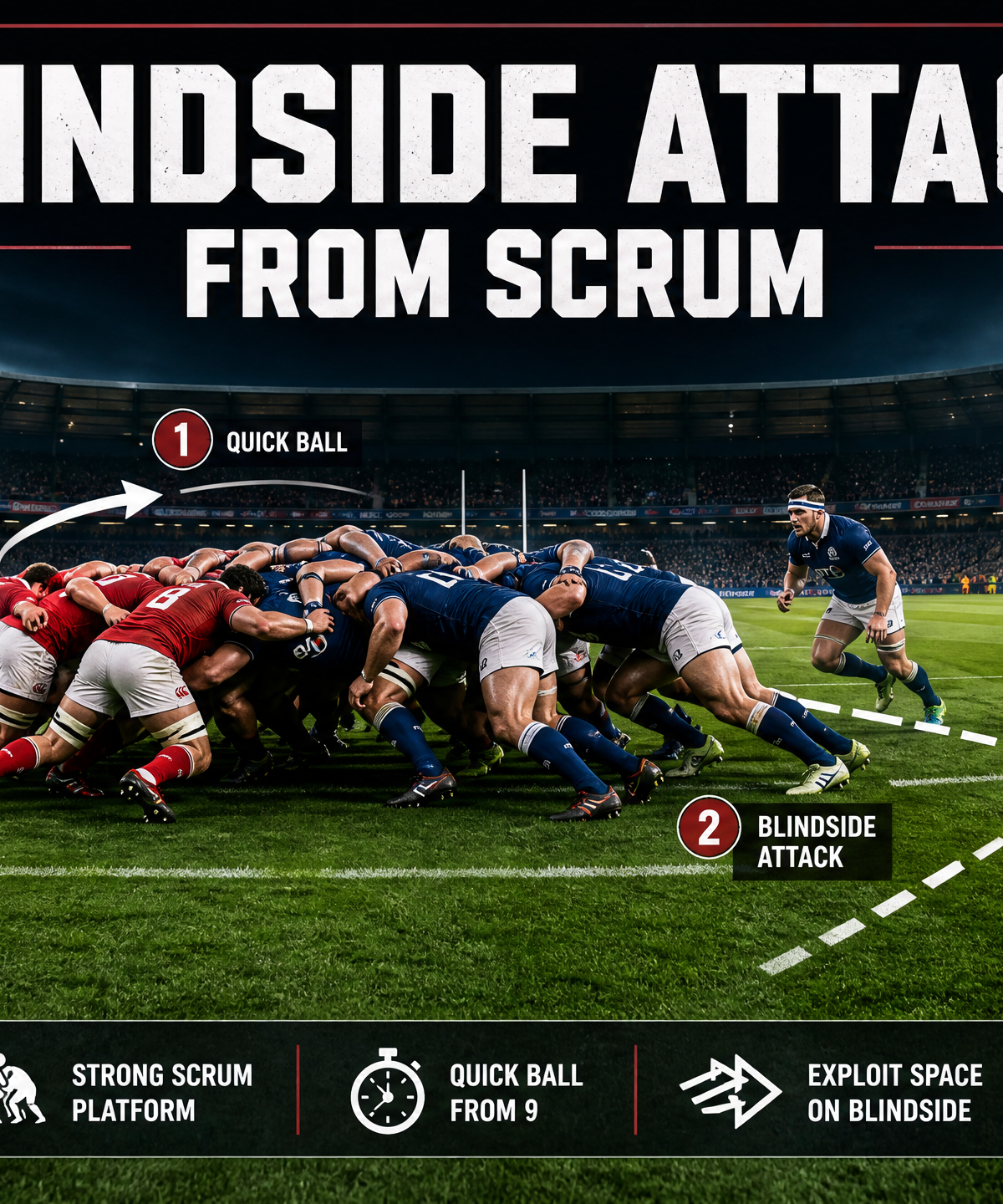
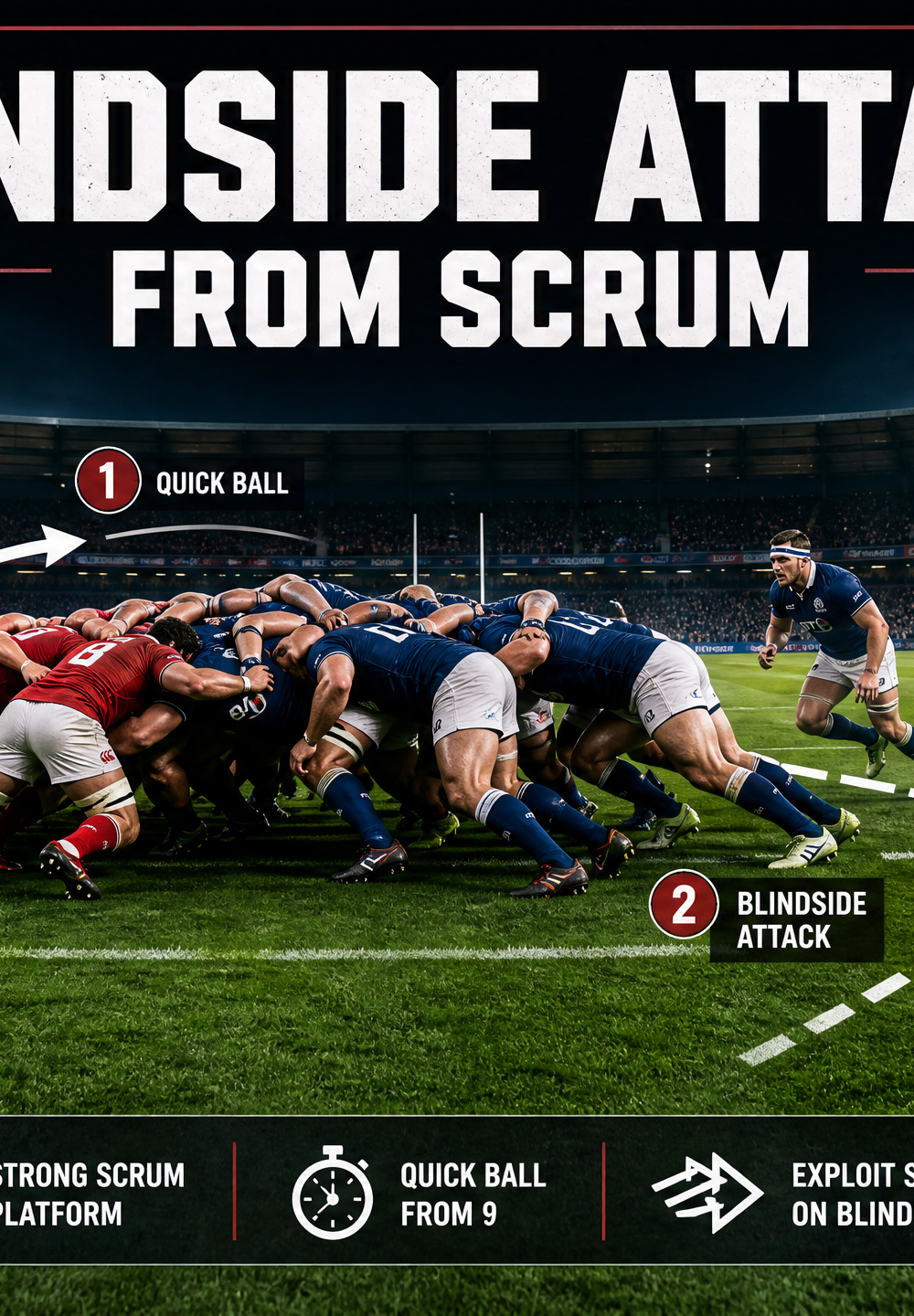
Exploit the narrow channel with this devastating 8-9-11 blindside attack off a solid scrum platform, designed to isolate the defending winger and create line breaks.
Equipment Needed
1. Overview
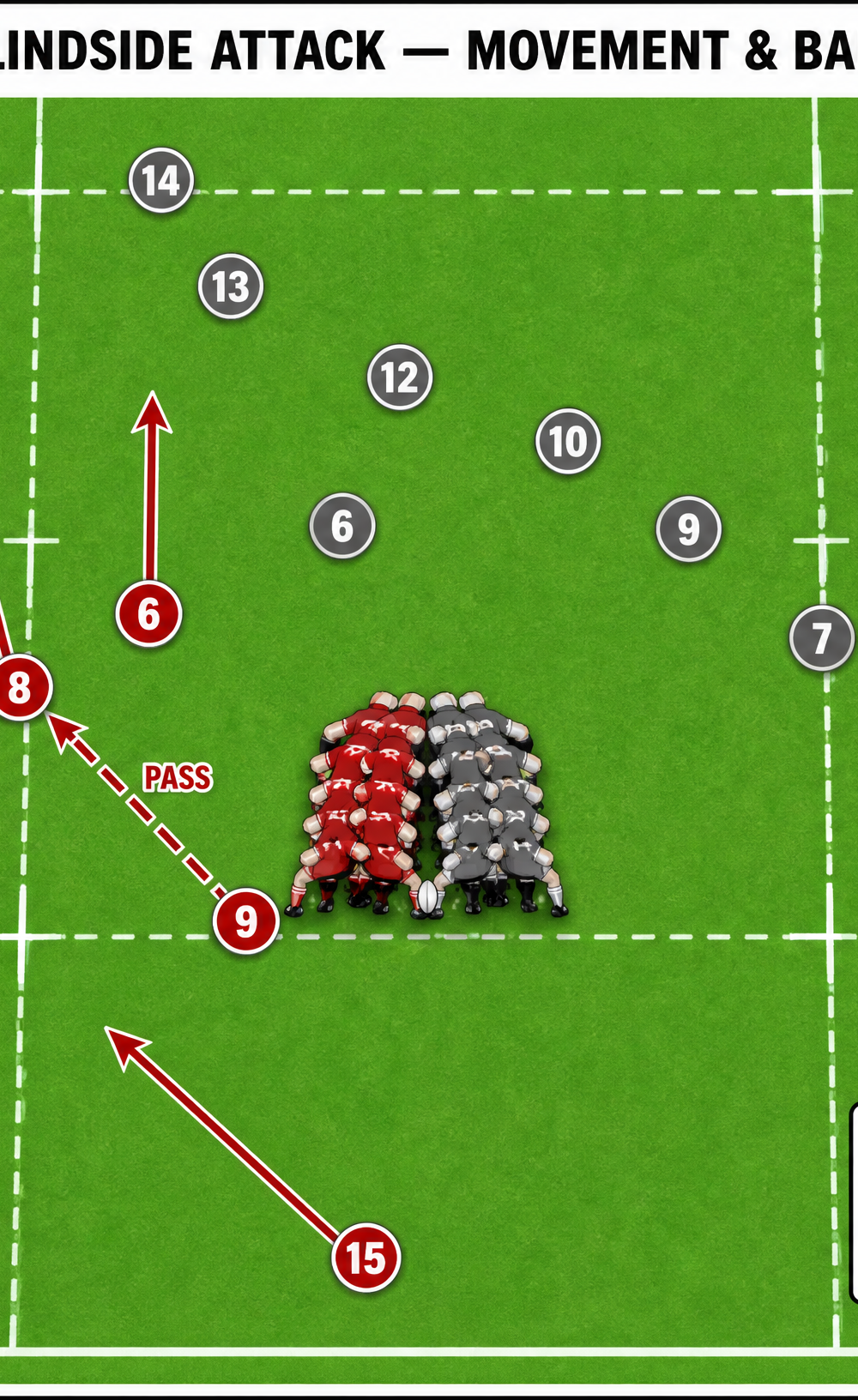
The blindside strike from a scrum is a classic, high-percentage attacking play designed to exploit the often under-defended narrow side of the pitch. By utilizing the Number 8, Scrum-half (9), and Blindside Winger (11), you can create a localized 3v2 or even 3v1 overload. This play is particularly effective when the opposition scrum is wheeling or when their openside flanker is cheating early to defend the wide channels.
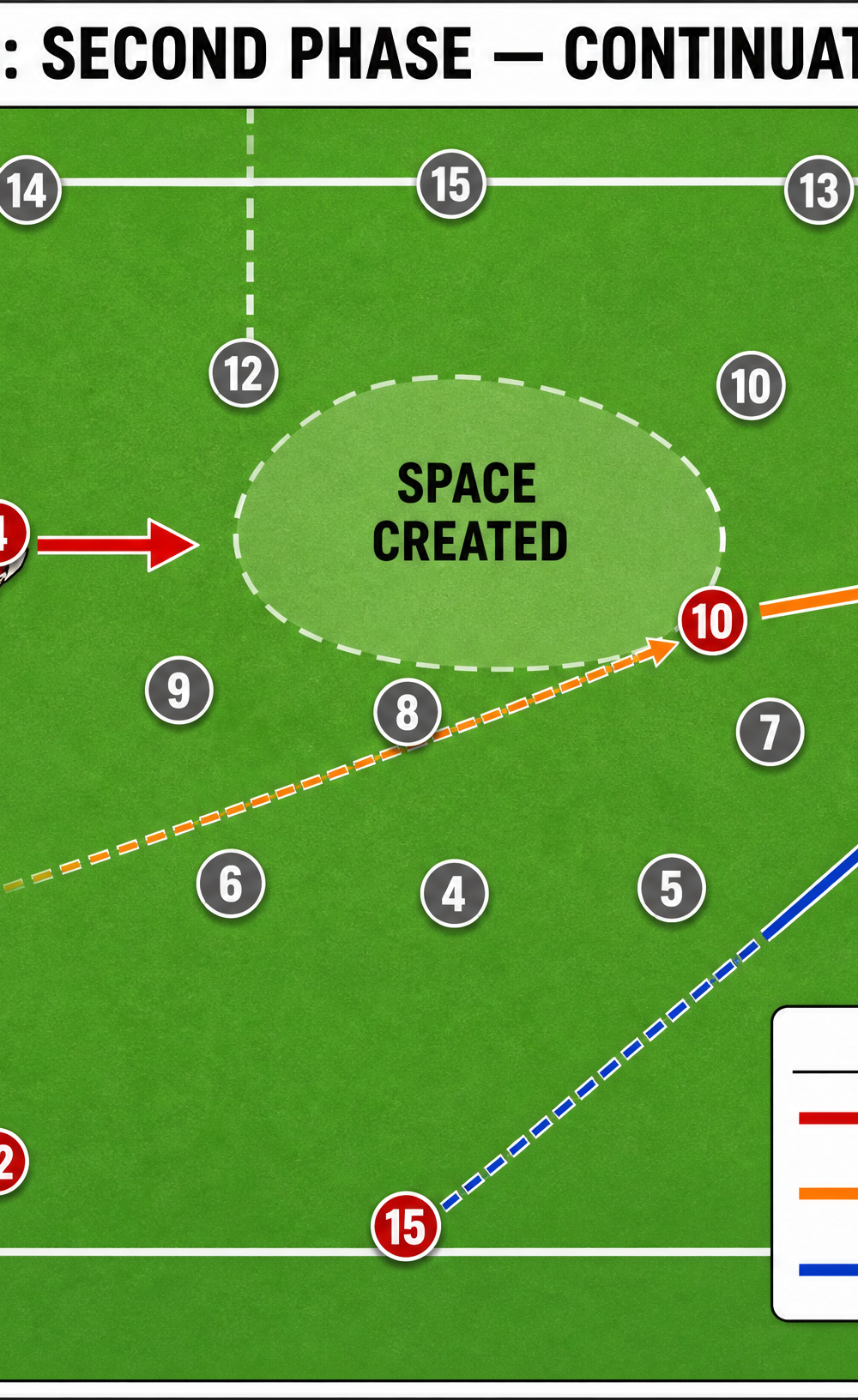
When executed with precision and pace, this move not only gains significant territory down the 5-15 metre channel but also forces the defending forwards to scramble backwards, creating disorganized defense for the second phase.
2. Setup
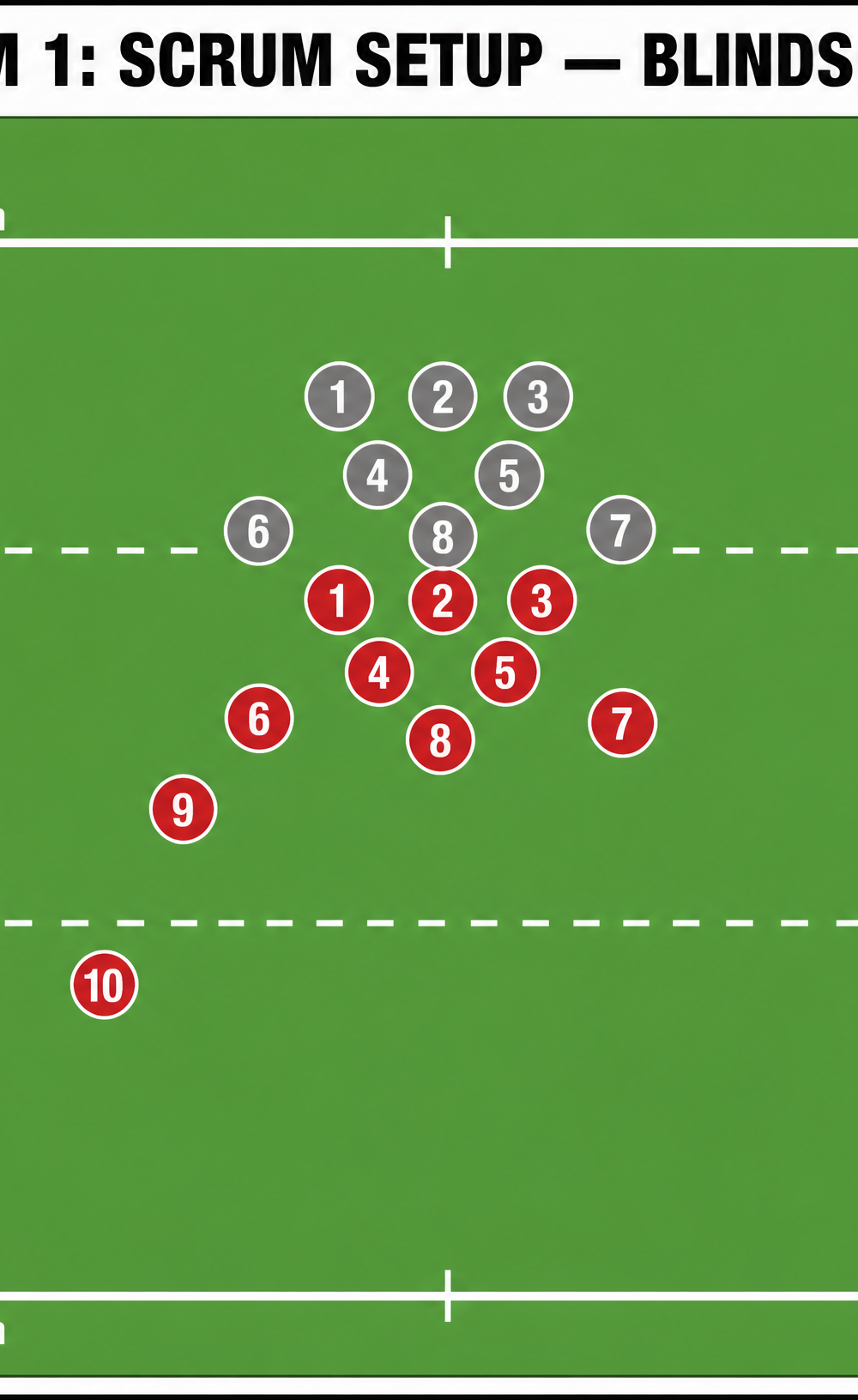
Pitch Position: Ideal for scrums set between the 15-metre lines, leaving a viable blindside channel of at least 8 to 15 metres.
Key Personnel Requirements:
- Number 8: Needs explosive acceleration from a standing start and good handling skills.
- Scrum-half (9): Must have rapid decision-making and accurate short passing under pressure.
- Blindside Winger (11 or 14): Requires hard running lines and the ability to read the defender's hips.
3. Step-by-Step Instructions
- The Call and Set: The Scrum-half (9) calls the play before feeding the ball. The backline sets up deep on the openside to draw the defensive focus, while the Blindside Winger (11) holds their width on the touchline.
- The Strike and Channel: The hooker strikes, and the ball is channeled quickly to the Number 8's feet. The front row must hold the scrum square to prevent the opposition back row from disrupting the base.
- The Pick and Go: The Number 8 unbinds rapidly, picks the ball, and attacks the space directly between the opposition Scrum-half and the Blindside Flanker.
- The Draw and Pass: As the defending Scrum-half or Winger commits to tackling the Number 8, the 8 delivers a short, sympathetic pop pass to the attacking Scrum-half (9) looping around, or directly to the arriving Winger (11).
- The Winger's Line: The Blindside Winger (11) must hit the line at pace, coming from deep to ensure they take the ball at top speed, aiming for the outside shoulder of the defending winger.
4. Key Coaching Points
- Scrum Stability: The play dies if the scrum goes backwards. The tight five must provide a rock-solid platform for the 8 to pick cleanly.
- Number 8's Body Height: The 8 must stay low upon picking the ball to avoid being immediately dislodged by the opposing 9.
- Timing of the Winger: The winger must not overrun the play. They should time their run to arrive exactly as the Number 8 commits the defender.
- Communication: The 9 must dictate the timing of the pick with a clear, sharp call (e.g., 'GO!').
5. Common Mistakes
- Telegraphing the Play: The Number 8 looking directly at the blindside before the ball is fed, alerting the defense.
- Poor Pick Mechanics: Fumbling the ball at the base due to rushing the unbind.
- Winger Standing Flat: If the winger starts too flat, they will receive the ball standing still, making them an easy target for the covering defense.
6. Variations & Progressions
Once the basic move is mastered, introduce these variations to keep the defense guessing:
- The 8-9 Switch: The Number 8 picks and runs blind, but instead of passing to the winger, pops it inside to the 9 who cuts back against the grain into the space vacated by the opposition flanker.
- The Blindside Chip: If the defending winger rushes up hard to shut down the pass, the 9 or 11 can execute a short chip kick into the space behind them for the Fullback (15) to chase.
7. Age Adaptations
- Under 10s/12s: Focus purely on the Number 8 picking up cleanly and running straight. Introduce the pass to the 9 only when the pick is consistent.
- Under 14s/16s: Introduce the winger's timed run. Emphasize drawing the defender before passing.
- Open/Senior: Implement complex variations, dummy runners on the openside, and specific second-phase structures off the resulting breakdown.