

Basketball
Sideline Inbound: The 'Flex Action' Quick Hitter
A high-efficiency sideline inbound play designed to punish aggressive man-to-man defense with a quick back-screen and lob option.
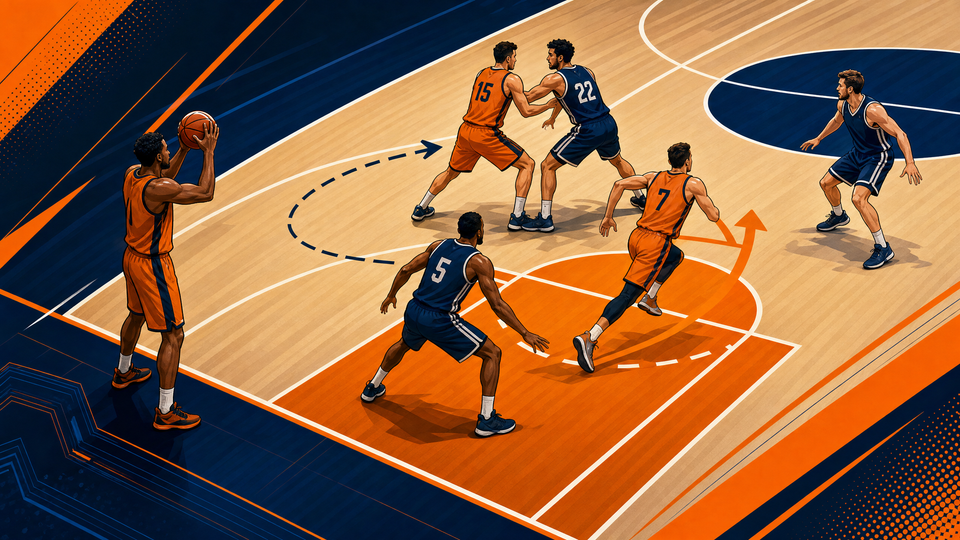
What you need
1 Basketball, Half Court
1. Overview
When facing aggressive man-to-man defense on a sideline out-of-bounds (SLOB) situation, coaches need a set play that creates immediate scoring threats while ensuring a safe inbound pass. The 'Flex Action' Quick Hitter is designed specifically for this purpose. By utilizing a deceptive back-screen and decisive cutting, this play forces the defense to make split-second communication decisions. It is highly effective in late-game situations or when you need a high-percentage shot near the basket to break a scoring drought.
2. Setup
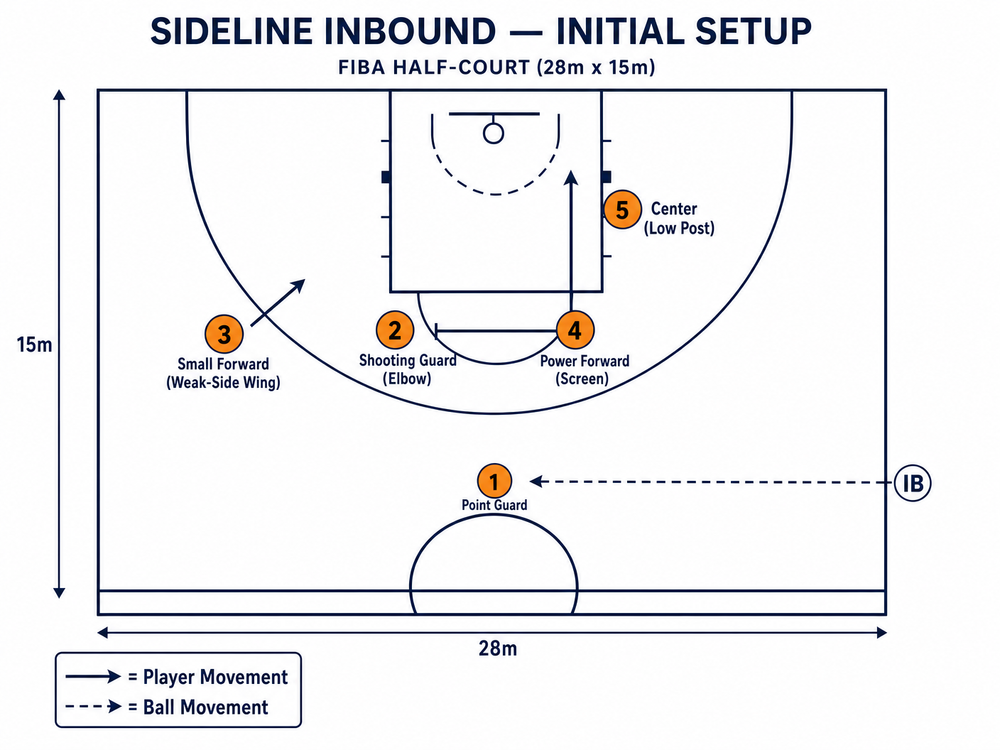
Court Position: Frontcourt sideline inbound, typically aligned with the top of the key or the free-throw line extended.
Player Personnel:
- 1 (Point Guard): Safety outlet, positioned near half-court.
- 2 (Shooting Guard): Primary scorer, starting at the ball-side elbow.
- 3 (Small Forward): Weak-side wing, acting as a decoy and secondary screener.
- 4 (Power Forward): Primary screener, starting near the ball-side elbow.
- 5 (Center): Post presence, starting at the ball-side low post.
- IB (Inbounder): Best passer, standing on the sideline.
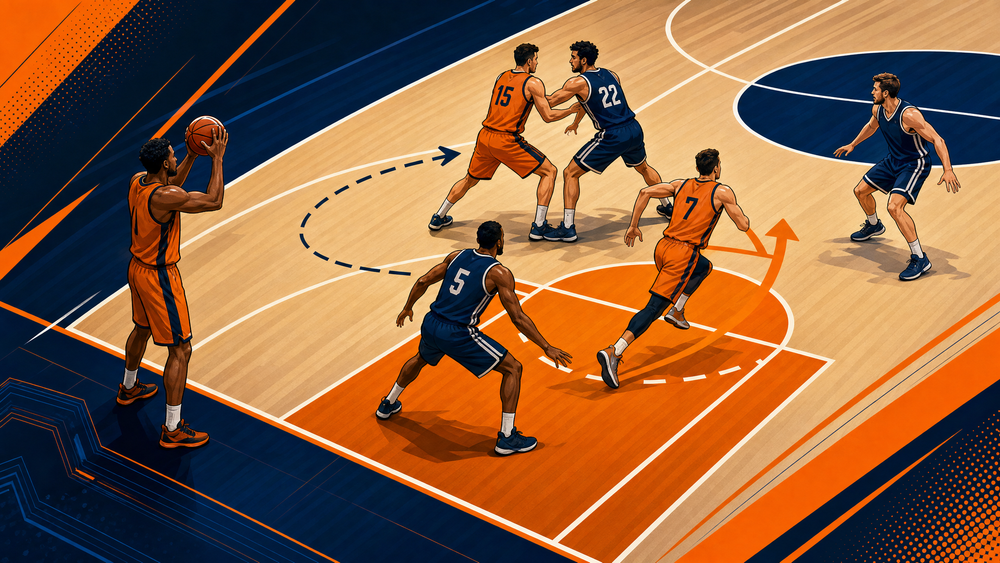
3. Step-by-Step Instructions
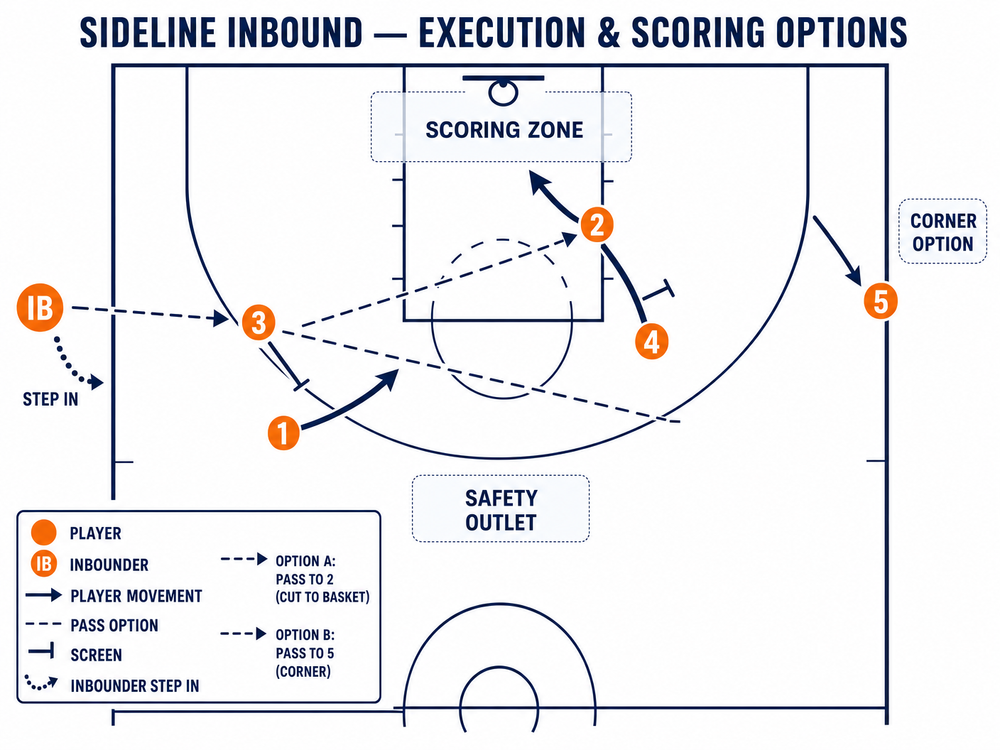
- The Trigger: The inbounder (IB) slaps the ball to initiate the action.
- The Setup Screen: Player 3 sets a down-screen for Player 1. Player 1 cuts hard toward the three-point line to draw the defense's attention and serve as the primary safety outlet.
- The Flex Screen: Simultaneously, Player 4 sets a hard, angled back-screen on Player 2's defender at the elbow.
- The Primary Cut: Player 2 reads the screen and cuts aggressively to the basket. If the defense switches late or trails, Player 2 is open for a quick layup or lob pass from the inbounder.
- The Corner Pop: As Player 2 cuts, Player 5 pops out from the low post to the ball-side corner, clearing the paint and offering a secondary passing option.
- The Inbound: The inbounder reads the defense. The first look is the lob or direct pass to Player 2 (Option A). The second look is Player 5 in the corner (Option B). If both are covered, the pass goes to Player 1 as the safety outlet.
4. Key Coaching Points
- Screening Angle: Player 4 must set the back-screen at the correct angle—facing the opposite sideline—to ensure Player 2 has a clear path to the rim.
- Patience by the Cutter: Player 2 must wait for the screen to be fully set before cutting. Leaving early will result in an offensive foul or a blown play.
- Eye Contact: The inbounder must maintain eye contact with the primary target (Player 2) while being aware of the secondary options.
- Spacing: Player 5 must sprint to the corner to pull the rim protector away from the basket, opening the driving lane for Player 2.
5. Common Mistakes
- Telegraphing the Pass: The inbounder stares down Player 2, allowing the defense to anticipate and intercept the pass.
- Weak Screens: Player 4 slips the screen too early or fails to make solid contact, allowing the defender to recover and contest the cut.
- Lack of Spacing: Player 5 stays in the paint, clogging the lane and bringing a secondary defender to the primary scoring option.
6. Variations & Progressions
- Slip the Screen: If the defense aggressively switches the back-screen, Player 4 can slip the screen and dive straight to the basket for a layup.
- Corner Three: If Player 5 is a capable shooter, the inbounder can pass directly to the corner for a quick three-point attempt, especially if Player 5's defender helps on the cut by Player 2.
7. Age Adaptations
- Under 10/12: Focus on the basic movement and spacing. Remove the secondary screens and emphasize a simple V-cut to get open for the inbound pass.
- Under 14/16: Introduce the back-screen and emphasize reading the defense. Teach the cutter (Player 2) how to read whether the defender goes over or under the screen.
- Open/Advanced: Incorporate the "slip" variation and require players to make reads on the fly based on the defensive coverage.
