

Cricket
Mastering Spin Variations: The 3-Zone Target Drill
A high-intensity drill designed to help spin bowlers develop consistency, accuracy, and confidence in executing their variations under pressure.
What you need
12-18 cricket balls, 3 sets of coloured flat markers/cones, Chalk or masking tape, 2 sets of stumps
1. Overview
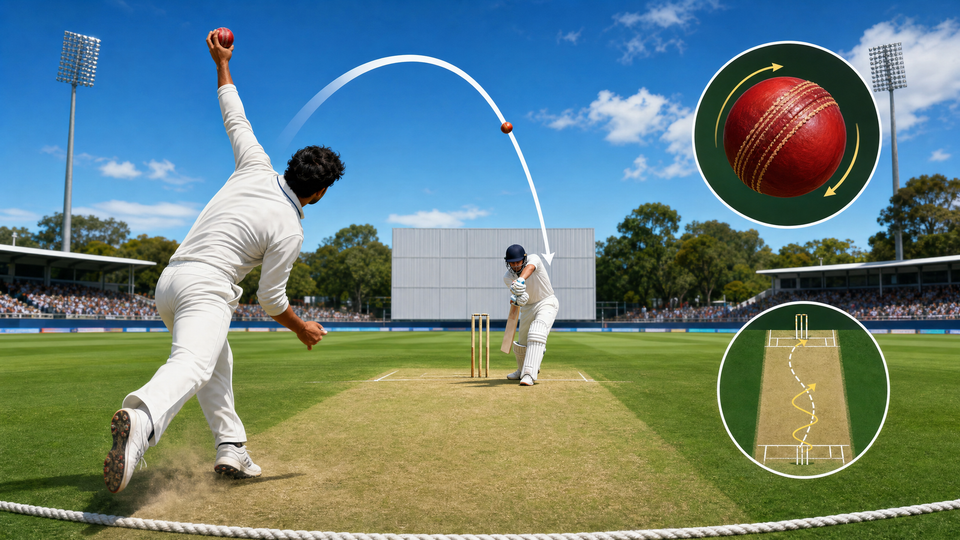
Developing a reliable stock ball is the foundation of spin bowling, but mastering variations is what separates good spinners from great ones. The 3-Zone Target Drill is designed to help spin bowlers (both off-spin and leg-spin) practice their variations with purpose and precision.
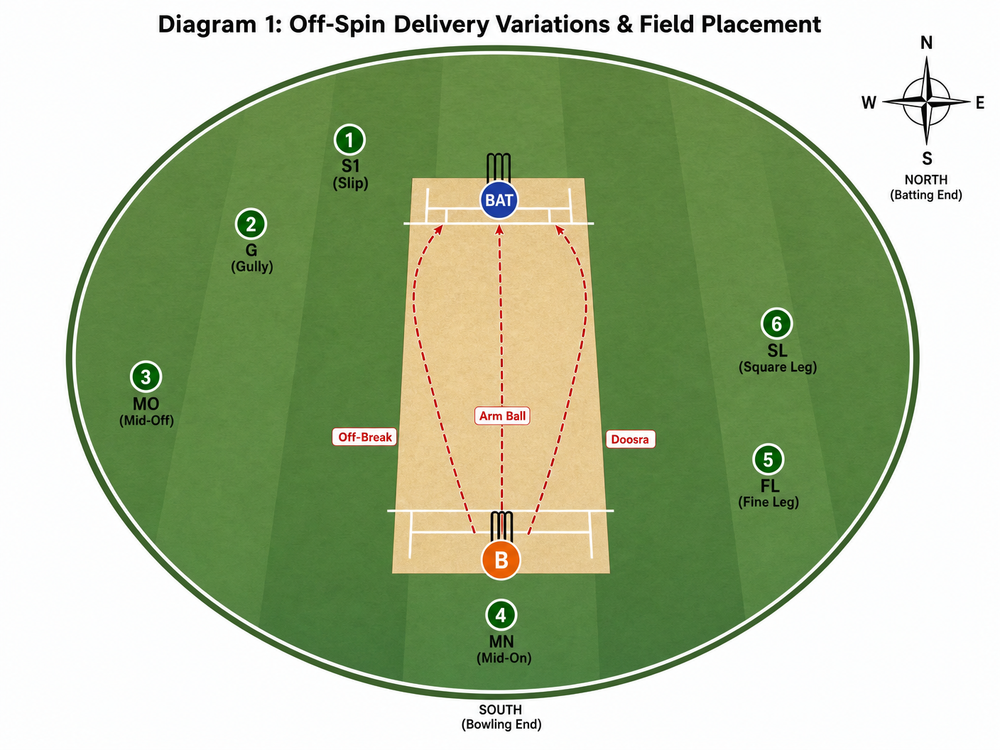
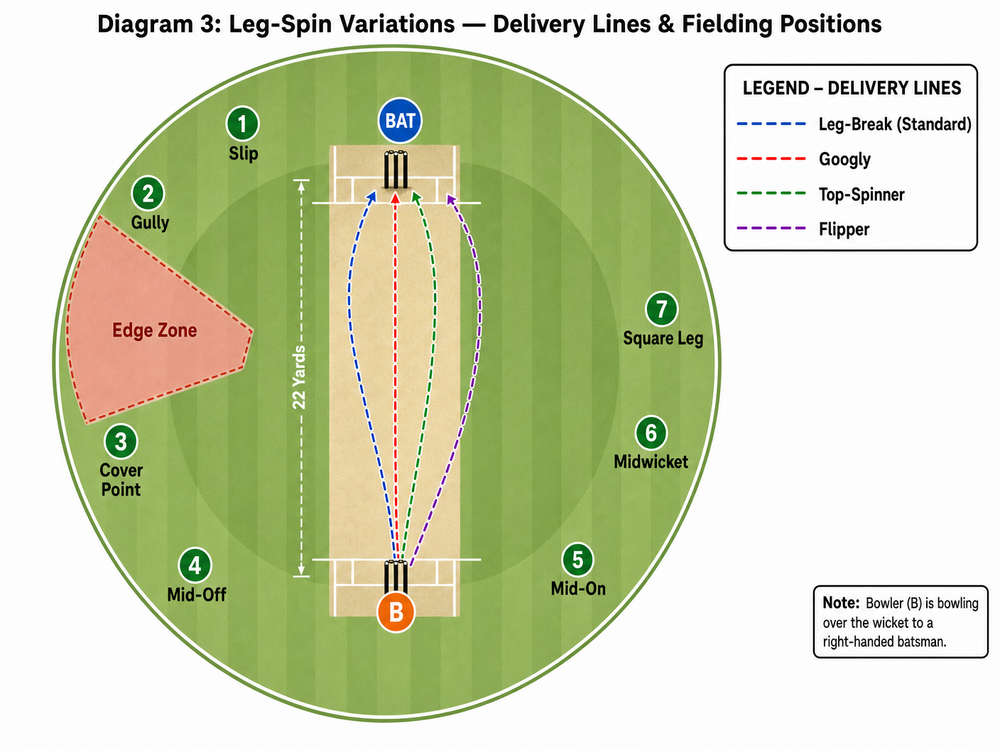
This drill shifts the focus from simply 'bowling in the nets' to executing specific deliveries into designated target areas. By creating visual zones on the pitch, coaches can objectively measure a bowler's ability to land their stock ball, arm ball, doosra, googly, or flipper exactly where it needs to be to deceive the batsman.
Use this drill during the middle or late stages of a training session when bowlers are fully warmed up and ready for technical refinement under mild pressure.
2. Setup
Equipment Needed:
- 12-18 cricket balls (match quality preferred)
- 3 different coloured sets of flat markers or cones (e.g., Yellow, Green, Orange)
- Chalk or masking tape (for indoor/hard pitches)
- 1 set of stumps (batting end)
- 1 set of stumps (bowling end)
Pitch & Field Setup:
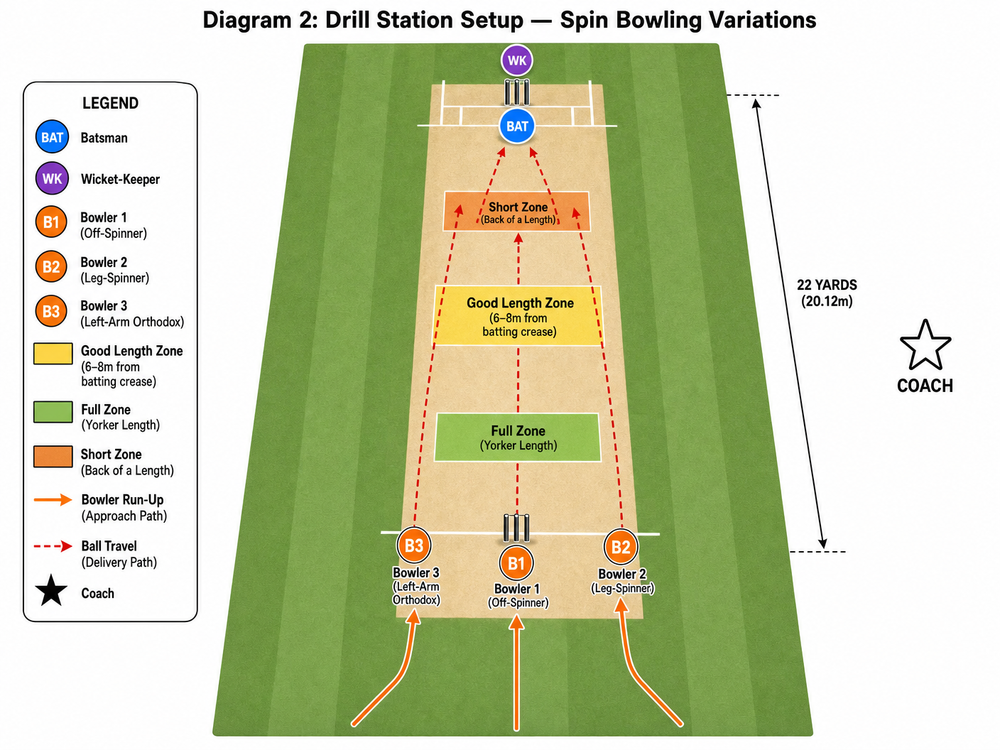
Set up a standard 22-yard pitch. Mark out three distinct target zones on the pitch surface:
- Good Length Zone (Yellow): A rectangular box spanning the width of the stumps, approximately 6 to 8 metres from the batting crease.
- Full Zone (Green): A rectangular box for yorker-length deliveries, just in front of the batting crease.
- Short Zone (Orange): A rectangular box for back-of-a-length deliveries, positioned halfway down the pitch.
Player Positions:
- Bowlers (B1, B2, B3): Stationed at the bowling end, rotating through deliveries.
- Wicket-Keeper (WK): Standing up to the stumps to collect deliveries and provide immediate feedback on drift and turn.
- Coach: Positioned to the side of the pitch (square of the wicket) to observe bowling action, release points, and ball trajectory.
3. Step-by-Step Instructions
- Warm-Up Phase (Stock Balls Only): Have each bowler deliver 6 consecutive stock balls (e.g., standard off-break or leg-break) aiming exclusively for the Yellow 'Good Length Zone'. This establishes rhythm and a baseline for accuracy.
- Variation Introduction: Instruct the bowler to bowl an over (6 balls) where deliveries 1, 2, 3, and 5 are stock balls aiming for the Good Length Zone. Deliveries 4 and 6 must be a specific variation (e.g., an arm ball or a googly).
- Targeting the Variation: When bowling the variation, the bowler must explicitly call out their intended target zone before starting their run-up (e.g., "Arm ball, Full Zone").
- Execution and Feedback: The bowler delivers the ball. The coach and wicket-keeper provide immediate feedback on whether the ball landed in the called zone and if the variation was executed with the correct wrist/finger position.
- Rotation: After an over is completed, the next bowler steps up. Rotate through the group, ensuring each bowler gets at least 4-5 overs of focused variation practice.
4. Key Coaching Points
- Arm Speed Consistency: The most crucial element of a successful variation is maintaining the same arm speed as the stock delivery. Batsmen pick variations by observing changes in arm speed. Ensure bowlers are not slowing down their action to bowl a googly or doosra.
- Release Point: Watch the bowler's release point carefully. Variations often require slight adjustments in wrist angle or finger position, but the overall release height and point should remain identical to the stock ball to disguise the delivery.
- Over-Spin vs. Side-Spin: Educate bowlers on the difference. A top-spinner requires heavy over-spin (forward rotation) for dip and bounce, while a standard break requires more side-spin for lateral movement. Check the seam position in flight.
- Follow-Through: A strong, complete follow-through ensures maximum energy is transferred into the ball, aiding in revolutions and drift. Bowlers must not abort their follow-through when attempting a complex variation.
- Patience: Remind bowlers that variations are surprise weapons, not stock deliveries. They should only be used 10-15% of the time in a match scenario.
5. Common Mistakes
- Telegraphing the Variation: Bowlers visibly changing their grip or run-up speed before delivering a variation, making it easy for the batsman to read.
- Sacrificing Accuracy for Turn: Bowlers trying to spin the ball too hard and losing all control of line and length. The target zones in this drill help correct this.
- Bowling Variations Too Often: Using the googly or arm ball too frequently, making it predictable and ineffective.
- Dropping the Bowling Arm: Lowering the bowling arm to bowl a variation, which changes the trajectory and alerts the batsman.
6. Variations & Progressions
- Progression 1: The 'Call It Late' Drill. The coach calls out the required variation and target zone just as the bowler begins their run-up, forcing them to adjust quickly under pressure.
- Progression 2: Add a Batsman. Introduce a batsman who is instructed to play defensively. This adds match realism and forces the bowler to consider the batsman's footwork when executing variations.
- Variation 1: Points System. Award 2 points for landing a stock ball in the Good Length Zone, and 5 points for successfully landing a called variation in the correct zone. Create a competitive leaderboard among the bowlers.
7. Age Adaptations
- Under 10s / Under 12s: Focus primarily on the stock ball. Introduce only one simple variation (like a faster ball or an arm ball). Make the target zones significantly larger to build confidence.
- Under 14s / Under 16s: Introduce more complex variations (googly, top-spinner). Emphasize the disguise and arm speed. Use standard-sized target zones.
- Open / Senior: Full implementation of the drill. Demand high accuracy and perfect disguise. Use the 'Call It Late' progression to simulate match pressure.
