

Cricket
T20 Innings Acceleration Plan: From Powerplay to Death Overs
Master the art of pacing a T20 innings with this comprehensive guide on powerplay maximization, middle-over rotation, and death-over assault strategies.

What you need
Batting gear, Cricket balls (new and semi-new), Cones/markers, Whiteboard
1. Overview
This comprehensive set play is designed to provide your batting unit with a structured, phased approach to building and accelerating a T20 innings. Rather than relying on individual brilliance, this plan establishes clear objectives for each phase of the game: the Powerplay (Overs 1-6), the Middle Overs (Overs 7-15), and the Death Overs (Overs 16-20). By implementing this blueprint, coaches can help their teams maximize scoring opportunities, minimize dot balls, and execute high-percentage boundary options when it matters most. This framework is essential for setting or chasing competitive totals in modern T20 cricket.
2. Setup

To effectively practice this acceleration plan, you will need to replicate match conditions as closely as possible.
Equipment Needed:
- Full set of batting gear for multiple pairs of batsmen.
- 24-30 high-quality cricket balls (mix of new and semi-new).
- Cones or markers to define fielding zones and the 30-yard circle.
- Whiteboard for tactical briefings and target setting.
Pitch and Field Setup:
- Utilize a standard 22-yard turf or artificial pitch.
- Mark out a regulation 30-yard fielding circle.
- Set up boundary markers (ropes or cones) at appropriate distances for your age group.
- Position fielders according to the specific phase being practiced, or use cones/pop-up targets to represent fielders if numbers are limited.
3. Step-by-Step Instructions

Phase 1: Powerplay Maximization (Overs 1-6)

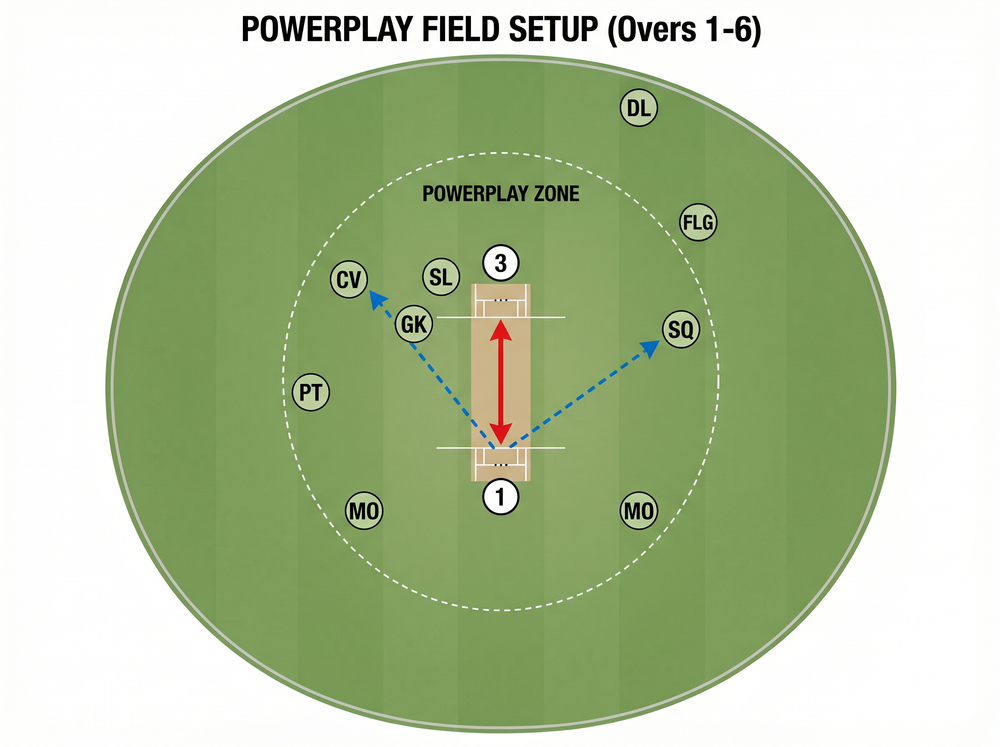
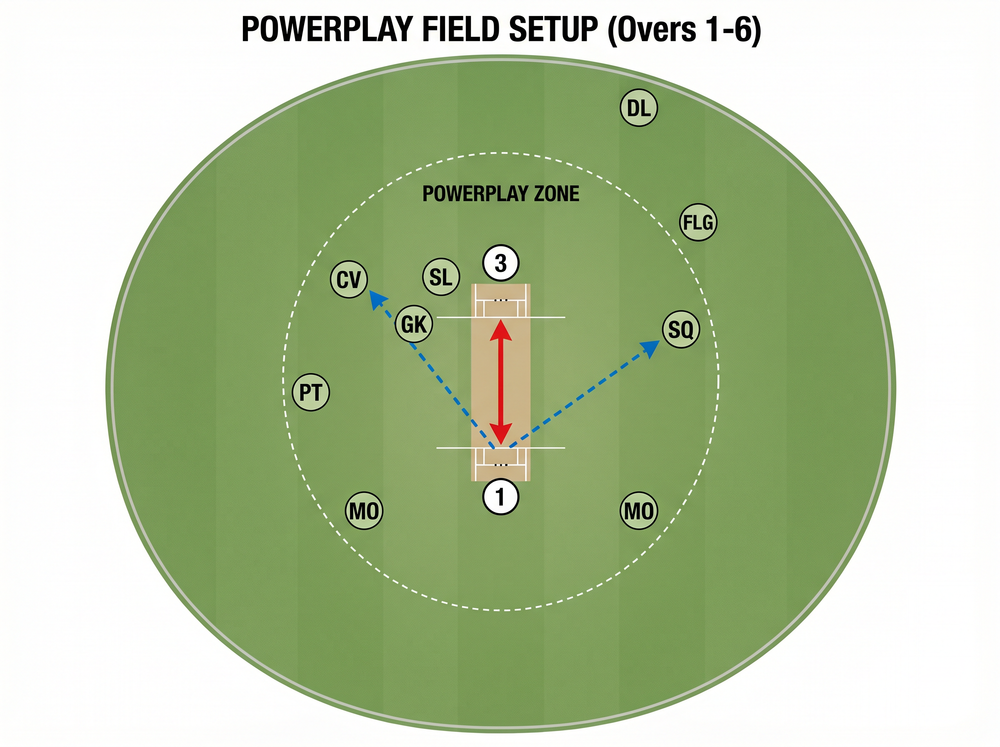
- Objective: Capitalize on fielding restrictions (only two fielders outside the 30-yard circle) to achieve a high run rate early.
- Fielding Setup: The opposition will typically have fielders in the ring (e.g., Point, Cover, Mid-off, Mid-on, Square Leg) to save singles, with deep fielders likely at Fine Leg and Third Man or Deep Square Leg.
- Batting Strategy:
- Identify the gaps in the inner ring.
- Play strong, orthodox cricket shots to pierce the infield (e.g., cover drives, square cuts).
- Utilize the pace of the new ball to clear the infield with lofted shots over Mid-off or Mid-on.
- Running: Aggressive running on any ball hit into the outfield to turn ones into twos.
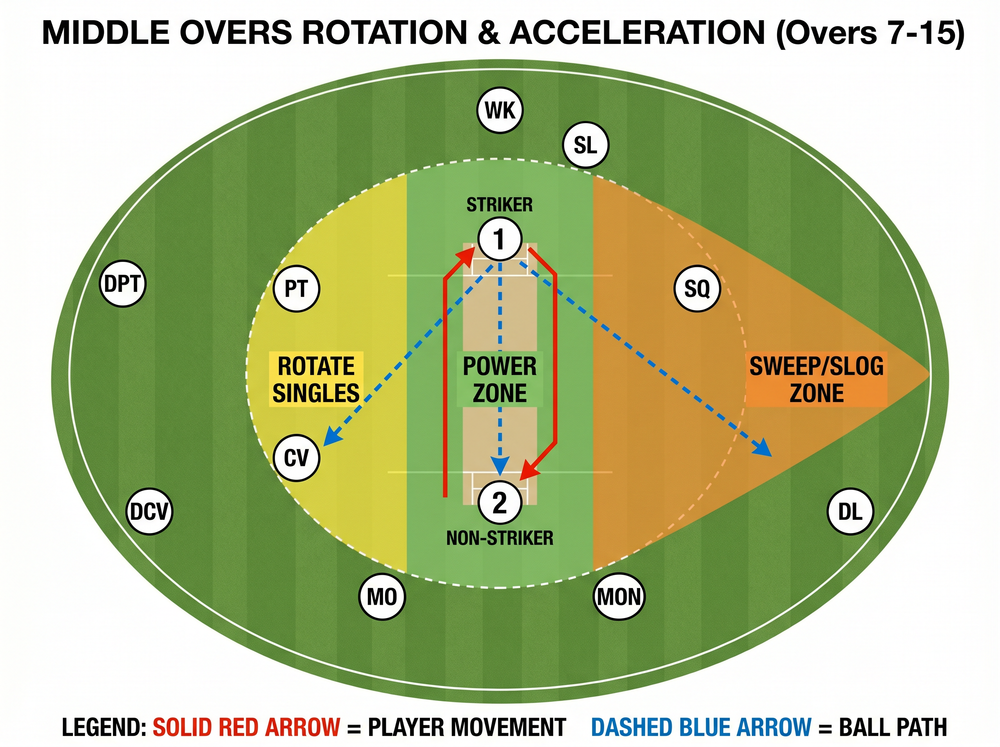
Phase 2: Middle Overs Rotation & Acceleration (Overs 7-15)
- Objective: Maintain a healthy run rate without losing clusters of wickets, focusing on strike rotation and punishing bad deliveries.
- Fielding Setup: The field spreads out (up to five fielders outside the circle). Spinners and medium pacers typically operate during this phase.
- Batting Strategy:
- Strike Rotation: Target the 'Rotate Singles' zones (e.g., dropping the ball softly into the off-side or working it off the pads to the leg-side sweepers).
- Finding Boundaries: Identify the 'Power Zone' (straight down the ground) and 'Sweep/Slog Zone' (leg side) to attack the spinners.
- Communication: Constant communication between batsmen is crucial. Call clearly for quick singles to put pressure on the fielders in the deep.
Phase 3: Death Overs Assault Plan (Overs 16-20)

- Objective: Maximize the run tally through aggressive, high-risk/high-reward stroke play.
- Fielding Setup: Bowlers will employ yorkers, slower balls, and wide lines. The field will be set to protect the boundaries (e.g., Long-off, Long-on, Deep Mid-wicket, Deep Square Leg).
- Batting Strategy:
- Pre-meditation vs. Reaction: Batsmen must be prepared to play innovative shots (ramps, scoops, switch hits) to manipulate the field, while also reacting to the length of the delivery.
- Targeting Zones: Aim for the shortest boundaries or areas where the bowler struggles to execute their variations.
- Over-by-Over Targets: Set clear targets (e.g., 10+ runs in overs 16-17, 12+ in 18-19, 14+ in the 20th).
- Running: Sprint hard on every hit; sacrifice wickets for runs if necessary.
4. Key Coaching Points

- Adaptability: Batsmen must be able to adjust the plan based on the match situation (e.g., early wickets mean extending the middle-overs phase).
- Intent: Encourage positive intent from ball one. Even defensive shots should be played with the intent to score a single.
- Partnerships: Emphasize that batting is a partnership. If one batsman is struggling, the other must take charge of the scoring.
- Execution Under Pressure: Practice death-over scenarios regularly to improve execution of yorkers and slower balls under pressure.
- Knowing the Field: Batsmen must constantly scan the field and identify where the gaps are before every delivery.
5. Common Mistakes

- Panic After Dot Balls: Batsmen playing rash shots after a few dot balls instead of trusting the plan and rotating the strike.
- Poor Communication: Run outs due to unclear calling or lack of understanding between partners.
- One-Dimensional Play: Relying solely on power hitting and failing to develop the skills needed for strike rotation in the middle overs.
- Ignoring the Match Situation: Sticking rigidly to the plan even when the match situation demands a different approach (e.g., continuing to attack when a consolidation phase is needed).
6. Variations & Progressions
- Target Chasing: Set specific, challenging targets for each phase during practice matches to simulate game pressure.
- Restricted Scoring Zones: During net sessions, restrict scoring to specific zones (e.g., only V down the ground) to force batsmen to improve their placement.
- Scenario Training: Start practice scenarios from different points in the innings (e.g., 3 wickets down in the powerplay, or needing 50 off the last 5 overs).
7. Age Adaptations
- Under 12s: Focus primarily on the basics of strike rotation and running between the wickets. Introduce the concept of finding gaps rather than power hitting.
- Under 14s/16s: Begin introducing specific phase strategies and more advanced shots (e.g., sweeps, using the feet to spinners). Emphasize the importance of pacing an innings.
- Open/Senior: Implement the full acceleration plan, focusing on execution under pressure, innovative stroke play, and advanced tactical awareness.
