Player Training
From Reps to Results: How to Improve Shooting Accuracy with Practice Tracking
Discover how combining proper shooting mechanics with intelligent practice tracking transforms dedicated players into dominant shooters. Learn practical drills and data-driven methods that work for both basketball and netball coaches.
From Reps to Results: How to Improve Shooting Accuracy with Practice Tracking
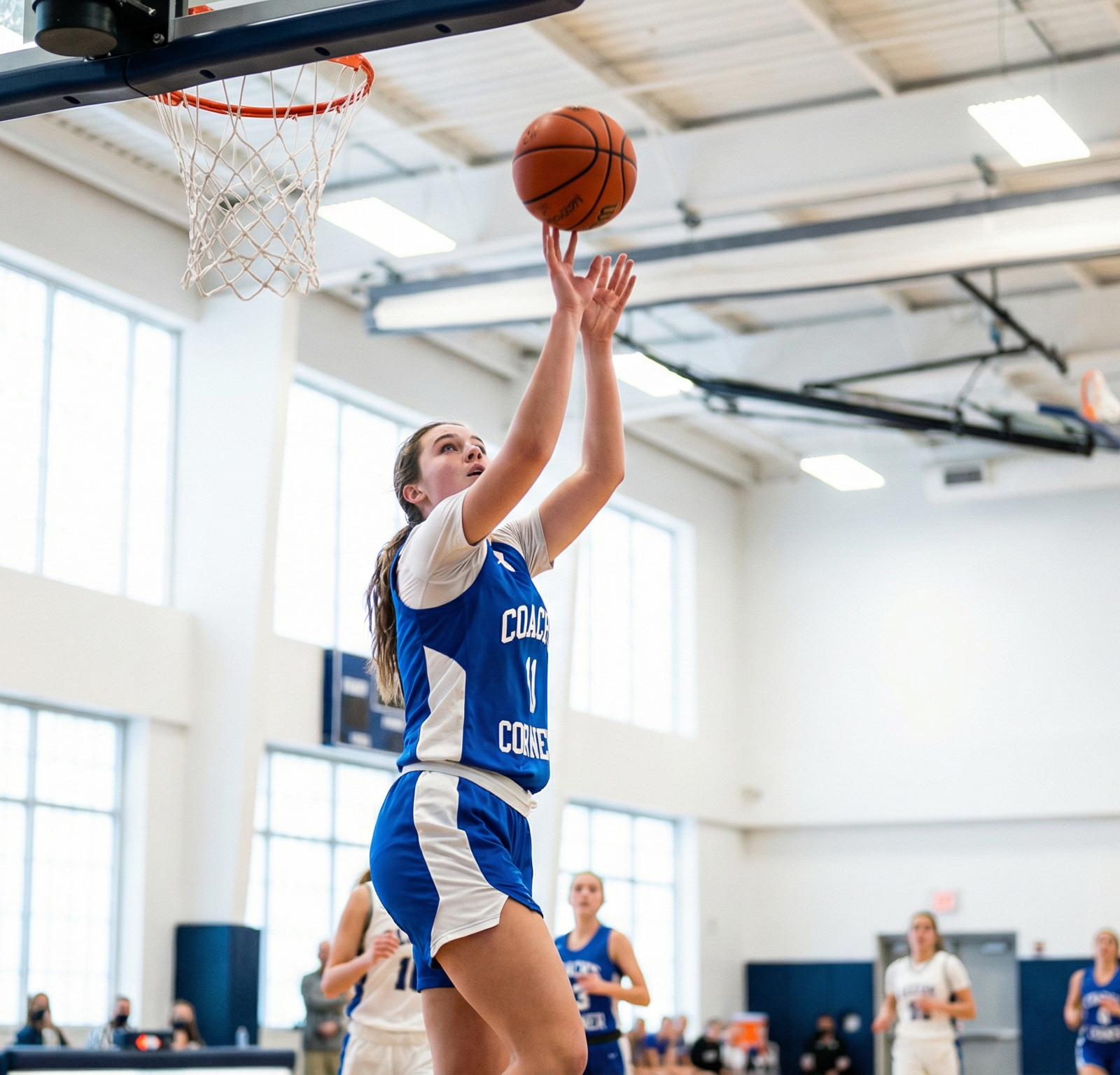
In the world of basketball and netball, one skill consistently separates the good from the great: shooting accuracy. A player who can reliably score under pressure is an invaluable asset to any team. While natural talent plays a role, the most significant improvements in shooting percentage come from a combination of deliberate practice, flawless technique, and—most importantly—intelligent tracking.
For coaches dedicated to developing their players, moving beyond simple repetition and embracing a data-driven approach is the key to unlocking an athlete's true potential. This article explores why tracking practice is a game-changer, provides practical drills for both basketball and netball, and explains how modern tools can streamline the entire process.
The "Why" Behind Tracking: Moving Beyond Feel
Every coach has heard it: "But coach, it felt good!" The reality is, feel isn't always real. A shot can feel smooth and still be mechanically flawed. Without objective feedback, players risk ingraining bad habits, practicing inconsistency, and failing to understand why their shots aren't falling in a game, even when they seem to in practice. [1]
This is where practice tracking transforms training. By systematically recording and analyzing performance data, coaches and players can move from guesswork to a clear, actionable understanding of what's working and what isn't.
The Core Benefits of Tracking
| Benefit | Description |
|---|---|
| Identify Hidden Patterns | Tracking reveals tendencies players may not notice, such as consistently missing short, long, or to one side. It can also pinpoint "hot zones" where a player is most effective. |
| Provide Objective Feedback | Data doesn't lie. Showing a player their shot chart or a video clip of their form provides concrete evidence that is far more powerful than verbal feedback alone. |
| Increase Player Buy-In | When players can see their progress quantified in numbers, their motivation and buy-in to the training process skyrocket. Celebrating measurable growth is a powerful coaching tool. |
| Maximize Practice Efficiency | Instead of running endless, generic drills, tracking allows you to focus on specific weaknesses, making every minute of practice count. |
Building the Foundation: Perfecting Shooting Mechanics
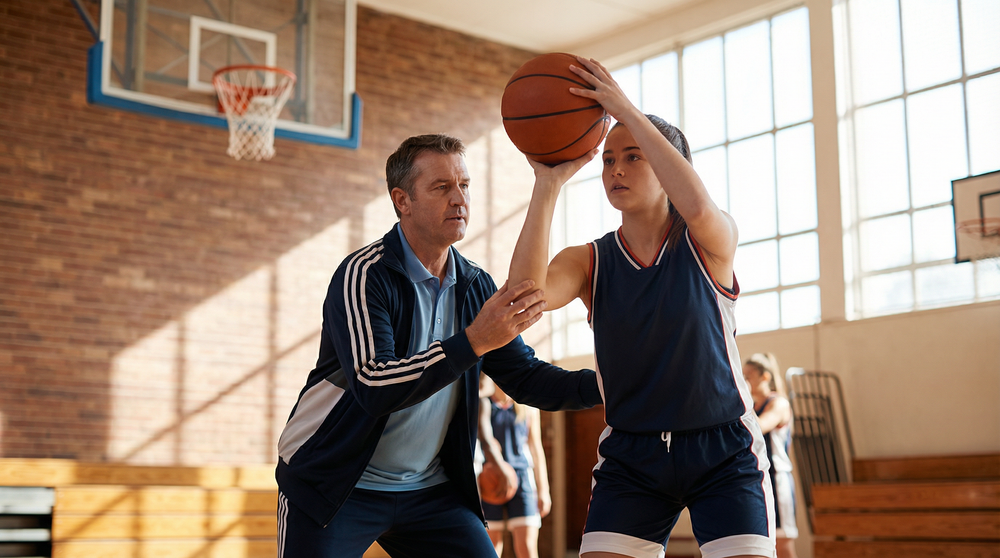
Before you can effectively track progress, you must establish a solid foundation of shooting mechanics. Whether it's a basketball jump shot or a netball set shot, the principles of balance, alignment, and follow-through are universal. According to USA Basketball, there are seven key components to a mechanically sound shot. [2]
7 Pillars of a Great Shot
- Eyes on the Target: The player's focus should be locked on the rim or the back of the net, not on the flight of the ball.
- Stance and Balance: Feet should be about shoulder-width apart with knees slightly bent, providing a stable base. The body should be aligned with the target.
- Grip: The ball should rest on the finger pads, not the palm, allowing for better control and backspin.
- Smooth Delivery: The shooting motion should be a single, fluid movement, with the elbow staying directly under the ball.
- Upforce and Power: Power comes from the legs. Players should bend their knees and extend upwards through the shot.
- Follow-Through: The shooting arm should extend fully towards the target, with the wrist snapping downwards (like reaching into a cookie jar on a high shelf).
- Self-Correction: Great shooters know when a shot is off and can make immediate adjustments. This awareness is honed through mindful practice.
For netballers, the principles are similar but with a greater emphasis on a controlled, one-handed release and maintaining balance without jumping. The supporting hand is purely for balance and should not interfere with the shot. [3]
Practical Drills for Measurable Improvement
Once the mechanics are established, it's time to implement drills that are not only effective but also lend themselves to tracking. Here are drills for both basketball and netball that you can start using today.
Basketball Shooting Drills
1. The "Pressure 5" Drill
- Objective: To improve shooting accuracy from key spots on the floor under pressure.
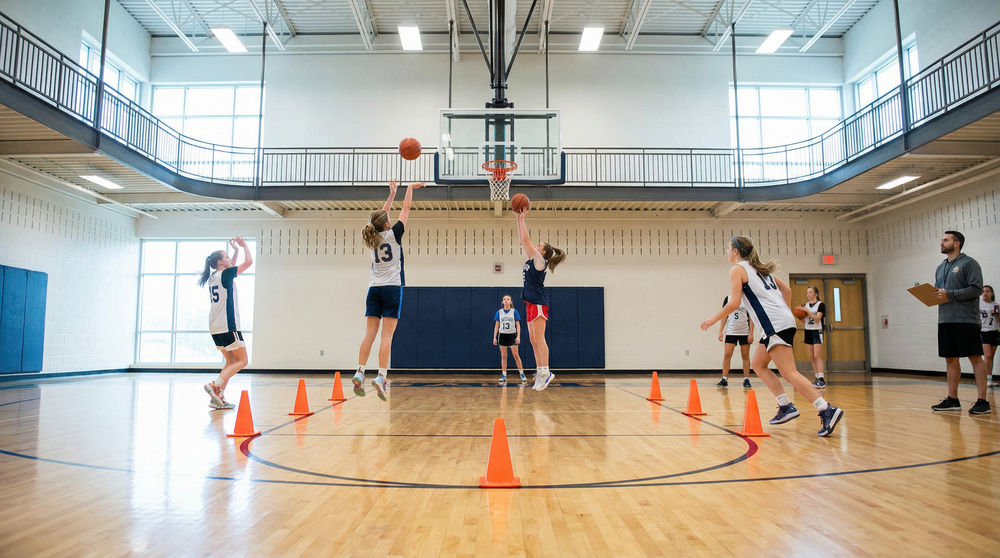
- Setup: Place cones at five spots around the arc (e.g., corners, wings, and top of the key).
- Execution: The player starts at the first cone. They must make 5 shots from that spot before moving to the next. The goal is to complete all five spots in as few attempts as possible.
- Tracking: Record the total number of attempts it takes to make the 25 shots (5 from each of the 5 spots). For example, a score of 25/35 (makes/attempts) is a great benchmark. Track this over time to see the player's percentage improve.
2. The Fatigue Shooting Drill
- Objective: To simulate late-game fatigue and train players to maintain form when tired.
- Setup: Player starts at half-court.
- Execution: The player sprints to the three-point line, receives a pass, and takes a catch-and-shoot jumper. Immediately after, they sprint to touch the opposite baseline and return for another shot. Repeat for 10 total shots.
- Tracking: Record the number of makes out of 10. As conditioning improves, you'll see players maintain a higher shooting percentage even when fatigued.
Netball Shooting Drills
1. The Cone Challenge
- Objective: To improve accuracy from various positions within the goal circle.
- Setup: Place 10 cones at different spots and distances within the shooting circle.
- Execution: The shooter starts at the first cone and must make a shot before moving to the next. A feeder retrieves the ball.
- Tracking: Time how long it takes the shooter to successfully complete all 10 cones. Alternatively, count the total number of attempts. The goal is to reduce the time and the number of attempts over successive sessions.
2. The Defender Pressure Drill
- Objective: To practice shooting accurately while under defensive pressure.
- Setup: One shooter, one feeder, and one defender inside the circle.
- Execution: The feeder passes the ball to the shooter, who must attempt a shot while the defender actively (but safely) tries to block or distract them. Run this for a set of 10 or 20 shots.
- Tracking: Record the shooting percentage (makes/attempts) against a defender. This provides a more game-realistic metric than uncontested shots. You can even track percentages against different defenders to identify specific challenges.
Leveraging Technology for Smarter Tracking
While a pen and paper or a simple spreadsheet can work, modern technology makes practice tracking seamless, insightful, and more engaging for everyone involved. This is where a dedicated platform becomes a coach's most valuable assistant.
For clubs and coaches looking for a complete ecosystem, Vanta Sports offers a suite of tools designed specifically for youth basketball and netball. The Vanta Player App empowers athletes to take ownership of their development by allowing them to log their practice sessions, track their shooting percentages, and visualize their progress over time.
Instead of relying on memory or scattered notes, a player can open their app and see a clear history of their performance. They can see that their free-throw percentage has climbed from 60% to 75% over the past month, or that they are most accurate from the right side of the court. This data is incredibly motivating and provides a clear focus for future training sessions.
For coaches, the Vanta Coach App integrates this data, providing a holistic view of each player's progress. You can easily review individual and team shooting charts, identify trends, and plan practices that target specific areas of need. This eliminates the administrative headache of manual tracking and frees you up to do what you do best: coach.
Unlike generic sports management apps, Vanta Sports is purpose-built for the nuances of basketball and netball, offering a complete ecosystem that connects the club, coaches, parents, and players. With dedicated apps like Vanta Club for administration and Vanta Guardian for parents, the entire community is aligned and engaged.
From Data to Dominance: Putting It All Together
Improving shooting accuracy is a journey of a thousand shots, but each shot must have a purpose. By combining a focus on proper mechanics with targeted, trackable drills, you create a powerful feedback loop that accelerates player development.
Start by establishing a baseline. Pick a few key drills and have your players run through them, carefully recording the results. Use this data to set realistic, measurable goals. Then, make tracking a consistent part of your practice culture.
Encourage players to use the Vanta Player App to log their individual workouts. Celebrate the small victories—the 5% increase in accuracy, the personal best time in a drill. When players see that their hard work is leading to tangible results, their confidence and commitment will soar.
Ultimately, the goal is to create smarter, more self-aware athletes who understand their own game on a deeper level. Practice tracking is the bridge that turns mindless reps into meaningful results, transforming dedicated players into dominant shooters.
Ready to Take Your Training to the Next Level?
Track your shots and level up with the Vanta Player App. Learn more about Vanta Sports
References
[1] PGC Basketball. (n.d.). How to Build Basketball Shooting Consistency. Retrieved from https://pgcbasketball.com/blog/how-to-build-basketball-shooting-consistency/
[2] USA Basketball. (2014, January 1). 7 Tips To Improve Your Shooting Mechanics. Retrieved from https://www.usab.com/news/2014/01/7-tips-to-improve-your-shooting-mechanics
[3] ActiveSG. (n.d.). Netball shooting drills to improve your game. Retrieved from https://www.activesgcircle.gov.sg/learn/netball/netball-shooting-drills-to-improve-your-game
Tags