

Basketball
The Ultimate 3v3 Box-Out and Rebounding Drill
Master the fundamentals of contact, positioning, and securing the rebound with this competitive 3v3 box-out drill designed to build defensive toughness.
What you need
1-2 Basketballs, Half-court area
1. Overview
Rebounding is a fundamental pillar of defensive basketball. Ending a defensive possession with a secured rebound is non-negotiable for any competitive team. The 3v3 Box-Out and Rebounding Drill is designed to isolate the crucial split-second after a shot goes up, forcing defenders to locate their man, make physical contact, establish a wide base, and secure the basketball.
This drill is highly effective because it removes the complexities of a live scrimmage and focuses entirely on the mechanics of the box-out. It teaches players to embrace physical contact, maintain balance, and aggressively pursue the ball, making it an essential component of any practice plan from youth leagues to the professional level.
2. Setup
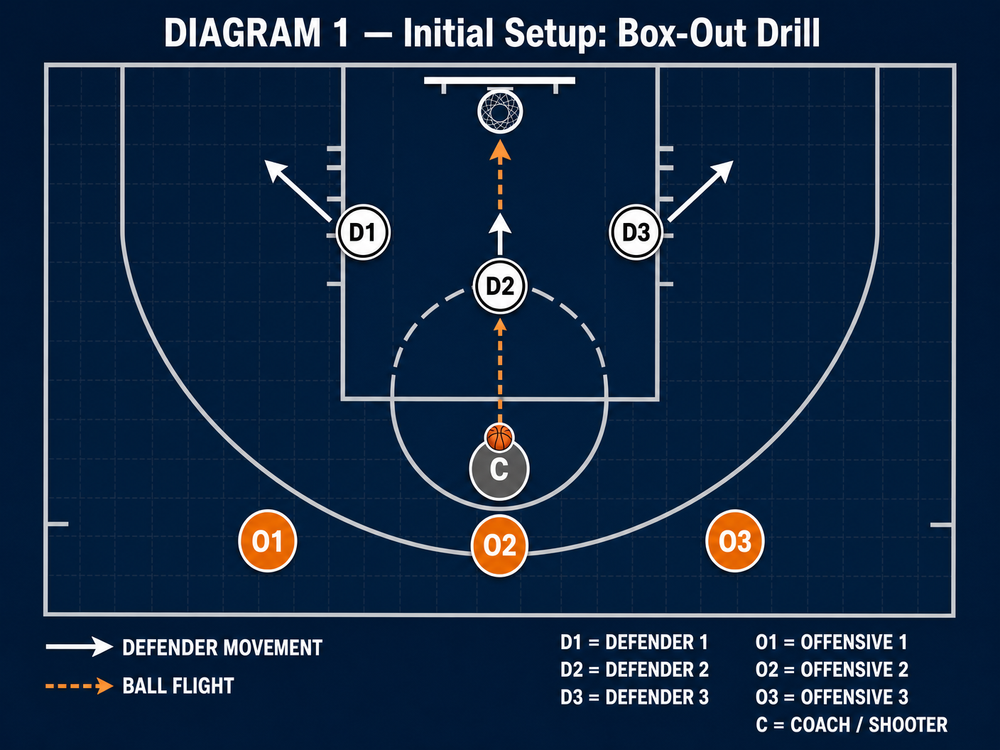
To run this drill efficiently, you will need a half-court setup (using standard 28m x 15m FIBA dimensions) and a minimum of seven participants (three defenders, three offensive players, and one coach or designated shooter).
- Equipment: 1-2 basketballs, half-court area.
- Player Positioning:
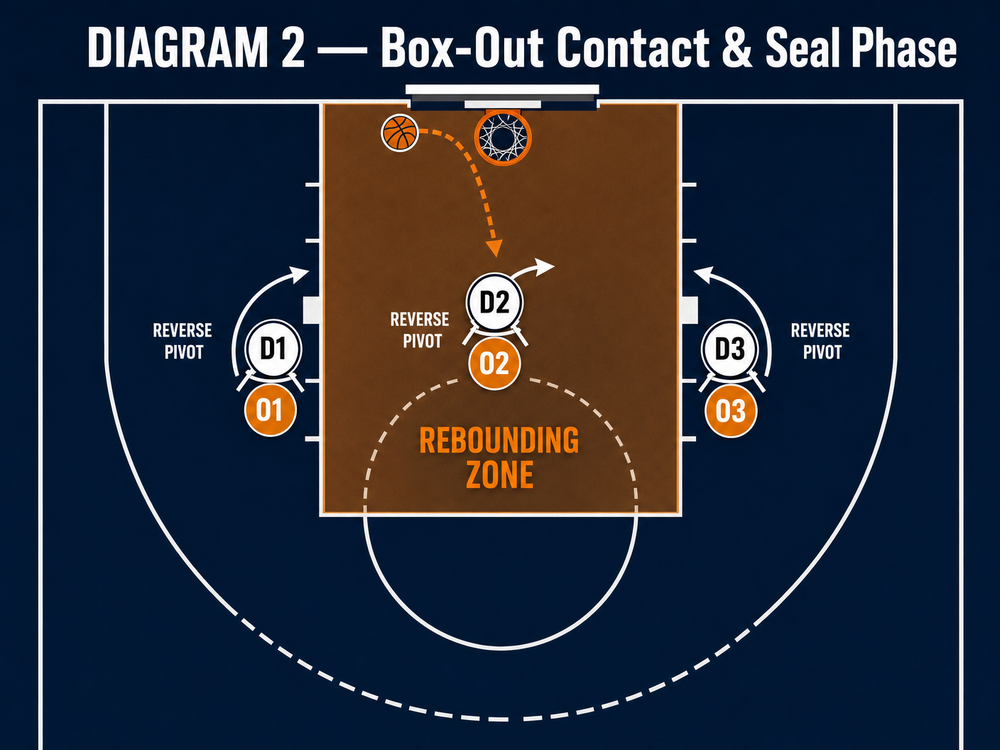
- Place three defenders (D1, D2, D3) inside the paint, facing outward toward the perimeter.
- Place three offensive players (O1, O2, O3) around the perimeter (e.g., wings and top of the key) facing the basket.
- The coach (C) stands at the free-throw line or top of the key with a basketball.
3. Step-by-Step Instructions
Executing this drill requires focus and intensity. Follow these steps to ensure maximum benefit for your players:
- Initial Stance: Defenders start in an athletic stance inside the paint, eyes on the coach with the ball, while maintaining peripheral awareness of their assigned offensive player.
- The Shot: The coach shoots the ball. The shot can be a make or a deliberate miss to create a rebounding opportunity.
- Locate and Pivot: As soon as the ball leaves the coach's hands, defenders must immediately locate their assigned offensive player. They perform a reverse pivot or front pivot to initiate contact.
- Make Contact: The defender must make solid physical contact with the offensive player using their forearm or body, stopping the offensive player's forward momentum.
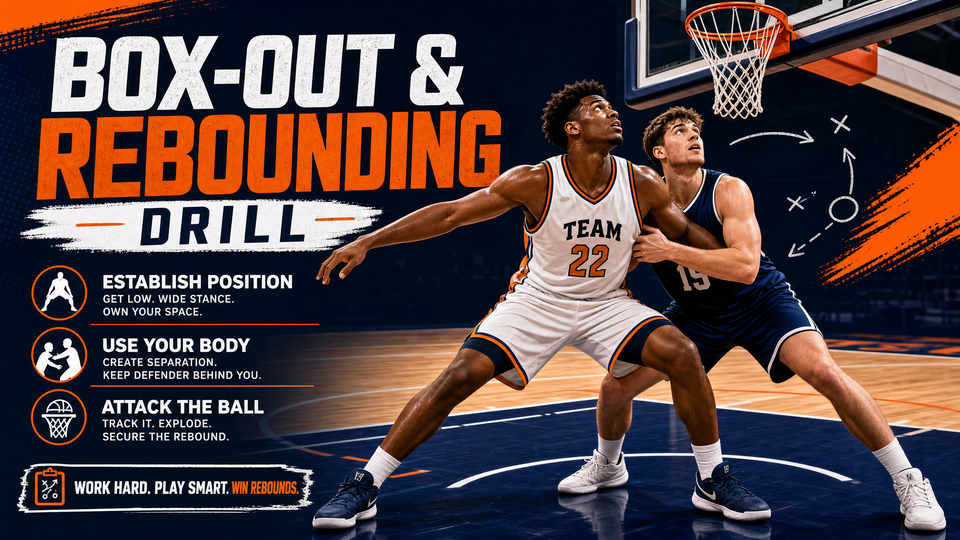
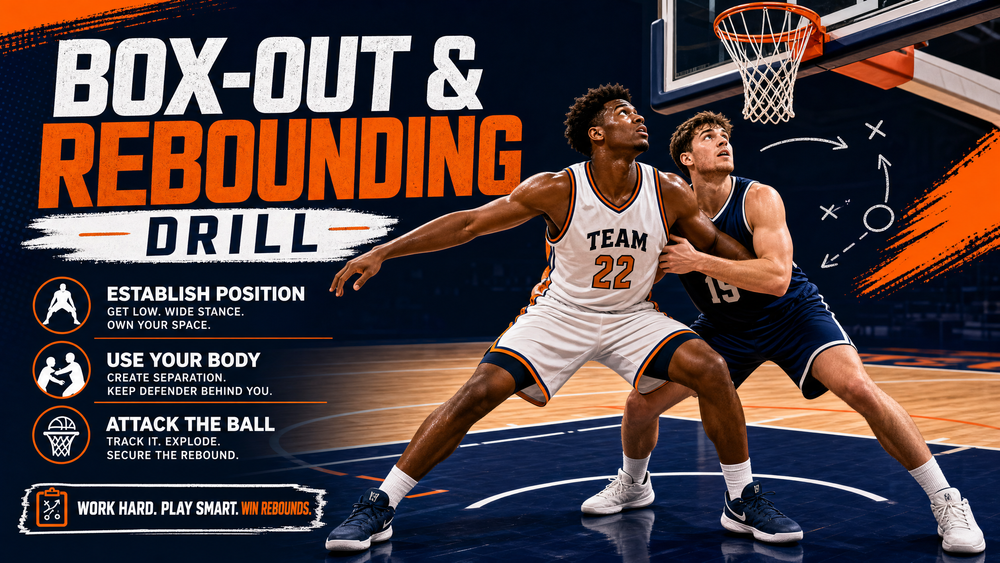
- The Seal: The defender drops their hips, establishes a wide base, and raises their arms (forming a "W" shape) to create a barrier, effectively sealing the offensive player behind them.
- Pursue the Ball: Once the offensive player is sealed and the ball bounces off the rim or backboard, the defender releases the box-out and aggressively jumps to secure the rebound with two hands.
- Chin the Ball: Upon landing, the rebounder must "chin" the ball (hold it tightly under their chin with elbows out) to protect it from being stripped.
- Outlet Pass: The rebounder immediately pivots and looks to make a crisp outlet pass to a designated outlet receiver (or the coach) to simulate starting a fast break.
4. Key Coaching Points
To maximize the effectiveness of this drill, emphasize the following coaching points:
- Hit First: The defender must be the aggressor. Do not wait for the offensive player to crash the boards; initiate contact early to dictate the positioning.
- Low Man Wins: Leverage is critical in rebounding. Players must drop their hips and get lower than their opponent to establish an immovable base.
- Arms Up and Out: Keep arms raised and wide. This makes the defender wider, harder to get around, and prepares them to react quickly to the ball's trajectory.
- Find the Ball, Not Just the Man: While boxing out is crucial, players must not lose sight of the ball. Once the seal is established, eyes must track the ball to anticipate the rebound.
- Two-Handed Rebounds: Always emphasize grabbing the ball with two hands. One-handed rebounds are easily tipped or stolen by aggressive offensive players.
5. Common Mistakes
Watch out for these frequent errors and correct them immediately:
- Watching the Flight of the Ball: The most common mistake is players turning to watch the shot instead of locating their man. This allows the offense a free path to the basket.
- Boxing Out Too Far Under the Basket: If a defender boxes out too deep in the paint, the ball will likely bounce over their head. Encourage players to meet the offense higher up the lane.
- Weak Contact: Failing to make solid contact allows the offensive player to easily slip around the box-out. Emphasize physical, legal contact.
- Bringing the Ball Down: After securing the rebound, players often bring the ball down to their waist, exposing it to smaller, quicker guards who can strip it. Reinforce "chinning" the ball.
6. Variations & Progressions
Keep the drill challenging and engaging by introducing these variations:
- Advantage/Disadvantage: Start the offensive players a step closer to the basket or give them a slight head start to force the defenders to react faster and work harder for the box-out.
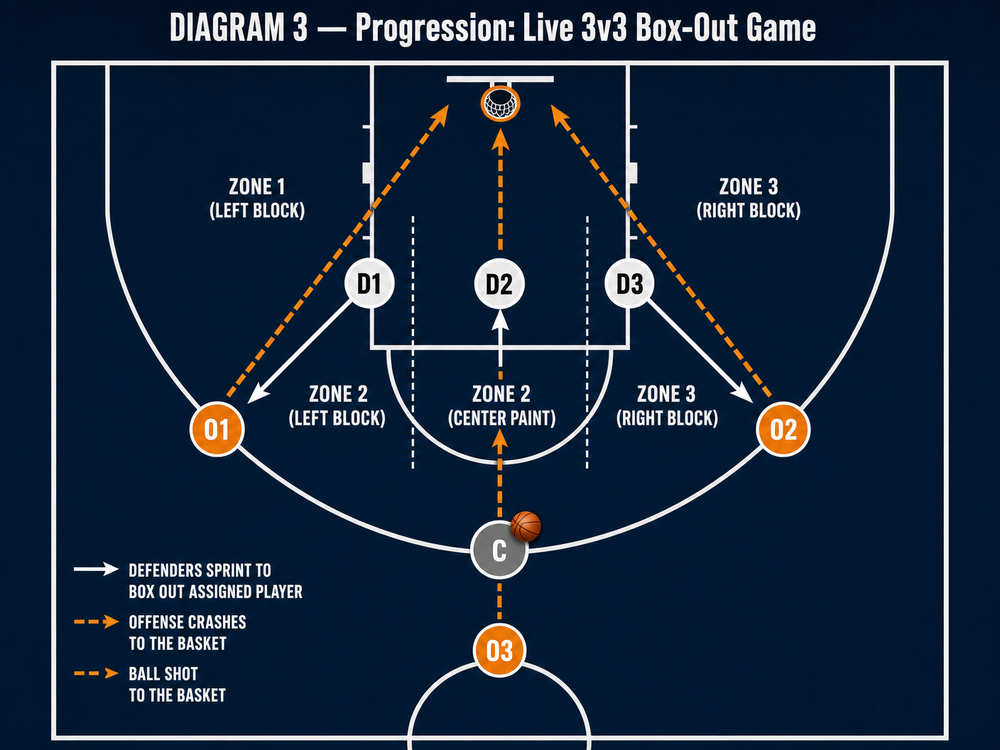
- Live 3v3: After the rebound is secured, transition immediately into a live 3v3 game. If the offense gets the offensive rebound, they try to score. If the defense gets the rebound, they must successfully clear the ball past the three-point line.
- No-Jump Rebounding: Require players to secure the rebound without leaving their feet. This emphasizes perfect positioning and boxing out, proving that you don't need a massive vertical leap to be an elite rebounder.
7. Age Adaptations
Adapt the drill to suit the age and skill level of your players:
- Under 8 / Under 10: Focus heavily on the mechanics of the pivot and finding the player. Use softer basketballs if necessary and reduce the physical contact. Make it a fun game of "find your partner."
- Under 12 / Under 14: Introduce more physical contact and emphasize the "hit first" mentality. Start incorporating the outlet pass to build fast-break habits.
- Under 16 / Open: Run the drill at full game speed with high intensity. Incorporate the live 3v3 progression to simulate game-like chaos and decision-making.
