Box Kick Chase and Press Play: Mastering the Aerial Contest
Equip your team with a highly effective exit and attacking transition strategy by mastering the box kick chase, organized press, and subsequent turnover attack.
Equipment Needed
1. Overview
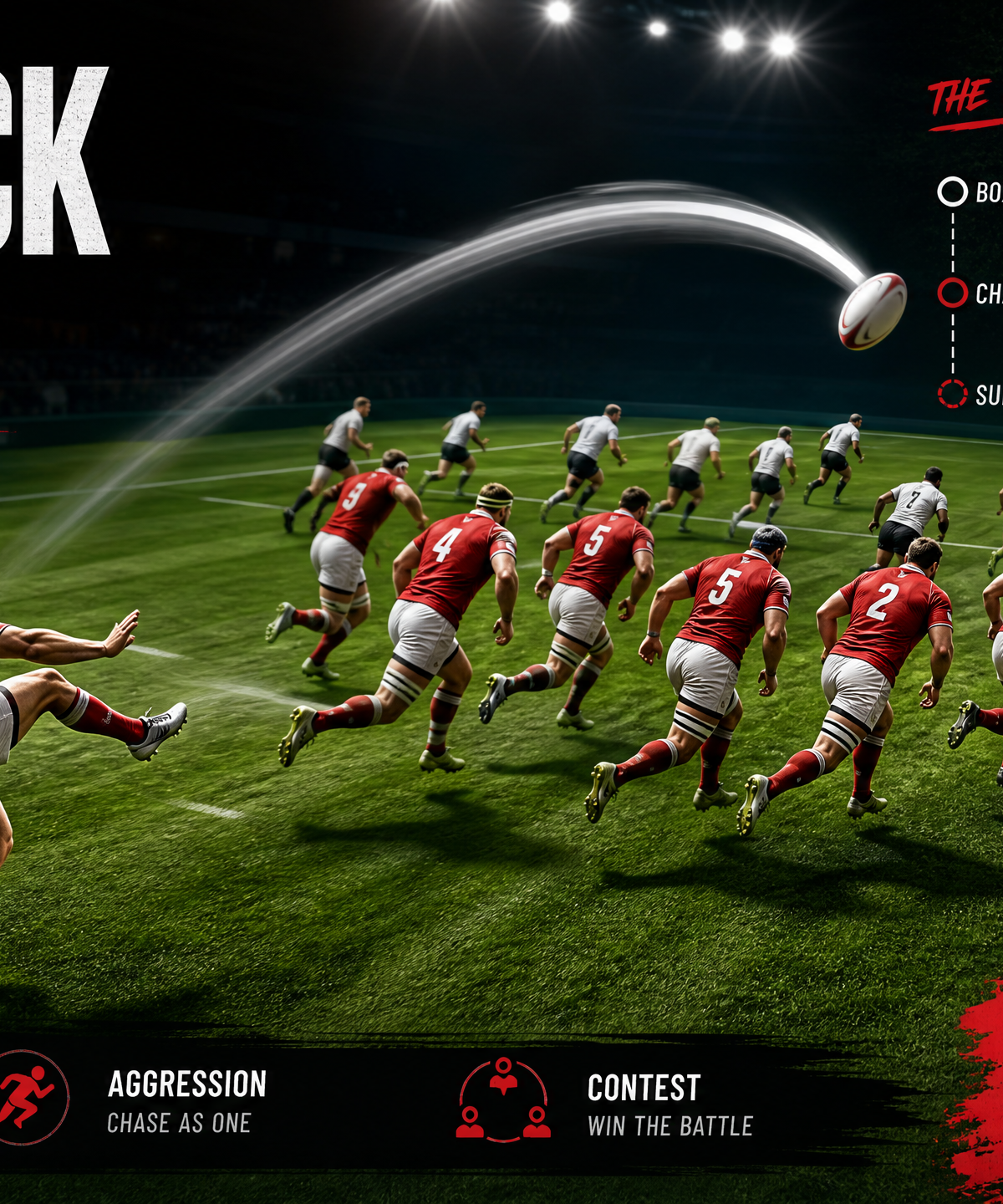
The Box Kick Chase and Press Play is a fundamental tactical maneuver designed to relieve pressure in your own half and aggressively contest possession in the opposition's territory. By executing a high, accurate box kick from the base of a ruck, your team can advance up the pitch while a coordinated line of chasers pressures the receiver. When executed correctly, this play forces knock-ons, poor return kicks, or immediate turnovers, instantly transitioning your team from defense into a potent attacking position deep in the opposition's 22-meter area.
This play is particularly effective when you are pinned inside your own half (between the 22m and halfway line) and need to flip field position while maintaining a high probability of regaining the ball.
2. Setup
Pitch Dimensions: Standard Rugby Pitch (100m x 70m)
Equipment Needed: 3-5 rugby balls, cones to mark the landing zone (15m x 15m box in the back-field corner), and optionally tackle shields for the ruck setup.
Player Positions:
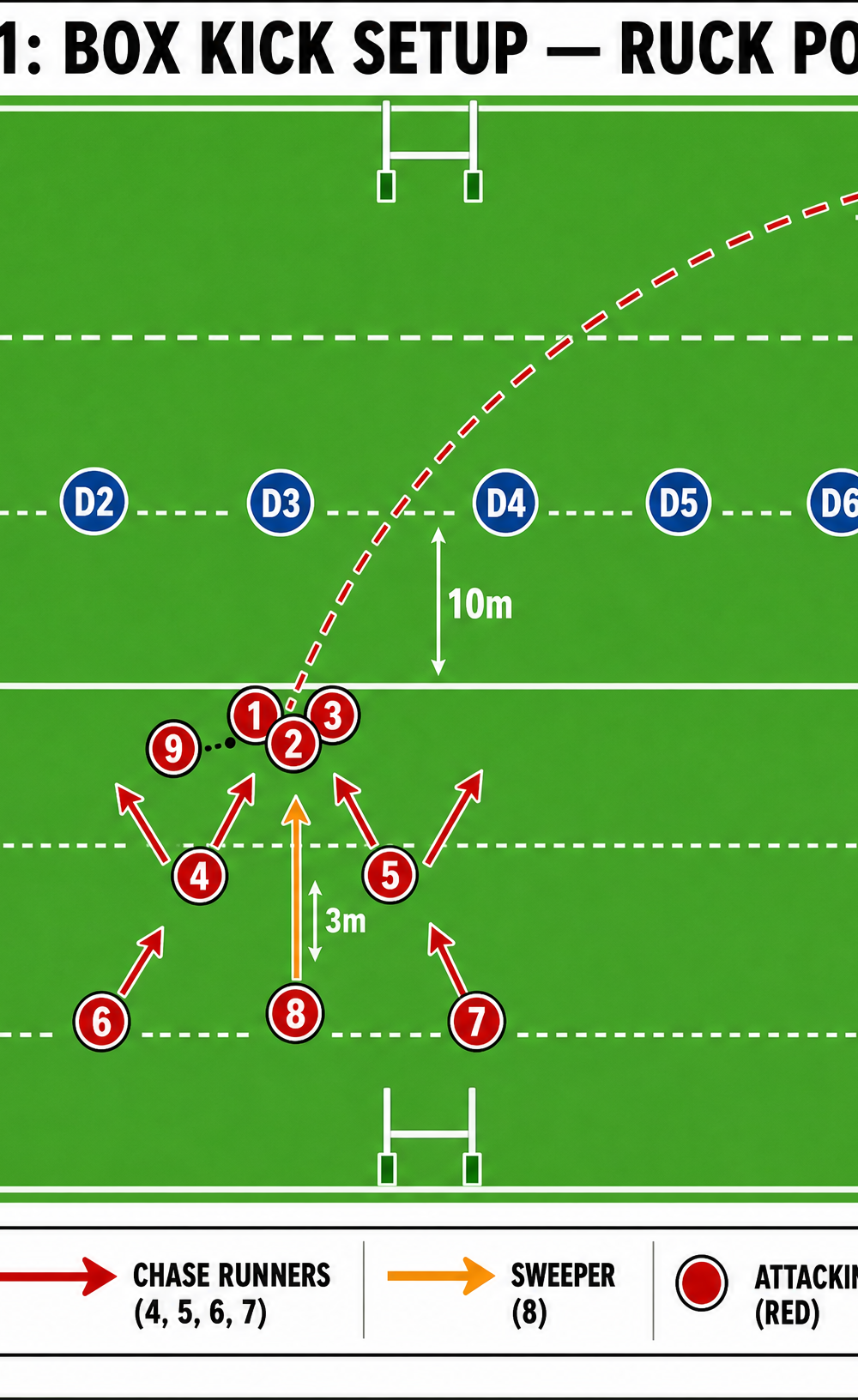
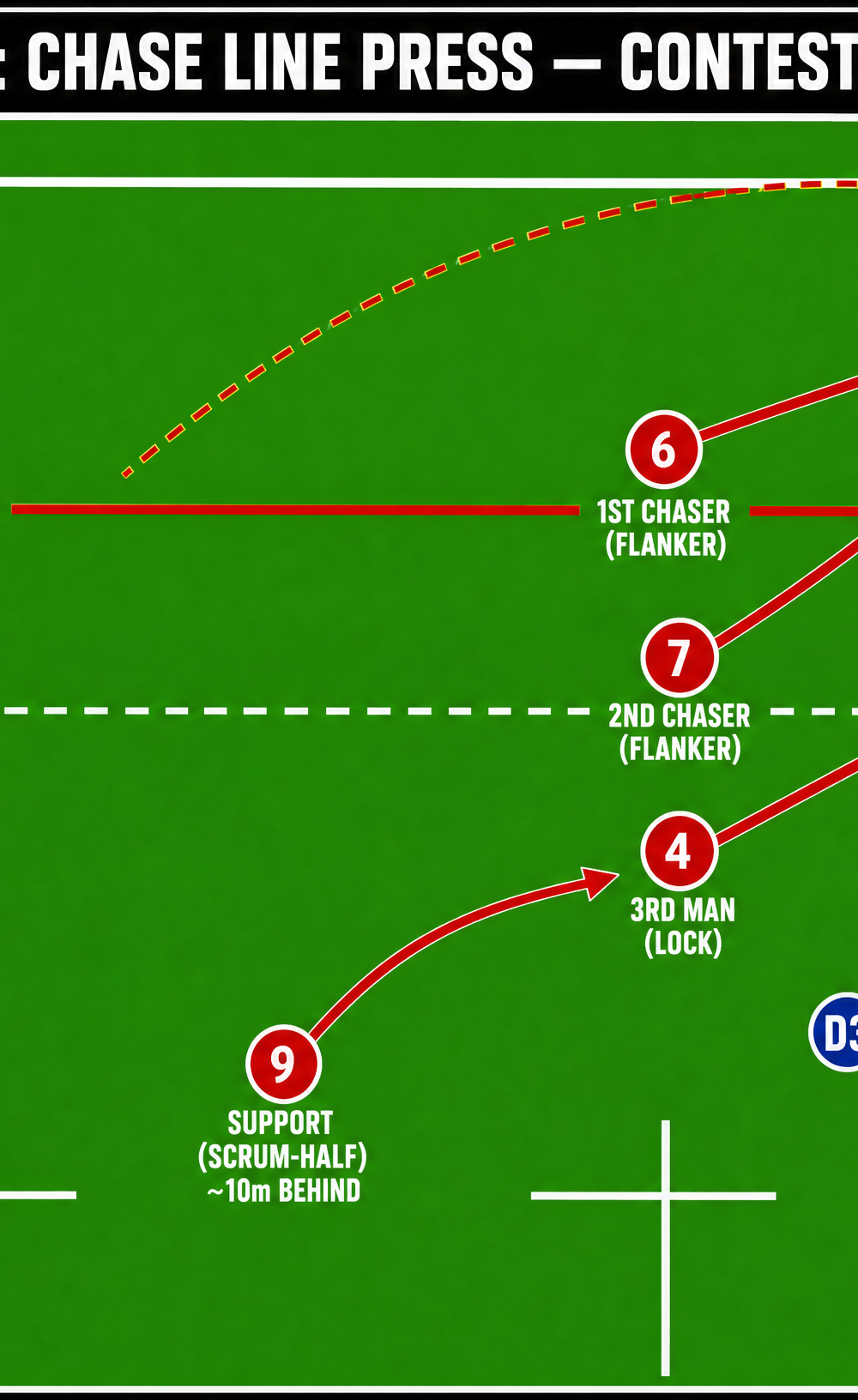
- 9 (Scrum-half): Positioned at the base of the ruck, responsible for the kick.
- 1, 2, 3 (Front Row): Securing the ruck and providing a solid protective screen.
- 4, 5 (Locks): Positioned immediately behind the ruck, forming the inside of the chase line.
- 6, 7 (Flankers): Fanned out slightly wider, roughly 3 meters behind the ruck, forming the primary chase line.
- 8 (Number 8): Positioned deeper as a sweeper to cover any quick return kicks or line breaks.
3. Step-by-Step Instructions
- Secure the Ruck: The forwards (1, 2, 3) must establish a dominant and stable ruck. They need to provide a clean, wide base to protect the 9 from charging defenders.
- Set the Chase Line: As the ruck is secured, players 4, 5, 6, and 7 quickly align 3 meters behind the hindmost foot. They must be onside and actively communicating to ensure a flat, unified line.
- The Kick: The 9 takes a quick glance at the target zone, steps back slightly to create an angle, and executes a high box kick. The hang time should be approximately 3.5 to 4 seconds, landing ideally between the opposition's 22m line and the touchline.
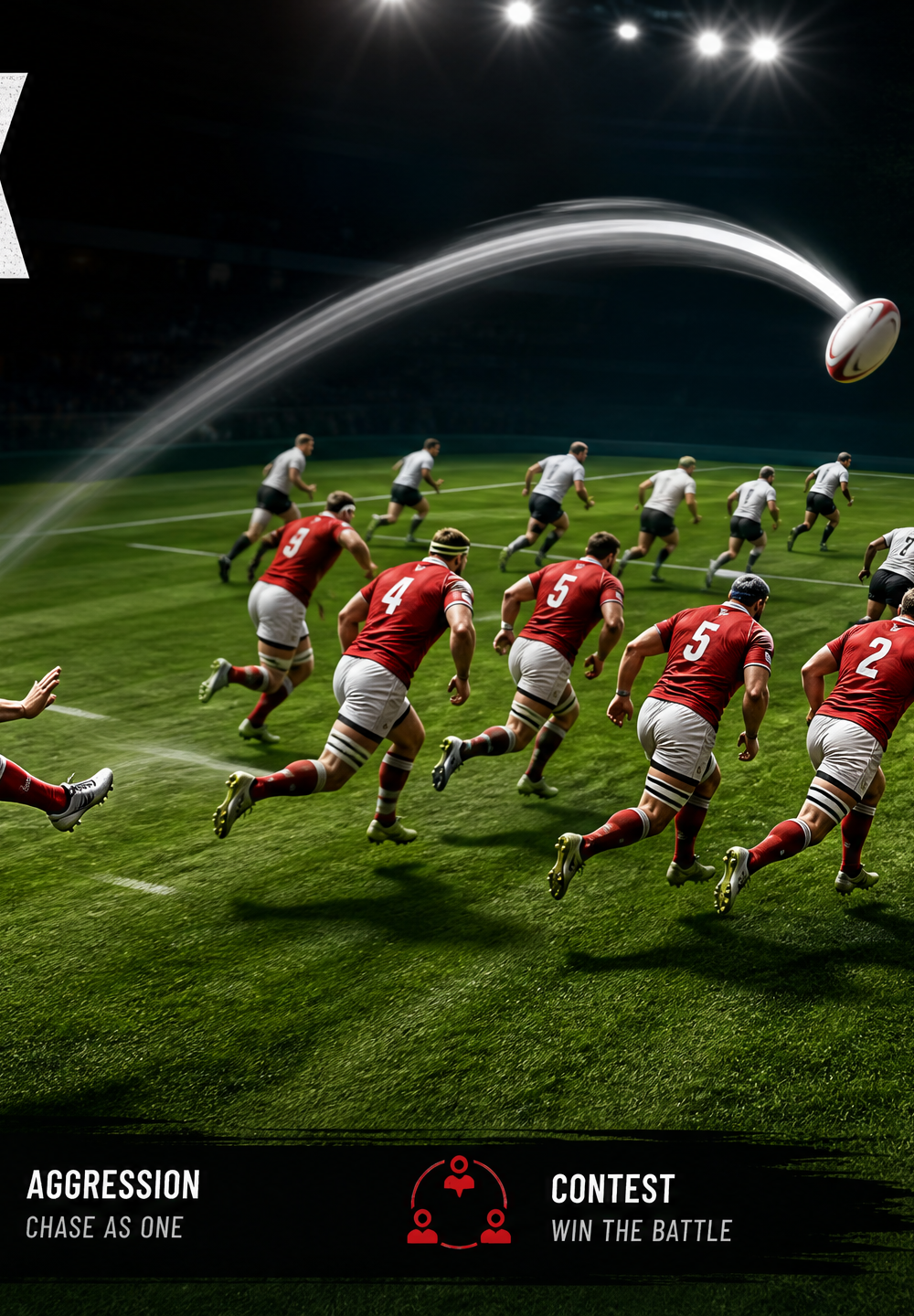
- The Chase: The moment the ball leaves the 9's boot, the chase line (4, 5, 6, 7) sprints forward. The 6 and 7 (flankers) are typically the fastest and should aim to arrive exactly as the ball reaches the receiver.
- The Press and Contest: The first chaser (usually 6 or 7) directly contests the ball in the air or makes a dominant tackle the instant the receiver lands. The second and third chasers arrive immediately to secure the breakdown or counter-ruck.
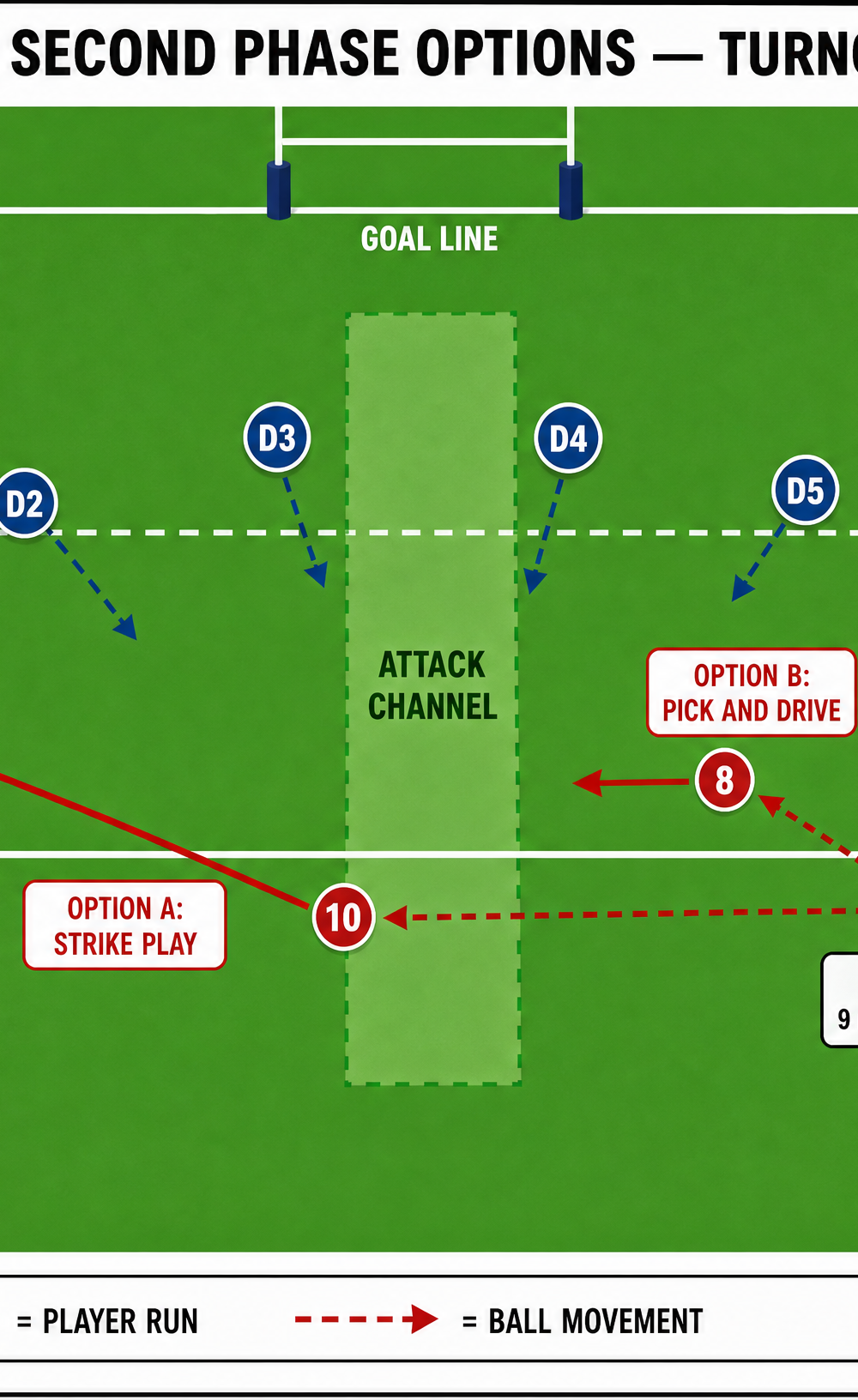
- Second Phase Attack: If a turnover is won, the 9 (who has followed up the kick) quickly assesses the scrambled defense. They can either distribute to the 10 for a strike play out wide or use the 8 for a quick pick-and-drive to exploit the disorganized defensive line.
4. Key Coaching Points
- Hang Time over Distance: The kick must prioritize height over sheer distance. A 3.5 to 4-second hang time is non-negotiable to allow the chasers to reach the landing zone simultaneously with the ball.
- The 'Wall' Chase: The chasers must run as a connected wall. If one player sprints ahead of the line, they become isolated and easily stepped. If they lag behind, the pressure is lost.
- Legal Contest: Teach the chasers to track the ball, not the man. They must jump and genuinely compete for the ball in the air to avoid dangerous tackle penalties.
- The Scrum-Half's Follow-Up: The 9 must not just kick and watch. They must immediately follow the kick to be in position for the resulting breakdown, whether it's a turnover or a defensive ruck.
5. Common Mistakes
- Kicking Too Long and Flat: This results in the receiver catching the ball with no pressure, allowing them to launch a devastating counter-attack.
- Offside Chasers: Players eager to chase often creep ahead of the kicker before the ball is struck, resulting in a penalty.
- Lack of a Protective Screen: The forwards at the ruck fail to bind tightly or hold their ground, allowing defenders to charge down the kick.
- Isolating the First Chaser: The first chaser makes the tackle, but the supporting forwards are too slow to arrive, leading to the opposition securing the ball easily.
6. Variations & Progressions
- Progression 1: Contested Catching: Introduce a live defender with a tackle shield in the landing zone to force the chasers to physically compete for the space and the ball.
- Progression 2: Transition to Attack: Once the turnover is secured in the drill, play out the next 2-3 phases live against a scrambling defense to practice exploiting the transition.
- Variation: The Short Box: Instead of kicking deep into the 22, the 9 executes a shorter, higher kick just over the defensive line to target a specific mismatch (e.g., a tall lock chasing against a shorter winger).
7. Age Adaptations
- Under 10s / Under 12s: Focus heavily on the technique of the kick itself and running in a straight line. Contesting in the air should be discouraged or heavily controlled for safety; focus on making the tackle immediately upon landing.
- Under 14s / Under 16s: Introduce the concept of hang time and the coordinated line speed. Begin teaching safe techniques for contesting the ball in the air.
- Open / Senior: Full execution with aggressive counter-rucking and complex second-phase strike plays off the turnover.