

Cricket
Powerplay Aggression: The Attacking Off-Stump Corridor Field
Master the first 6 overs with this aggressive field setting designed to take early wickets by attacking the off-stump corridor while managing fielding restrictions.
What you need
1 New cricket ball, 6 markers/cones, Full protective gear for wicketkeeper
1. Overview
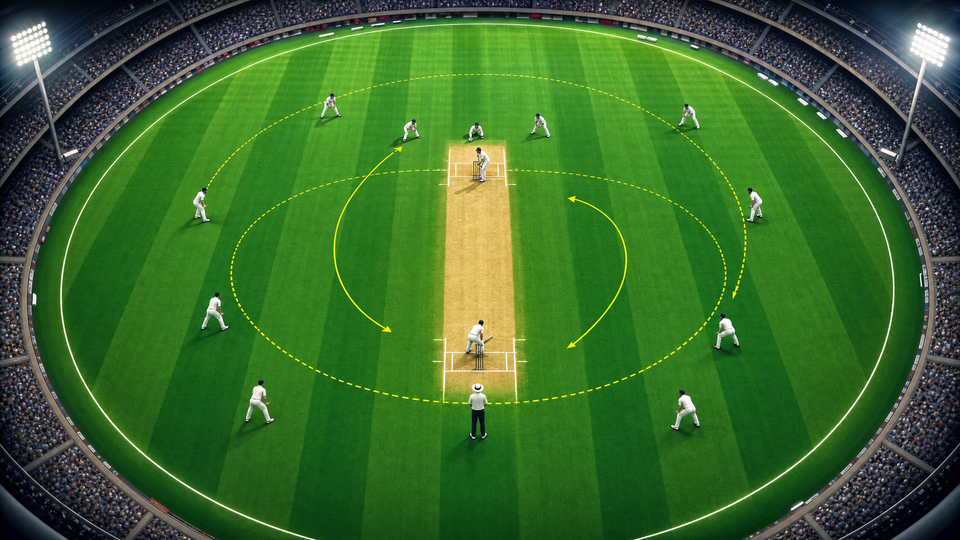
The Powerplay (overs 1-6 in T20s, 1-10 in ODIs) is the most critical phase of the innings. While many teams focus purely on containment, the most successful sides use this period of fielding restrictions to take early wickets. This set play, "The Attacking Off-Stump Corridor Field," is designed to maximize pressure on the opening batters by creating a suffocating ring inside the 30-yard circle and an aggressive slip cordon.
By forcing the batter to play at deliveries in the "corridor of uncertainty" (just outside off-stump), we increase the probability of edges to the slips or false shots to the infield. Use this play when you have a new ball swinging or seaming, and you want to put the opposition immediately on the back foot.
2. Setup
Equipment Needed:
- 1 New cricket ball
- 6 markers/cones (for practice sessions to mark the 30-yard circle if not painted)
- Full protective gear for wicketkeeper and close-in fielders
Pitch & Field Setup:
- Standard 22-yard pitch.
- A clearly defined 30-yard inner circle.
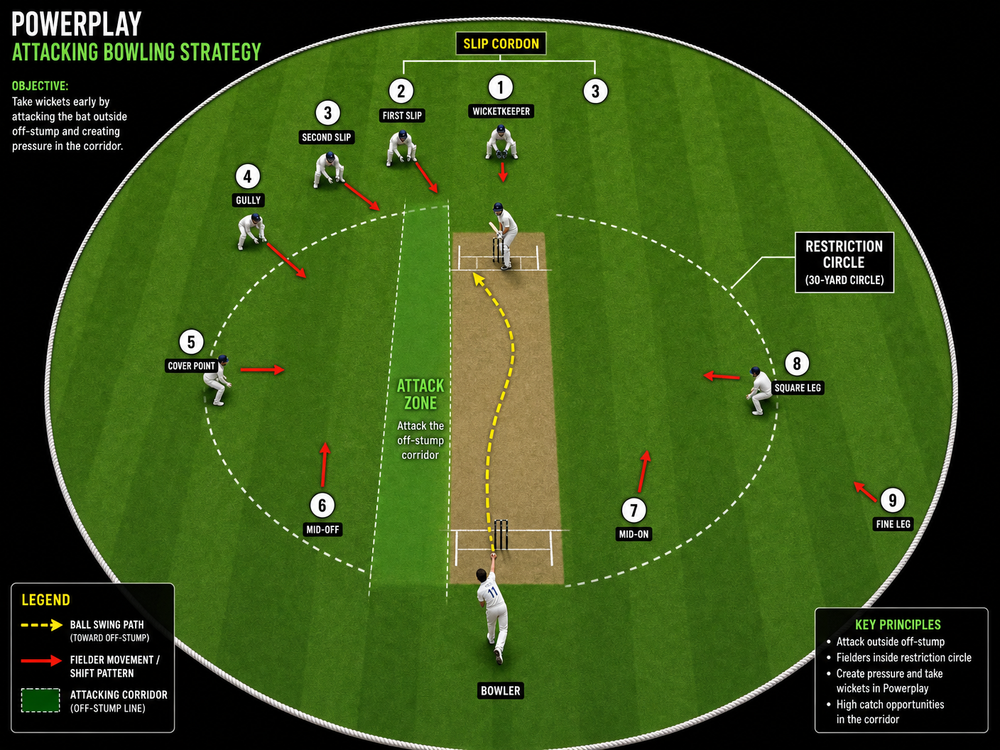
Player Positions (Right-Arm Over to Right-Handed Batter):
- Wicketkeeper (standing back for pace, or up for medium pace/spin)
- First Slip
- Second Slip (or Gully depending on bounce)
- Point (inside the circle)
- Cover (inside the circle)
- Mid-off (inside the circle, relatively straight)
- Mid-on (inside the circle)
- Square Leg (inside the circle)
- Fine Leg (on the boundary - outside the circle)
- Third Man (on the boundary - outside the circle)
- Bowler
3. Step-by-Step Instructions
Step 1: Set the Cordon
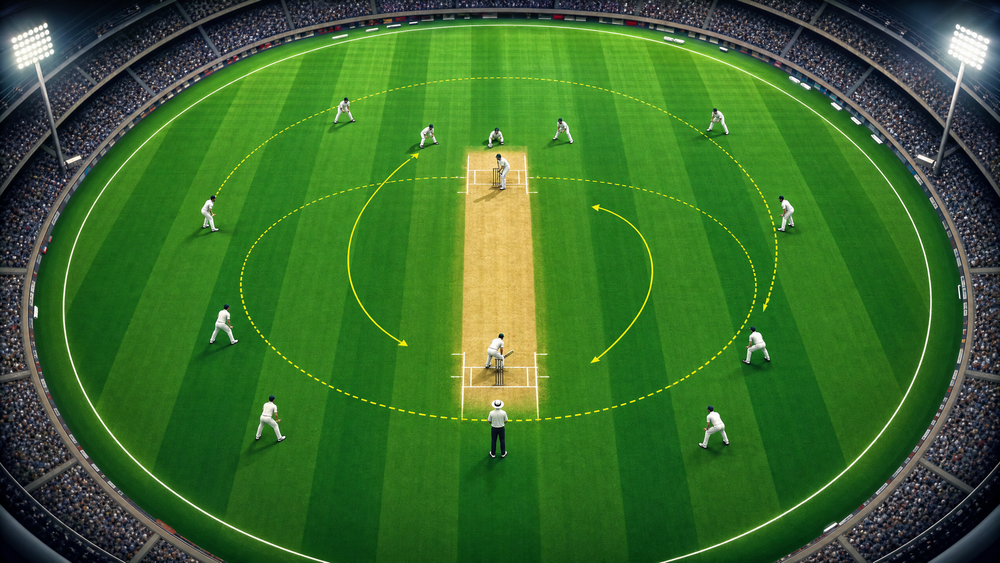
Position your Wicketkeeper and Slips first. Ensure the First Slip is correctly spaced from the keeper (usually about an arm's length plus a bat width). The Second Slip should be slightly staggered forward to avoid blind spots.
Step 2: Establish the Off-Side Ring
Place Point, Cover, and Mid-off strictly inside the 30-yard circle. They must be alert and ready to cut off the single. Their primary role is to build pressure by stopping the quick rotation of strike.
Step 3: Secure the Leg Side
Place Mid-on relatively straight to cut off the straight drive. Position Square Leg inside the circle to prevent easy singles off the pads.
Step 4: Position the Boundary Riders
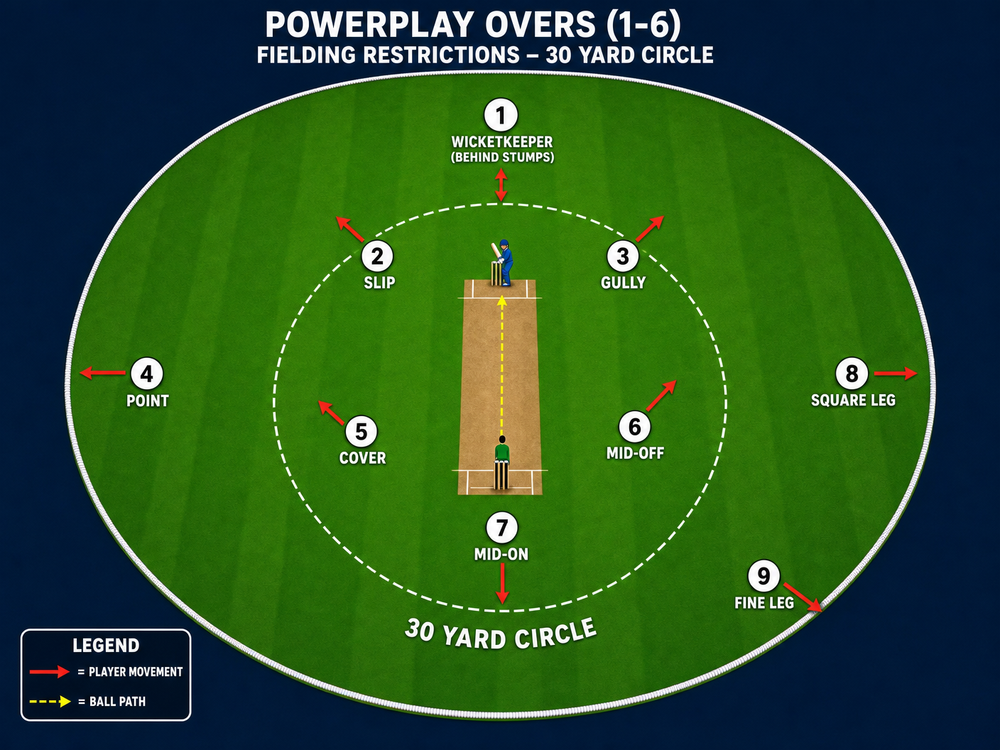
With only two fielders allowed outside the 30-yard circle during the Powerplay, place them strategically based on the bowler's plan. For an off-stump attack, Fine Leg and Third Man are standard to protect against the inside edge and the outside edge respectively.
Step 5: The Bowling Execution
The bowler must consistently hit the "corridor of uncertainty" (4th/5th stump line) on a good length (6-8 meters from the batter). The ball should be swinging or seaming away from the right-hander.
4. Key Coaching Points
- Discipline in Line and Length: The entire field setting relies on the bowler hitting the top of off-stump or just outside. If the bowler strays onto the pads, the field is exposed.
- Infield Energy: The fielders inside the 30-yard circle (Point, Cover, Mid-off, Mid-on, Square Leg) must walk in with the bowler and be on the balls of their feet. They are there to stop the single and create run-out opportunities.
- Slip Catching Posture: Slips must stay low for as long as possible. The new ball flies quickly, and rising too early will result in dropped catches.
- Communication: The wicketkeeper must direct the infield, adjusting point or cover a few yards left or right based on the batter's tendencies.
5. Common Mistakes
- Bowling Too Short: Banging the ball in short with this field allows the batter to easily cut or pull over the infield ring, rendering the slips useless.
- Static Infielders: Fielders standing flat-footed inside the circle. They must be moving forward as the ball is delivered to cut down the angle and react quickly.
- Slips Too Close Together: Positioning slips too close to each other, causing confusion and collisions on edges between them.
- Over-Attacking the Stumps: Bowling too straight (middle/leg line) with an off-side heavy field, leading to easy runs through the leg side.
6. Variations & Progressions
- The Squeeze (Progression): If the batter is struggling, bring Third Man inside the circle to backward point, and push a cover fielder to the deep point boundary. This increases pressure on the single while protecting the boundary shot.
- Spin Powerplay (Variation): If opening with spin, move the slips to a slip and a leg slip, and bring the wicketkeeper up to the stumps. The boundary riders might shift to Deep Mid-Wicket and Deep Square Leg depending on the turn.
7. Age Adaptations
- Under 10 / Under 12: Focus heavily on the bowler's accuracy rather than complex field movements. Use only one slip to avoid confusion, and ensure infielders are safely positioned (not too close to the bat).
- Under 14 / Under 16: Introduce the concept of the "corridor" and start emphasizing the energy of the inner ring. Slips should be practicing taking sharp catches.
- Open / Seniors: Full implementation. High expectation on the bowler to execute the plan, and the infield to save 10-15 runs through sheer athletic fielding inside the circle.
