

Cricket
Defensive Field Setting for Spin: Building Pressure and Forcing Mistakes
Learn how to deploy a defensive spin bowling field to cut off boundaries, build dot ball pressure, and force batters into high-risk shots.
What you need
1 Cricket ball, Full 22-yard pitch, Oval ground with boundary rope
1. Overview
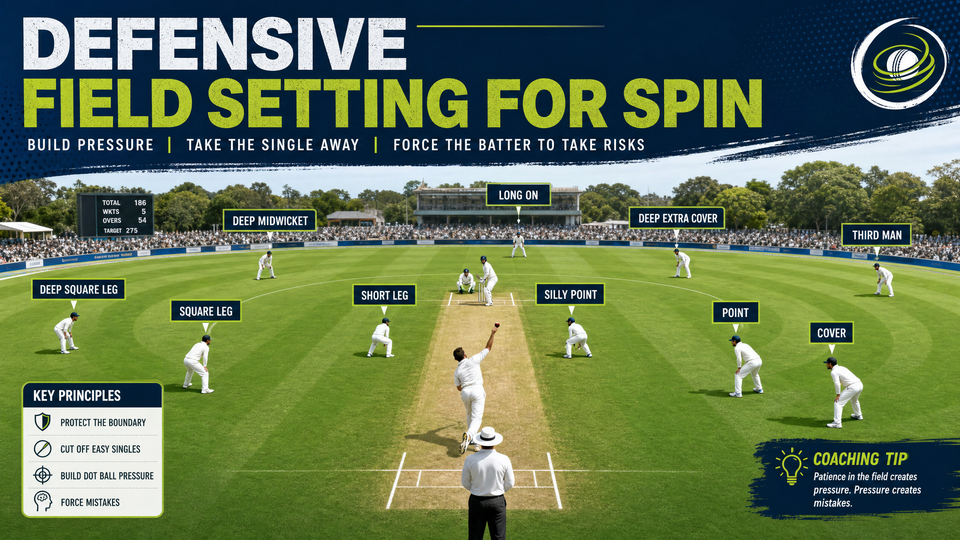
When a spin bowler is operating, controlling the run rate is often just as important as taking wickets. A defensive field setting is designed to dry up boundaries and cut off easy singles, forcing the batter to take unnecessary risks to score. This set play focuses on creating a ring of pressure around the batter while protecting the boundary in high-scoring zones.
Use this setup when the batting team is scoring freely, during the middle overs of a limited-overs match, or when a new batter arrives at the crease and you want to deny them easy rotation of the strike.
2. Setup
Equipment Needed:
- 1 Cricket ball
- 11 Players (1 Bowler, 1 Wicketkeeper, 9 Fielders)
- Full 22-yard pitch and oval ground with boundary rope
Pitch & Field Setup:
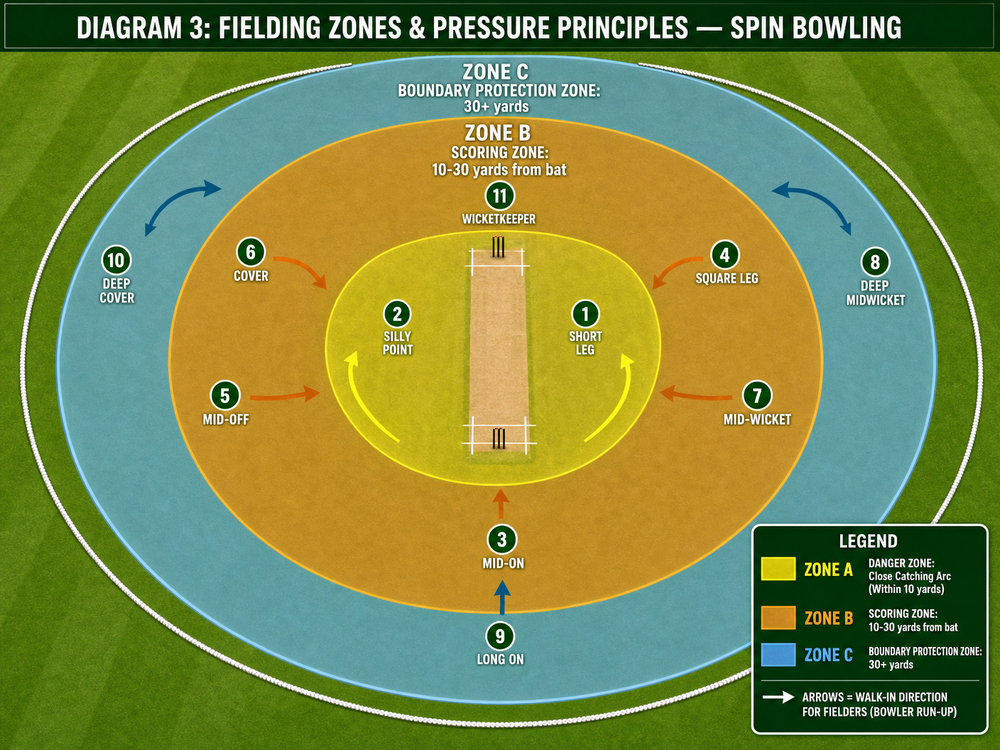
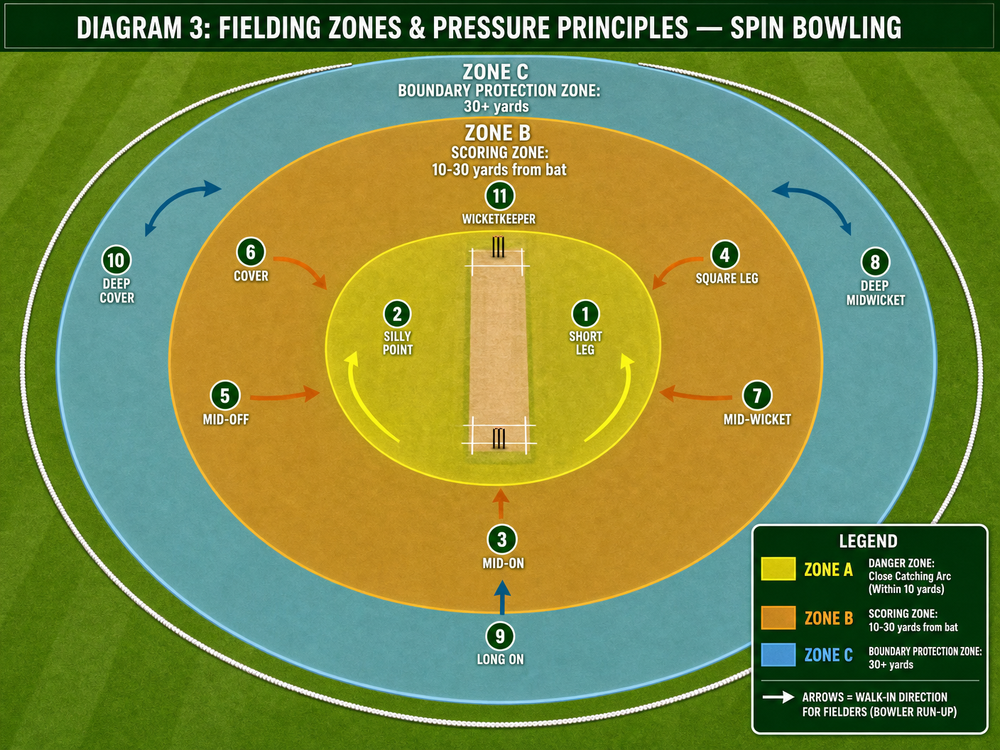
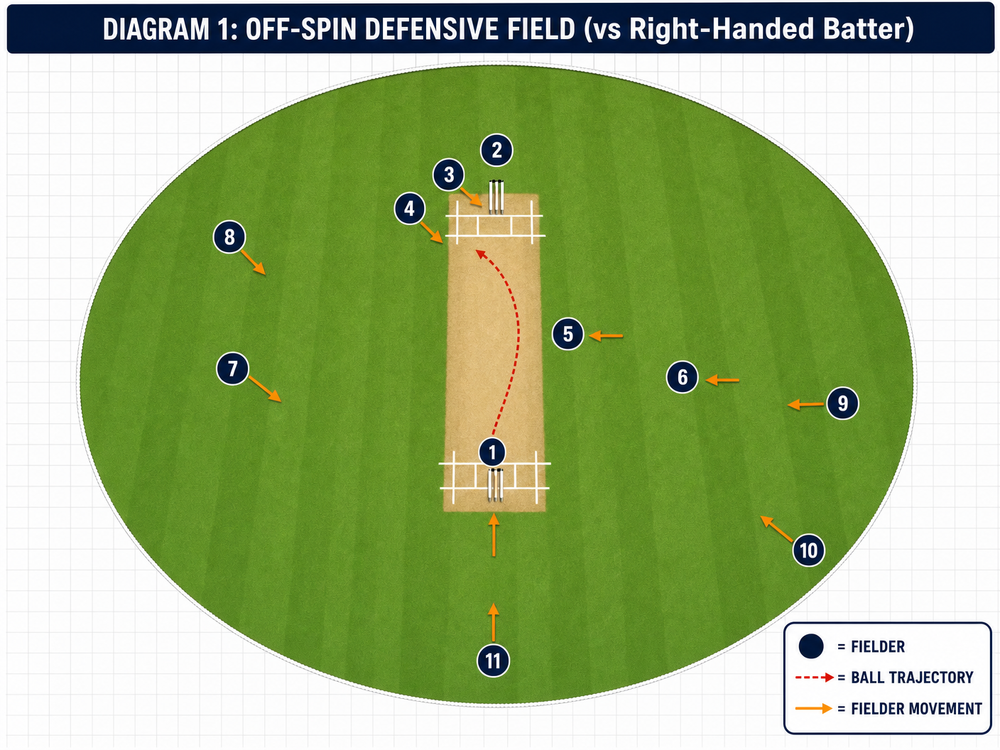
The field is divided into three main zones: the close catching arc (Zone A), the scoring ring (Zone B), and the boundary protection zone (Zone C). Fielders must be placed precisely to cover the most likely scoring areas based on the bowler's stock delivery.
3. Step-by-Step Instructions
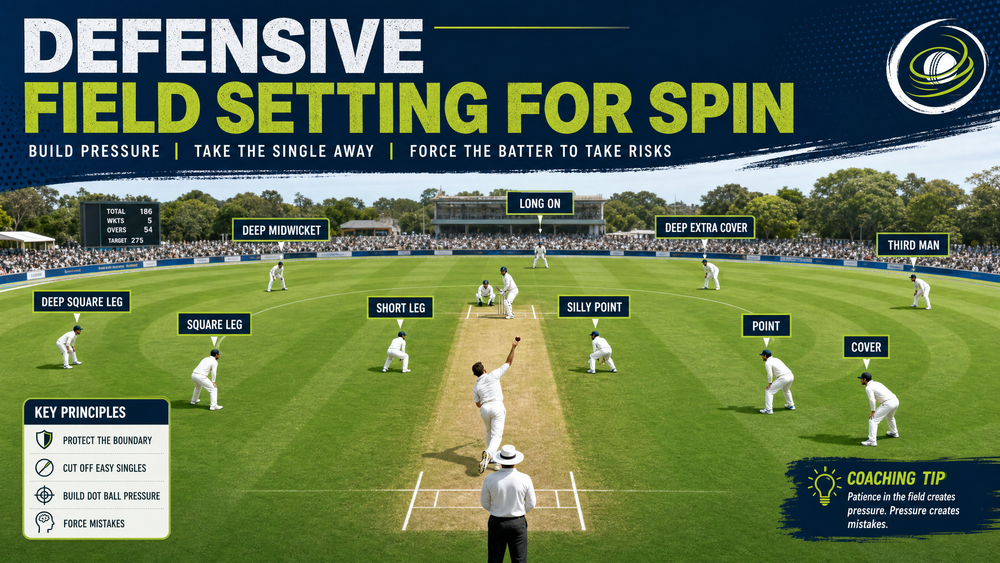
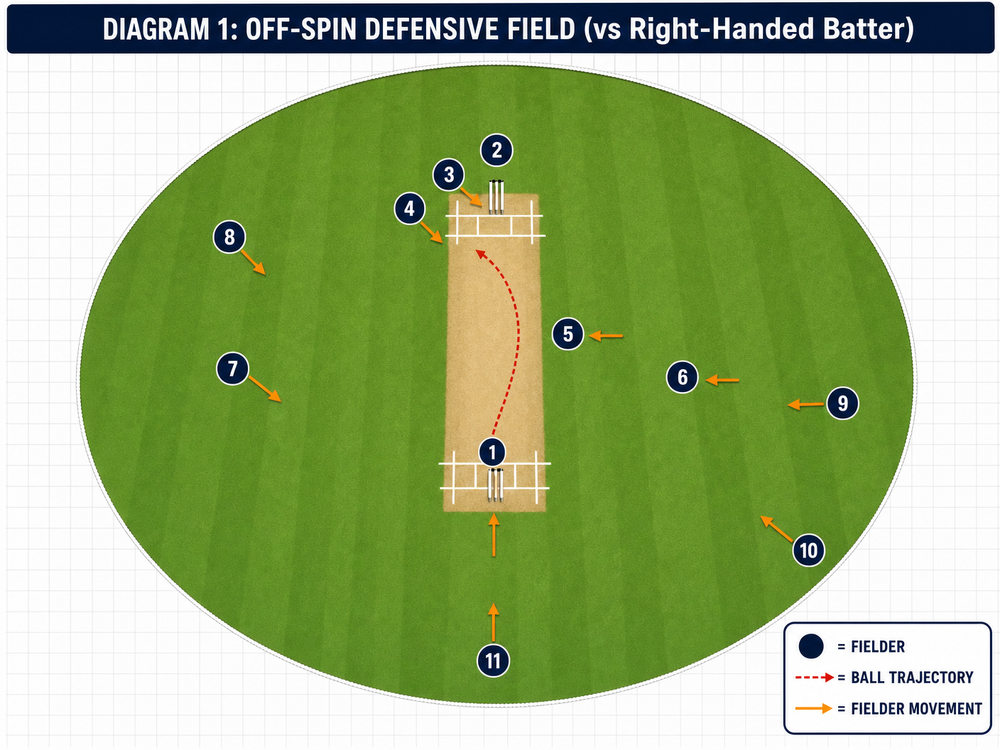
Setting the Field for Off-Spin (Right-Arm to Right-Handed Batter)
- Protect the Deep: Place fielders at Deep Midwicket and Long On. These are the primary boundary riders to protect against the slog sweep and straight drive.
- Set the Ring: Position fielders at Cover, Mid-Off, Mid-On, and Square Leg. These fielders form the 30-yard ring, designed to cut off singles.
- Close Catchers: Keep a Slip in place to catch edges from balls that grip and bounce, and a Silly Point to apply pressure and catch bat-pad deflections.
- Bowler Execution: The bowler must bowl a tight line (on or just outside off stump) and a good length, denying the batter room to cut or drive.
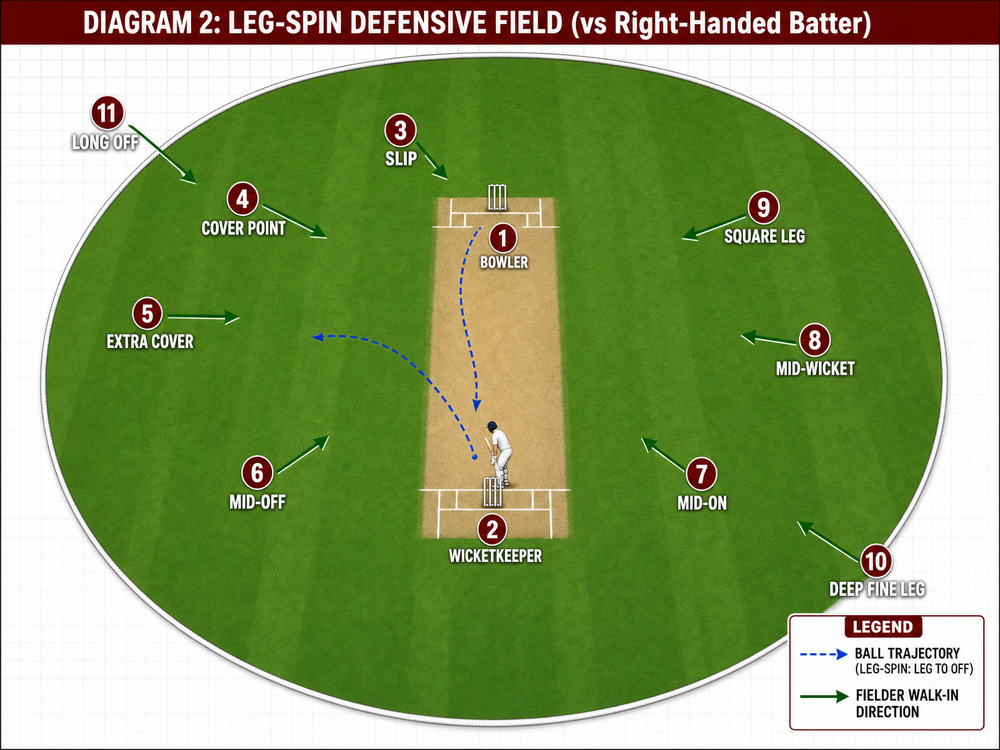
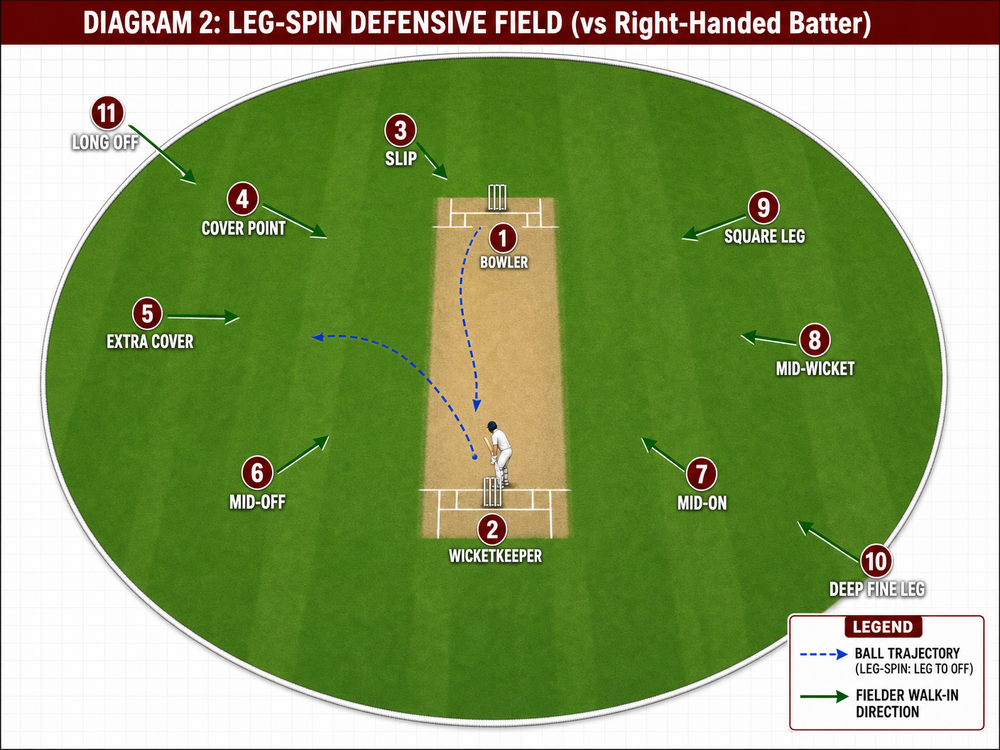
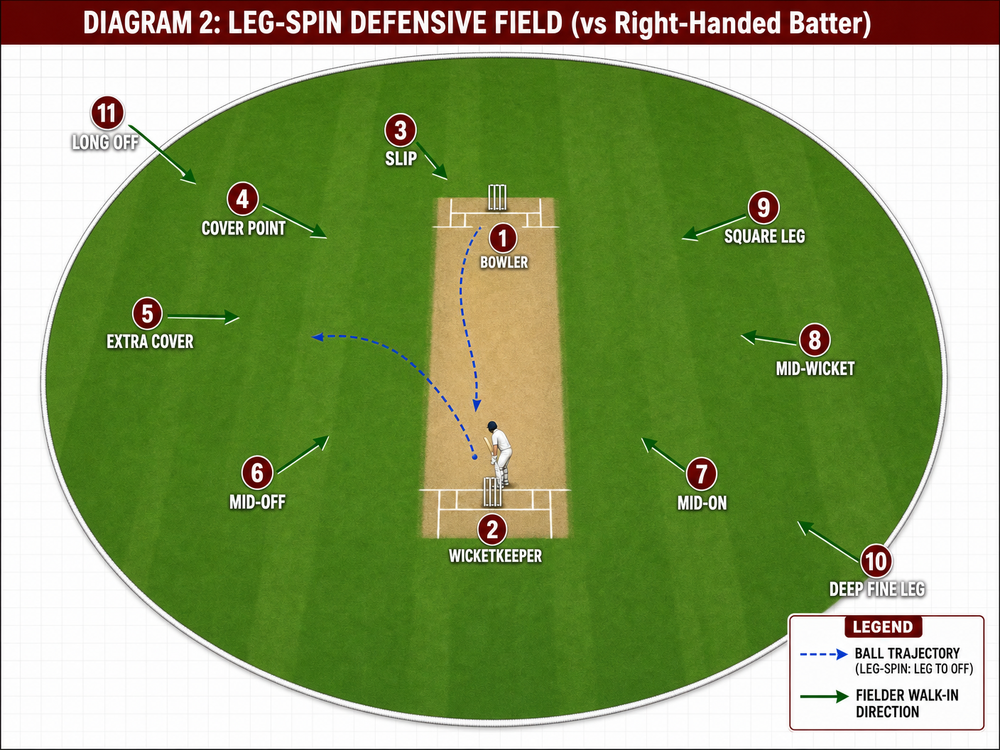
Setting the Field for Leg-Spin (Right-Arm to Right-Handed Batter)
- Protect the Deep: Place fielders at Long Off and Deep Fine Leg. The Long Off protects the drive, while Deep Fine Leg covers the sweep or paddle shot.
- Set the Ring: Position fielders at Cover Point, Extra Cover, Mid-Off, Mid-On, Mid-Wicket, and Square Leg. This creates a strong off-side ring to combat the ball spinning away from the batter.
- Close Catchers: Maintain a Slip to catch outside edges.
- Bowler Execution: The bowler should aim for a line on middle-and-leg stump, spinning away to off, forcing the batter to play against the spin if they try to hit to the leg side.
4. Key Coaching Points
- Walk-in Intensity: Fielders in the ring (Zone B) must walk in with the bowler's run-up. This builds visible pressure and reduces the time the batter has to find a gap.
- Communication: Fielders must communicate constantly. If the ball is hit into a gap, the closest fielder calls "Mine!" while others back up.
- Bowler Discipline: A defensive field only works if the bowler bowls to it. Bowling wide or short ruins the setup and allows easy runs.
- Body Language: Fielders should stay low and alert, ready to sprint and dive. A sluggish field invites the batter to take quick singles.
5. Common Mistakes
- Static Fielding: Fielders standing flat-footed instead of walking in with the bowler.
- Bowling to the Wrong Line: An off-spinner bowling down the leg side with a packed off-side field.
- Poor Backing Up: Fielders failing to anticipate throws, leading to overthrows.
- Leaving Gaps: Misjudging the angles and leaving large gaps in the ring, allowing easy singles.
6. Variations & Progressions
- Attacking Shift: If a wicket falls, bring a fielder from the boundary into the close catching arc (e.g., add a Short Leg or second Slip) to increase pressure on the new batter.
- Pace Variation: Have the bowler vary their pace and flight while maintaining the same field to deceive the batter into a false shot.
- The 'In-Out' Field: Move one ring fielder back to the boundary and bring one boundary rider into the ring to confuse the batter's scoring plans.
7. Age Adaptations
- Under 10s/12s: Focus on the basic ring field. Ensure players understand their positions and the importance of walking in. Close catchers (Slip, Silly Point) are generally not recommended due to safety concerns.
- Under 14s/16s: Introduce boundary riders and more complex angles. Teach the bowler how to bowl to specific field settings.
- Open/Senior: Implement the full defensive setup with close catchers. Focus on high-intensity fielding, precise bowling plans, and adapting the field based on the batter's strengths.
