The Ultimate Dual-Channel Crossing & Finishing Masterclass
A high-intensity, match-realistic drill designed to perfect wide delivery, synchronized box runs, and clinical finishing under pressure.
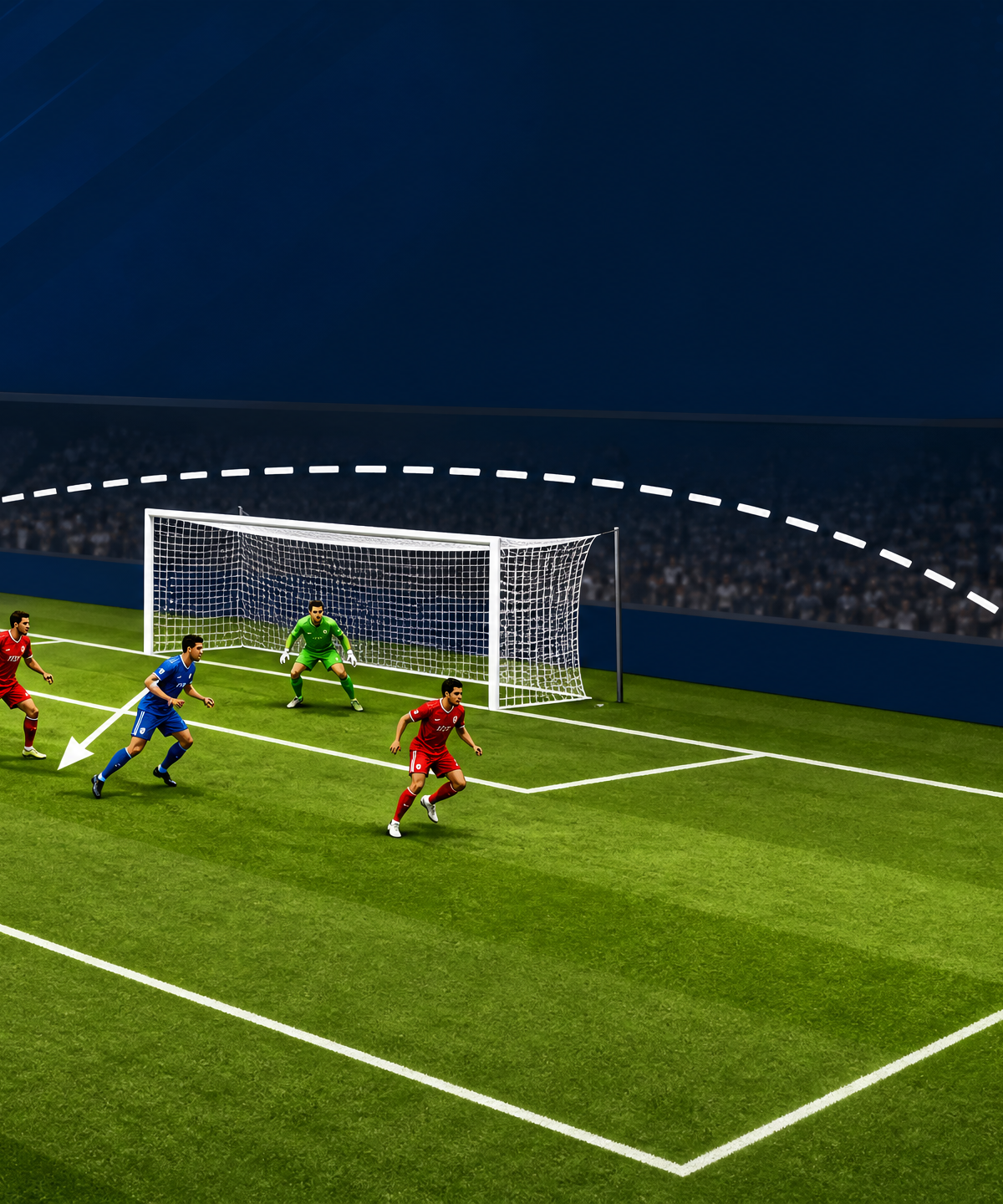
Equipment Needed
1. Overview
Crossing is an art, but finishing from a cross requires impeccable timing, spatial awareness, and synchronized movement. This Dual-Channel Crossing & Finishing Masterclass is designed to replicate the chaotic, high-speed environment of the penalty area during a match.
By running deliveries from both flanks simultaneously (or in rapid succession), you force your forwards to constantly adjust their runs, read the flight of the ball, and attack specific zones. This drill is perfect for developing the classic "near post, far post, cutback" attacking trident.
2. Setup
Pitch Dimensions: Attacking half of a standard pitch (approx. 50m x 70m).
Players: 8-12 outfield players + 1 Goalkeeper.
- 2-4 Wide Players (Wingers/Fullbacks)
- 4-6 Central Attackers (Strikers/Attacking Midfielders)
- 2 Central Defenders (for progressions)
Equipment:
- Full-size goal
- 8-10 Cones (to mark crossing zones and starting positions)
- Minimum 15-20 footballs (split evenly between both flanks)
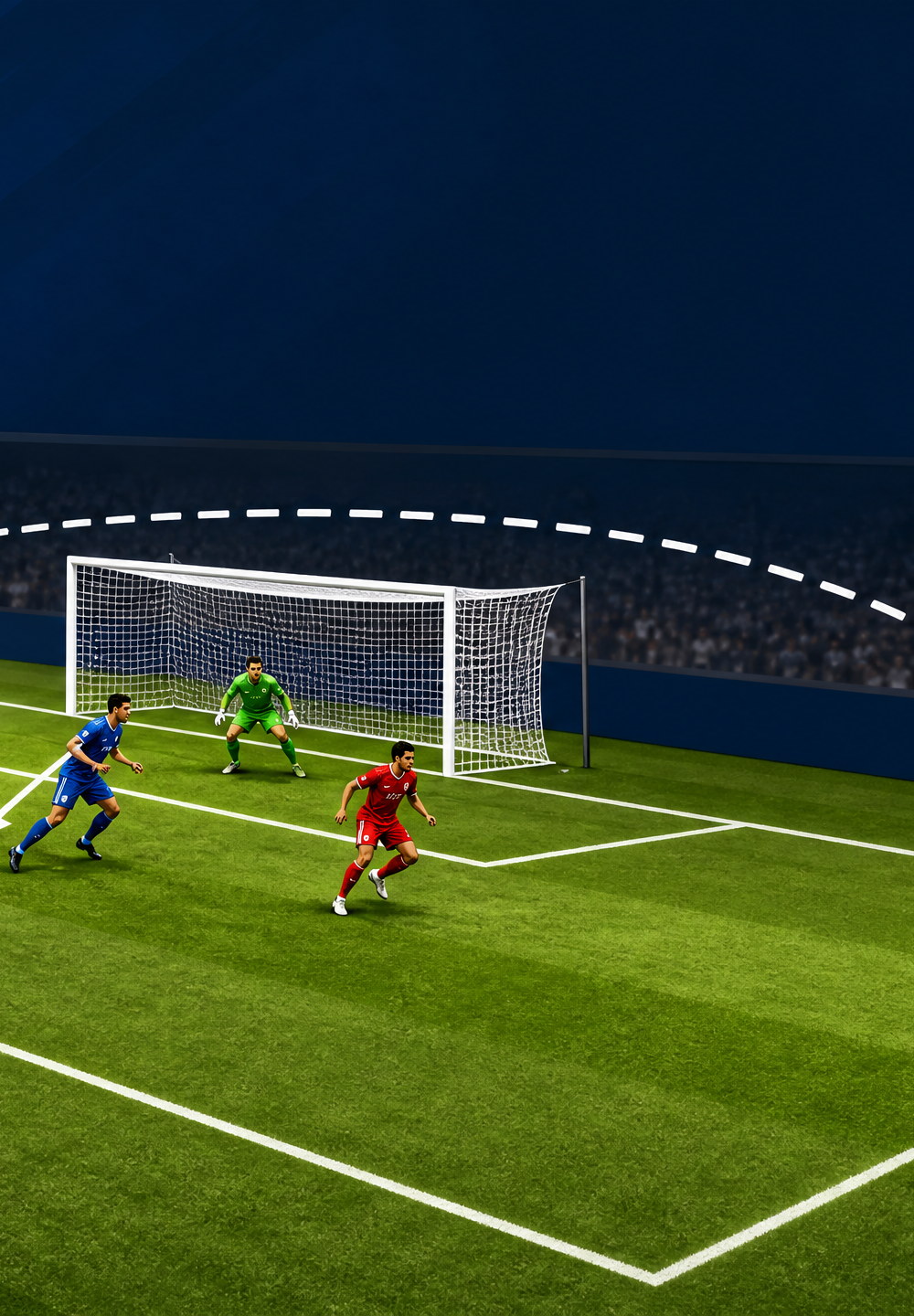
Positioning:
- Set up a 15x15 yard Crossing Zone on both the left and right flanks, extending from the corner flag to the edge of the penalty area.
- Place half the balls and your wide players (e.g., No. 7 and No. 11) at the start of each Crossing Zone.
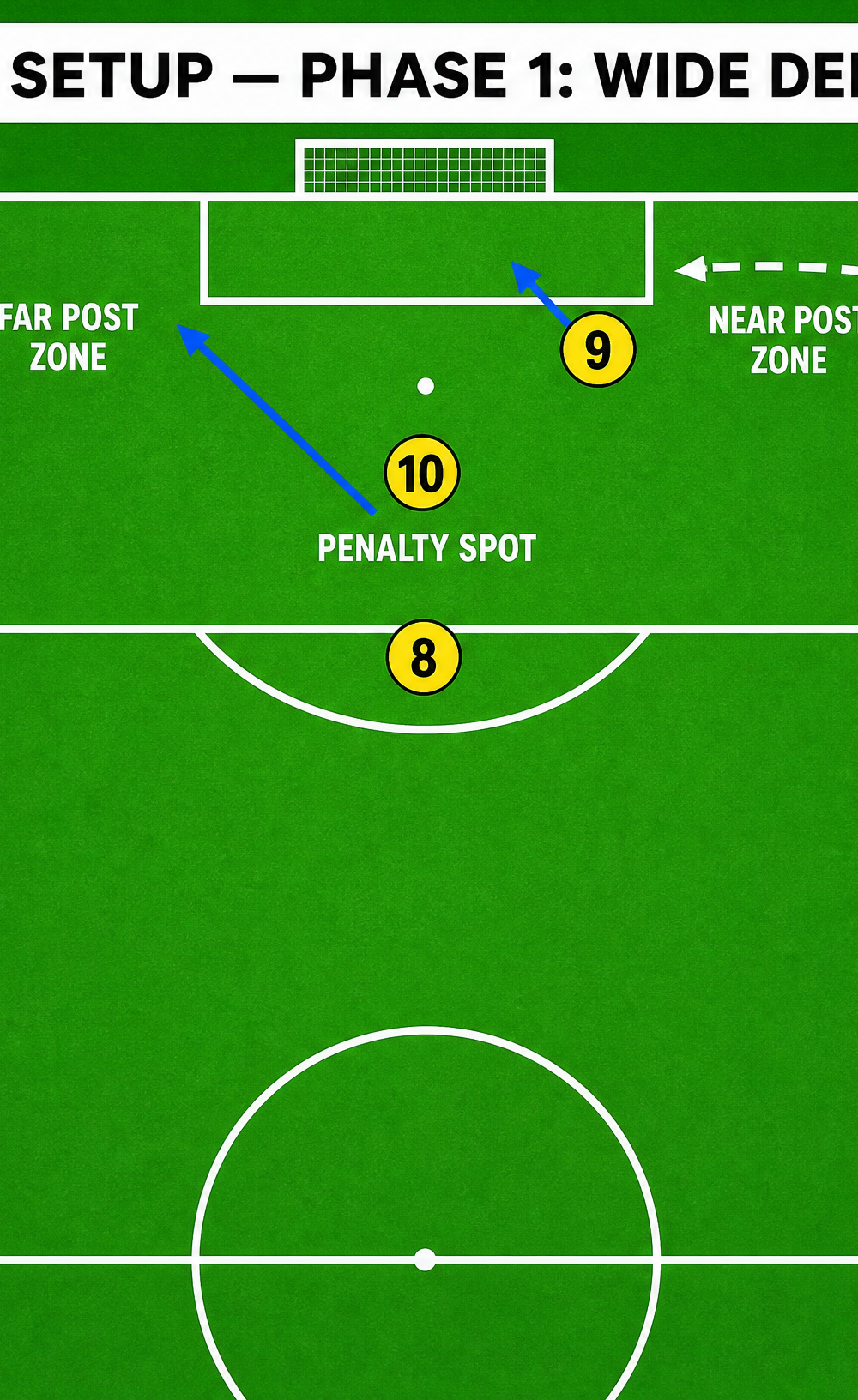
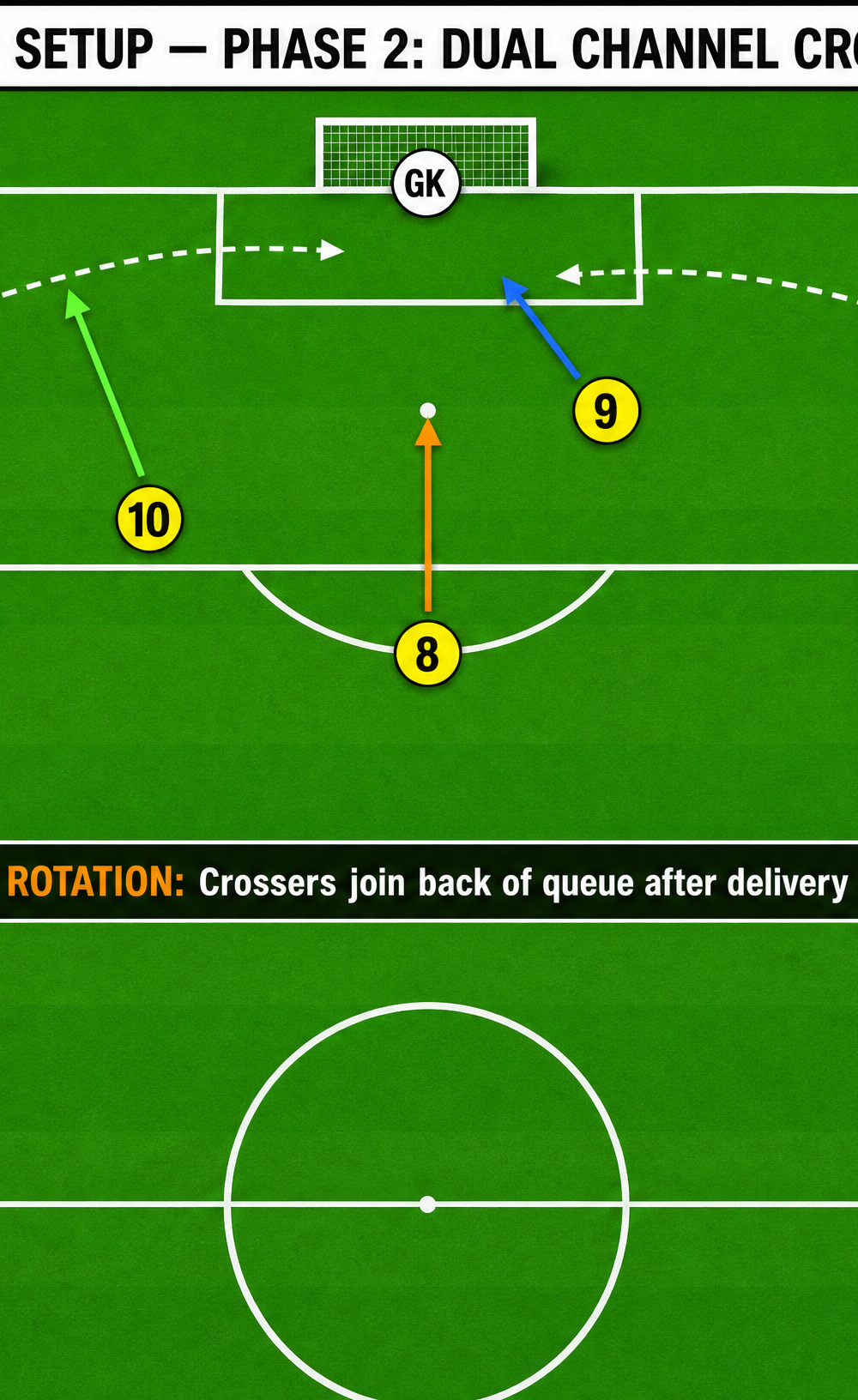
- Position your attackers centrally, roughly 35-40 yards from goal. Assign specific roles: Near Post Runner (No. 9), Far Post Runner (No. 10), and Edge of Box/Cutback Runner (No. 8).
3. Step-by-Step Instructions
Phase 1: Unopposed Pattern Play
- The Trigger: The coach blows the whistle or shouts "Right!" to initiate the sequence from the right flank.
- The Delivery: The right winger (No. 7) takes a touch out of their feet, drives into the Crossing Zone, and delivers a cross.
- The Runs: As the winger touches the ball, the central attackers begin their synchronized runs.
- No. 9 attacks the front post, aiming for the 6-yard box corner.
- No. 10 loops around to attack the back post.
- No. 8 delays their run, arriving late at the penalty spot for a potential cutback or clearance.
- The Finish: Attackers must attempt to score with one touch (header or volley).
- The Reset: Immediately after the phase ends (goal, save, or miss), the coach shouts "Left!" and the sequence repeats from the left winger (No. 11).
4. Key Coaching Points
To get the most out of this drill, coaches must demand quality in these specific areas:
- Quality of Delivery: Wingers must look up before crossing. The ball should be driven with pace into the "Danger Zone" (the space between the 6-yard box and the penalty spot), making it difficult for the goalkeeper to claim.
- Timing of the Run: Attackers should arrive as the ball arrives, not before. Arriving too early kills momentum; arriving too late misses the opportunity. "Arrive on time, not in time."
- Clearing the Space: The near-post runner (No. 9) is crucial. Even if they don't win the header, their aggressive run drags defenders away, opening up the center and far post for teammates.
- Ruthless Finishing: Encourage players to attack the ball aggressively. First-time finishes are mandatory. Technique over power when redirecting crosses.
5. Common Mistakes
Watch out for these frequent errors during the session:
- Static Forwards: Attackers waiting for the cross while standing still. Correction: Demand dynamic movement; forwards must check away before attacking their designated zone.
- Floated Crosses: Wingers lofting the ball aimlessly into the box. Correction: Instruct wingers to hit specific zones with driven, whipped crosses. A low, hard cross is often more dangerous than a high, looping one.
- Overcrowding the Near Post: Multiple attackers making the same run. Correction: Enforce strict positional discipline. If the near post is taken, the next player must identify and attack the open space (far post or cutback).
6. Variations & Progressions
Once the basic patterns are established, increase the difficulty to simulate match conditions.
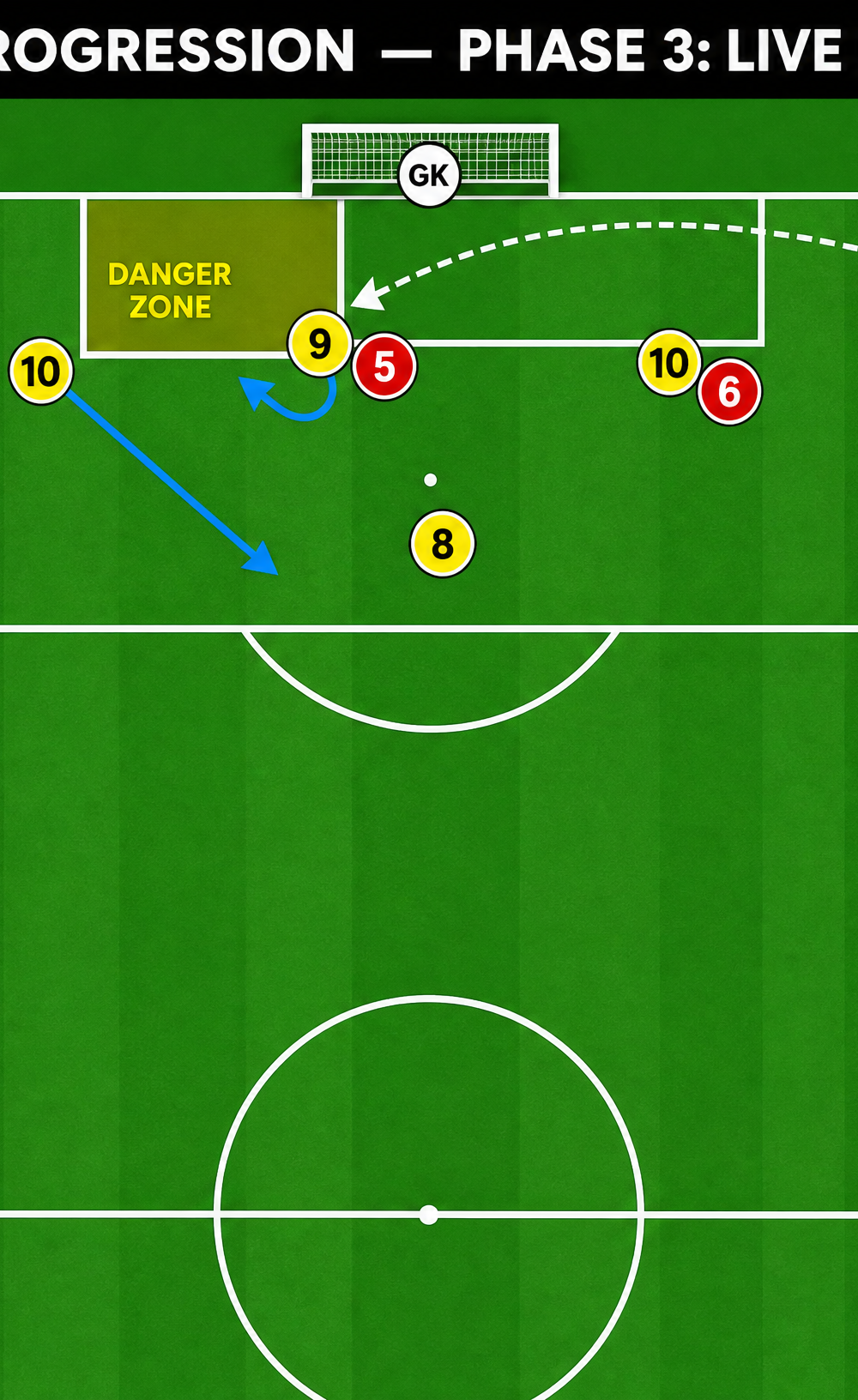
Progression 1: Live Defending
Introduce two Central Defenders (No. 5 and No. 6) to mark the central attackers. The defenders start on the 6-yard line and can actively challenge for the ball. This forces the attackers to use double movements (check and spin) to lose their markers.
Progression 2: The Recovering Fullback
Add a recovering defender who starts 10 yards behind the winger. The winger now has a time limit to get the cross away before being tackled, simulating a rapid counter-attack scenario.
Variation: The Cutback Focus
Instead of aerial crosses, mandate that all deliveries must be low cutbacks to the penalty spot, forcing the No. 8 to become the primary goalscorer.
7. Age Adaptations
- Under 8 - Under 10: Focus purely on the technique of striking a moving ball. Reduce the distances significantly. Use smaller goals and remove the goalkeeper initially to build confidence. No defenders.
- Under 12 - Under 14: Introduce the concept of specific runs (near post vs. far post). Focus on the winger's first touch out of their feet to set up the cross.
- Under 16 - Open: Full match realism. Demand high intensity, physical challenges in the box, and precise, driven deliveries. Incorporate all progressions and track scoring percentages.