Dynamic Diamond: One-Touch Passing & Third-Man Runs
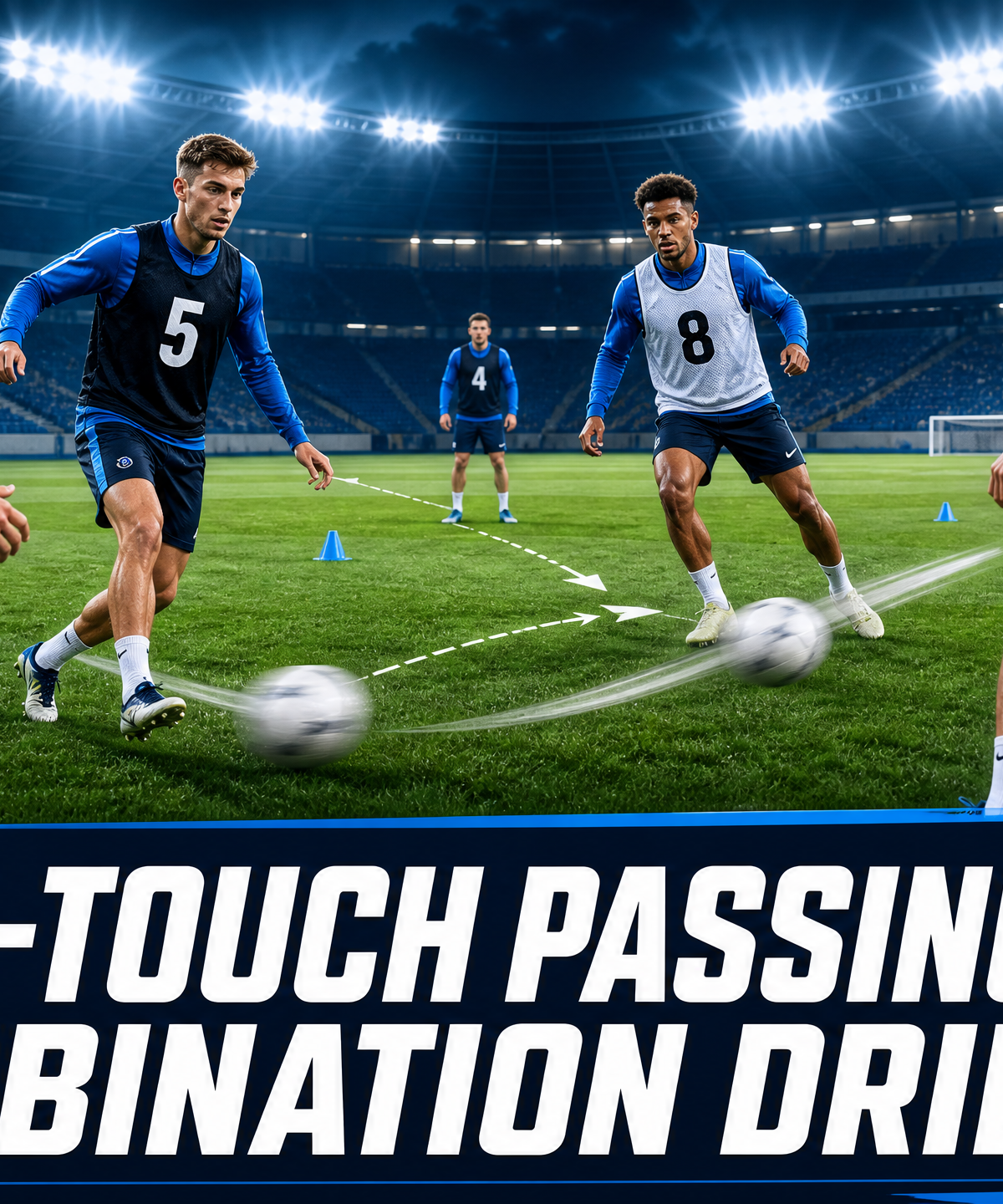
Develop rapid passing combinations, improve speed of thought, and master the third-man run with this high-intensity one-touch football drill.
Equipment Needed
1. Overview
The "Dynamic Diamond" One-Touch Passing Combination Drill is designed to improve players' speed of thought, passing accuracy, and off-the-ball movement in tight spaces. This drill simulates high-pressure game situations where quick combinations are necessary to break defensive lines. By focusing on one-touch passing, wall-passes, and third-man runs, coaches can develop a team's ability to maintain possession and progress the ball rapidly. It is ideal for the activation phase of a session or as a core technical component before moving into small-sided games.
2. Setup
Pitch Dimensions:
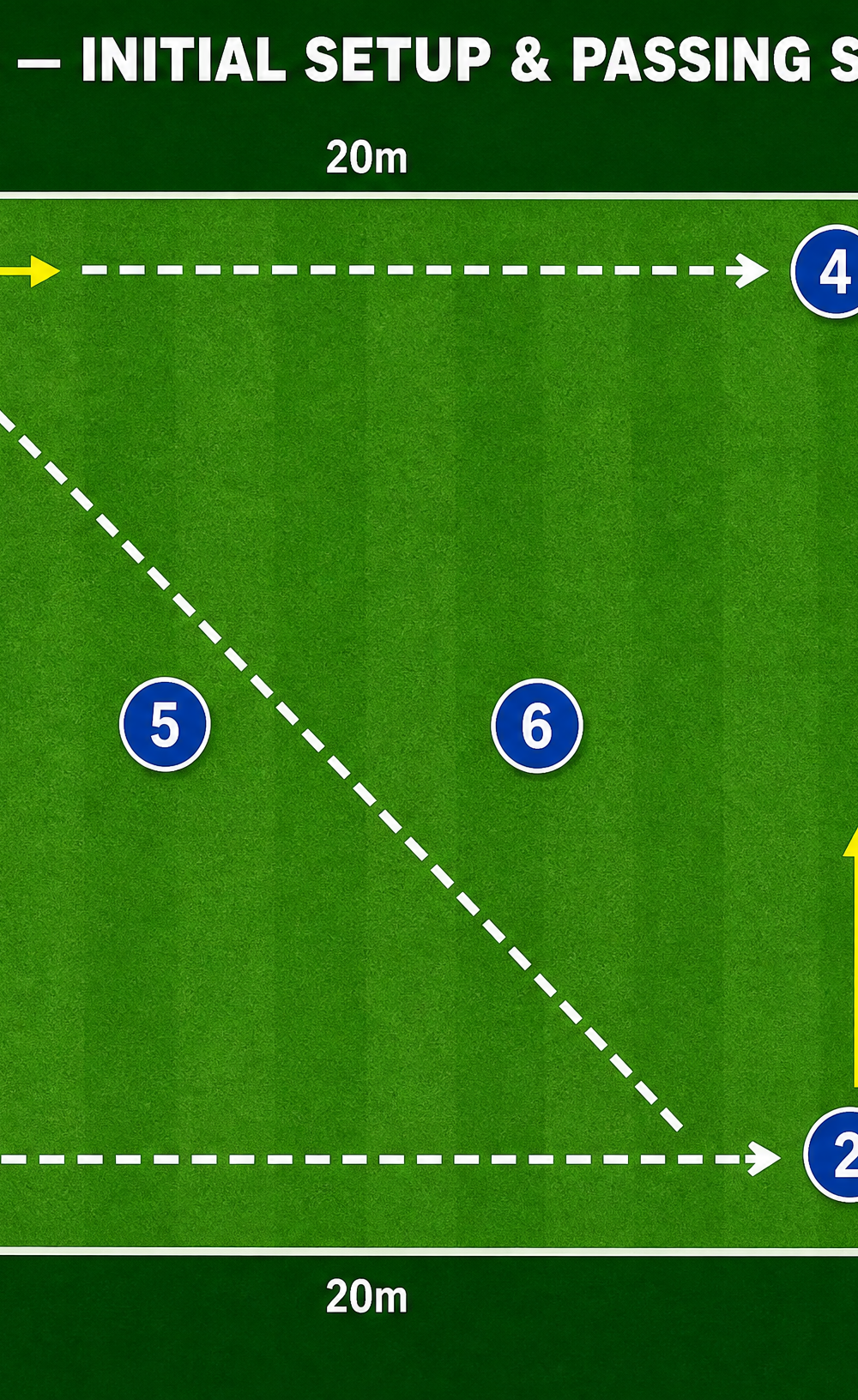
- Basic Grid: 20m x 20m (Adjustable based on age and skill level)
- Advanced Grid: 30m x 20m or 25m x 25m
Equipment Needed:
- 8-10 marker cones (preferably in two different colors)
- Minimum of 4 footballs (keep spares nearby to maintain drill tempo)
- Bibs for defenders (if using the advanced progression)
Player Positions:
- Set up 4 cones in a diamond or square shape.
- Position one player at each cone (Players 1, 2, 3, 4).
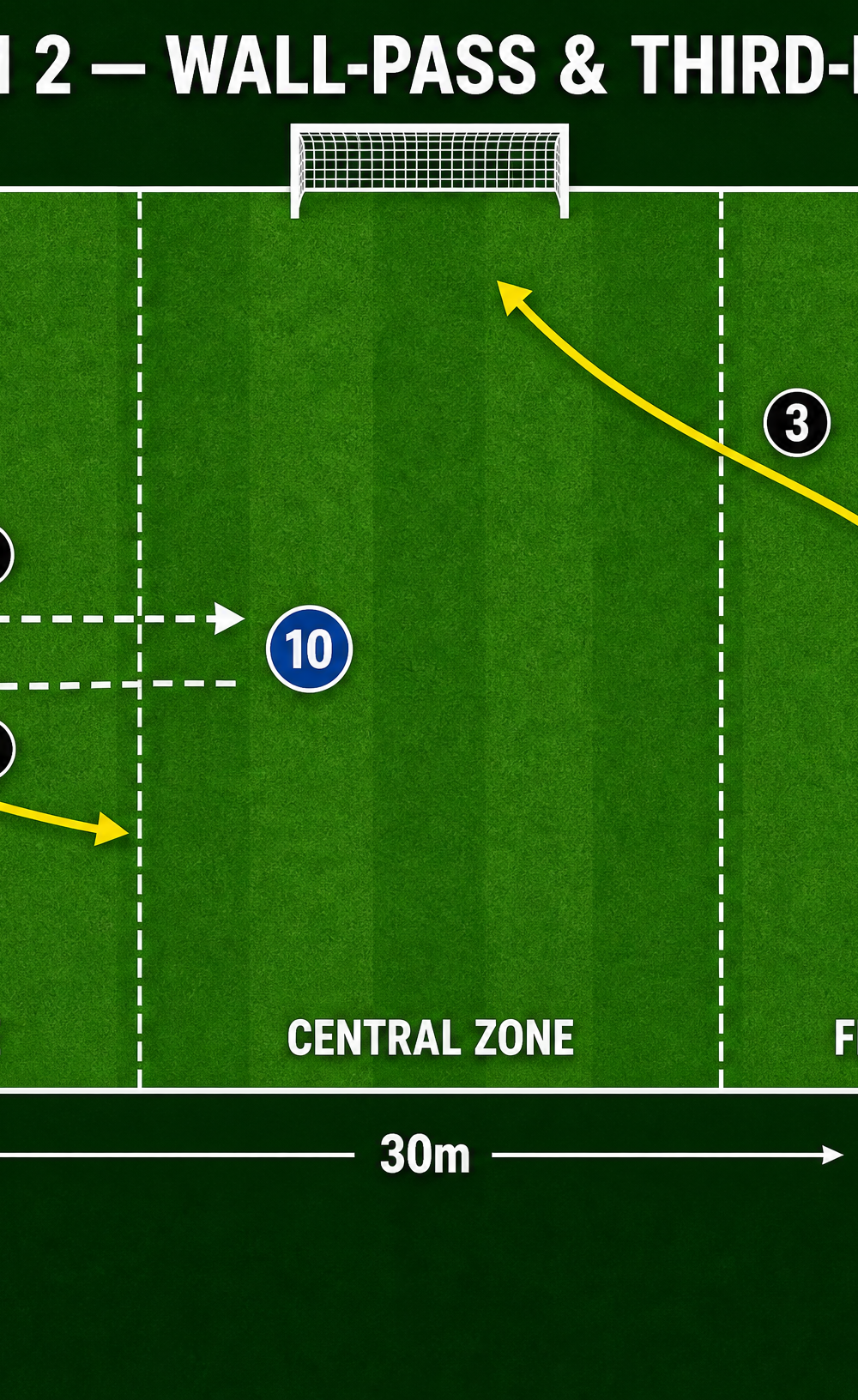
- Position two central players (Players 5, 6) inside the grid to act as link players or "walls."
3. Step-by-Step Instructions
- Initiate the Sequence: Player 1 starts with the ball at their feet at the bottom cone. The drill begins with a firm, ground pass from Player 1 to Player 2 on the right side.
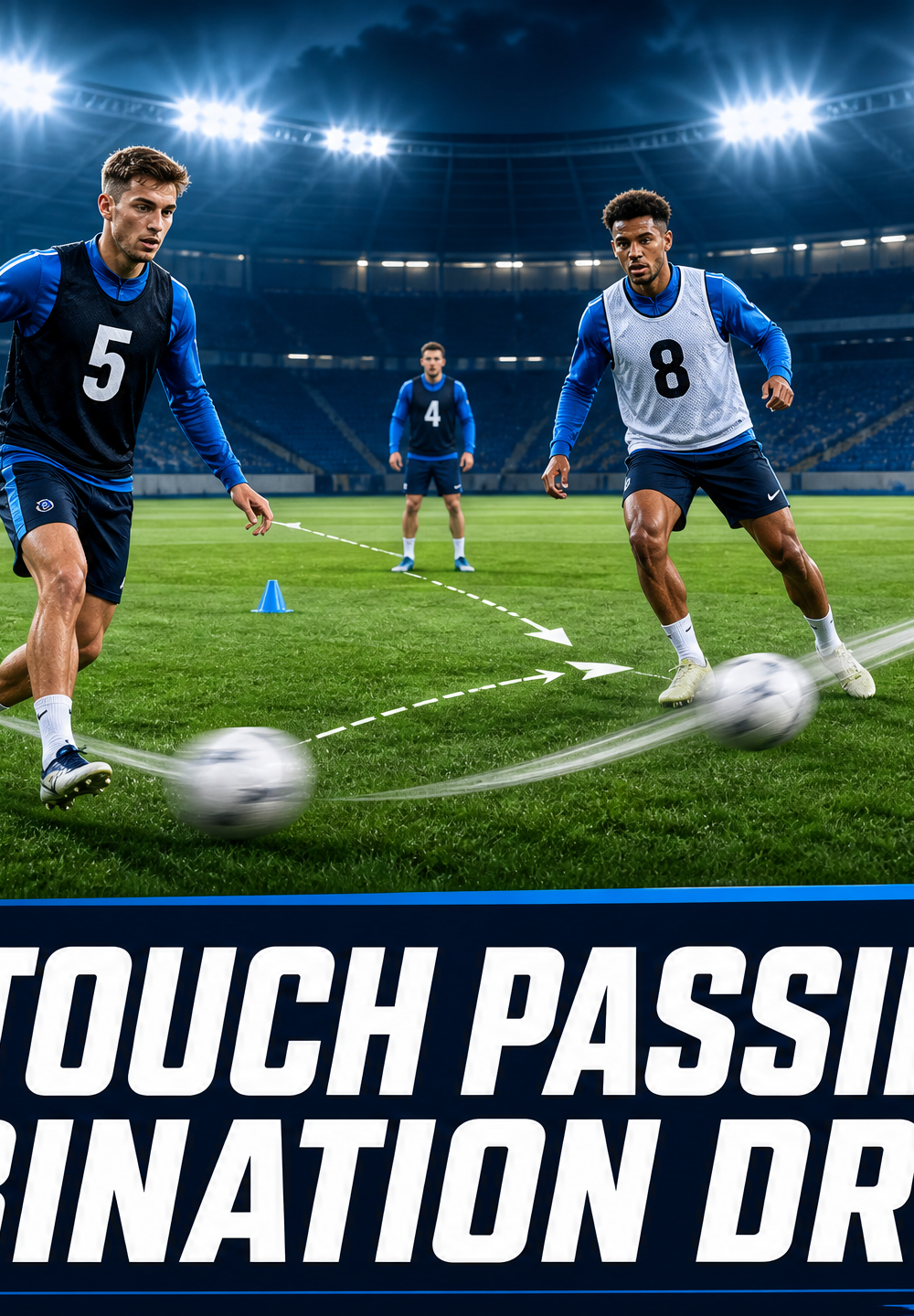
- First Combination: Player 2 receives the ball and immediately plays a one-touch pass diagonally across the grid to Player 3.
- The Wall Pass: As the ball travels to Player 3, central Player 5 checks into space to offer a passing option. Player 3 plays a one-touch pass to Player 5, who immediately returns it (a classic wall-pass or 1-2).
- Third-Man Run: While the wall-pass is occurring, Player 4 anticipates the play and makes a third-man run into space. Player 3, upon receiving the return pass from Player 5, plays a one-touch pass into the path of Player 4.
- Reset and Repeat: Player 4 receives the ball and dribbles or passes back to the start line (Player 1's position) to reset the sequence.
- Rotation: Players follow their pass to the next cone to ensure everyone rotates through all positions (P1 moves to P2, P2 to P3, etc.).
4. Key Coaching Points
- Body Shape and Awareness: Players must scan the field before receiving the ball. Body shape should be open, allowing them to see both the incoming pass and their next target.
- Pass Weight and Accuracy: Passes must be firm and played to the correct foot (the "safe" foot or the foot leading in the direction of the next play). A bobbling or slow pass kills the drill's tempo.
- Timing of Movement: Off-the-ball runs (especially the third-man run) must be timed perfectly. Arriving too early closes the space; arriving too late breaks the combination.
- Communication: Verbal and non-verbal communication is critical. Players should demand the ball, use eye contact, and point to where they want the pass.
- "Play the Way You Face": Emphasize that central players acting as walls should generally play the ball back in the direction they are facing to maintain the speed of play.
5. Common Mistakes
- Taking Too Many Touches: Players reverting to two touches when the drill demands one-touch play. This often happens due to poor body shape or a poorly weighted initial pass.
- Standing Still After Passing: Players admiring their pass instead of immediately moving to support the next action or rotating to their next position.
- Poor Angle of Support: Central players hiding behind imaginary defenders instead of checking into clear passing lanes to offer a viable wall-pass option.
- Lack of Intensity: Performing the drill at a walking pace. The drill must be executed at match speed to be effective.
6. Variations & Progressions
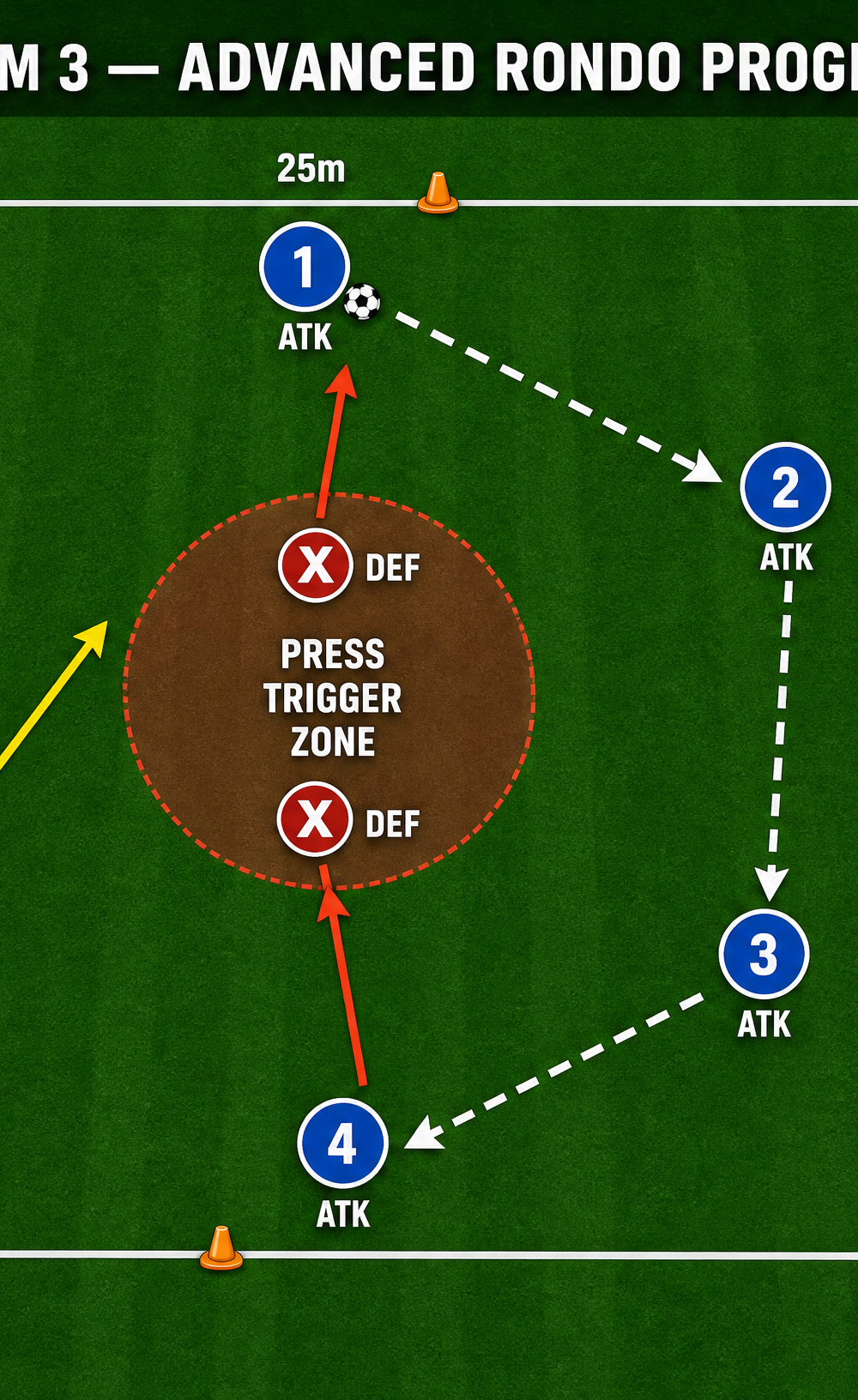
- Add Defenders (Rondo Transition): Introduce 1 or 2 passive, then active, defenders inside the grid. The attacking players must now use the one-touch combinations to keep possession away from the defenders.
- Reverse Direction: Run the sequence in the opposite direction (counter-clockwise) to ensure players are equally comfortable using both feet.
- The "Up-Back-Through" Pattern: Change the passing sequence so the ball goes from a deep player (up) to a high player, who drops it back (back) to a supporting midfielder, who then plays a penetrating pass (through) to a runner.
7. Age Adaptations
- Under 8 / Under 10: Increase the grid size to give players more time and space. Allow two touches initially (control and pass) before progressing to one-touch. Focus heavily on basic passing technique rather than complex combinations.
- Under 12 / Under 14: Introduce the strict one-touch rule. Focus on the timing of the checking runs and the weight of the pass. Introduce passive defenders to increase cognitive load.
- Under 16 / Open (Seniors): Decrease the grid size to demand faster decision-making and tighter control. Implement active defenders and require the drill to be performed at absolute match intensity.