

Basketball
The Elevator Doors: Sideline Out-of-Bounds Buzzer Beater
Execute a flawless last-second sideline out-of-bounds play designed to get your best shooter a wide-open look from the top of the key.
What you need
1 Basketball, Full court with FIBA markings
1. Overview
The "Elevator Doors" set play is a highly effective sideline out-of-bounds (SLOB) action specifically designed for end-of-game or end-of-quarter situations where you need a quick, high-percentage three-point shot. It leverages misdirection and a double screen to free up your best shooter at the top of the key. This play is ideal when there are 2 to 4 seconds remaining on the clock. The primary objective is to create a clean catch-and-shoot opportunity by forcing the defense to navigate a tight gap that immediately closes, much like a pair of elevator doors.
2. Setup
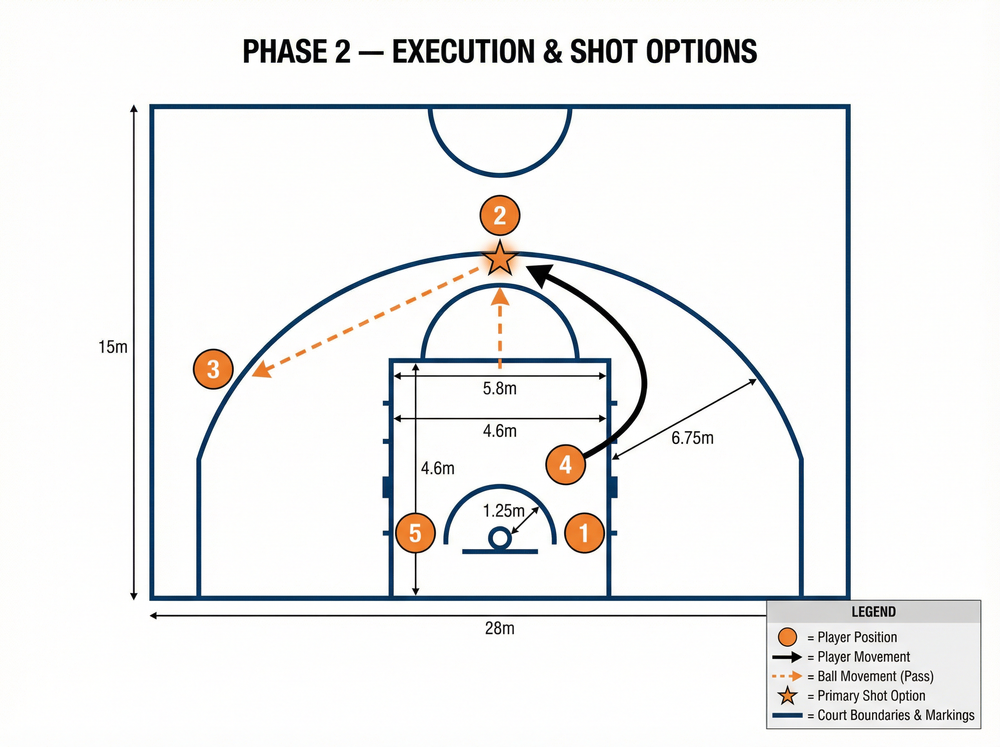
To run this play effectively, you need a standard FIBA basketball court (28m x 15m). The setup requires precise positioning to ensure the timing of the screens and cuts aligns perfectly.
Player Positions:
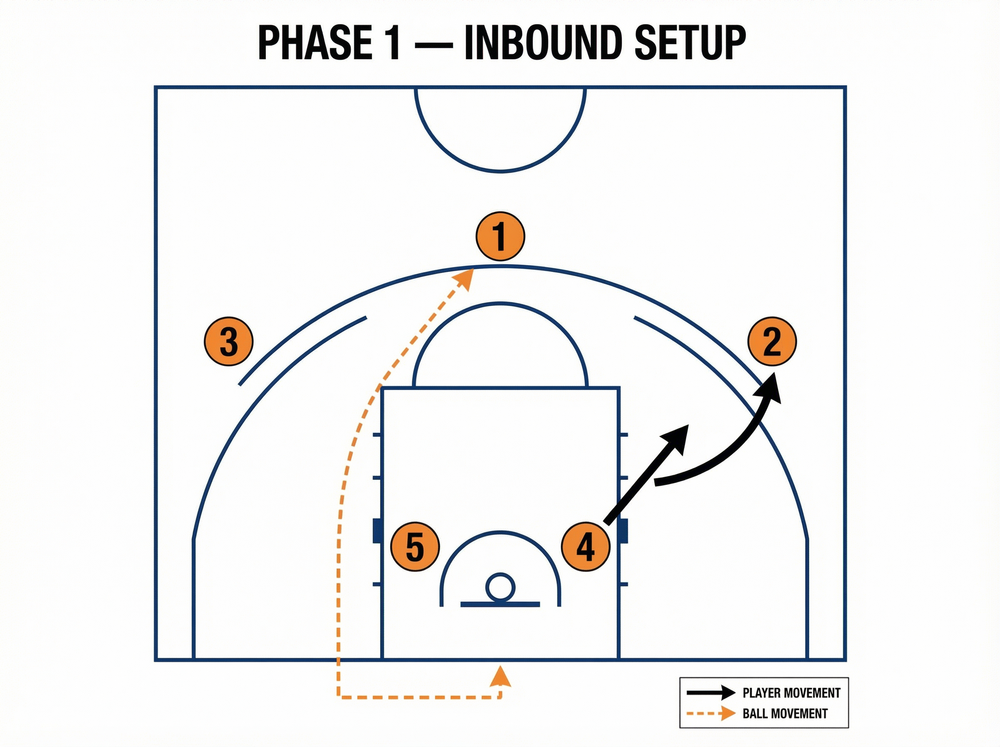
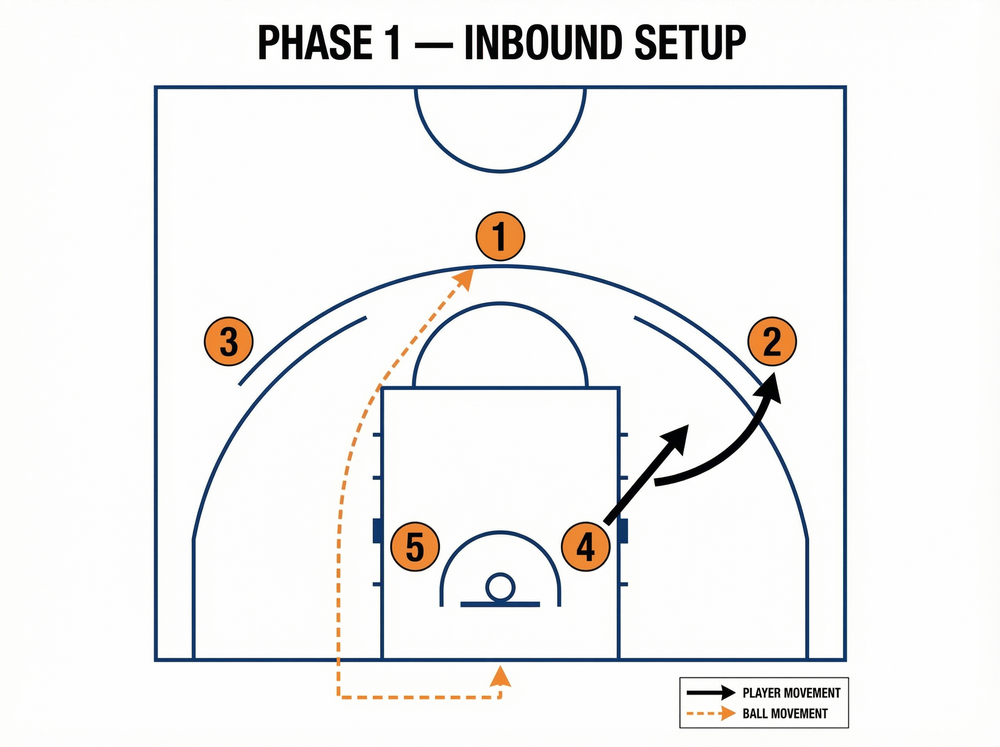
- Player 1 (Point Guard): Inbounder on the sideline, positioned parallel to the free-throw line extended.
- Player 2 (Shooting Guard / Primary Shooter): Positioned on the weak-side block.
- Player 3 (Small Forward): Positioned at the weak-side elbow.
- Player 4 (Power Forward): Positioned at the strong-side elbow.
- Player 5 (Center): Positioned on the strong-side block.
Equipment Needed:
- 1 Basketball
- Full court with accurate markings
3. Step-by-Step Instructions
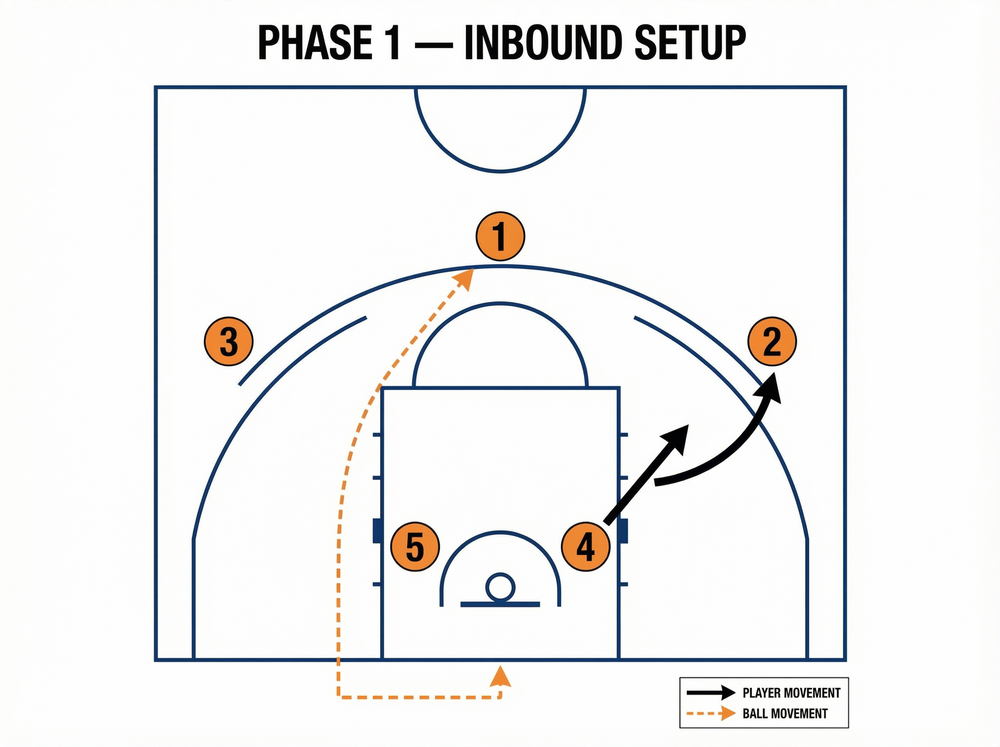
Executing this play requires synchronized movement. Every player must understand their role and the timing of their actions.
- The Decoy Cut: As the referee hands the ball to Player 1, Player 3 makes a hard cut toward the strong-side corner. This movement is designed to draw the defense's attention and clear the middle of the floor.
- The Setup: Simultaneously, Player 5 steps up from the strong-side block to set a screen for Player 4 at the elbow.
- The Curl: Player 4 curls around Player 5's screen and dives toward the basket. This action forces the defense to react to a potential lob or layup threat.
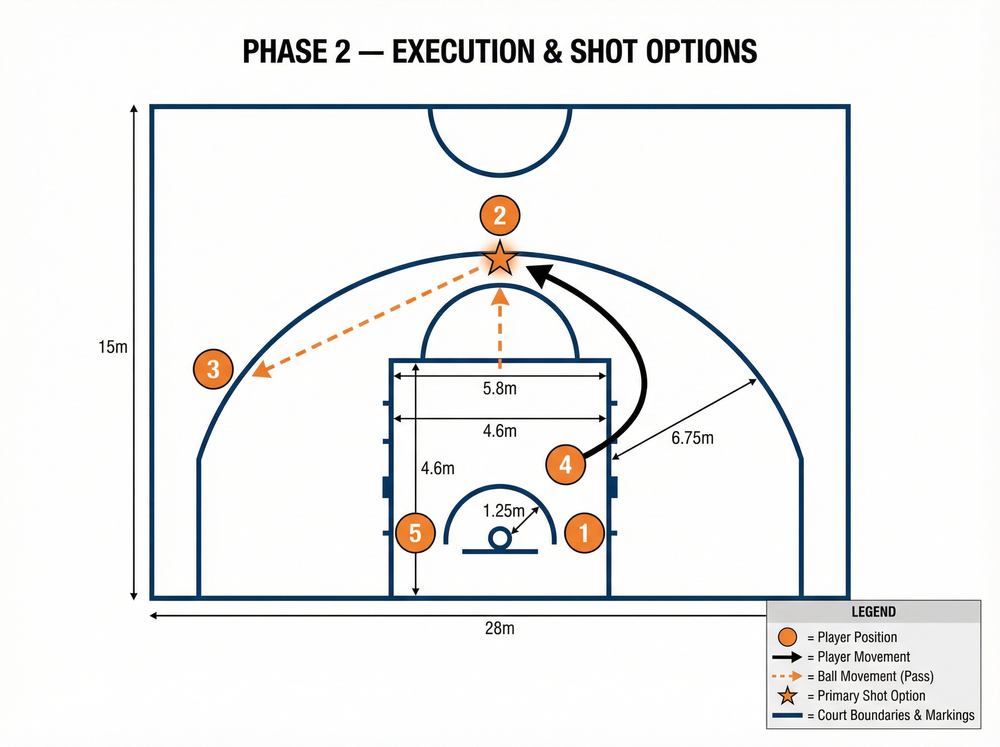
- The Elevator Screen: As Player 4 clears the area, Player 5 and Player 3 (who has relocated to the top of the key area) position themselves side-by-side, leaving a small gap between them.
- The Shooter's Cut: Player 2 sprints from the weak-side block directly through the gap between Player 5 and Player 3.
- Closing the Doors: The moment Player 2 passes through, Player 5 and Player 3 step together, closing the gap and effectively sealing off Player 2's defender.
- The Pass and Shot: Player 1 delivers a crisp, accurate pass to Player 2 at the top of the key for an open catch-and-shoot three-pointer.
4. Key Coaching Points
To ensure the success of the "Elevator Doors" play, emphasize these critical aspects during practice:
- Timing is Everything: The shooter (Player 2) must not start their sprint too early. They need to wait for the screeners to establish their positions before making the cut.
- Solid Screens: The screeners (Player 3 and Player 5) must be stationary and have a wide base when they close the gap. Moving screens will result in an offensive foul, negating the play.
- Pass Accuracy: The inbounder (Player 1) must deliver the pass exactly to the shooter's shooting pocket. A poor pass will disrupt the shooter's rhythm and allow the defense to recover.
- Sell the Decoys: Players 3 and 4 must run their initial cuts at game speed to force the defense to react and commit to those actions.
5. Common Mistakes
Watch out for these frequent errors that can cause the play to break down:
- Telegraphing the Pass: The inbounder staring directly at the primary shooter before the cut happens, allowing the defense to anticipate the play.
- Weak Screens: Screeners failing to make solid contact or closing the gap too slowly, allowing the trailing defender to slip through and contest the shot.
- Rushed Shot: The shooter catching the ball and rushing the release due to perceived pressure, rather than trusting the screens and taking a balanced shot.
- Poor Spacing: Players bunching up in the lane, which clogs the passing lanes and makes it easier for a single defender to disrupt multiple actions.
6. Variations & Progressions
Adapt the play based on the defensive scheme or your team's personnel:
- The Slip: If the defense anticipates the elevator screen and switches aggressively, have one of the screeners (Player 5) slip the screen and dive hard to the basket for a quick layup.
- The Flare: Instead of running through the elevator doors, Player 2 can fake the cut and flare out to the weak-side wing for a shot, using a single screen from Player 3.
- Secondary Option: If the primary option is heavily covered, Player 4's initial dive to the basket serves as a viable secondary scoring opportunity.
7. Age Adaptations
Modify the play to suit the skill level and physical capabilities of different age groups:
- Under 12: Focus on a simpler single-screen action rather than the complex timing of the elevator doors. Emphasize basic cutting and accurate passing.
- Under 14: Introduce the concept of the double screen, but allow more space between the screeners to reduce the risk of offensive fouls. Focus on the shooter's footwork on the catch.
- Under 16 & Open: Execute the full "Elevator Doors" play with tight screens and precise timing. Incorporate the variations and read-and-react options based on defensive adjustments.
