Elite Wide Play: Crossing and Finishing Masterclass
Develop lethal wide play by mastering the timing of runs, crossing delivery types, and penalty box occupation in this comprehensive attacking drill.
Equipment Needed
1. Overview
Creating goal-scoring opportunities from wide areas remains one of the most effective attacking strategies in modern football. This comprehensive drill focuses on the entire sequence of wide play: from the initial wide distribution, to the winger's 1v1 execution or crossing delivery, right through to the coordinated movement of attackers arriving in the penalty area.
By running this session, coaches will help players understand the critical relationship between the crosser's body shape and the timing of the attackers' runs. It emphasizes the importance of occupying key zones—the near post, far post, and penalty spot—to maximize the chances of converting crosses into goals. This drill is ideal for teams looking to improve their final-third efficiency and attacking fluidity.
2. Setup
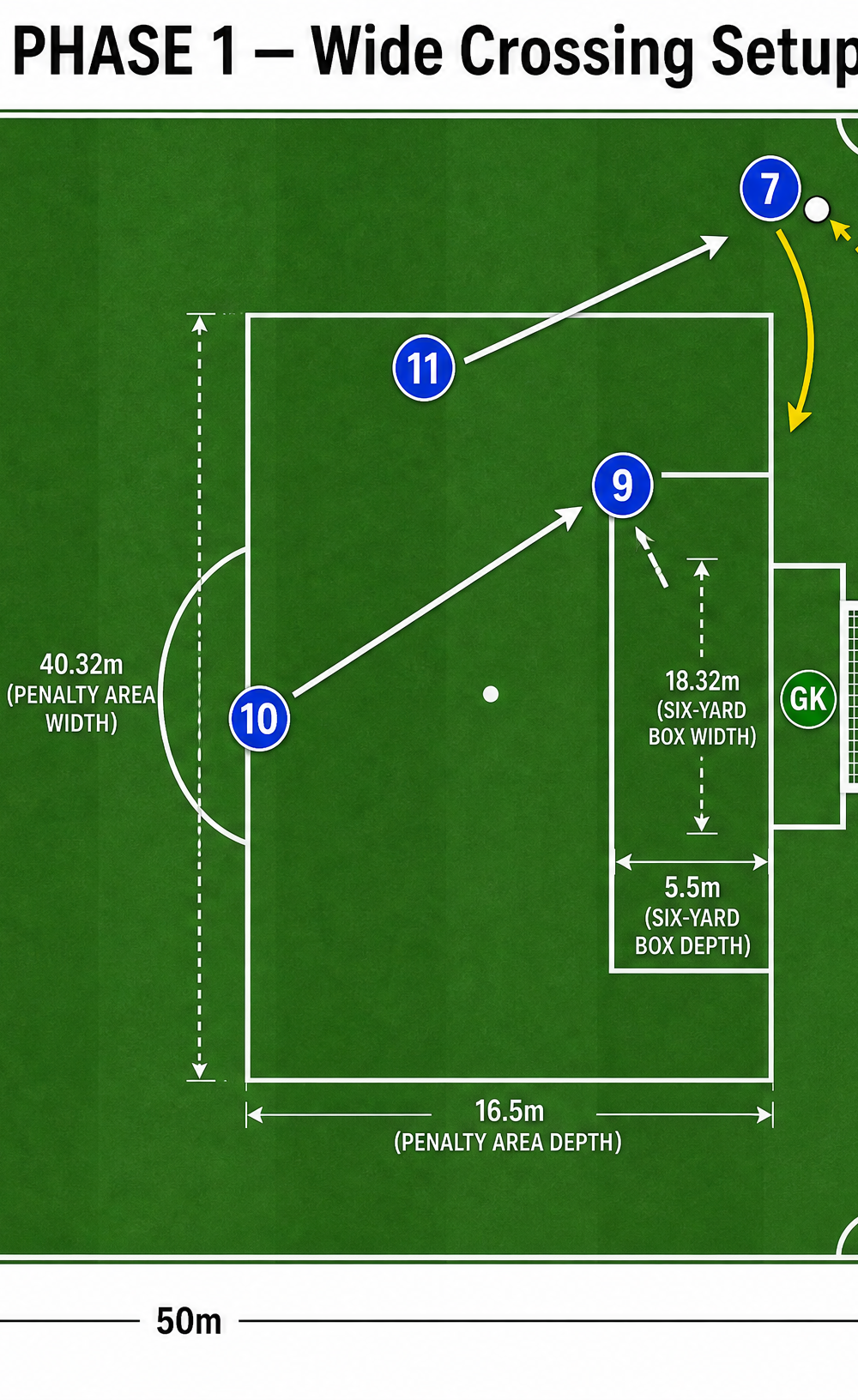
Pitch Area: Use one half of a standard football pitch (approx. 50m x 68m).
Players: 10-14 players (1 Goalkeeper, 2-4 Wide Players/Wingers, 3-4 Central Attackers/Midfielders, 2-3 Defenders).
Equipment: 1 Full-size goal, 10-15 footballs (placed near the server/coach), cones to mark starting positions and wide channels, bibs for defenders.
Positions:
- Server/Coach: Positioned near the halfway line with the supply of balls.
- Wingers (7 & 11): Starting wide, approximately 35m from the goal line.
- Attackers (9, 10, 8): Starting centrally, around 30-35m from goal.
- Defenders (CBs): Starting inside the penalty area.
- Goalkeeper (GK): In goal.
3. Step-by-Step Instructions
- The Trigger: The drill begins with the Server/Coach playing a firm, driven pass out to the right winger (Player 7) in the wide channel.
- The Wide Approach: The winger receives the ball on the move, taking a positive first touch toward the byline to commit an imaginary (or real) full-back.
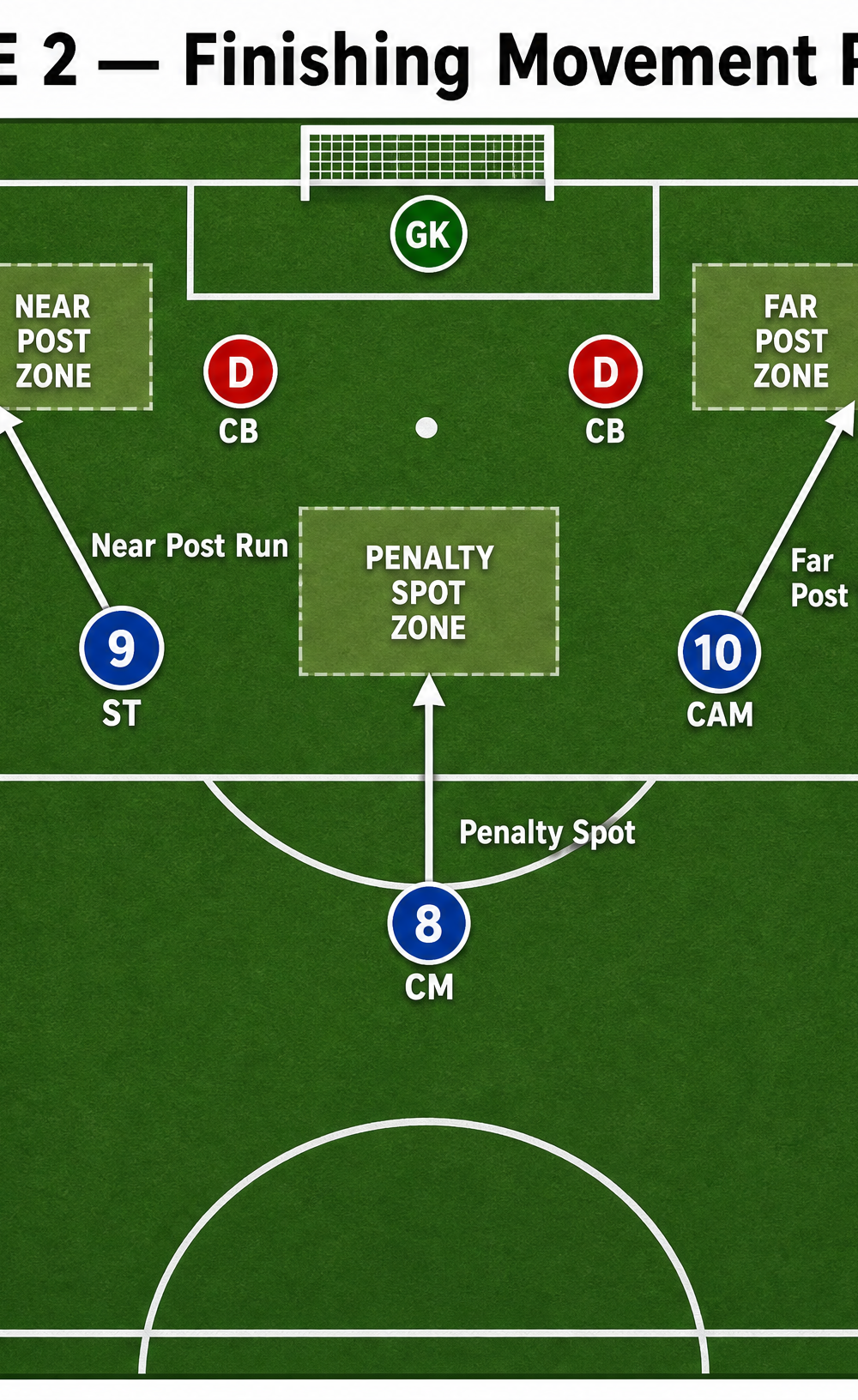
- The Coordinated Runs: As the winger prepares to cross (looking up to assess the box), the central attackers initiate their runs.
- The Striker (9) makes an explosive dart across the near post.
- The Attacking Midfielder (10) loops toward the far post.
- The Central Midfielder (8) arrives late at the edge of the penalty area/penalty spot.
- The Delivery: The winger delivers the cross into the penalty area, choosing the appropriate type of cross (driven near post, lofted far post, or cutback) based on the attackers' movements and defender positioning.
- The Finish: The attackers must attack the ball aggressively, aiming for a one-touch finish. The drill immediately resets, and the Server alternates the initial pass to the left winger (Player 11).
4. Key Coaching Points
- Timing is Everything: Attackers must not arrive in the box too early. They should time their runs so they are attacking the ball at pace as it arrives, rather than standing static waiting for it.
- Zone Occupation: Ensure the three critical zones (near post, far post, penalty spot) are occupied simultaneously. This stretches the defense and provides multiple options for the crosser.
- Crosser's Assessment: The winger must get their head up before delivering the ball. They should aim for a specific zone or player, not just put the ball blindly into the 'mixer'.
- Types of Delivery: Encourage different crossing techniques. A low, driven cross is often best for the near post, while a floated, hung cross suits the far post arrival.
- Attacking the Ball: Attackers must show aggression and determination to win the first contact. Meet the ball, don't wait for it to reach you.
5. Common Mistakes
- Arriving Too Early: Attackers reach their zones before the cross is delivered, killing their momentum and making them easy to mark.
- Crossing Without Looking: Wingers hitting the ball into the box without assessing the positioning of teammates or defenders.
- All Running to the Same Area: Attackers making the same run (e.g., both 9 and 10 attacking the near post), making it easy for defenders to clear and leaving other zones empty.
- Poor First Touch by Winger: A negative or slow first touch wide allows the defense to set up and blocks the crossing angle.
6. Variations & Progressions
- Progression 1: Add Active Defenders: Introduce 2-3 active defenders in the box who are instructed to clear the ball. This increases the realism and forces attackers to use double movements to lose their markers.
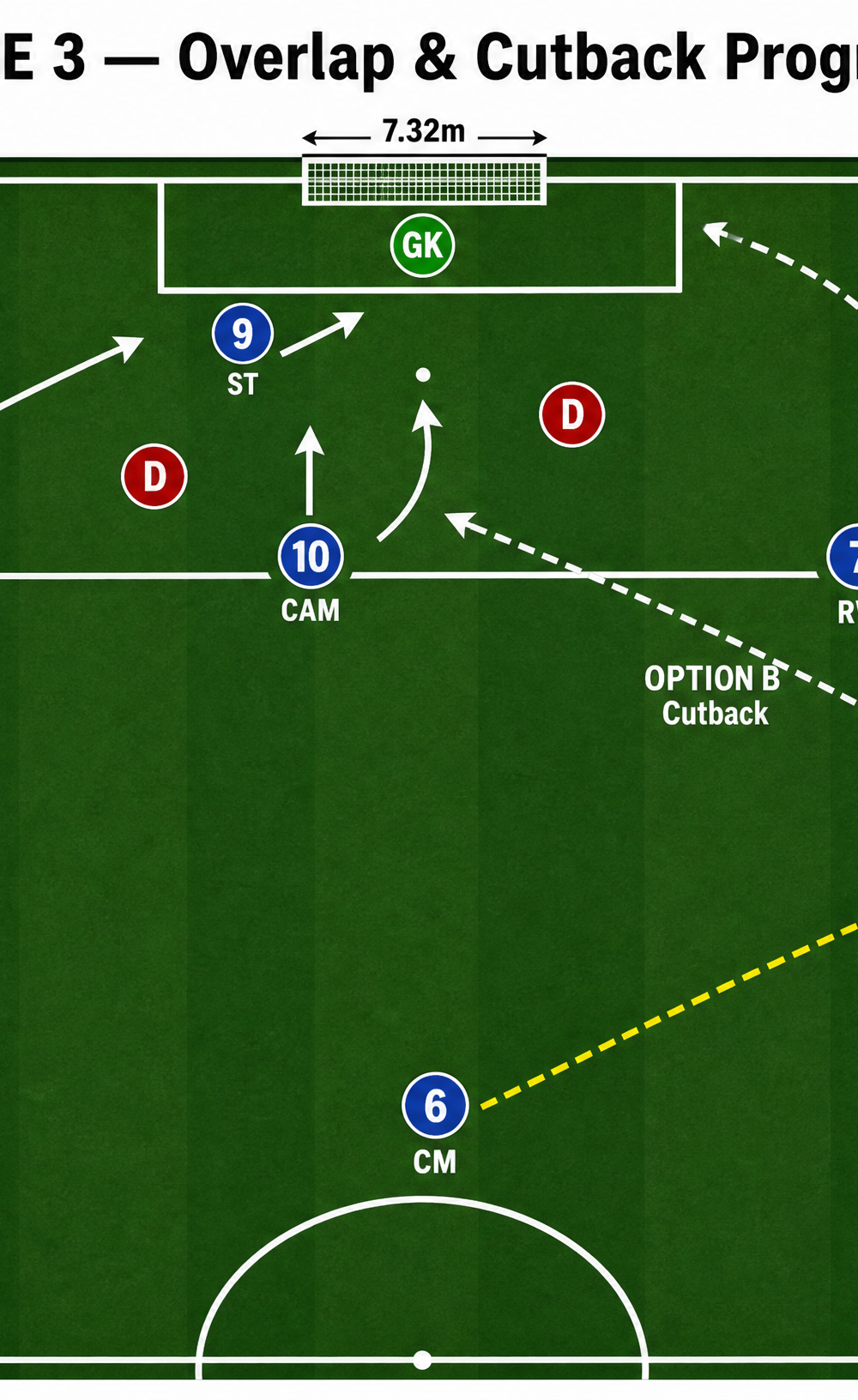
- Progression 2: The Overlap: Introduce full-backs (Player 2 or 3) making overlapping runs past the winger. The winger can either use the overlap or cut inside to deliver an in-swinging cross or shot.
- Variation: The Cutback: Specifically condition the drill so that the winger must drive all the way to the byline and deliver a cutback to the late-arriving midfielder at the penalty spot.
7. Age Adaptations
- Under 8 - Under 10: Focus purely on the technique of striking the moving ball and the basic concept of running toward the goal. Remove defenders entirely. Reduce the distances significantly.
- Under 12 - Under 14: Introduce the specific zones (near post, far post). Begin to demand that wingers look up before crossing. Use passive defenders to provide visual obstacles.
- Under 16 - Open: Full match realism. High tempo, active aggressive defending, and demand tactical awareness regarding the types of crosses and coordinated double movements from the attackers.