The Overload Cross: Dynamic Penalty Box Movement Play
Master the art of coordinated penalty box movement to create high-percentage scoring opportunities from wide crosses.
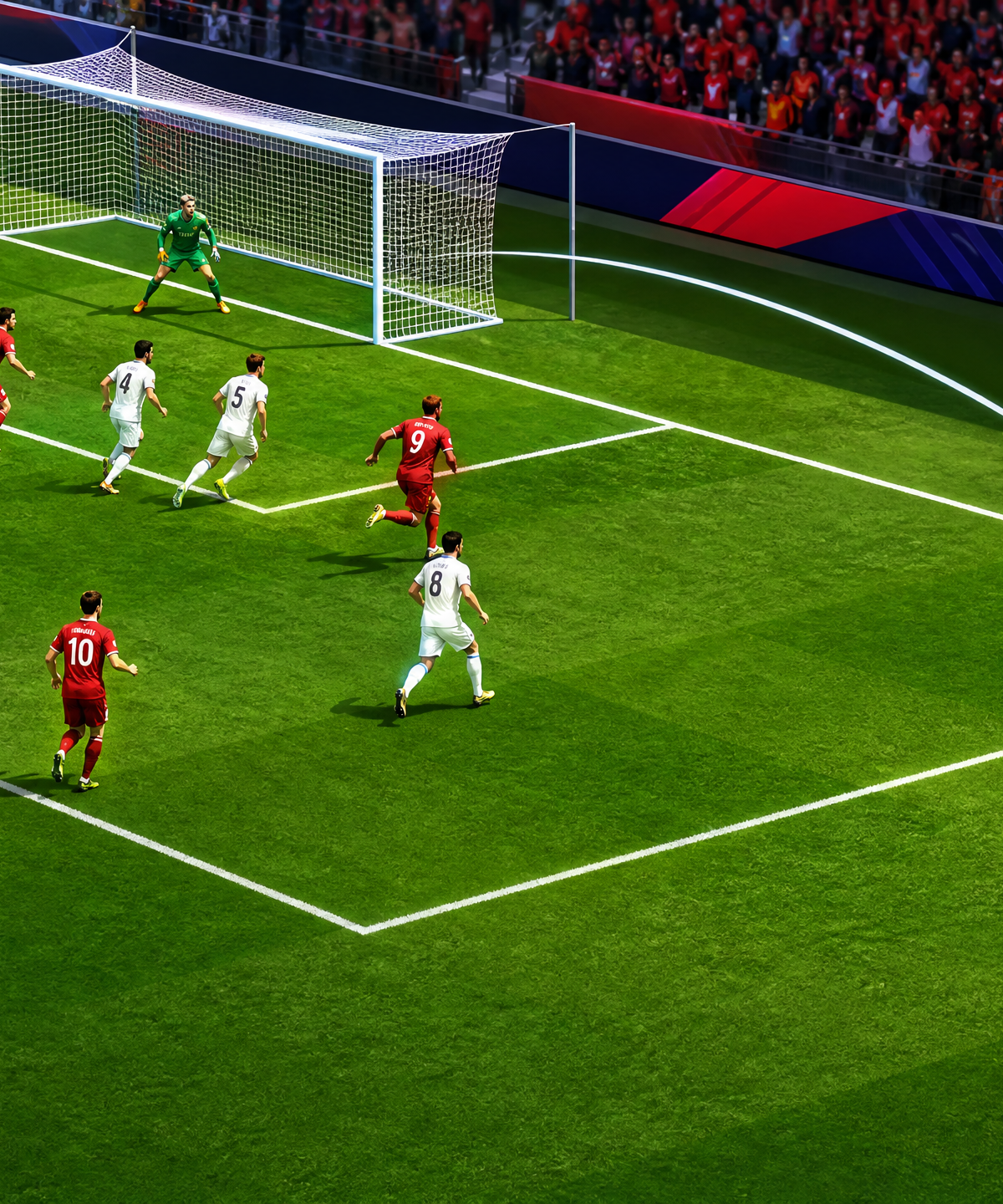
Equipment Needed
1. Overview
Creating high-quality scoring chances from crosses requires more than just a good delivery; it demands synchronized, purposeful movement inside the penalty area. The Overload Cross is a dynamic set play designed to manipulate the opposition's defensive line, creating space in critical scoring zones.
By executing coordinated runs—specifically targeting the near post, far post, and the penalty spot—this play forces defenders into difficult decision-making situations. It is particularly effective against teams that defend deep or employ a rigid zonal marking system. Coaches should implement this play when their team struggles to convert wide possession into clear-cut chances, utilizing it to maximize the effectiveness of wingers and fullbacks who excel at crossing.
2. Setup
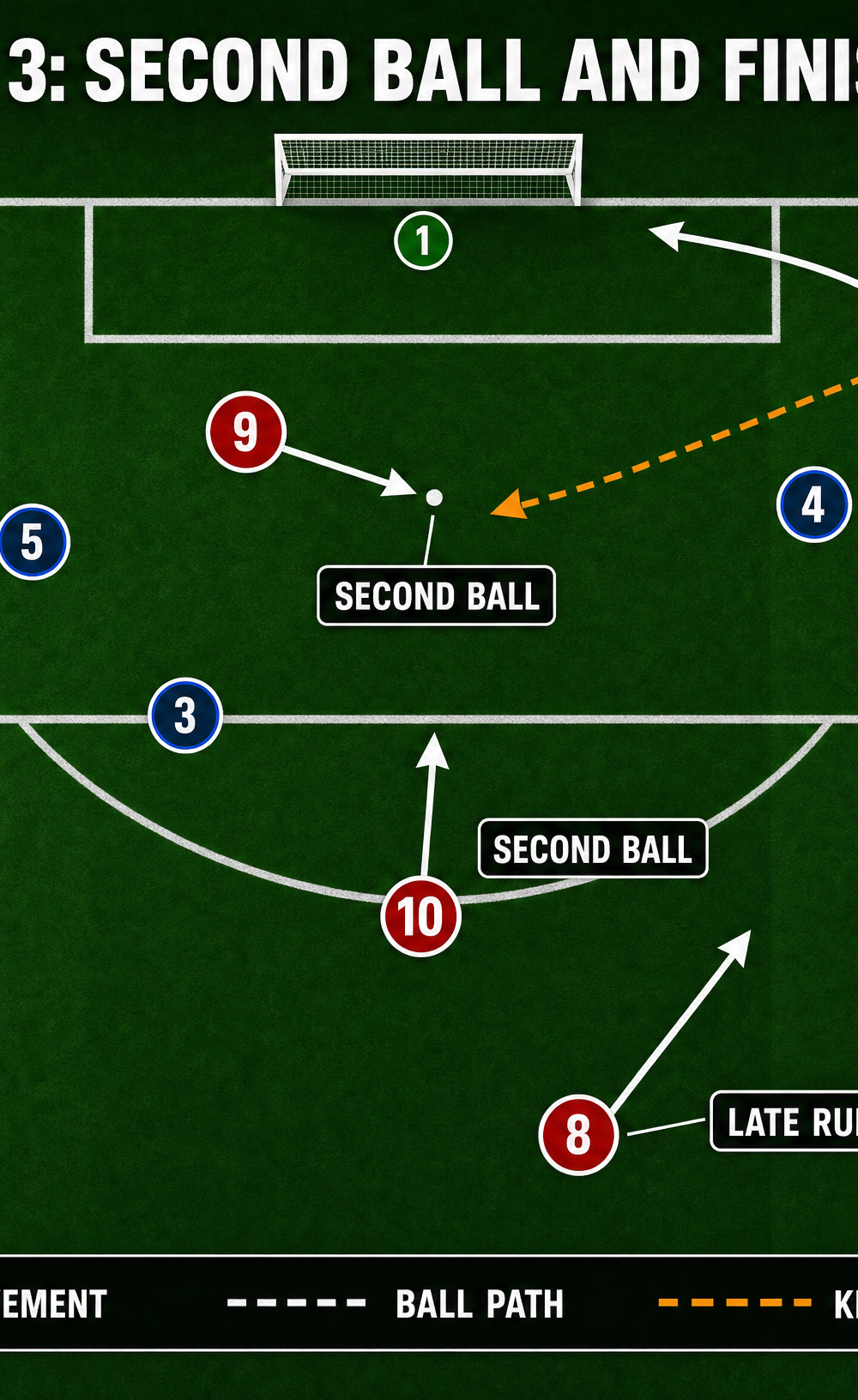
Proper setup is crucial for the success of this set play. The exercise should be conducted on a full-size pitch (100-110m x 64-75m) to ensure realistic distances and timings.
- Equipment: 1 full-size goal, 10-15 footballs (placed with the wide players), training bibs (two colors), and cones to mark starting positions and target zones.
- Players Required: Minimum 8 players (1 Goalkeeper, 3 Defenders, 4 Attackers). Ideal setup uses 11 players (1 GK, 4 Defenders, 6 Attackers).
- Pitch Setup: Place cones to designate the 'Near Post Zone', 'Far Post Zone', and 'Penalty Spot'. The crossing player should start with a supply of balls on the right flank, approximately 15-20 meters from the byline.
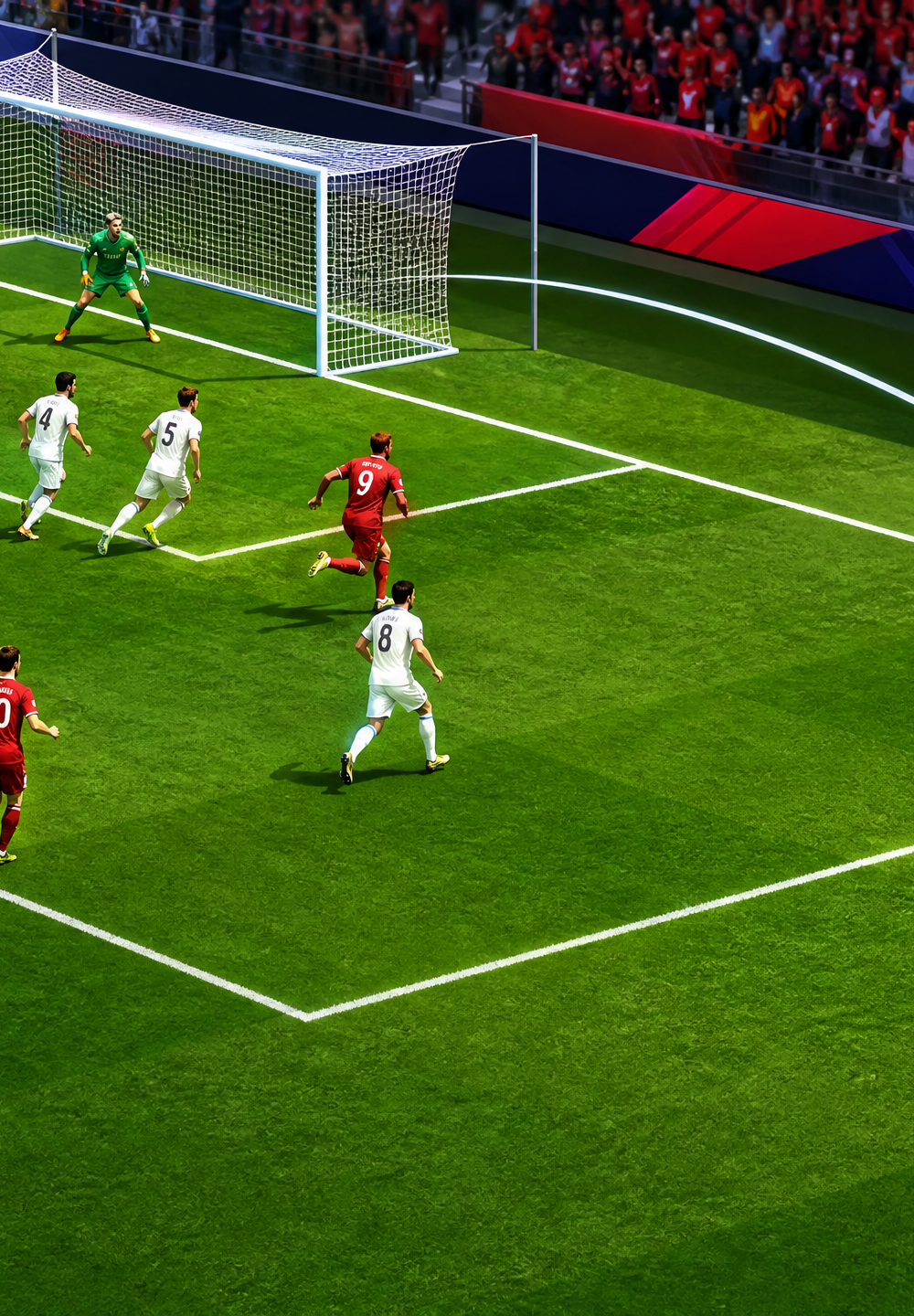
3. Step-by-Step Instructions
The execution of the play is broken down into precise, synchronized movements. Timing is the most critical element; runs must be triggered by the crossing player's body language.
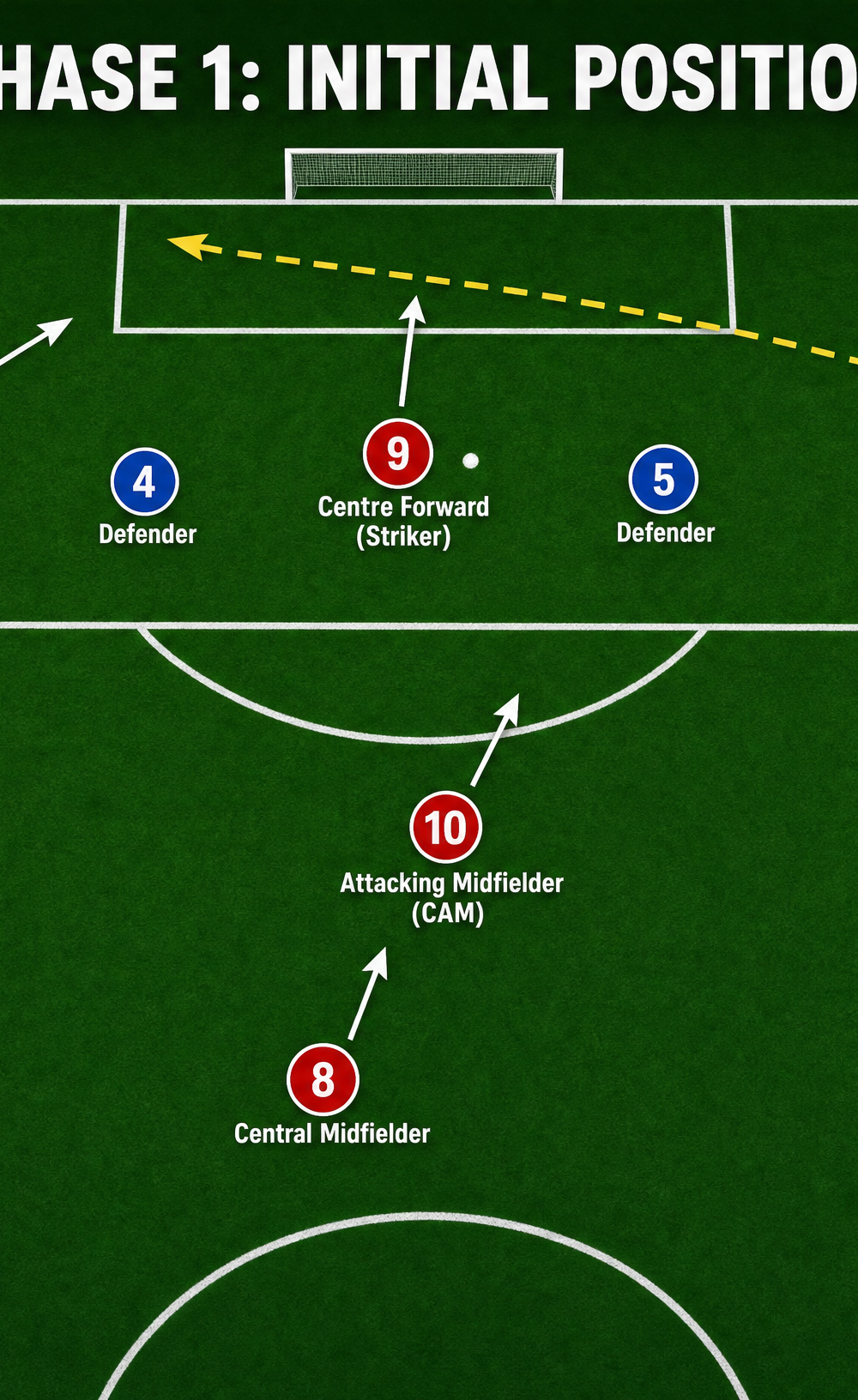
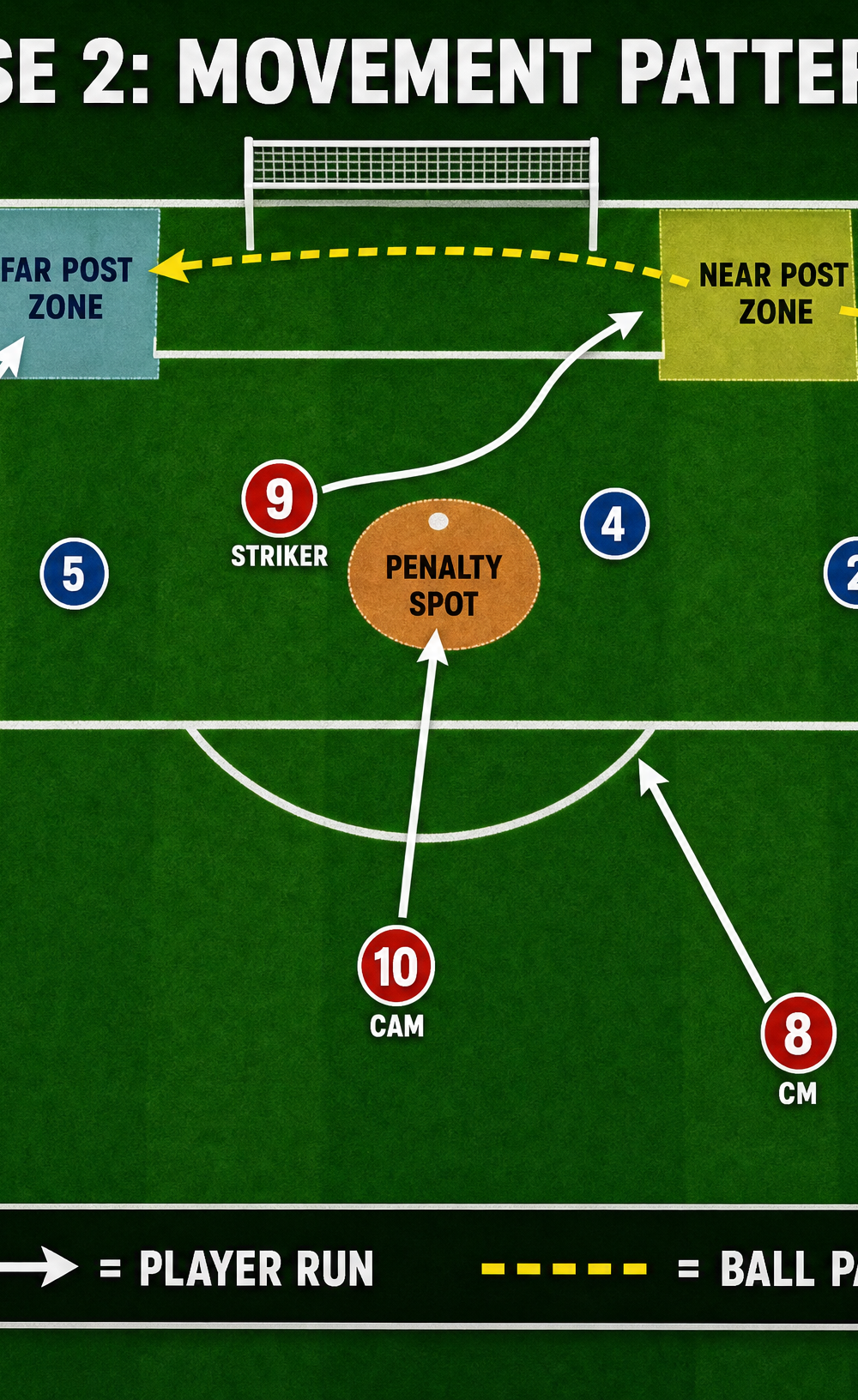
- The Trigger: The play begins when the Right Winger (7) takes a positive touch out of their feet, signaling they are preparing to cross. They should look up to assess the box before striking the ball.
- The Near-Post Run: As the winger prepares to cross, the Centre Forward/Striker (9) initiates a sharp, explosive run from the penalty spot area toward the near post. This run must be aggressive to draw the central defenders and create space behind.
- The Far-Post Run: Simultaneously, the Left Winger (11) makes a diagonal run from the left side of the penalty area toward the far post, staying on the blind side of the opposing fullback.
- The Penalty Spot Run: The Attacking Midfielder (10) delays their run slightly, arriving at the penalty spot just as the ball is delivered. They are looking to exploit the space vacated by the Striker's near-post run.
- The Late Arrival: The Central Midfielder (8) makes a late run to the edge of the penalty area, anticipating any clearances or second balls.
- The Delivery: The Right Winger (7) delivers an in-swinging or driven cross, aiming primarily for the space between the penalty spot and the six-yard box.
4. Key Coaching Points
To ensure the success of this set play, coaches must emphasize the following technical and tactical details:
- Timing is Everything: Runs must not be made too early. Attackers should arrive in their designated zones exactly as the ball arrives, not before. Arriving early allows defenders to adjust.
- Aggressive Decoys: The near-post run by the Striker must be executed with 100% commitment, even if they are not the primary target. A passive run will not draw defenders away from the center.
- Blind-Side Movement: The far-post runner (Left Winger) must start wide and move in on the blind side of the defender, making it impossible for the defender to watch both the ball and the attacker.
- Quality of Delivery: The cross must be driven with pace. Loopy, slow crosses give the goalkeeper and defenders time to react and reposition.
- Readiness for Second Balls: The players arriving at the penalty spot and the edge of the box must be balanced and prepared to shoot instantly on any knockdowns or clearances.
5. Common Mistakes
Watch out for these frequent errors during practice and correct them immediately:
- Static Starting Positions: Attackers standing still before the cross is delivered. They must be on their toes, making small movements to keep defenders unbalanced.
- Congesting the Same Zone: Multiple players making runs into the same area, making it easy for one defender to clear the ball. Discipline in maintaining designated zones is vital.
- Ignoring the Goalkeeper: Crossing the ball too close to the goalkeeper. The delivery must be played into the 'corridor of uncertainty'—the space between the defensive line and the goalkeeper.
- Lack of Communication: Players not communicating their intentions, leading to confusion. Eye contact and verbal cues are essential, especially between the crosser and the primary target.
6. Variations & Progressions
Once the basic pattern is mastered, introduce these variations to keep the play unpredictable:
- The Cut-Back: Instead of crossing into the six-yard box, the winger drives to the byline and cuts the ball back to the Attacking Midfielder (10) arriving at the penalty spot or the Central Midfielder (8) at the edge of the box.
- The Overlap: Introduce a Right Fullback overlapping the Right Winger. The winger plays a disguised pass to the overlapping fullback, who delivers a first-time cross, changing the angle and timing of the delivery.
- Adding Defenders: Progress from unopposed runs to adding active defenders (start with 2, then increase to 4) to increase the difficulty and realism of the drill.
7. Age Adaptations
Modify the complexity of the play based on the age and skill level of your players:
- Under 8 - Under 10: Focus purely on the fundamental technique of crossing and basic finishing. Introduce only one runner (e.g., aiming for the near post) to keep it simple.
- Under 12 - Under 14: Introduce two coordinated runs (near post and far post). Emphasize the timing of the run relative to the crosser's body language.
- Under 16 - Open: Implement the full pattern with all four runners. Focus on high-speed execution, disguised runs, and exploiting the blind side of defenders in fully opposed scenarios.