Netball
Drill
intermediate
under 14
GK Body Positioning and Intercept Drill
Master the art of reading the play and executing clean intercepts in the goal circle with this essential defensive drill.
Jul 11, 20264 min read15 min drill4 players
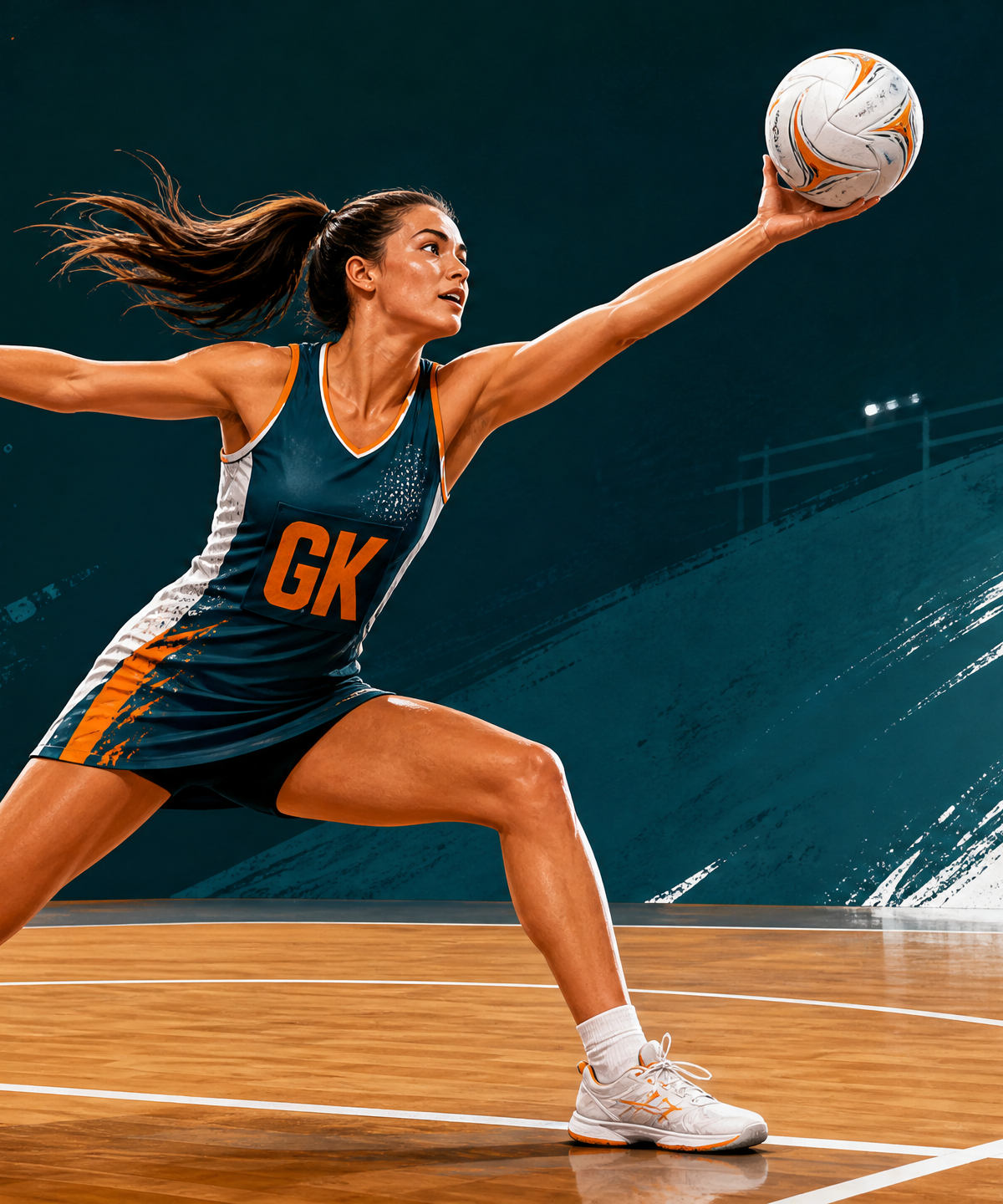
Equipment Needed
1 Netball
Netball Court (Goal Third)
Bibs (Optional)
Overview
This drill focuses on developing a Goal Keeper's (GK) ability to read the incoming pass, maintain dominant body positioning against the Goal Shooter (GS), and explode off the mark to secure a clean intercept. Effective circle defense requires more than just height; it demands anticipation, precise footwork, and the ability to track both the ball and the attacker simultaneously. This resource provides a step-by-step guide to mastering these critical defensive skills within the 15.25m x 30.5m court environment.
Setup
- Equipment Needed: 1 netball, 4 cones (optional, for marking starting positions).
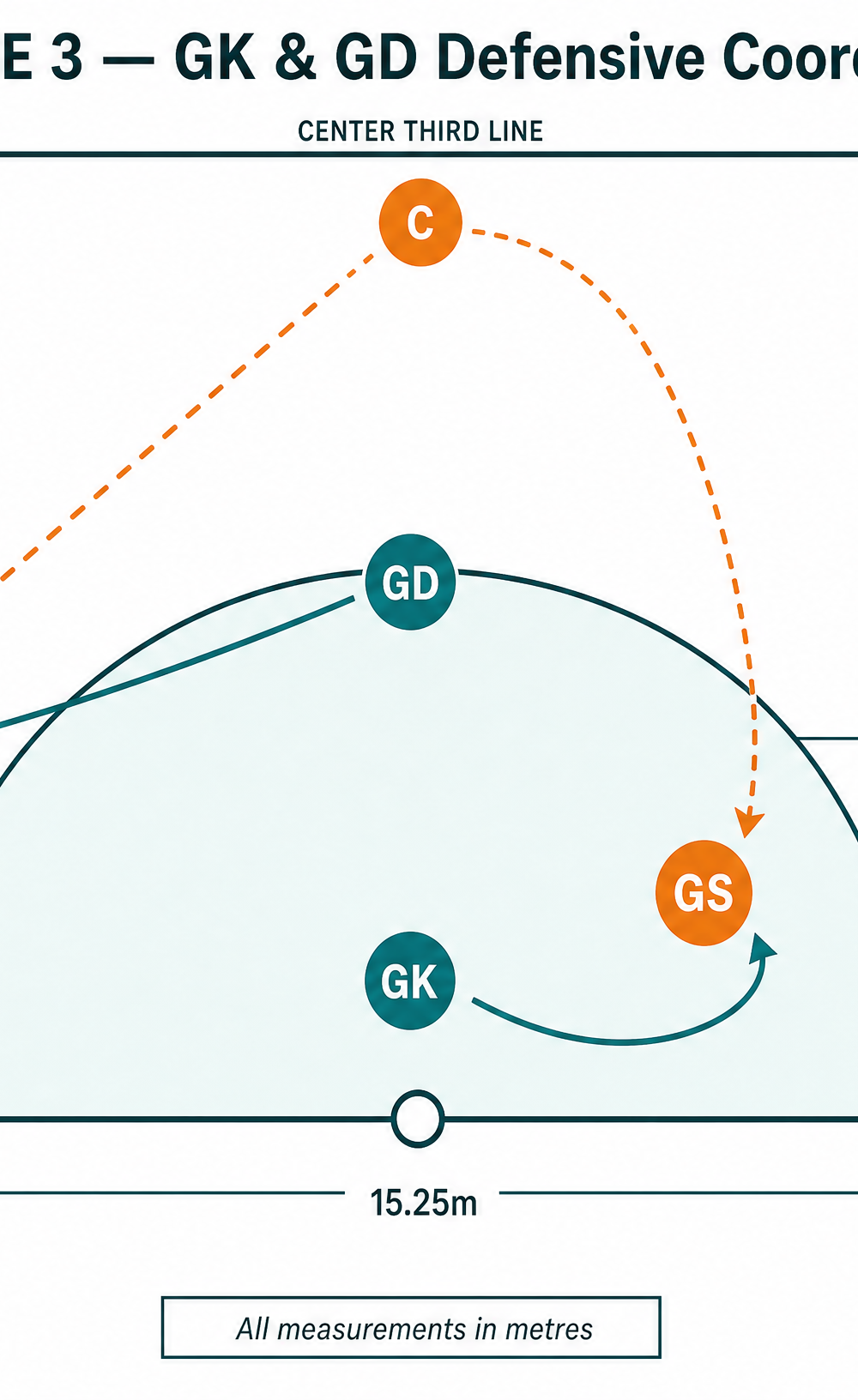
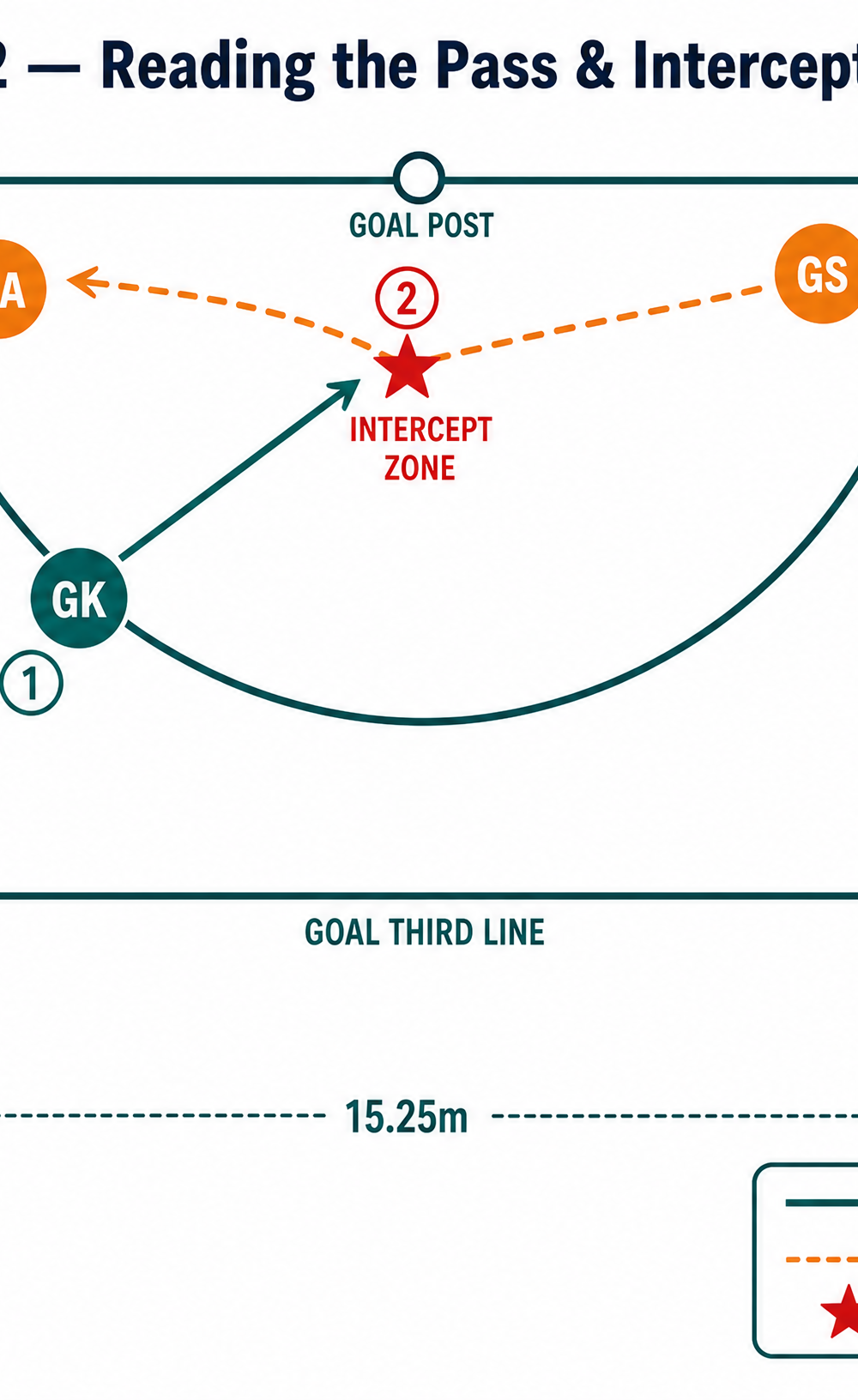
- Court Setup: Use the goal third of the court. Place the GK in the goal circle, with a GS and Goal Attack (GA) positioned to receive passes. A Center (C) or feeder starts near the transverse line.
- Player Positions:
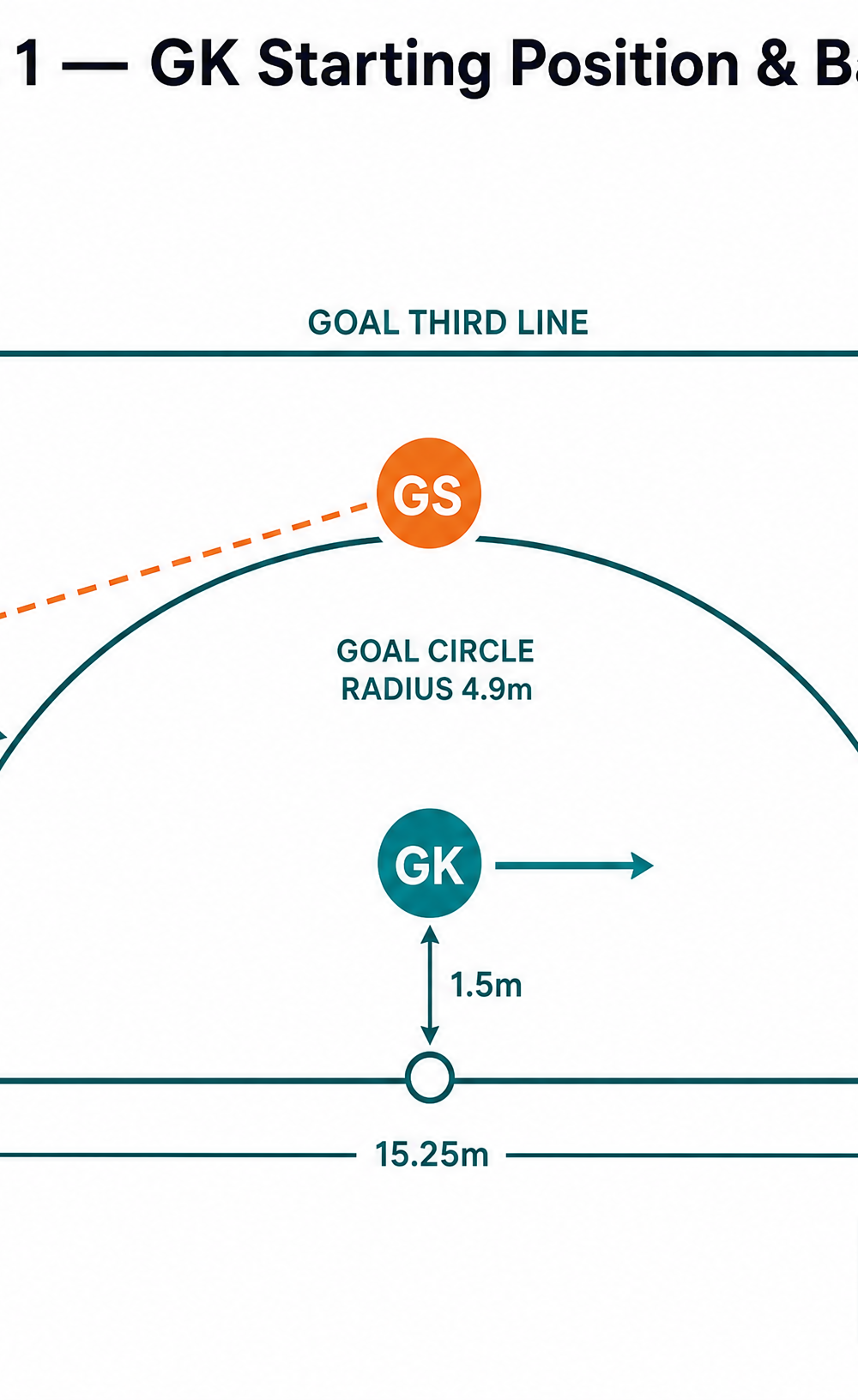
- GK (Defender): Starting inside the goal circle, approximately 1.5m in front of the goal post.
- GS (Attacker): Positioned at the top of the goal circle arc (4.9m from the post).
- GA (Attacker): Positioned outside the goal circle, providing a passing option.
- C/Feeder: Positioned in the center third or top of the goal third to initiate the play.
Step-by-Step Instructions
Phase 1: Starting Position & Ball Tracking
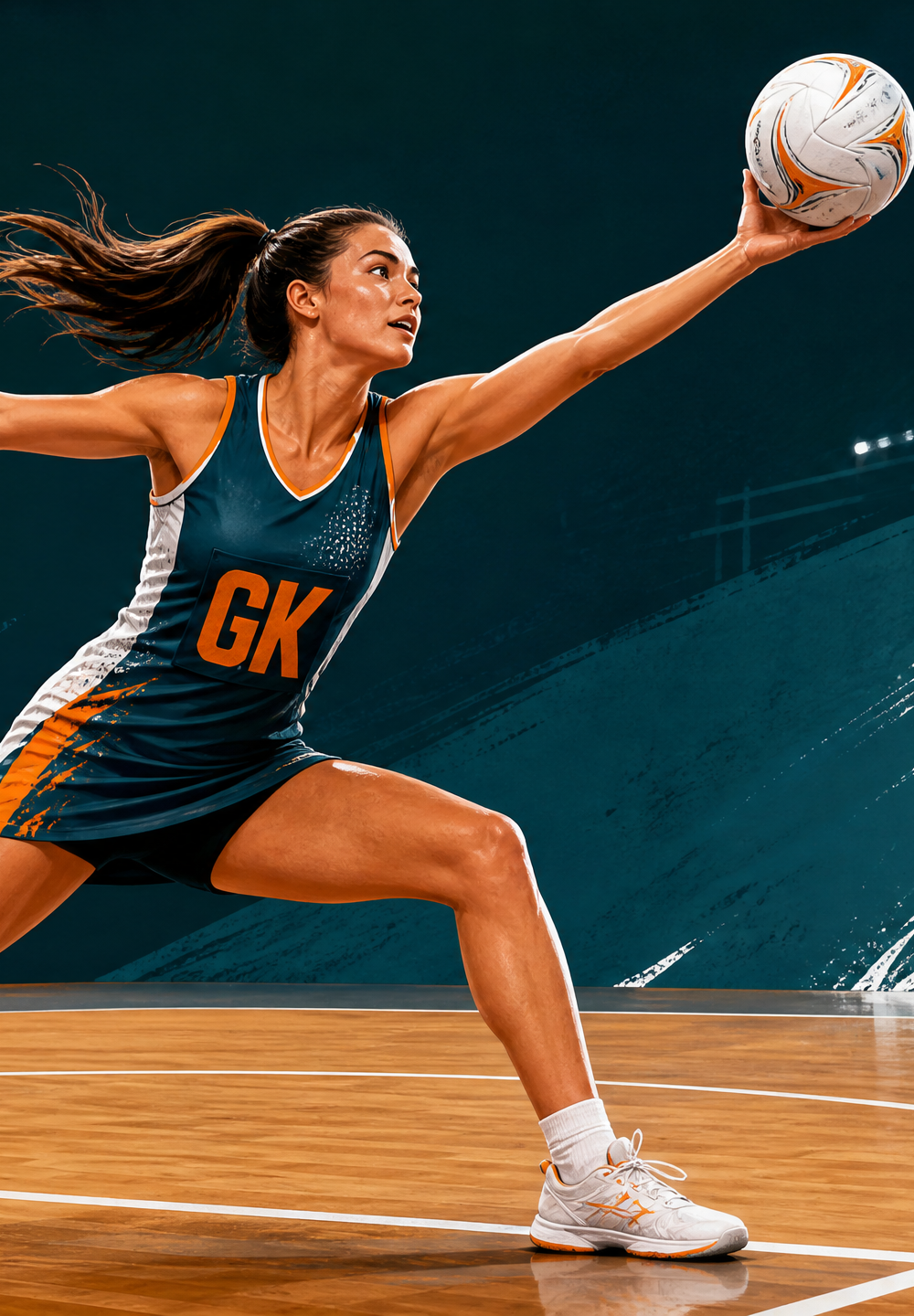
- The GK starts in a side-on, athletic stance, positioned slightly in front and to the side of the GS, ensuring vision of both the feeder (C) and the GS.
- The feeder (C) initiates a pass to the GA or another feeder on the circle edge.
- As the ball moves, the GK must adjust their body angle using quick, small shuffle steps to maintain a line of sight on the ball while keeping physical proximity to the GS.
Phase 2: Reading the Pass & Intercept Execution
- The feeder looks to pass the ball into the GS inside the goal circle.
- The GK must anticipate the pass trajectory. Instead of reacting after the ball is thrown, the GK should read the feeder's body language and eye line.
- As the ball leaves the feeder's hands, the GK explodes off their outside foot, driving diagonally forward into the 'Intercept Zone' to take the ball cleanly in the air before it reaches the GS.
Phase 3: Defensive Coordination (Progression)
- Introduce a Goal Defense (GD) to work in tandem with the GK.
- As the GA drives towards the circle edge, the GD tracks them.
- The GK must communicate with the GD to switch or cover spaces, ensuring that if the GS rolls along the baseline or pops out, the GK is positioned to intercept or heavily contest the pass.
Key Coaching Points
- Vision: Maintain a 'V' vision—seeing both the player and the ball. Never turn your back completely on the ball.
- Footwork: Keep a low center of gravity. Use quick, light shuffle steps to adjust positioning rather than crossing feet, which compromises balance.
- Timing: Explode for the intercept as the ball is released, not before (which risks being drawn out of position) or after (which is too late).
- Angle of Attack: Drive through the line of the ball on an angle, rather than running directly at the attacker, to avoid contact penalties.
Common Mistakes
- Ball Watching: Staring only at the ball and losing track of the GS's movements, allowing them to slip into open space.
- Flat-Footed Stance: Standing too upright with straight legs, reducing explosive power for the intercept.
- Reaching Instead of Moving: Trying to reach for the ball with arms only instead of moving the feet to get the body behind the intercept.
Variations & Progressions
- Add a Second Attacker: Introduce a GA entering the circle to force the GK to make split-second decisions on who to cover.
- Vary the Feed: Have the feeder use different types of passes (lob, bounce, chest) to challenge the GK's reading of the play.
- Fatigue Factor: Run the drill for 60 seconds continuously to practice maintaining defensive intensity under fatigue.
Age Adaptations
- Under 10s: Focus purely on the footwork and maintaining vision. Use stationary feeders and soft passes to build confidence.
- Under 14s: Introduce the dynamic intercept, emphasizing the timing of the explosive step off the mark.
- Open/Advanced: Add multiple feeders, complex attacker movements (screens, rolls), and demand high-intensity, continuous execution.