

Netball
The Double-Cut Centre Pass: A Quick-Strike Set Play
Master a high-tempo centre pass set play that uses sharp misdirection and a cross-court cut to deliver the ball directly to the shooters in under three passes.
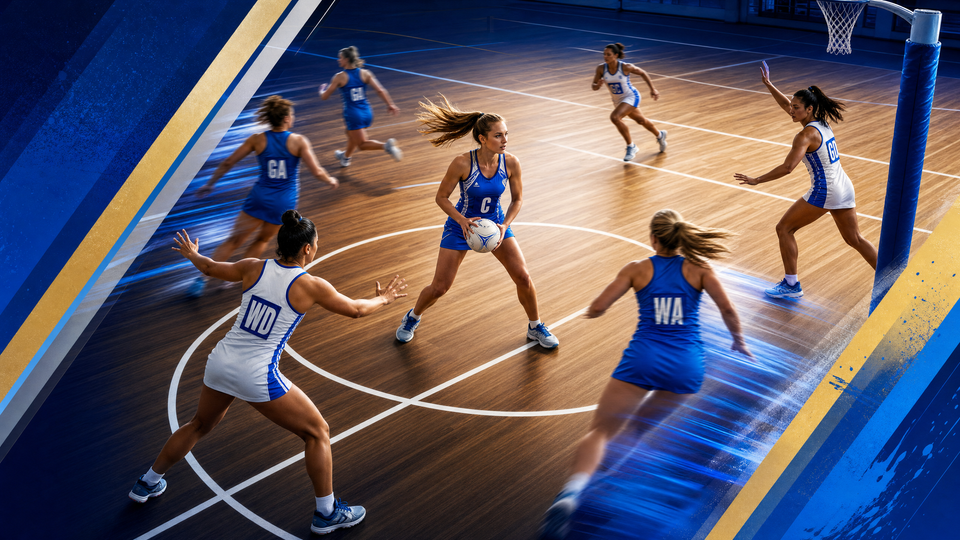
What you need
1 Netball, Netball Court (30.5m x 15.25m), Bibs (C, WA, GA, GS, WD, GD, GK)
1. Overview
The 'Double-Cut' is an aggressive, high-tempo centre pass set play designed to bypass the defensive midcourt and deliver the ball directly to the edge of the shooting circle in two swift passes. By drawing the defence to one side of the court, we create an isolation channel on the opposite side.
This play is highly effective against a heavy zone defence or a tight one-on-one marking system. It relies on precise timing, strong preliminary movements, and accurate passing. Use this play when you need a quick goal to shift momentum or when the opposing Wing Defence (WD) is playing a tight intercepting game.
2. Setup
Equipment Needed: 1 Netball, full standard netball court (30.5m x 15.25m).
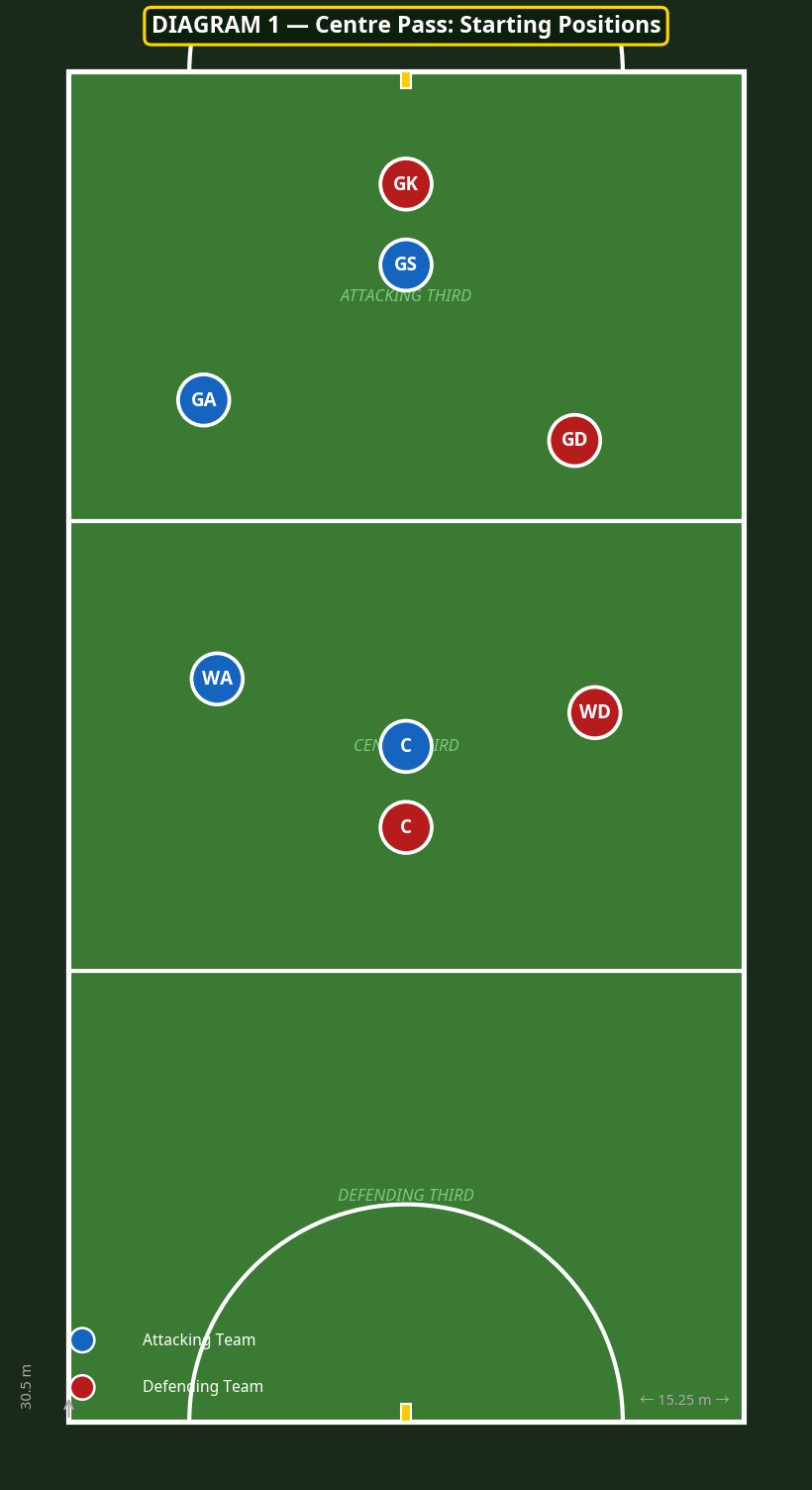
Court Setup:
- C (Centre): Starts exactly in the middle of the centre circle.
- WA (Wing Attack): Sets up on the transverse line, left of the centre circle (looking towards the attacking end).
- GA (Goal Attack): Positions deep in the attacking third, holding the left channel.
- GS (Goal Shooter): Holds a high position near the top of the shooting circle.
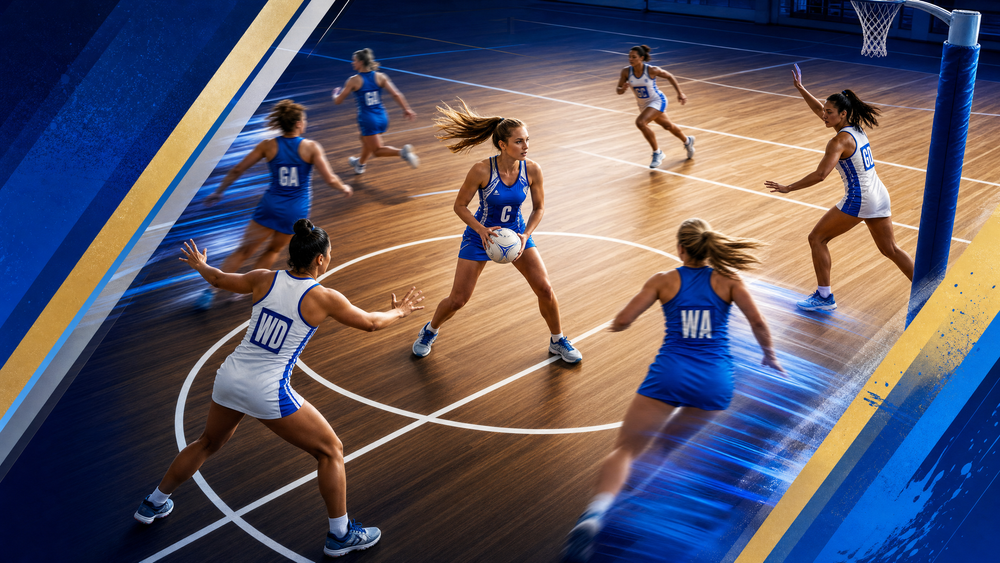
3. Step-by-Step Instructions
Step 1: The Decoy Drive (WA)
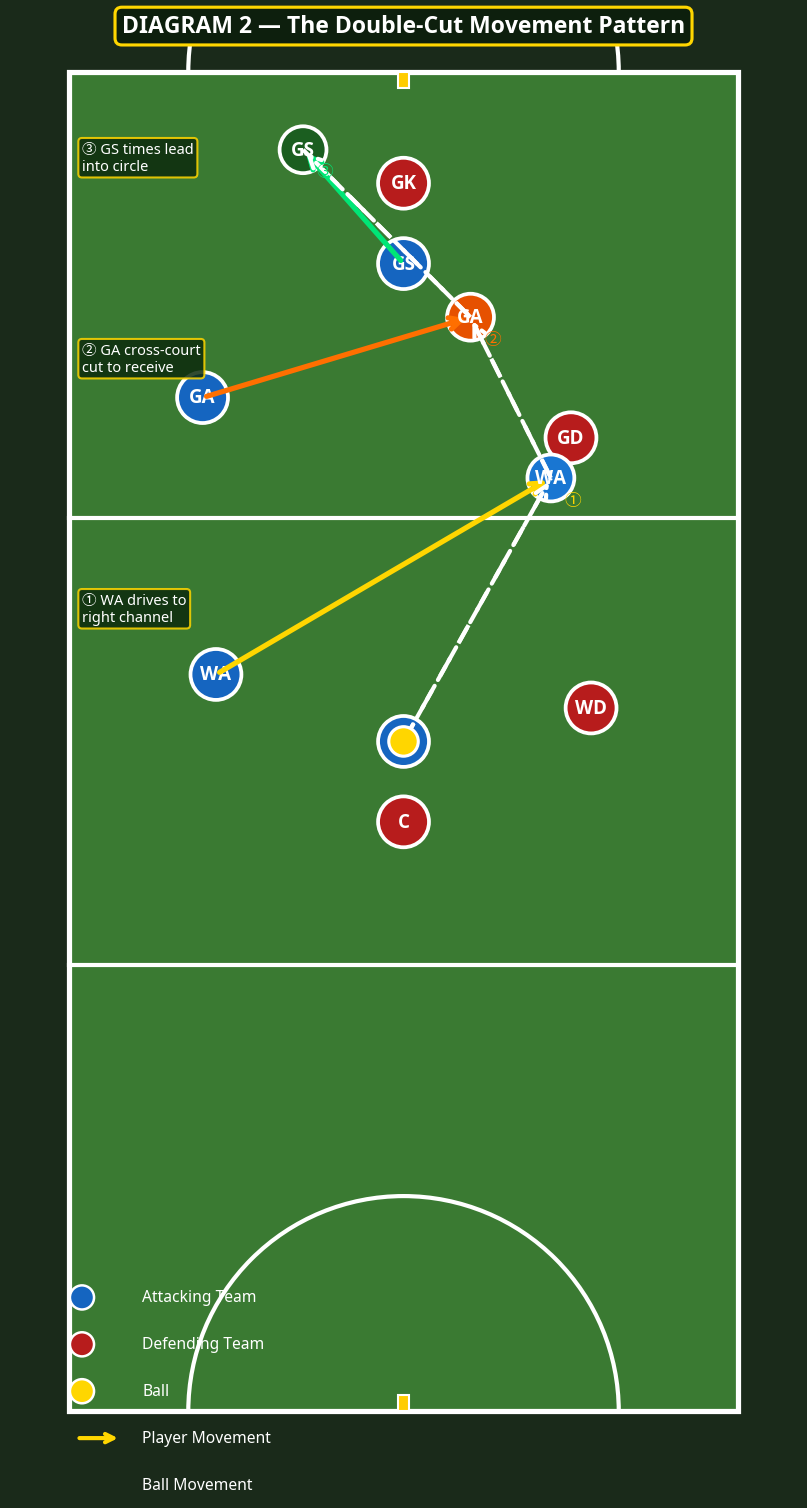
As the umpire blows the whistle, the WA makes a sharp, hard drive from the left side of the transverse line, cutting diagonally across the centre third towards the right channel. This initial movement is designed to pull the opposing WD out of position and create space in the middle.
Step 2: The First Pass (C to WA)
The C steps forward and delivers a flat, fast chest pass or shoulder pass to the WA hitting the top of the attacking third on the right side.
Step 3: The Cross-Court Cut (GA)
As the WA receives the ball, the GA initiates the second phase. The GA pushes off their outside foot and makes a hard, angled cut from the left channel across the top of the shooting circle towards the middle.
Step 4: The Second Pass (WA to GA)
The WA lands, pivots quickly, and feeds the cutting GA with a direct pass to the circle edge.
Step 5: The Circle Entry (GS)
Simultaneously, the GS times their lead, dropping baseline or rolling off the Goal Keeper (GK) to present a clear passing option under the post.
Step 6: The Final Feed (GA to GS)
The GA receives the ball on the circle edge and immediately feeds the GS for a high-percentage shot.
4. Key Coaching Points
- Timing is Everything: The GA must not begin their cross-court cut until the WA has secured the first pass. Early movement clogs the space.
- Strong Preliminary Moves: The WA must sell the initial drive. A slight dodge or change of pace before hitting the transverse line will help shake the defender.
- Flat, Fast Passing: Loopy passes will be intercepted. Ensure the C and WA are using strong, direct chest or shoulder passes.
- Clear the Space: If the GA is heavily marked and cannot receive the ball, the GS must be prepared to pop out of the circle as the secondary option.
- Vision on the Land: The WA must get their eyes up immediately upon landing to spot the cutting GA.
5. Common Mistakes
- Drifting Drives: Players curving their runs instead of making sharp, angular cuts. This makes them easier to defend.
- Looking Away: The C passing the ball before making eye contact with the driving WA.
- Crowding the Feeder: The GA cutting too close to the WA, reducing the passing angle and bringing the defenders together.
- Stationary Shooters: The GS standing still under the post. They must be active and holding space to receive the final feed.
6. Variations & Progressions
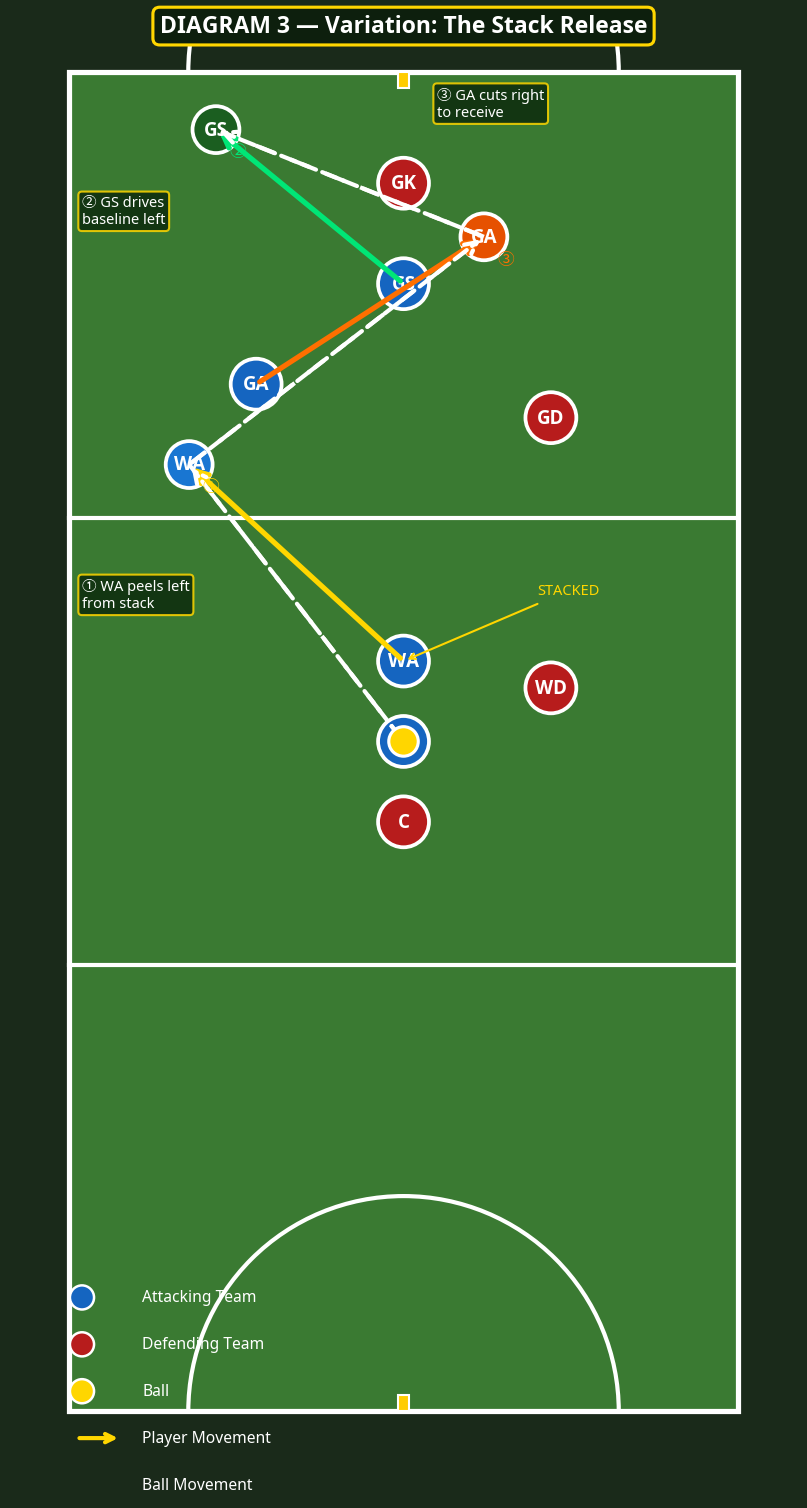
Variation 1: The Stack Release
Instead of a split setup, the WA stacks directly behind the C at the centre pass. On the whistle, the WA peels left while the GA holds the right channel. This forces the defence to guess the direction of the first pass.
Variation 2: The C Drive
If the WA is heavily shut down, the C can play a short one-two with the GA dropping into the centre third, before driving onto the circle edge themselves.
Progression: Add Defensive Pressure
Start the drill unopposed to get the timing right. Progress to adding a passive WD, then a full defending unit (WD, GD, GK) to simulate match conditions.
7. Age Adaptations
- Under 10s / Under 12s: Focus purely on the C to WA pass and the straight drive. Simplify the GA's movement to a straight lead rather than a cross-court cut.
- Under 14s / Under 16s: Introduce the cross-court cut and emphasize the speed of the transition. Work on the WA's pivot and vision.
- Open / Seniors: Run the play at full match intensity. Incorporate the stack variation and focus on the GS's baseline holds and rolls against tight marking.
