

Netball
Shooting Circle Figure-8 Rotation & Entry Drill
Master dynamic circle movement with this Figure-8 rotation drill, designed to help your shooters lose their defenders and open up clear passing lanes to the post.
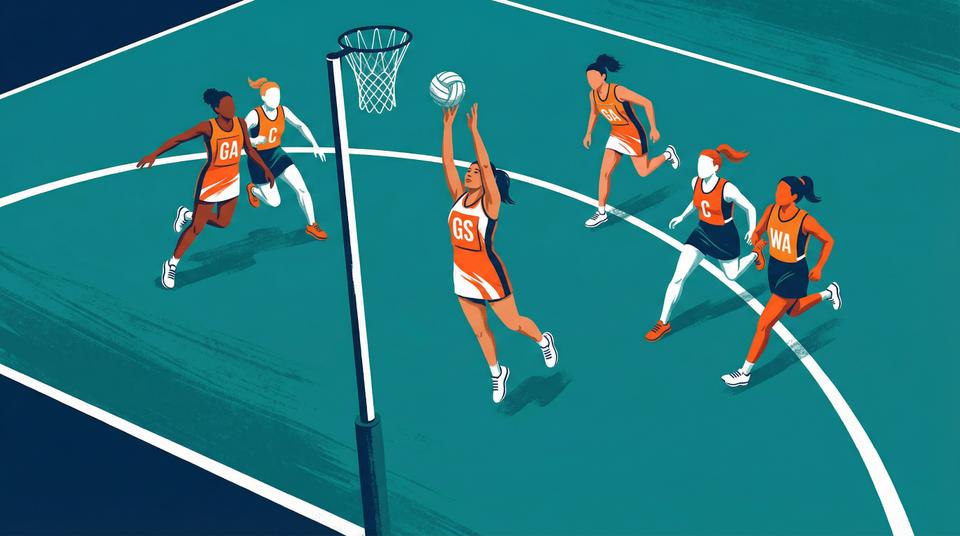
What you need
1 Netball, 6 Positional Bibs (GS, GA, WA, C, GD, GK), Throwdown markers (optional)
1. Overview
Effective circle movement is the cornerstone of a high-scoring netball team. When shooters remain static, defenders can easily dictate the space and intercept incoming feeds. The Shooting Circle Figure-8 Rotation & Entry Drill is designed to teach your Goal Shooter (GS) and Goal Attack (GA) how to work in tandem, using continuous, coordinated movement to disrupt the defensive structure. By implementing a 'Figure-8' rotation around the goal post, attackers create confusion, forcing defenders to make split-second decisions on whether to switch or stay with their mark. This drill is perfect for use during the mid-to-late stages of a training session, bridging the gap between basic passing exercises and full-court match play.
2. Setup

To run this drill effectively, you will need to utilize the standard netball goal third (incorporating the 4.9m shooting circle). Ensure the area is clear of any obstructions.
- Players Required: 6 players per group (1x GS, 1x GA, 1x WA, 1x C, 1x GD, 1x GK).
- Equipment: 1 Netball, 6 positional bibs, and optional flat throwdown markers to indicate starting positions.
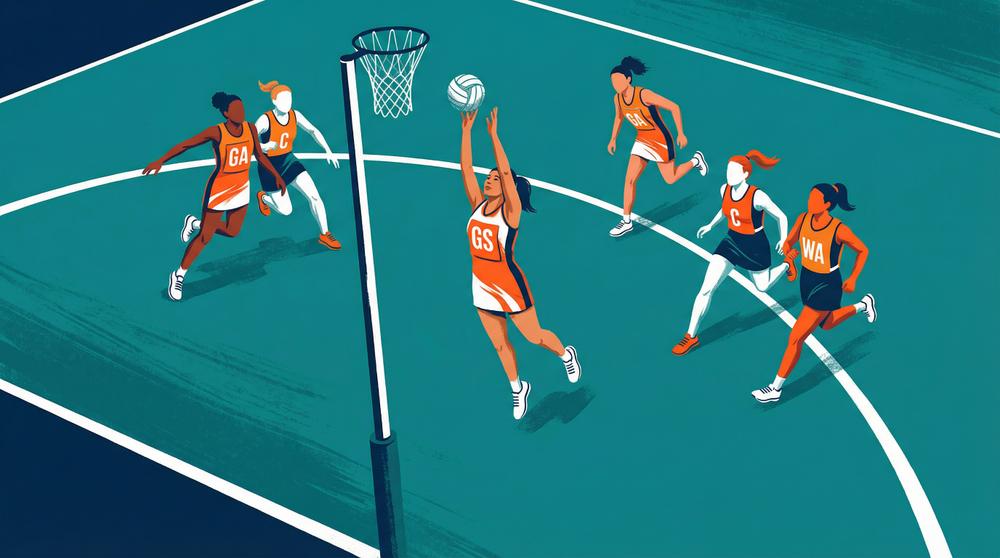
- Court Setup: Set up in the goal third. The Center (C) starts with the ball just outside the transverse line in the center third. The Wing Attack (WA) positions themselves near the transverse line, ready to drive into the goal third. Inside the circle, the GS and GA set up against their respective defenders (GK and GD).
3. Step-by-Step Instructions
Follow these sequential steps to execute the drill. Begin at a walking pace to ensure players understand the movement patterns before increasing to match intensity.
- The Entry Drive: The C initiates the drill by passing the ball to the WA, who makes a strong, angled drive from the center third into the attacking goal third.
- The Figure-8 Rotation: As the WA receives the ball, the GS and GA begin their synchronized rotation. The GS, starting on the left side of the post, drives hard across the front of the GK toward the right side of the circle.
- Clearing the Space: Simultaneously, the GA drops back toward the left side of the circle, effectively swapping zones with the GS. This cross-rotation forces the GD and GK to communicate and navigate through traffic.
- The Circle Feed: The WA assesses the movement and delivers a precise pass to either the holding GA on the circle edge or the driving GS near the post.
- The Final Pass & Shot: If the GA receives the initial feed, they must immediately look to pass to the GS, who should now be holding strong position under the post. The GS completes the sequence by taking the shot.

4. Key Coaching Points
To maximize the effectiveness of this drill, focus your feedback on these critical elements of execution:
- Timing is Everything: Shooters must not initiate their rotation until the WA has securely caught the ball. Moving too early closes the space before the feeder is ready to pass.
- Eye Contact: The GS and GA must maintain peripheral vision of each other to avoid collisions and ensure they are balancing the circle.
- Strong Holds: When a shooter completes their drive, they must establish a strong, wide base to hold off the defender and provide a clear target for the feeder.
- Pass Placement: Feeders (WA and C) must place the ball out in front of the driving player, leading them into the open space rather than passing directly at their body.

5. Common Mistakes
Watch out for these frequent errors and correct them early in the session:
- Drifting Too Wide: Shooters often run too close to the circle edge during their rotation, taking themselves out of a viable shooting position. Remind them to keep their drives tight around the post.
- Lack of Communication: Defenders failing to call out screens or switches will result in wide-open attackers. Encourage the GK and GD to talk constantly.
- Flat Passing: Feeders looping the ball into the circle allows defenders time to recover and intercept. Demand crisp, flat, and direct passes into the shooters.
6. Variations & Progressions
Once your team has mastered the basic movement, introduce these variations to increase the difficulty:
- Add a Wing Defence (WD): Introduce a WD to mark the WA. This forces the WA to work harder for the initial entry pass and adds pressure to the feed into the circle.
- Time Limit: Challenge the attacking unit to complete the sequence and take a shot within 5 seconds of the C initiating the first pass.
- Reverse the Rotation: Have the GA drive across the post first while the GS drops back. This ensures both players are comfortable playing both roles within the circle.
7. Age Adaptations
Tailor the drill to suit the developmental stage of your players:
- Under 10s: Remove the defenders entirely. Focus purely on the attacking movement, ensuring players understand the concept of running into empty space.
- Under 14s: Introduce passive defense. Defenders can track the attackers but are not allowed to intercept the ball. This builds confidence in the shooters' holds.
- Open/Seniors: Run the drill at full match intensity with active, physical defense. Encourage defenders to actively disrupt the rotation using legal body positioning.
