Passing Accuracy Under Pressure: The 5-Point Star Drill
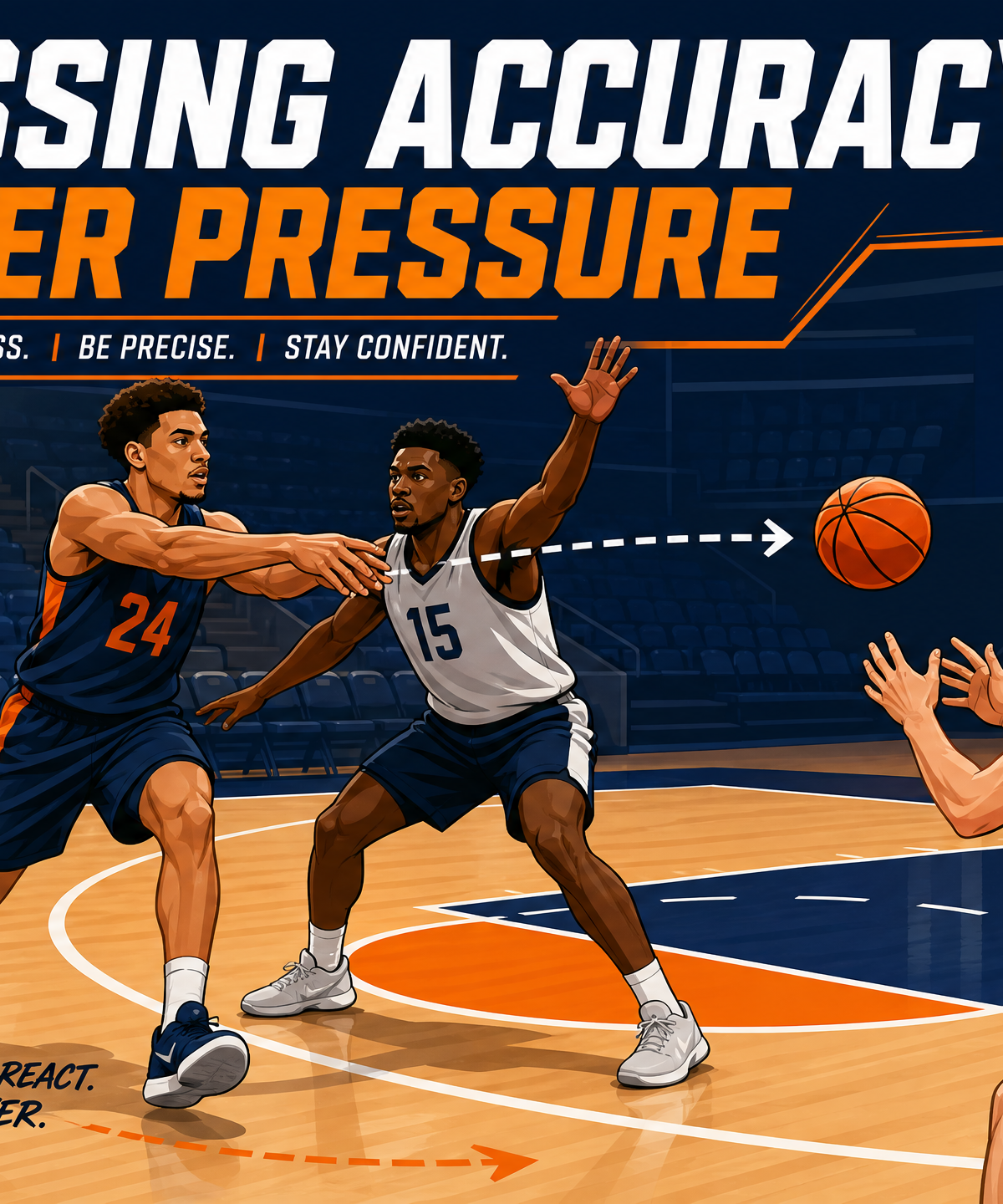
Develop your team's ability to make crisp, accurate passes while reading the defense and handling intense ball pressure.
Equipment Needed
1. Overview
Passing under pressure is one of the most critical skills in modern basketball. This drill, the 5-Point Star Passing Drill, is designed to simulate game-like defensive pressure, forcing offensive players to make quick, accurate decisions. It bridges the gap between static passing lines and live 5-on-5 play, teaching players how to use pass fakes, create passing lanes, and deliver the ball on target while a defender is actively trying to disrupt the play.
Use this drill during the competitive phase of your practice to elevate intensity and focus, particularly when preparing for teams that employ aggressive man-to-man defense or full-court presses.
2. Setup
- Equipment Needed: 1 Basketball, 5 cones (optional, for spacing reference), practice pinnies (for defenders).
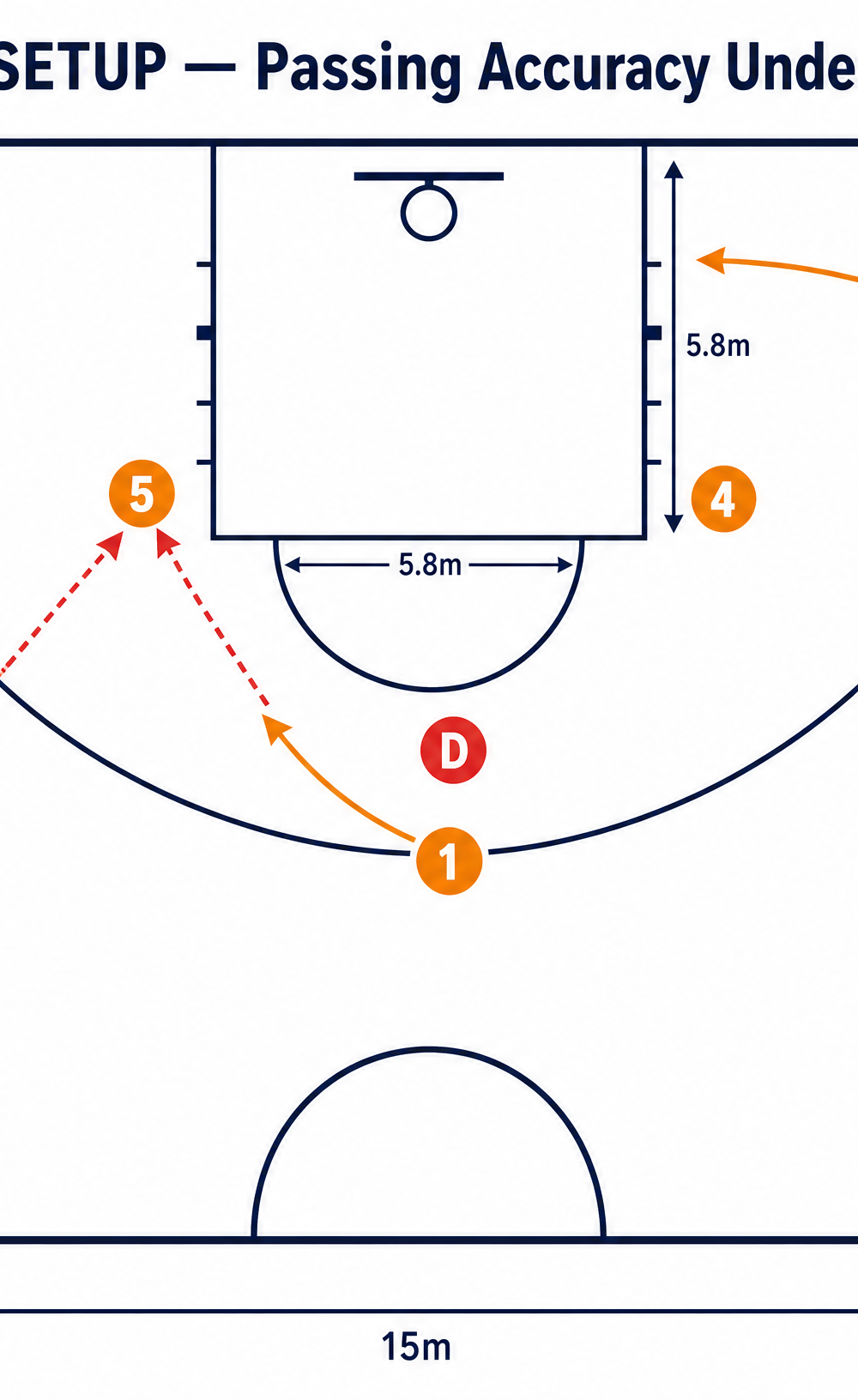
- Court Setup: Use a standard half-court (15m x 14m FIBA).
- Player Positions:
- Position 5 offensive players in a "star" formation around the three-point arc and elbows.
- Player 1 (Point Guard) at the top of the key (approx. 7m from the basket).
- Player 2 (Shooting Guard) on the right wing.
- Player 3 (Small Forward) on the left wing.
- Player 4 (Power Forward) at the right elbow.
- Player 5 (Centre) at the left elbow.
- Place 1 active Defender (D) starting on the ball handler (Player 1).
3. Step-by-Step Instructions
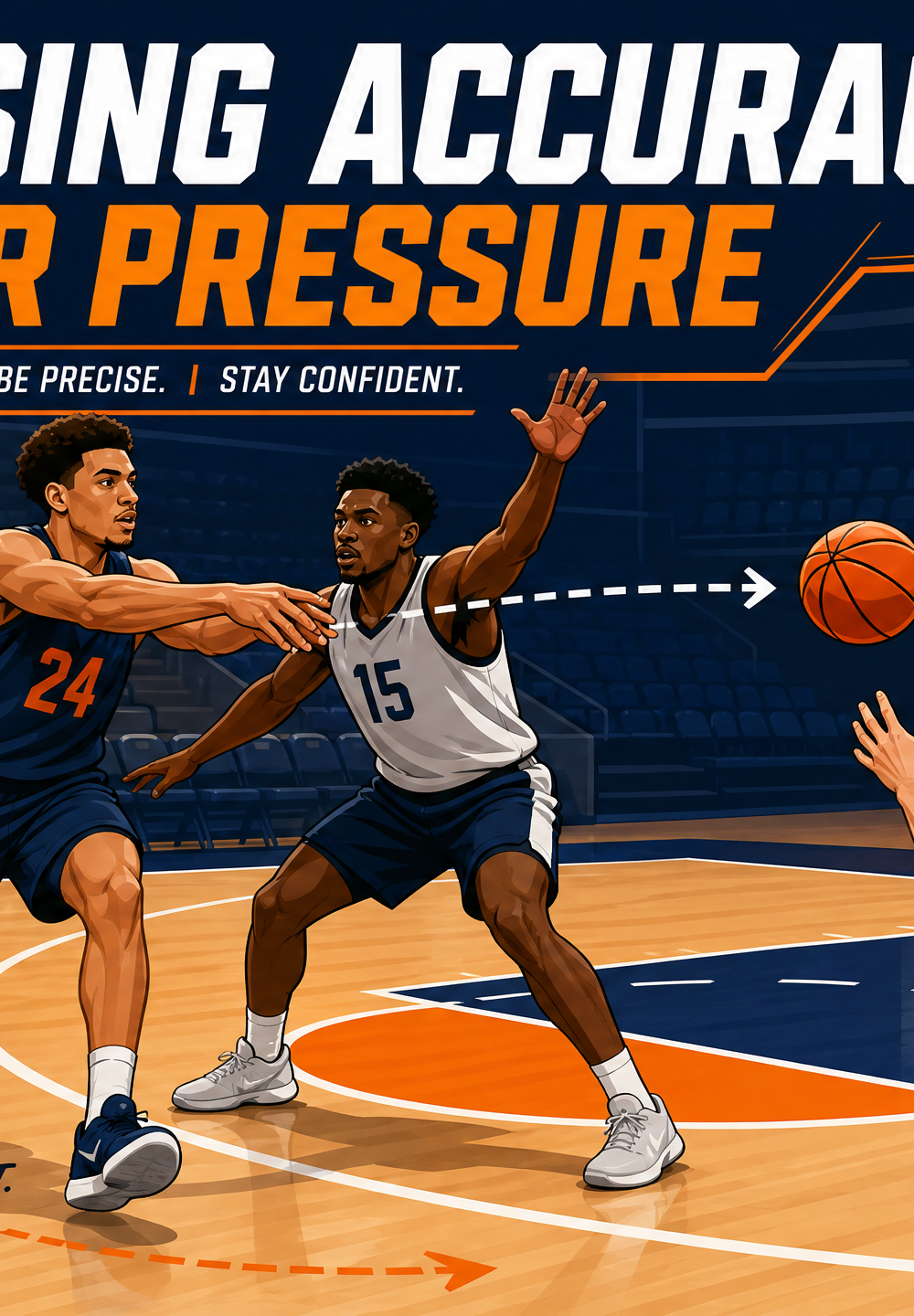
- Start the Drill: Player 1 starts with the ball at the top of the key. The Defender (D) applies immediate, intense on-ball pressure (tracing the ball, yelling, closing the gap).
- Create the Lane: Player 1 must use a strong pivot and a convincing pass fake to shift the defender and open a passing lane.
- The Pass: Player 1 delivers a sharp, accurate pass to any of the other four players (e.g., Player 5 at the left elbow).
- Follow the Pass (Optional Rotation): In the basic version, players stay static. In the moving version, Player 1 follows their pass to replace Player 5, while Player 5 relocates.
- Defender Rotation: As soon as the pass is released, the Defender must sprint to close out on the new ball handler (Player 5), arriving with high hands to immediately apply pressure.
- Continuous Play: The new ball handler (Player 5) must catch, face the basket (triple threat), and immediately read the closing defender before making the next pass to an open teammate (e.g., Player 3).
- Duration: Run continuously for 45-60 seconds, then rotate a new defender in.
4. Key Coaching Points
- Meet the Pass: Receivers must not wait for the ball. They need to take a step toward the passer to shorten the distance and prevent interceptions.
- Fake to Make: Passers must use their eyes and ball fakes to move the defender. A high fake opens a bounce pass lane; a low fake opens a chest or overhead pass lane.
- Strong Pivots: Emphasize staying low and balanced. Players should use front and reverse pivots to protect the ball and create space from the defender.
- Vocal Communication: Receivers must call for the ball loudly and provide a clear target (show hands) to assist the passer under pressure.
- Defensive Intensity: The drill only works if the defender is going 100%. They must trace the ball with active hands and close out under control but with urgency.
5. Common Mistakes
- Telegraphing Passes: Staring directly at the intended receiver before passing, allowing the defender to easily deflect the ball.
- Weak Passes: Throwing slow, looping passes (lob passes) instead of sharp, direct chest or bounce passes. Lob passes give the defense time to recover.
- Standing Up: Offensive players standing tall when pressured, exposing the ball and losing the leverage needed to pivot effectively.
- Retreating: Stepping backward away from the defender instead of pivoting aggressively into the defender's space to protect the ball.
6. Variations & Progressions
- Two Defenders (Harder): Add a second defender who plays in the passing lanes (denial defense), forcing the offense to use V-cuts and backdoors to get open.
- Time Limit (Harder): Require the ball handler to make a successful pass within 3 seconds of catching the ball to simulate the 5-second closely guarded rule.
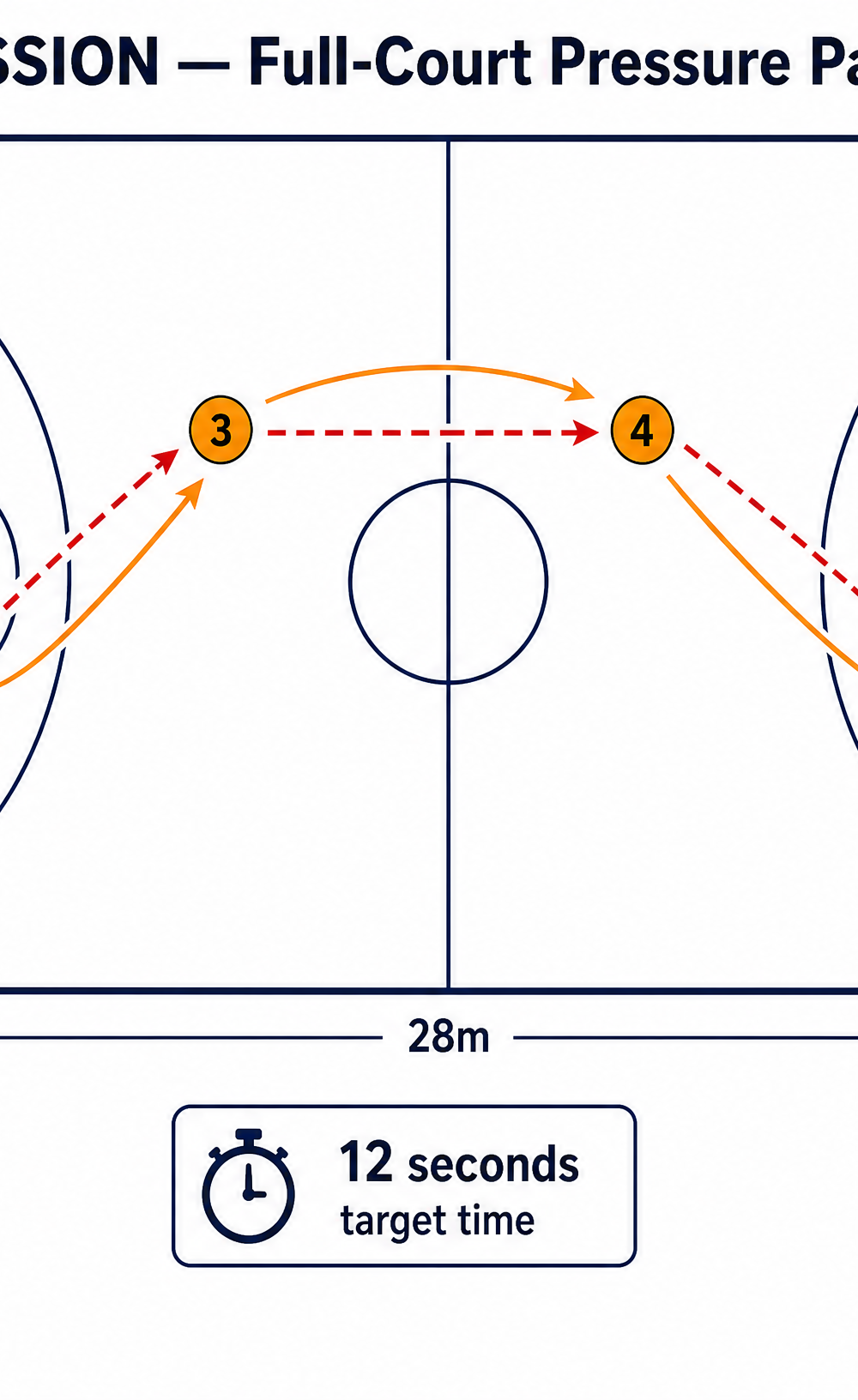
- Full-Court Circuit (Progression): Move the drill to the full court (28m x 15m). Players pass and follow their pass down the floor against multiple defenders stationed in different zones.
7. Age Adaptations
- Under 10 / Under 12: Reduce the distance between players. Start with passive defense (defender waves hands but cannot steal) to build confidence before moving to live pressure.
- Under 14 / Under 16: Enforce strict 3-second counts on the ball handler. Introduce the two-defender variation to teach spacing and cutting.
- Open / Advanced: Run the full-court progression with trapping. Defenders attempt to trap the ball handler in the corners or at half-court, forcing the offense to make split-second reads to the open man.