Post Moves & Footwork Mastery: The Essential Low Block Circuit
Develop dominant post players by mastering the drop step, jump hook, and face-up moves through this intensive footwork circuit.
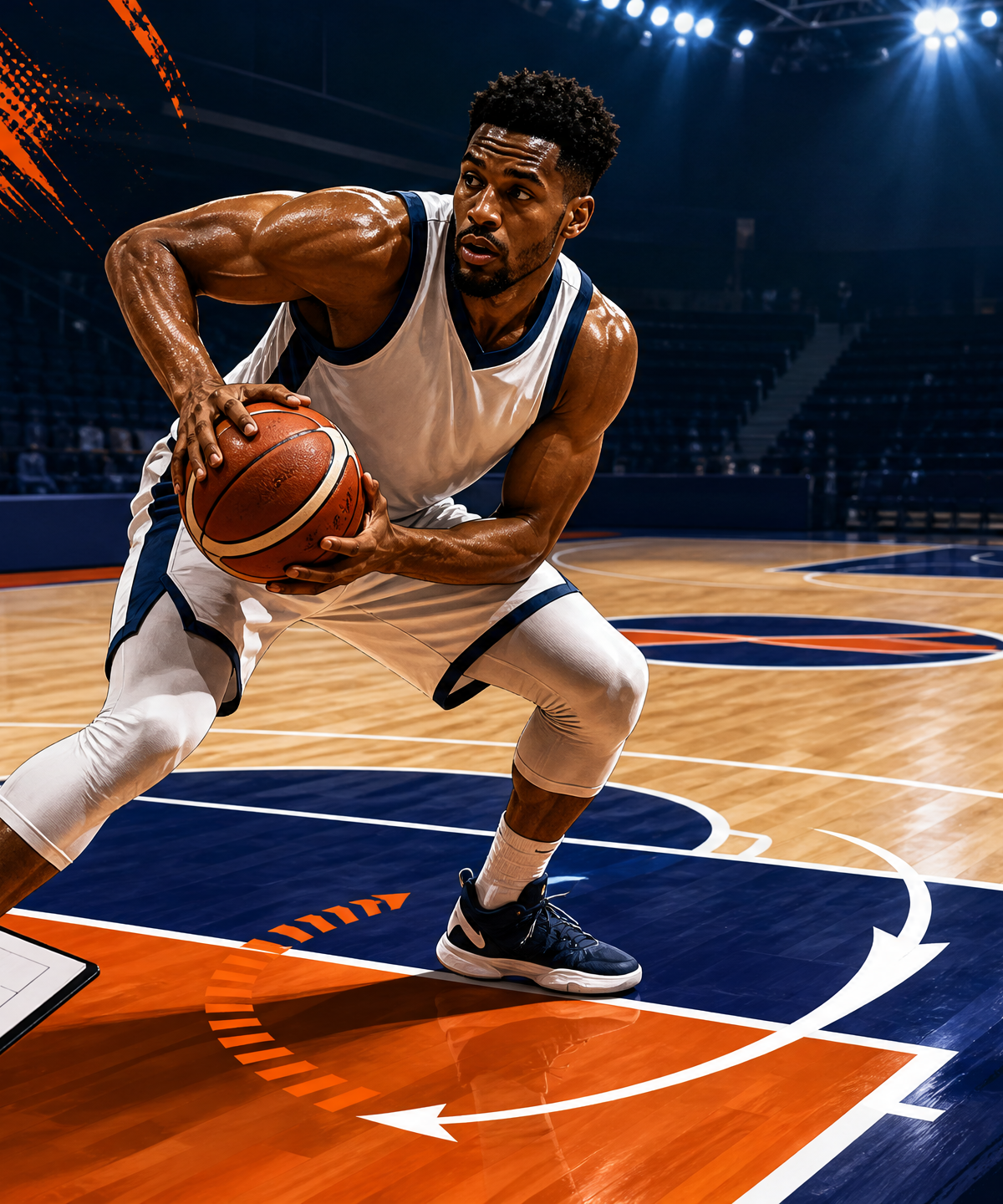
Equipment Needed
1. Overview
Developing a dominant interior presence is critical for any successful basketball team. The Post Moves & Footwork Mastery Circuit is designed to build the foundational skills necessary for big men (and guards who post up) to score efficiently on the low block. This drill isolates the footwork required for three primary post moves: the drop step, the jump hook, and the face-up.
By breaking down these movements and repping them in a controlled environment, coaches can ensure players develop the muscle memory needed to execute under pressure. Use this drill during the skill development portion of practice, particularly early in the season to establish good habits, or as a regular maintenance drill for your post players.
2. Setup
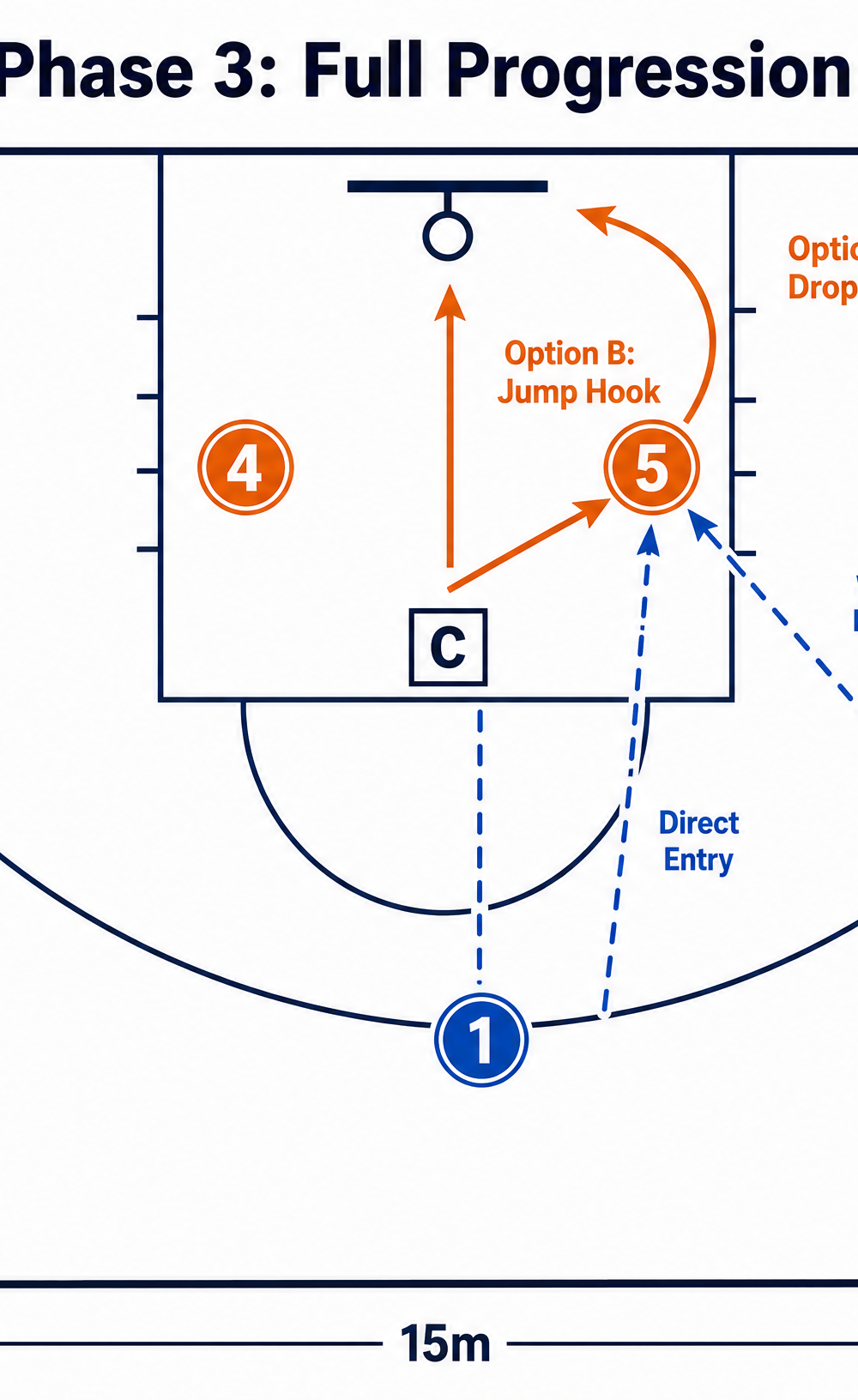
Proper setup is crucial for maximizing repetitions and keeping the drill flowing efficiently.
- Equipment: 2-3 basketballs, a standard FIBA half-court (15m wide x 14m deep from baseline to half-court line).
- Player Positions:
- Post Player (5): Starts on the low block, straddling the first hash mark above the baseline.
- Passer (1): Starts at the top of the key or the wing (depending on the entry angle being practiced).
- Defender (X5) / Coach (C): A coach or a teammate acts as a dummy defender to provide a physical presence and dictate the read.
- Rebounder (Optional): To keep the drill moving faster.
3. Step-by-Step Instructions
This drill is broken down into three phases, each focusing on a specific move. Players should master Phase 1 before progressing.
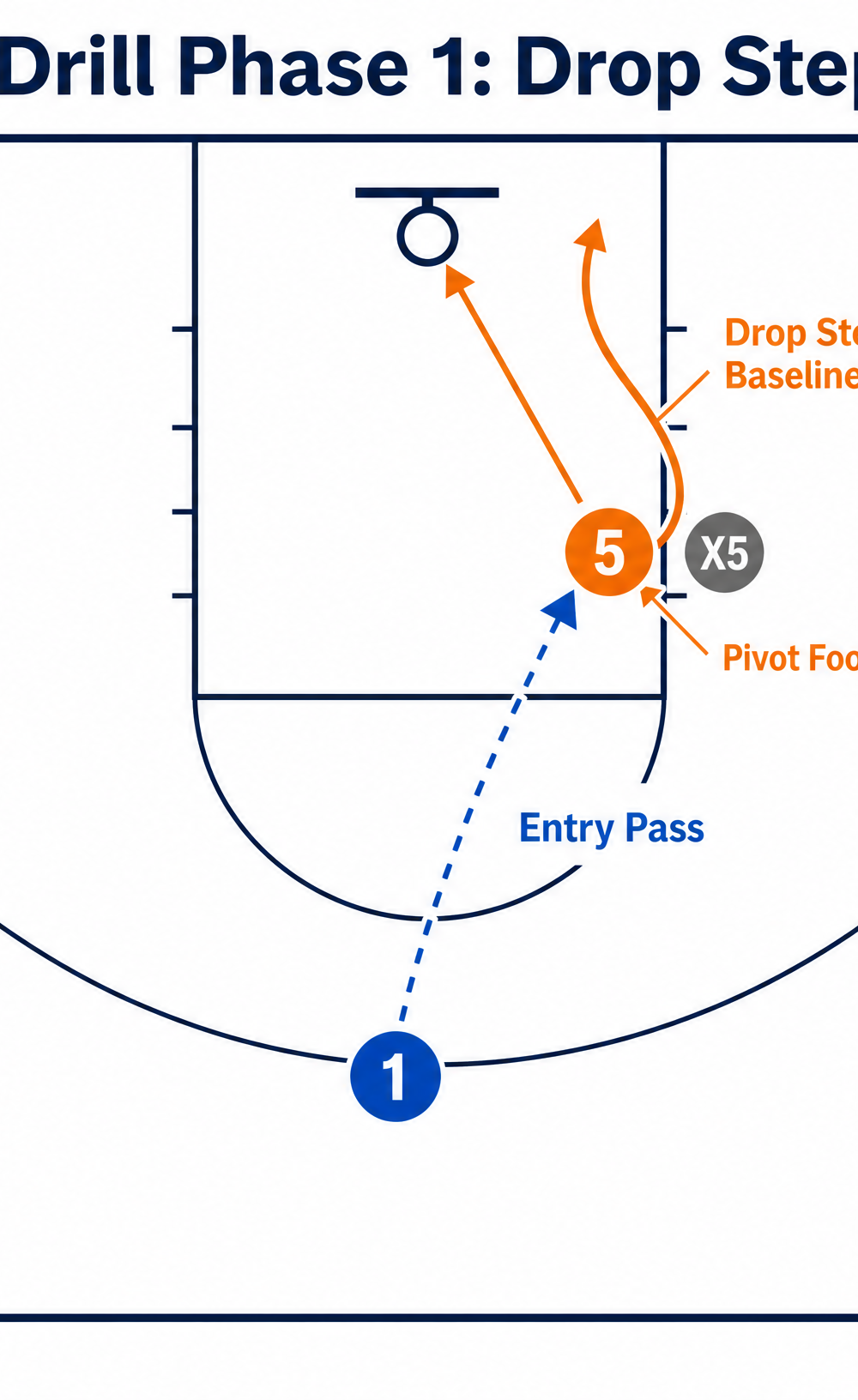
Phase 1: The Drop Step (Baseline)
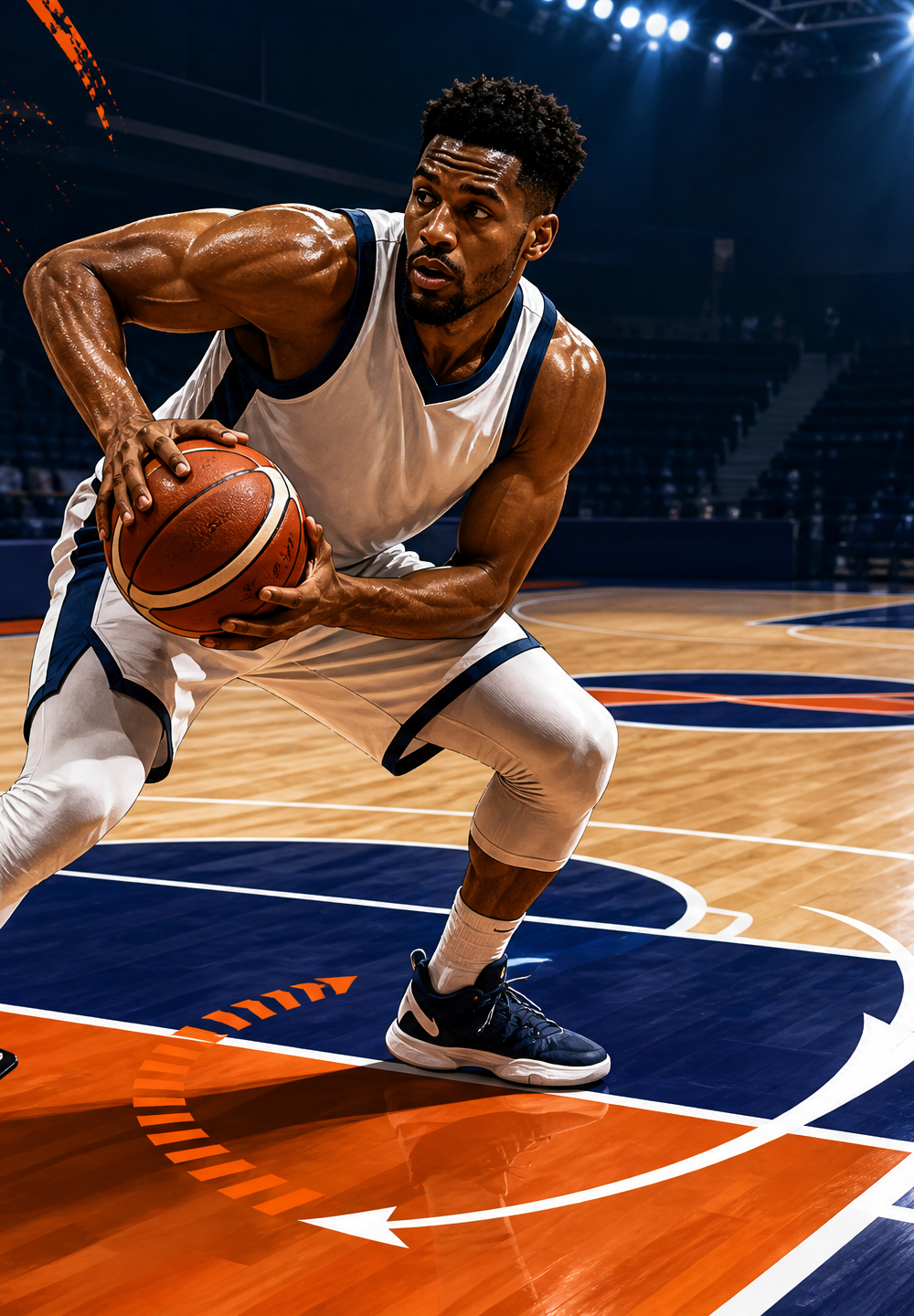
- The Catch: The Post Player (5) establishes a wide, low stance on the block, sealing the defender (X5) on the high side. The Passer (1) delivers a crisp entry pass.
- The Read: Upon catching the ball, 5 chins the ball (secures it under the chin with elbows out) and reads the defender's pressure. Since the defender is playing high, the baseline is open.
- The Pivot: 5 establishes their top foot (the foot closest to the free-throw line) as the pivot foot.
- The Drop Step: 5 violently swings their bottom leg backward, stepping deep toward the basket and the baseline, sealing the defender behind them.
- The Finish: Keeping the ball high, 5 takes one power dribble (optional, depending on distance) and finishes strong off the glass, protecting the ball with their body.
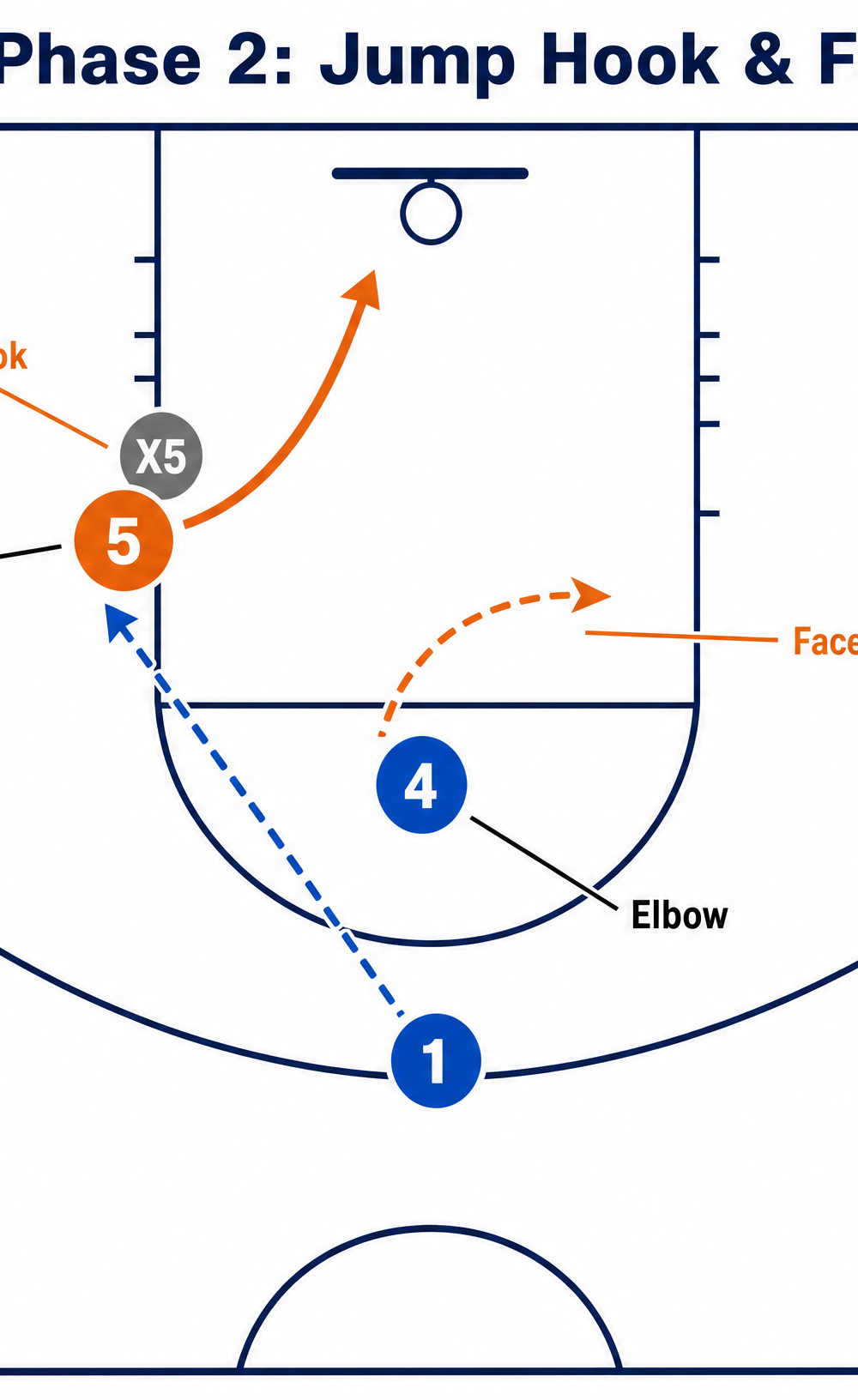
Phase 2: The Jump Hook (Middle)
- The Catch: 5 establishes position on the block. This time, the defender (X5) is playing on the baseline side, taking away the drop step.
- The Read: 5 catches, chins the ball, and recognizes the baseline is closed.
- The Pivot: 5 establishes their bottom foot (closest to baseline) as the pivot foot.
- The Step to the Middle: 5 steps aggressively with their top foot toward the middle of the lane, aiming their lead shoulder at the front of the rim.
- The Finish: 5 launches off their inside foot, extending their shooting arm high and releasing a soft jump hook, using their off-arm to protect against the defender.
Phase 3: The Face-Up (Elbow/Short Corner)
- The Catch: 5 catches the ball on the block or slightly off it (short corner).
- The Read: The defender (X5) is playing directly behind, giving 5 space, or is a slower defender who can be beaten off the dribble.
- The Pivot: 5 executes a front pivot or reverse pivot to face the basket, immediately bringing the ball into a triple-threat position.
- The Attack: 5 reads the defender. If the defender sags, 5 shoots the short jumper. If the defender steps up, 5 uses a shot fake and drives aggressively to the rim.
4. Key Coaching Points
- "Chin the Ball": Immediately upon catching the entry pass, the ball must be secured under the chin with elbows out to prevent guards from stripping it.
- Win the Footwork Battle: The first step must be aggressive and purposeful. In the drop step, step past the defender's leg to seal them completely.
- Read the Defense: Do not predetermine the move. The defender's positioning dictates whether to go baseline (drop step) or middle (jump hook).
- Play Wide and Low: A high center of gravity makes a post player easy to move. Players must establish a wide base and sit low before the catch and during the move.
- Protect the Ball on the Finish: Use the body and the off-arm as a shield when going up for the shot. Never expose the ball to the shot blocker.
5. Common Mistakes
- Catching the ball standing straight up: This eliminates explosiveness and makes it easy for the defender to push the offensive player off the block.
- Bringing the ball down: Dropping the ball below the waist after the catch invites smaller players to strip it.
- Weak pivot foot: Dragging or lifting the pivot foot before releasing the ball or starting a dribble, resulting in a traveling violation.
- Fading away on the jump hook: Instead of jumping into the defender to create space and draw contact, players often fade away, resulting in a low-percentage shot.
6. Variations & Progressions
- Progression 1: Live Defense (1-on-1): Transition from a dummy defender to a live defender. The passer initiates the action, and the post player must read the defense and score.
- Progression 2: Double Team Read: Add a second defender who occasionally traps the post. The post player must now read whether to score or pass out to the open perimeter player.
- Variation 1: Weakside Flash: Start the post player on the opposite block. They must flash across the lane, establish position, catch, and execute the move.
7. Age Adaptations
- Under 10: Focus purely on the footwork without a ball first. Introduce the ball and practice the drop step with no defense. Emphasize using the backboard.
- Under 12 - Under 14: Introduce dummy defense to teach reading the defender's position. Focus heavily on "chinning" the ball and establishing a strong pivot foot.
- Under 16 - Open: Incorporate live, physical defense. Add the face-up game and reads against double teams. Demand high-speed execution and finishing through contact.