

Football
Pressing Trigger and Recovery Drill: Mastering the Transition
Teach your team how to recognize pressing triggers, execute a coordinated press, and quickly recover their defensive shape when the press is broken.
What you need
1 full-size goal, 2 mini-goals, 10 cones, Footballs, Bibs (2 colors)
1. Overview
Modern football demands teams that can press aggressively but also recover intelligently when that press is bypassed. The Pressing Trigger and Recovery Drill is designed to bridge the gap between attacking the ball out of possession and defending the space behind. It teaches players to recognize specific cues (triggers) to initiate a high-intensity press, while simultaneously coaching the rest of the team on how to condense space and prepare for a potential recovery run if the opposition breaks the lines.
Use this drill when your team is struggling with being too expansive out of possession or when they are easily countered after a failed press. It is highly effective for teams employing a mid-block or high-pressing system, such as a 4-4-2 or 4-3-3.
2. Setup
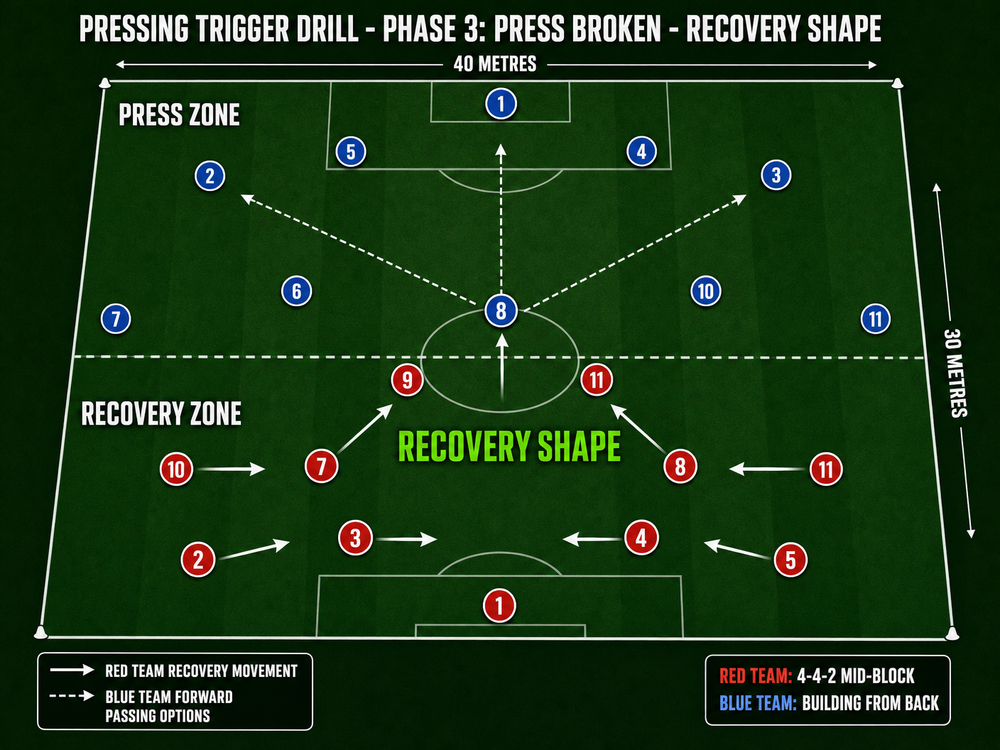
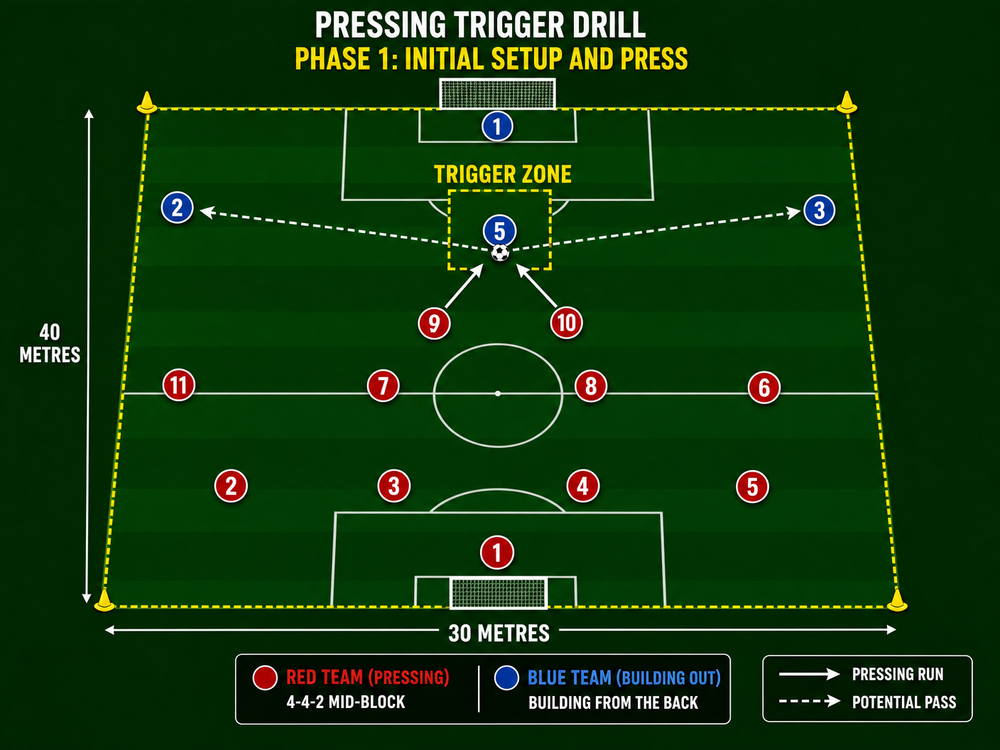
- Pitch Area: 40m long x 30m wide (adjust slightly based on age group and ability).
- Equipment: 1 full-size goal, 2 mini-goals (or target zones), 8-10 cones (to mark the boundary and the 'Trigger Zone'), ample supply of footballs.
- Players: 12-14 players (e.g., 6v6 or 7v7 depending on your squad size).
- Red Team (Pressing): Set up in a 4-2 or 3-3 shape depending on numbers, representing the front lines of your defensive block.
- Blue Team (Building Out): Set up with a Goalkeeper, Center Backs, and Fullbacks/Midfielders trying to build out from the back.
3. Step-by-Step Instructions
- Initial Positioning: The Blue team starts with the ball with their Goalkeeper or Center Back (5) deep in their own half. The Red team sets up in a compact mid-block shape, allowing the first pass but remaining vigilant.
- The Trigger: The coach defines a specific 'trigger' for the Red team to initiate the press. Common triggers include:
- A slow, looping pass to a Fullback.
- A player receiving the ball facing their own goal.
- A heavy touch by a defender.
- A pass into a designated 'Trigger Zone' (marked by cones).
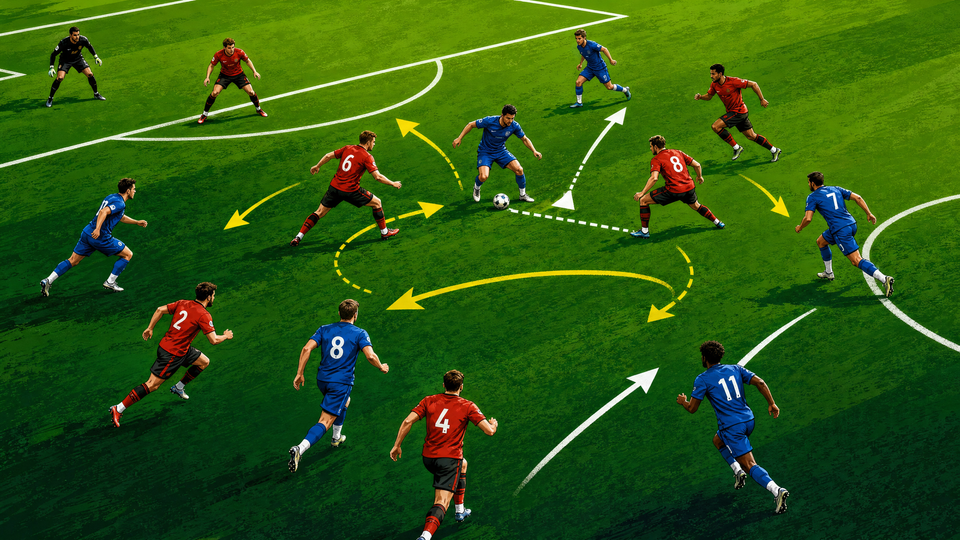
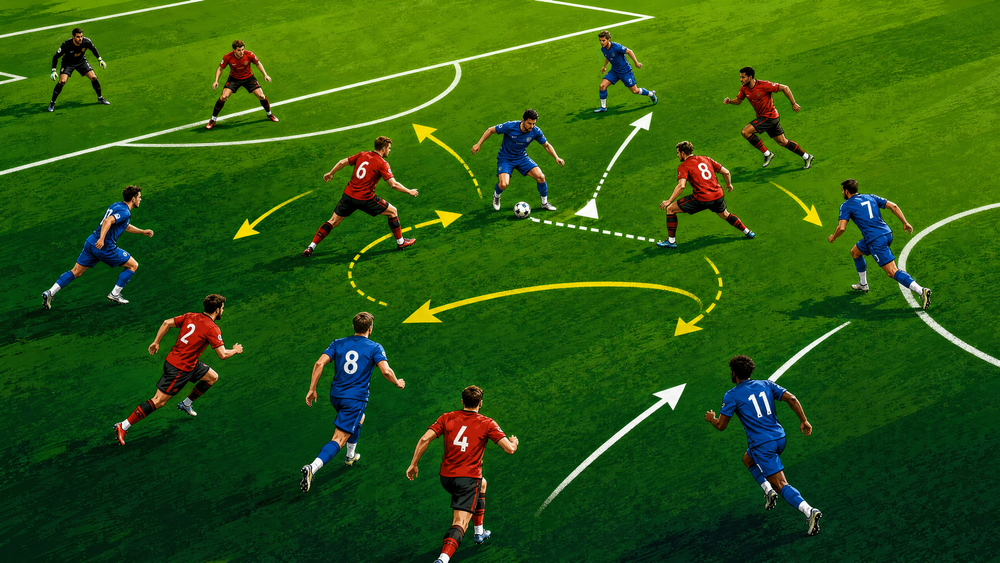
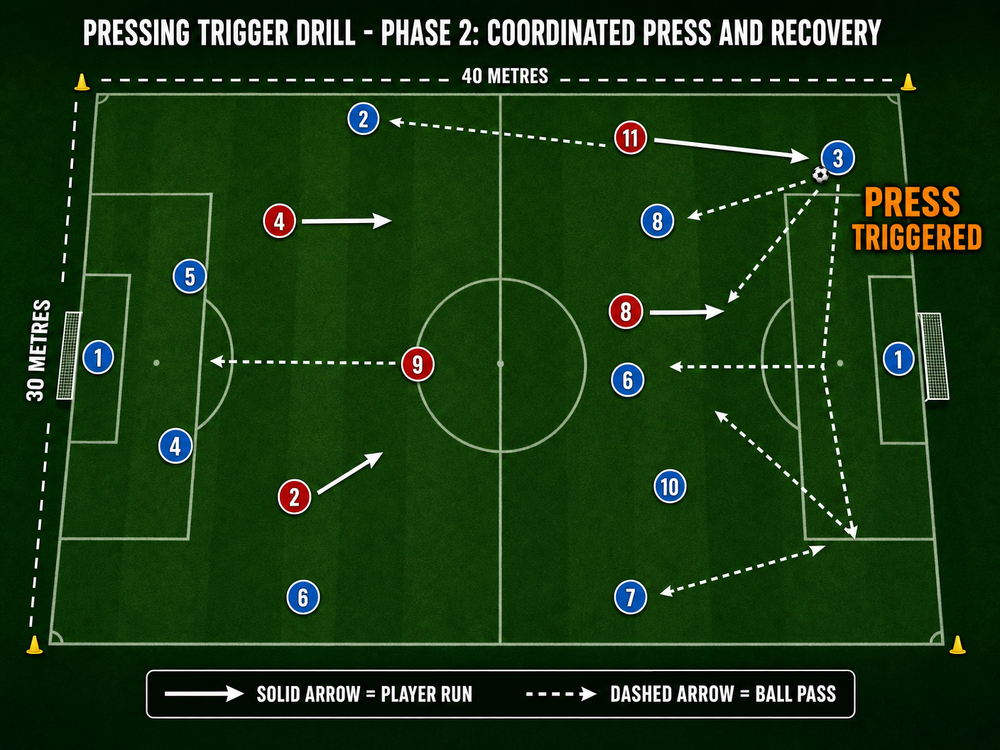
- The Coordinated Press: Once the trigger occurs, the nearest Red player (e.g., Striker 9 or 10) sprints to press the ball carrier, curving their run to cut off a passing lane. The rest of the Red team must immediately shift and condense the space around the ball, locking the Blue team into a specific area.
- The Breakout: The Blue team attempts to break the press by passing through or around the Red team. Their objective is to score in one of the mini-goals or play a successful pass to a target player waiting at the opposite end of the grid.
- The Recovery: If the Blue team successfully breaks the initial press, the Red team must instantly transition into recovery mode. The priority shifts from winning the ball high up the pitch to sprinting back, dropping below the line of the ball, and re-establishing a compact defensive shape to prevent a direct attack on their goal.
4. Key Coaching Points
- Recognize the Trigger: Players must be hyper-aware of the predetermined cues. A late press is often worse than no press at all. Communication is vital here—the player initiating the press should shout to alert their teammates.
- Curve the Run: The initial presser must approach the ball carrier at an angle that cuts off at least one passing option (usually the switch of play or the pass back to the goalkeeper), making the play predictable.
- Compactness is Key: The press is only effective if the team moves as a unit. As the first player presses, the midfield and defensive lines must step up and slide across to close the gaps between the lines.
- Immediate Reaction to Failure: If the press is broken, there can be no hesitation or disappointment. The immediate reaction must be a high-intensity sprint to recover defensively and get behind the ball.
5. Common Mistakes
- Pressing Individually: One player pressing without the support of the team simply opens up space for the opposition to exploit. The press must be collective.
- Straight-Line Pressing: Approaching the ball carrier in a straight line allows them to easily pass around the presser. Always curve the run to dictate the play.
- Jogging on Recovery: The transition from pressing to recovering must be at maximum speed. Jogging back allows the opposition to attack an unsettled defense.
- Ignoring the Weak Side: When shifting to press on one side of the pitch, players on the opposite side (the weak side) must tuck in to maintain compactness, rather than staying wide and leaving massive gaps centrally.
6. Variations & Progressions
- Change the Trigger: Rotate the triggers throughout the session (e.g., first 5 minutes the trigger is a pass to the fullback, next 5 minutes it's a backward pass) to keep players mentally sharp.
- Add a Time Limit: Give the pressing team a maximum of 6 seconds to win the ball back after the trigger. If they fail, they must immediately drop into their recovery shape.
- Increase the Overload: Make it harder for the pressing team by giving the building team a numerical advantage (e.g., 7v5), forcing the pressing team to be even more coordinated and efficient.
7. Age Adaptations
- Under-8 to Under-10: Focus heavily on the individual mechanics of pressing (curving the run, aggressive approach) rather than complex team coordination. Use very simple triggers, like a specific player receiving the ball.
- Under-12 to Under-14: Introduce the concept of collective pressing and shifting as a unit. Emphasize communication and the immediate reaction required for the recovery phase.
- Under-16 and Open: Demand high tactical understanding. Implement multiple, complex triggers and expect seamless transitions between aggressive pressing and disciplined recovery shapes. The intensity should match match-day conditions.
