

Rugby
Blindside Strike: 8-9-11 Scrum Attack
A high-percentage attacking scrum play designed to exploit space on the blindside using quick ball off the base, isolating the defending flanker.
What you need
Rugby ball, Scrum machine (optional for practice), Cones for marking channels, Bibs/Pinnies
Overview
The Blindside Strike is a fundamental attacking scrum set play designed to exploit the short side (blindside) when defending teams over-commit to the openside. By utilizing the No.8, Scrum-half (9), and Blindside Wing (11), this play creates a 3-on-2 or even a 3-on-1 overlap in the 15-meter channel. It is highly effective when the attacking scrum is positioned near either touchline, forcing the defending flanker and scrum-half to make split-second decision-making errors.
This play achieves forward momentum, crosses the gain line efficiently, and can result in clean line breaks if the defending wing (14) bites in on the No.8 or 9.
Setup
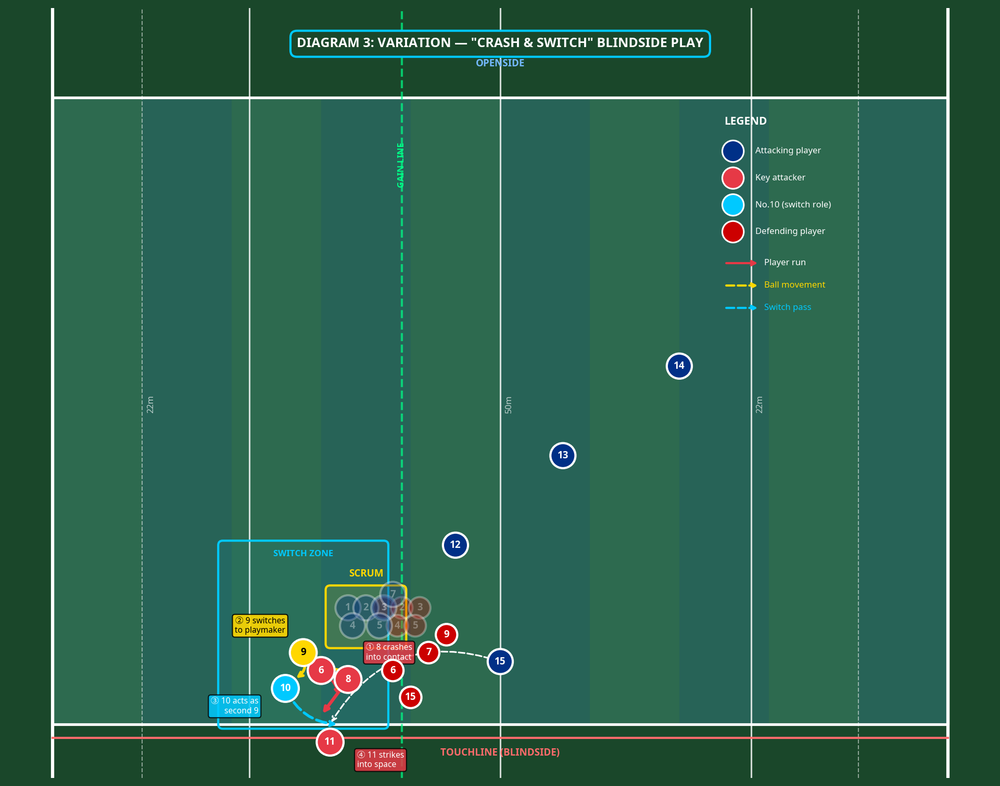
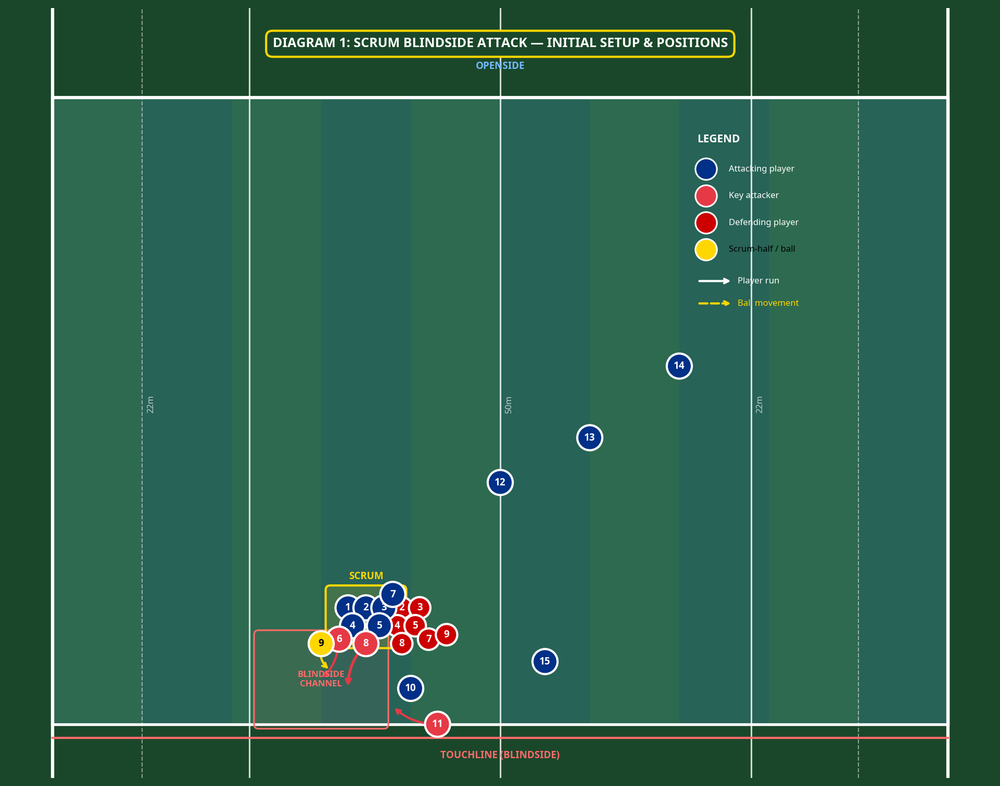
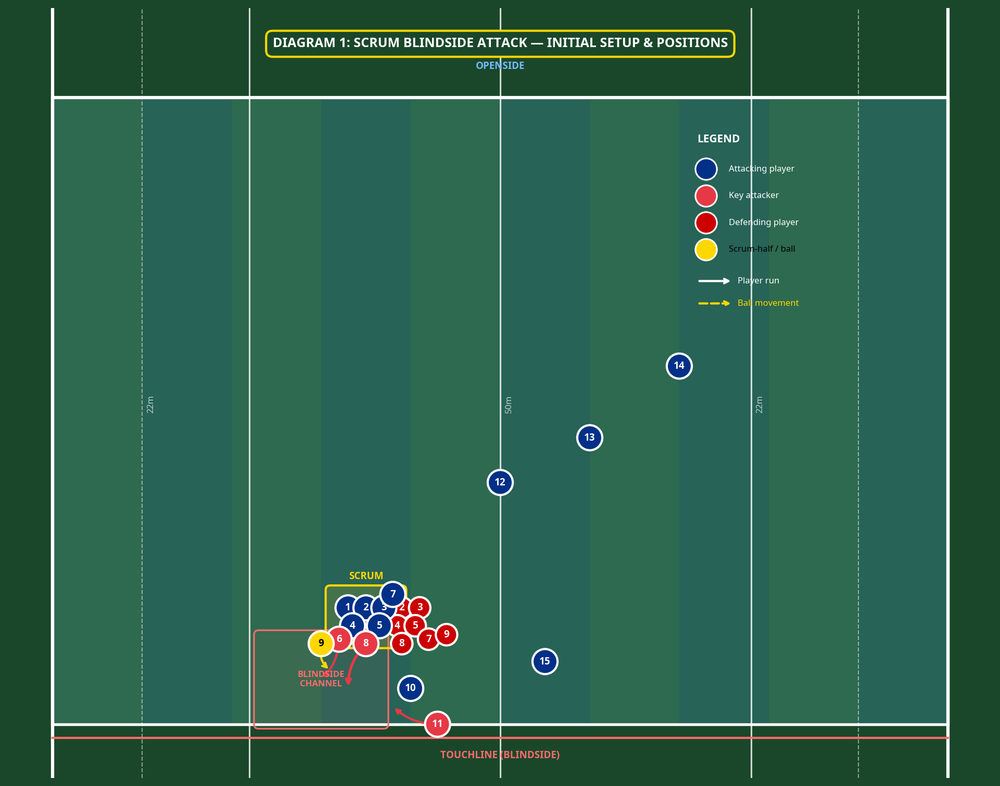
Pitch Location: Best executed between the 22m and 50m lines, ideally with the scrum positioned 10-15 meters from the touchline, creating a defined 'blindside' channel.
Player Positions:
- Forwards (1-8): Standard scrum formation. The pack must provide a stable platform and avoid wheeling to the openside, which would close the blindside channel.
- Scrum-half (9): Positioned at the base of the scrum, ready to clear the ball or support the No.8.
- Blindside Wing (11): Holding width initially, staying out of the defending wing's peripheral vision, ready to accelerate onto a pass.
- Backline (10, 12, 13, 14, 15): The fly-half (10) and centers must run hard, convincing decoy lines to the openside to freeze the defending back row and backline.
Step-by-Step Instructions
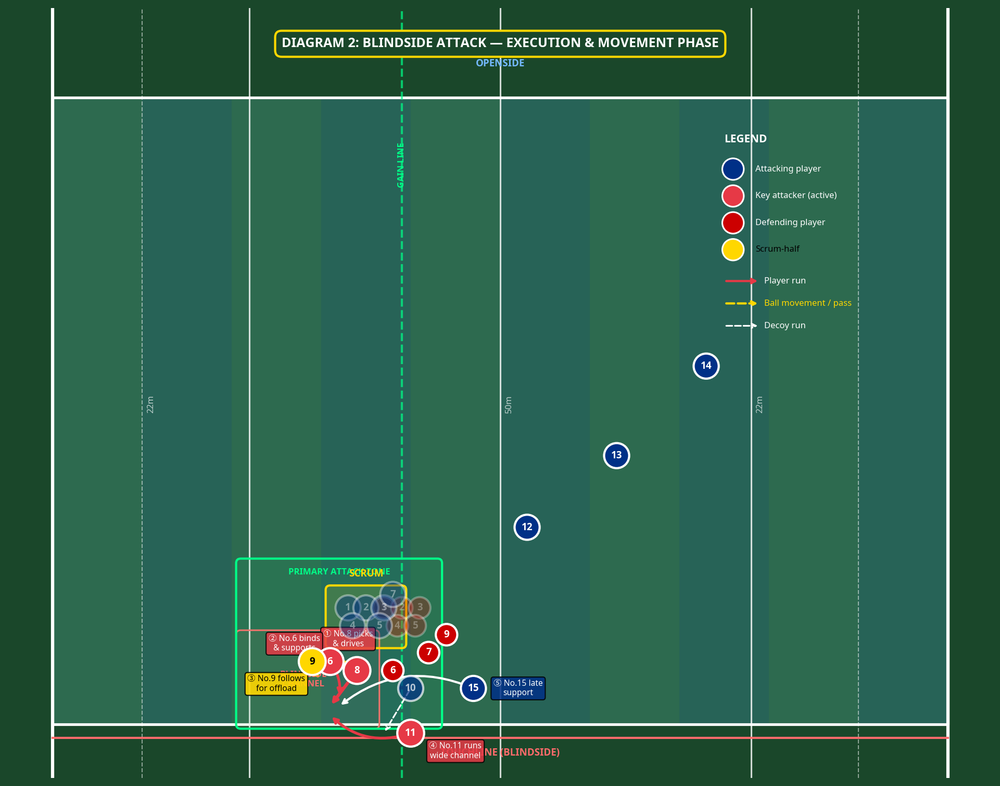
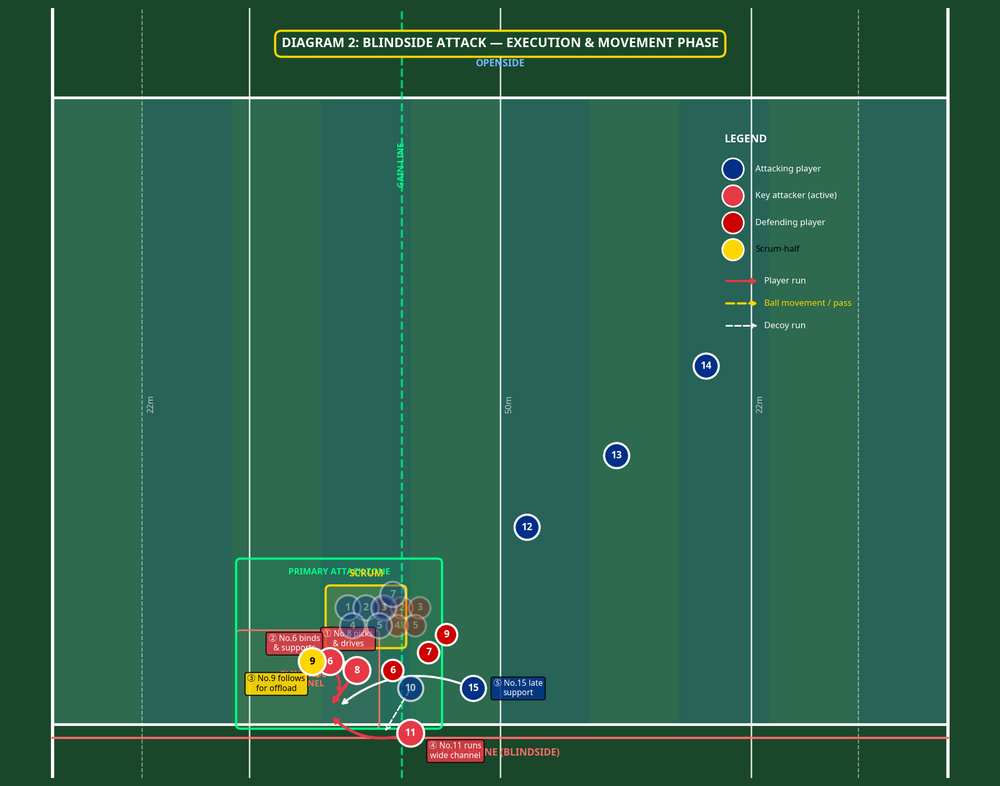
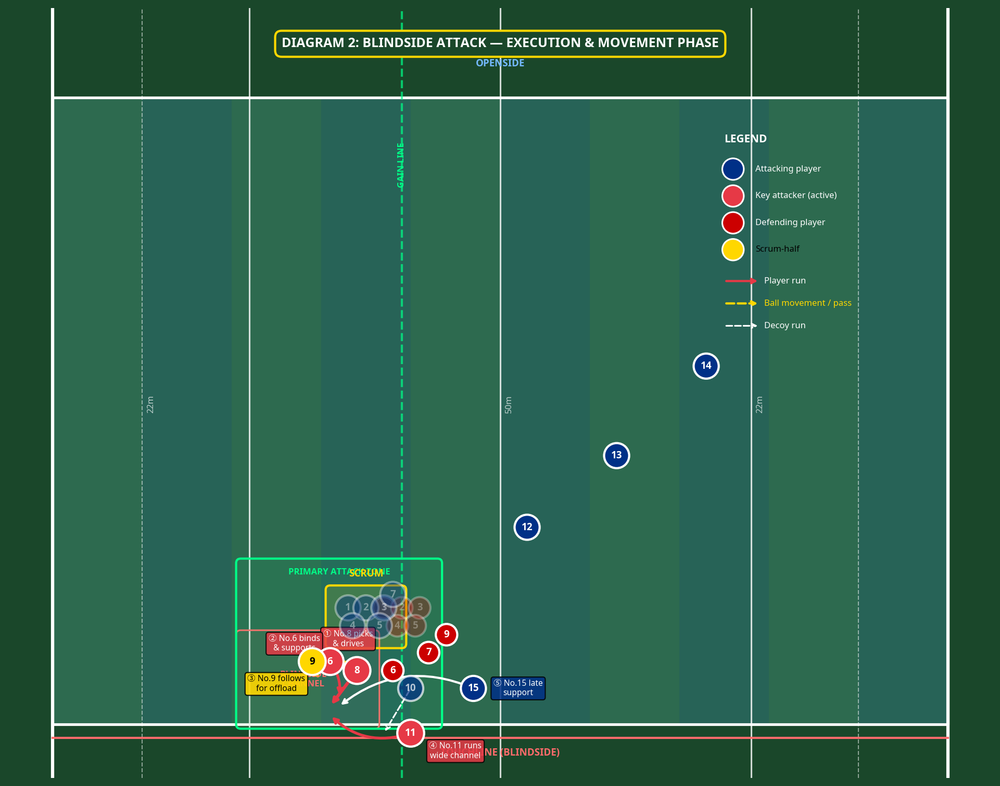
- The Platform: The forward pack engages and secures the ball. The hooker strikes, and the ball is channeled cleanly to the feet of the No.8.
- The Pick: The No.8 unbinds quickly, picking the ball up from the base and attacking the space between the defending scrum and the touchline. The No.8 must run hard and square, targeting the inside shoulder of the defending blindside flanker (6).
- The Support: The attacking blindside flanker (6) unbinds immediately and supports the No.8 on the inside shoulder, preventing the defending scrum-half from making an easy tackle from behind.
- The Draw and Pass: As the defending blindside flanker (6) commits to tackling the No.8, the No.8 executes a quick pop pass to the Scrum-half (9), who is wrapping around the outside.
- The Strike: The Scrum-half (9) attacks the outside shoulder of the defending wing (14). The Blindside Wing (11) hits the line at pace, staying wide. The 9 draws the defender and passes to the 11 in space for a clean break down the touchline.
Key Coaching Points
- Square Shoulders: The No.8 must run square up the pitch initially. Drifting sideways immediately pushes the attack into touch and makes it easy for the defense to drift.
- Decoy Lines: The openside backline (10, 12, 13) must run at 100% pace and call for the ball. If they jog, the defending openside flanker (7) will fold around to the blindside and kill the play.
- Timing of the Unbind: The No.8 and attacking flanker (6) must unbind exactly as the ball reaches the back of the scrum. Unbinding too early results in a penalty; too late results in slow ball.
- The Wing's Depth: The blindside wing (11) must stay deep enough to receive the pass at full speed. Flattening out too early limits their options and space.
Common Mistakes
- Wheeling the Scrum: If the attacking tighthead prop (3) pushes too hard and wheels the scrum, the blindside channel closes, and the No.8 will be tackled immediately upon picking the ball up.
- Slow Pick up: If the No.8 fumbles the ball at the base, the defending scrum-half will disrupt the play before it begins.
- Wing Overrunning: The blindside wing (11) gets too excited and overruns the scrum-half (9), resulting in a forward pass or a missed opportunity.
Variations & Progressions
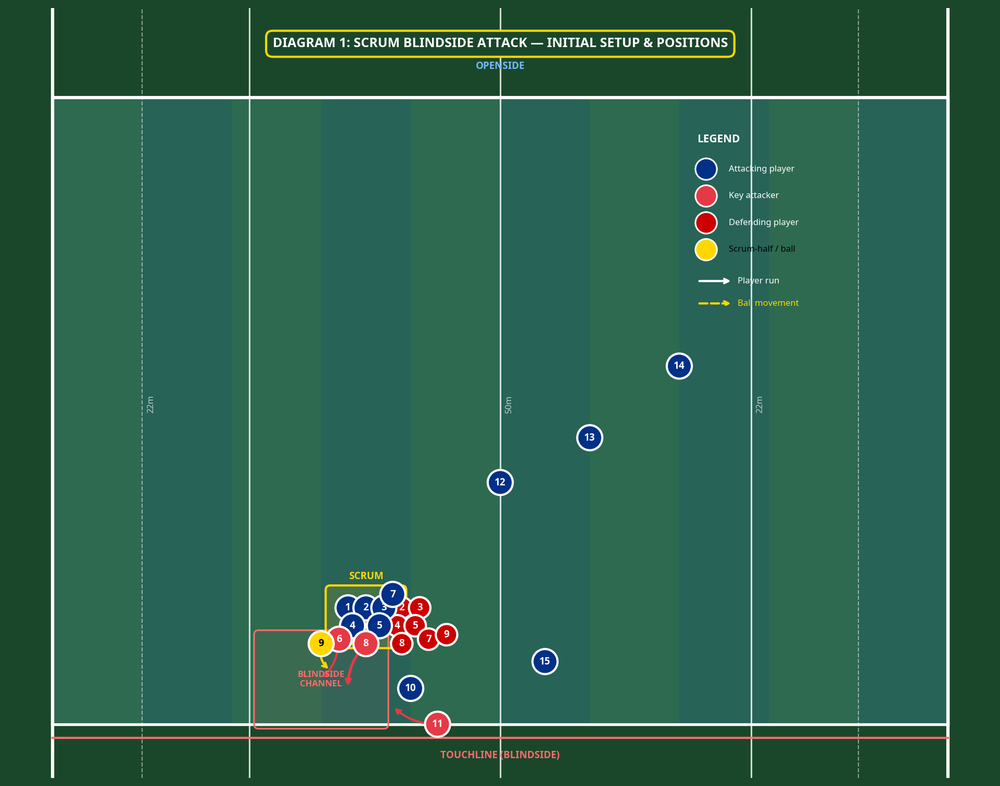
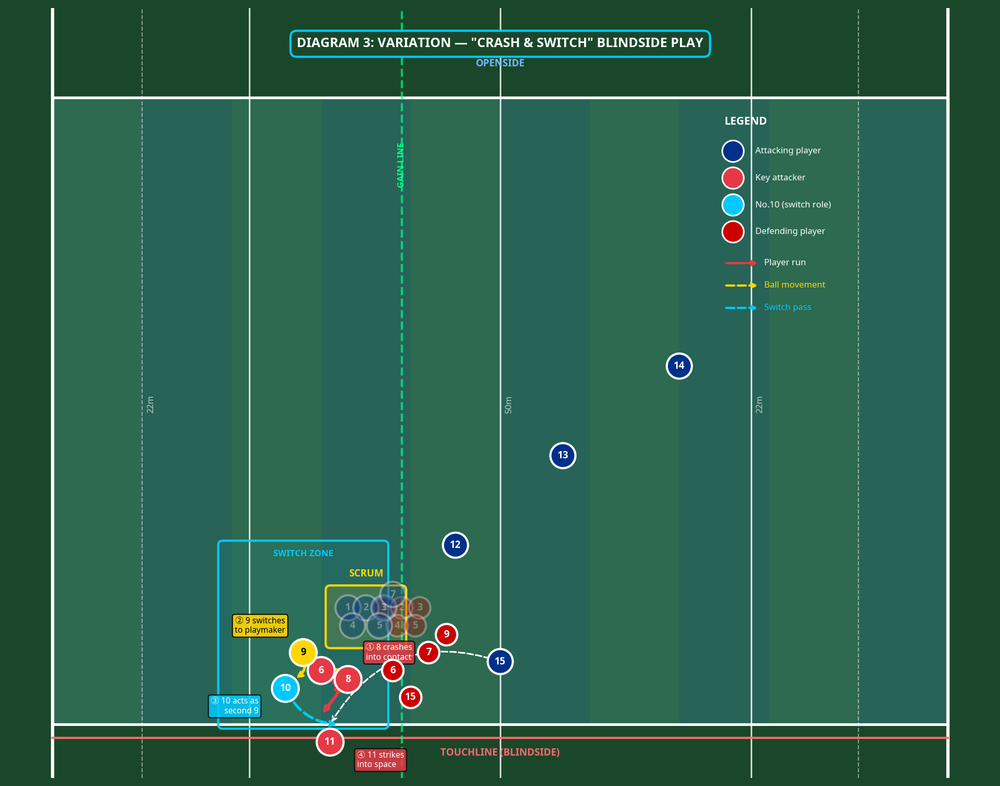
- Variation 1: The Crash and Switch. If the defense starts drifting early to cover the wide pass, the No.8 crashes the ball up. The Scrum-half (9) clears the ruck, and the Fly-half (10) switches back to the blindside to attack the disorganized defense.
- Variation 2: The 8-9 Inside Pop. If the defending flanker drifts out to cover the 9, the No.8 dummies the outside pass and pops the ball inside to the attacking flanker (6) running a hard line.
Age Adaptations
- Under 12s/14s: Focus entirely on the No.8 pick and the basic pass to the Scrum-half. Do not overcomplicate with decoy runners. Emphasize square running and secure ball handling.
- Under 16s: Introduce the blindside wing into the attack. Focus on the timing of the wing's run and the decision-making of the Scrum-half (whether to run or pass).
- Open / Senior: Execute the full play with complex decoy lines from the openside backs. Introduce variations based on reading the defensive alignment pre-engagement.
