

Rugby
Mastering the Base: Scrum Half Passing Accuracy & Speed Drill
Develop lightning-fast, pinpoint distribution from the base of the ruck with this essential scrum half passing drill.
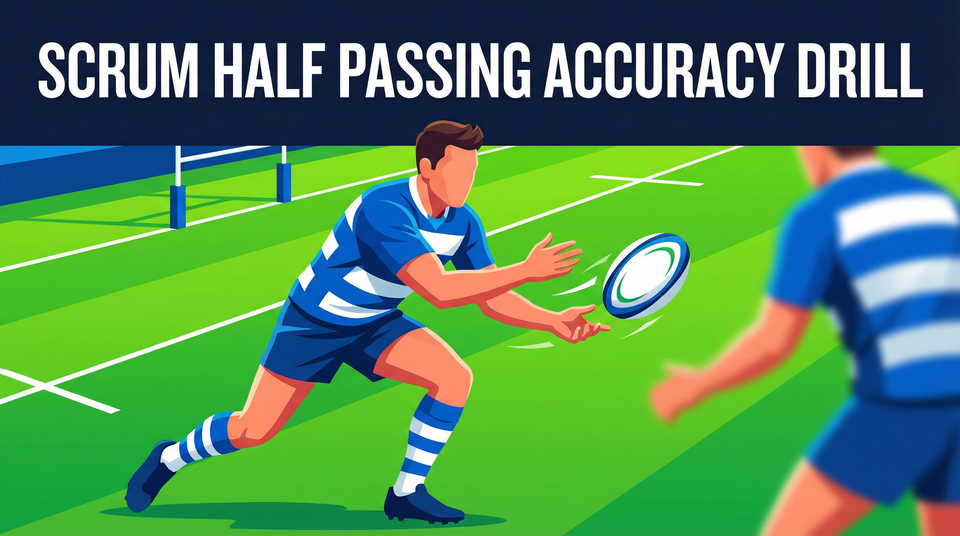
What you need
5-10 Rugby balls, 4-6 Marker cones, 1 Tackle shield, Target hoops (optional)
1. Overview
The scrum half (9) is the heartbeat of any rugby team's attack. Their ability to deliver fast, accurate, and perfectly weighted passes from the base of the ruck dictates the tempo of the game. This comprehensive drill is designed to isolate and refine the core mechanics of the scrum half pass. By focusing on footwork, body position, and follow-through, coaches can help their nines develop the consistency required to hit the fly-half (10) or hard-running forwards perfectly in stride. Use this drill during the skills block of your session, particularly when preparing for matches that will require high-tempo, multi-phase attacking structures.
2. Setup
Proper setup is crucial for maximizing the repetitions and effectiveness of this drill. You will need a 20m x 15m section of the pitch.
Equipment Needed:
- 5-10 Rugby balls (to maintain high tempo without constantly retrieving)
- 4-6 Marker cones (for target zones and defensive lines)
- 1 Tackle shield or hit shield (for progressions)
- Target hoops or flat markers (optional, for visual targets)
Pitch Setup & Player Positions:
Set up a designated "ruck" area using a tackle bag or simply a static ball on the ground.
- Scrum Half (9): Starts approximately 1 meter behind and slightly to the side of the ball.
- Primary Receivers: Position a Fly-Half (10) at 5 meters, an Inside Centre (12) at 10 meters, and an Outside Centre (13) at 15 meters along a flat passing line.
- Feeder/Coach: A coach or spare player stands behind the ruck to continuously feed balls to the base, ensuring the drill maintains a rapid pace.
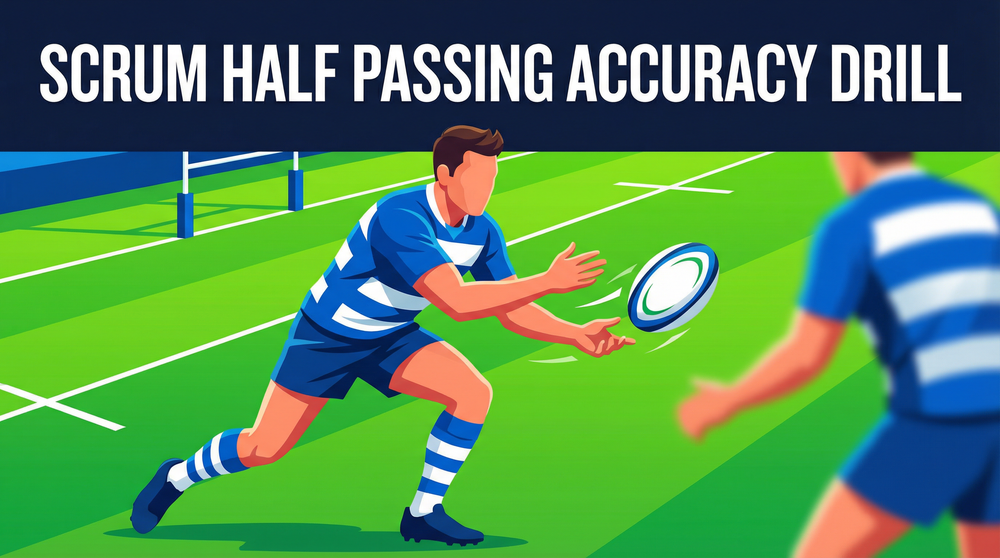
3. Step-by-Step Instructions
Execute the drill with a focus on technique over sheer speed initially. As proficiency increases, ramp up the tempo.
- The Approach: The coach feeds the ball to the base of the simulated ruck. The scrum half (9) approaches the ball, sinking their hips to get low. Their non-passing foot (the foot closest to the target) should plant firmly next to the ball, pointing directly at the intended receiver.
- The Grip: The scrum half sweeps their hands onto the ball. The back hand provides the power and spin, while the front hand guides the trajectory. The grip should be slightly towards the back third of the ball.
- The Sweep and Transfer: In one fluid motion, the scrum half sweeps the ball off the ground. Weight transfers from the back foot to the planted front foot. The torso rotates forcefully toward the target.
- The Release: The arms extend fully toward the receiver. The wrists snap at the point of release to generate the spiral. Both hands should finish pointing exactly at the target's chest.
- The Reset: Immediately after the pass, the scrum half resets their feet and moves back to the starting position to receive the next ball from the feeder. Repeat for 10 passes off the left hand, then switch to 10 passes off the right hand.
4. Key Coaching Points
To ensure your players are getting the most out of this drill, focus your feedback on these critical areas:
- Sink the Hips, Don't Bend the Back: Power comes from the legs and core. The scrum half must get low by bending their knees and dropping their hips, keeping their chest up to maintain vision of the defensive line.
- Point the Plant Foot: The foot closest to the receiver acts as the directional rudder. If it points away from the target, the pass will invariably drift.
- Punch Through the Target: Emphasize a strong, aggressive follow-through. The hands shouldn't drop after release; they must "punch" toward the receiver to ensure velocity and accuracy.
- Clear the Ball Quickly: The ball should not come up to the chest before being passed. It should travel in a direct, sweeping arc from the ground to the receiver.
5. Common Mistakes
Watch for these frequent errors and correct them immediately:
- Taking Extra Steps: Many young scrum halves take a stutter step or shuffle away from the ruck before passing. This slows down the delivery and alerts the defense. The pass must be made directly from the base.
- Looking at the Ball: The scrum half should locate the ball, but their eyes must quickly snap to the target receiver before the pass is initiated. Passing blind leads to interceptions.
- Standing Up Too Early: If the player pops up out of their low stance before releasing the ball, the pass will likely float upward, making it difficult for the receiver to catch in stride.
6. Variations & Progressions
Once the core technique is mastered, introduce these progressions to simulate match conditions.
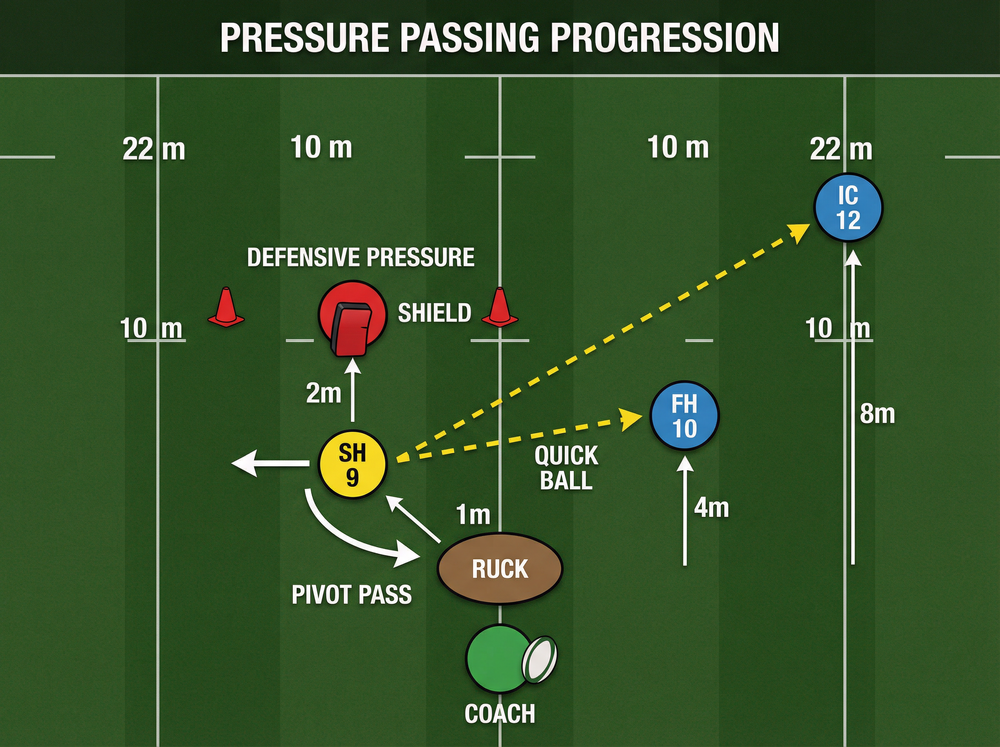
Progression 1: Defensive Pressure
Introduce a player holding a tackle shield standing 2 meters directly opposite the scrum half. On the coach's whistle, the shield holder steps forward aggressively. The scrum half must clear the ball accurately before the pressure arrives. This forces quicker decision-making and faster execution under duress.

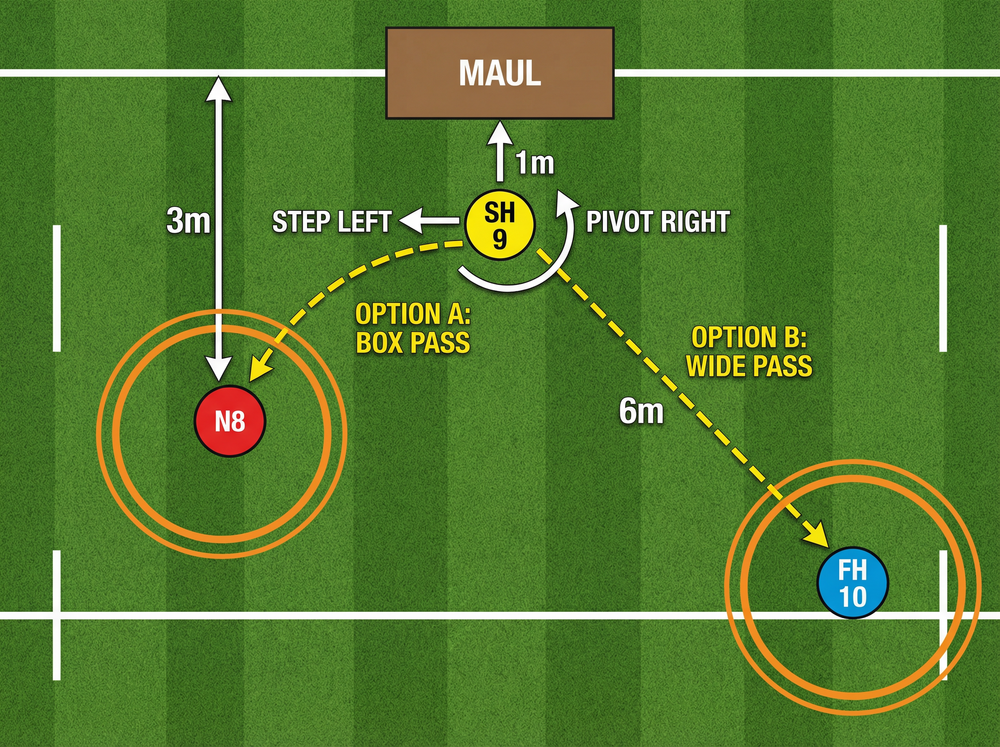
Progression 2: Box Pass vs. Wide Distribution
Set up a simulated maul scenario. The scrum half must now read a cue from the coach. If the coach shouts "Short!", the 9 executes a tight, pop pass to a driving forward (Number 8) running a hard line 3 meters away. If the coach shouts "Wide!", the 9 must pivot and deliver a long, flat pass to the Fly-Half (10) standing 6-8 meters away. This trains the ability to adjust pass type and distance on the fly.
7. Age Adaptations
Tailor the drill to the developmental stage of your players:
- Under 8s - Under 10s: Focus entirely on the sweep and two-handed delivery. Do not worry about a perfect spiral. Reduce passing distances to 2-3 meters. Use softer, age-appropriate balls.
- Under 12s - Under 14s: Begin emphasizing the wrist snap and the spiral. Introduce the non-passing foot plant. Start increasing the distance to 5 meters.
- Under 16s - Open Grade: Demand perfect technique, high velocity, and rapid execution. Implement all pressure progressions and require players to hit targets consistently at 10+ meters off both the left and right hands.
