

Basketball
Mastering the Low Post: A Coach's Guide to Post Moves & Footwork
A comprehensive, step-by-step guide for basketball coaches to teach players dominant post moves and precision footwork for effective low-post scoring.
What you need
Basketballs, Cones
1. Overview
This drill is designed to develop a player's fundamental footwork and scoring moves in the low post, a critical area for any team's half-court offense. The focus is on creating high-percentage scoring opportunities close to the basket by teaching players how to use their body to seal defenders, establish position, and execute a series of counter-moves. A dominant post presence can collapse a defense, open up perimeter shots, and create second-chance opportunities. This drill is essential for developing forwards and centers (Positions 4 and 5) but is also valuable for guards looking to expand their offensive versatility.
2. Setup
- Equipment: 2-4 basketballs, 4-6 cones or floor markers.
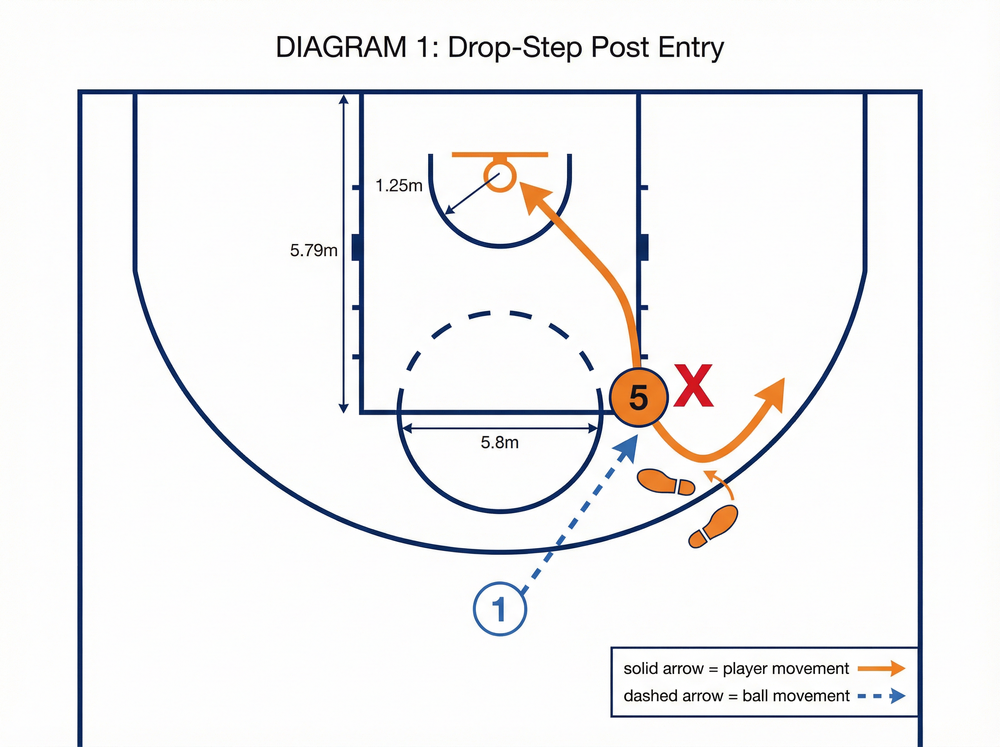
- Court Setup: Use one side of the court, focusing on the area from the low block to the free-throw line extended. Place cones to mark the starting positions for the players on the low blocks and elbows as shown in the diagrams.
- Player Positions: 2-4 players per basket. One line of players starts on the low block (the offensive players). A coach or a feeder stands at the wing or the top of the key to make the entry pass.
3. Step-by-Step Instructions
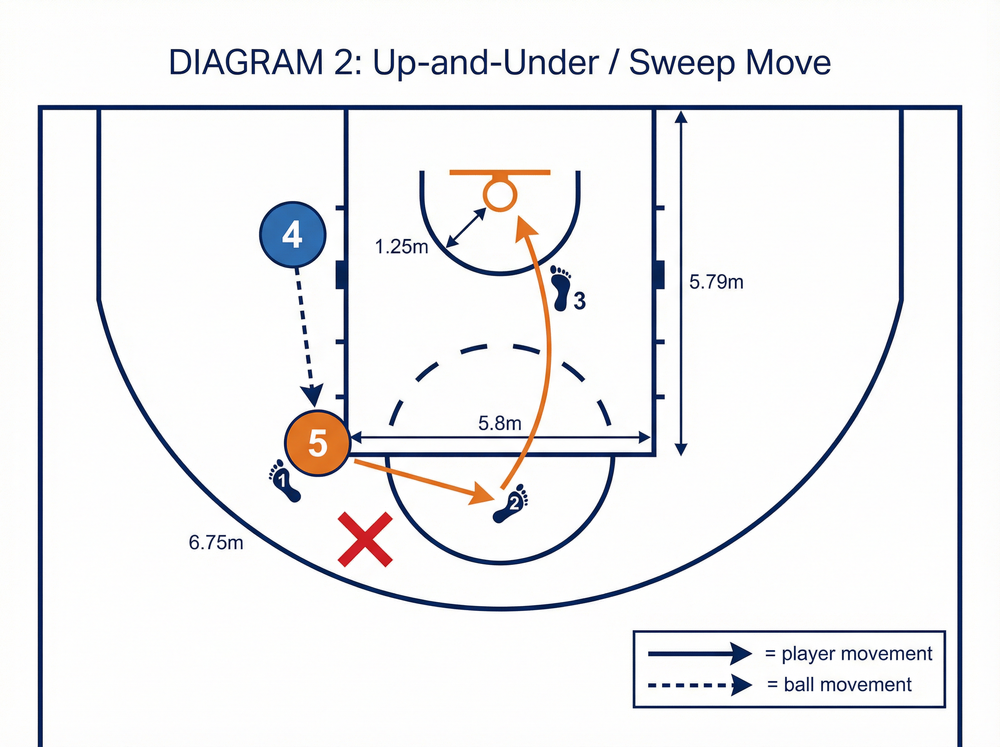
This drill is broken down into a progression of moves, starting with the most fundamental post-scoring technique: the drop step.
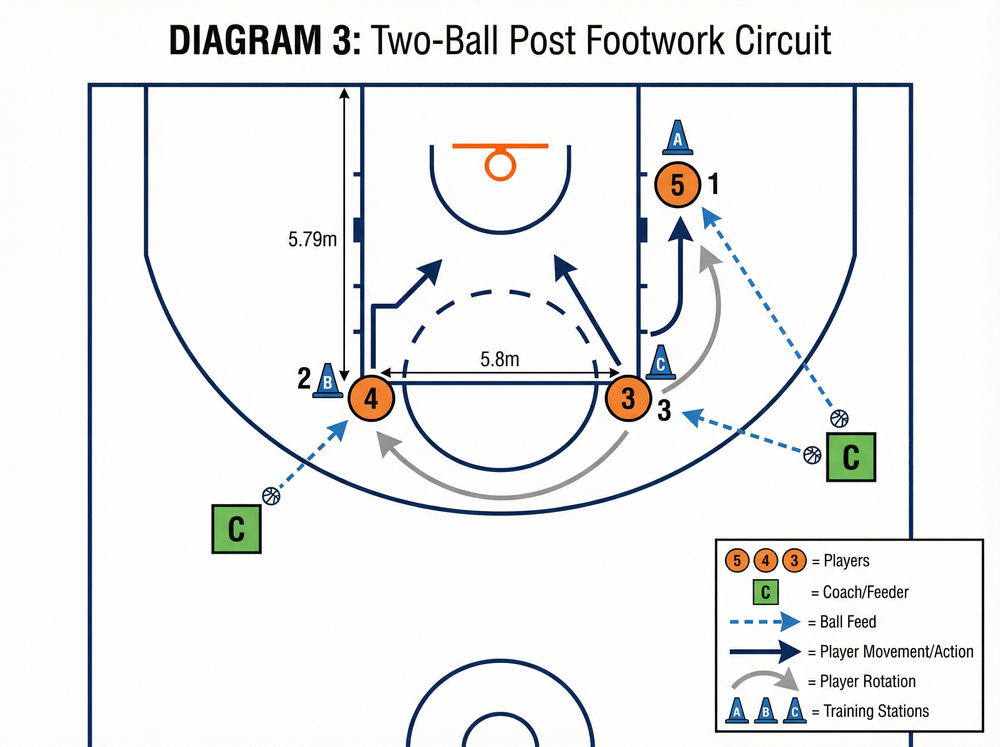
Move 1: The Drop Step (Baseline)

- Establish Position: The offensive player (5) starts on the right low block, using their body to seal the defender (X5) and show a target hand for the entry pass.
- Catch and Secure: The feeder (1) makes a sharp pass to the post player. The player catches the ball with two hands and chin-tucks it to protect it from the defender.
- Read the Defense: The player feels where the defender is positioned. In this scenario, the defender is directly behind or slightly shaded to the high side.
- Execute the Drop Step: The player performs a hard, low drop step with their baseline foot (left foot in this case), swinging it behind the defender's leg. The pivot foot is the right foot.
- Power Dribble and Finish: The player takes one hard power dribble with their left hand as they step, gathers the ball, and finishes with a power layup or dunk off the backboard.
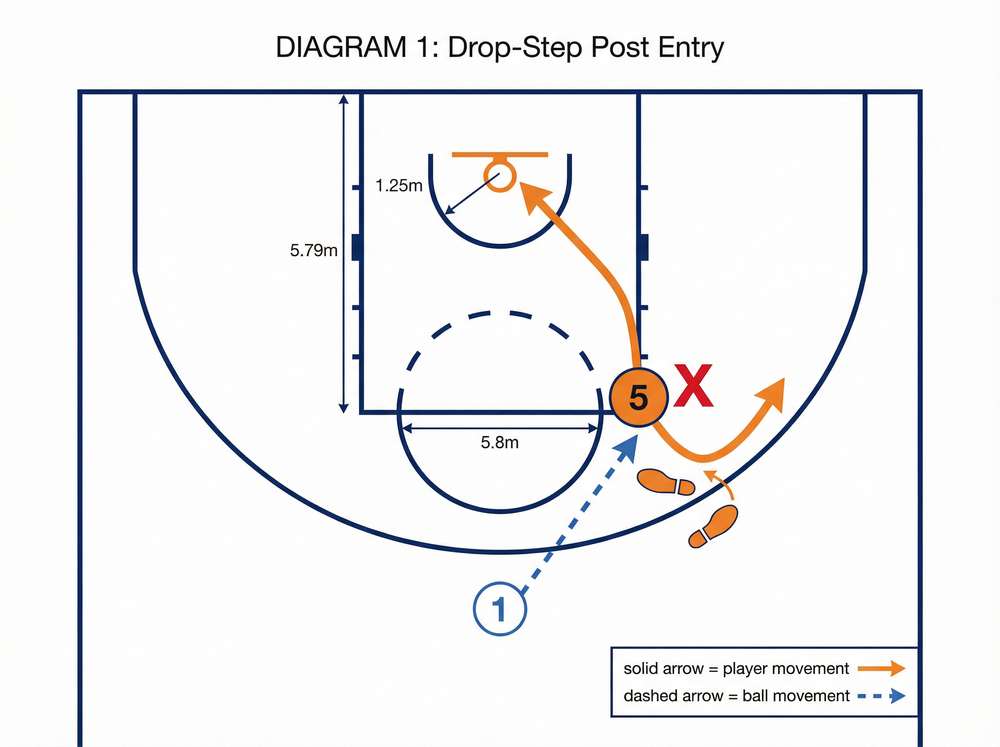
Move 2: The Up-and-Under / Sweep Move (Middle)
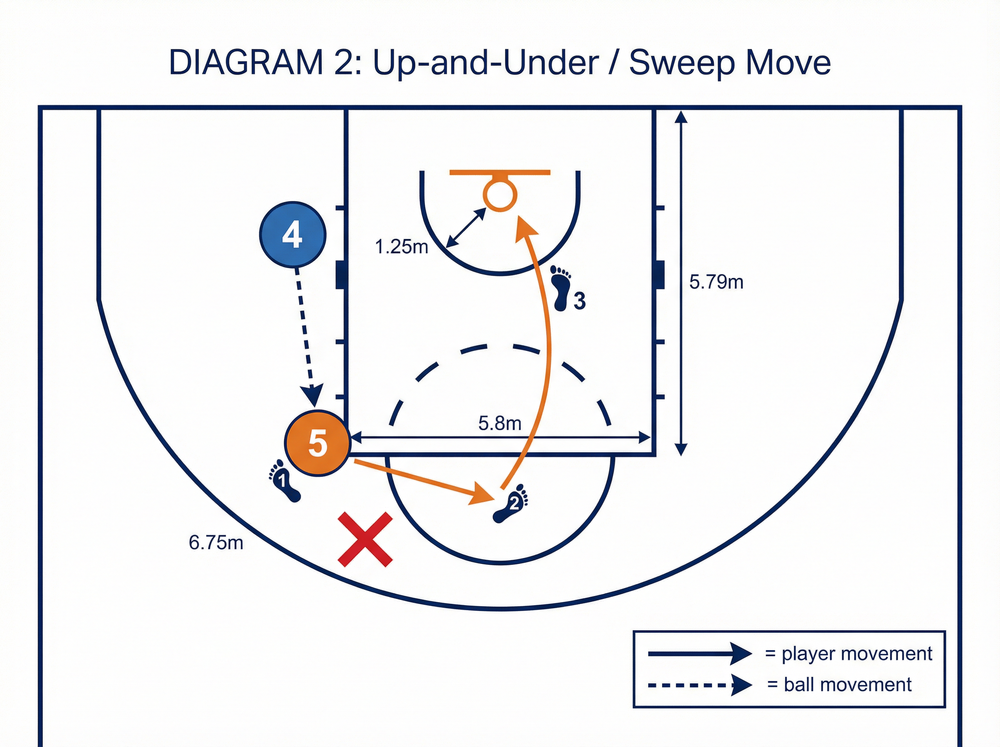
- Entry and Setup: The offensive player (5) receives the pass from the feeder (4) on the left low block.
- Read the Defense: This time, the defender (X5) has overplayed the baseline, anticipating the drop step.
- The Fake: The player executes a hard shot fake or jab step toward the baseline, getting the defender to commit and jump.
- The 'Up and Under' or 'Sweep': As the defender leaves their feet, the offensive player pivots on their inside foot (right foot), sweeps the ball low and through to the middle of the lane (the 'up and under' motion), and steps through with their left foot.
- Finish in the Lane: The player is now in the middle of the paint with a clear path for a hook shot, floater, or power finish.
4. Key Coaching Points
- Be Low and Wide: Emphasize a low center of gravity and a wide base. Players should 'own their space' before the catch.
- Chin the Ball: Upon catching the entry pass, the ball should immediately be secured under the chin with elbows out. This protects the ball and allows the player to see the floor.
- Patience and Footwork: Discourage rushing. Great post play is about precise, deliberate footwork. Every pivot and step must have a purpose. Teach them to feel the defender and react, not just play at one speed.
- Sell the Fake: For counter-moves like the up-and-under, the initial fake must be convincing. Use the eyes, the ball, and the body to make the defender believe the first move is the real one.
- Finish Strong: All moves should end with an aggressive finish at the rim. Players should expect contact and be taught to finish through it.
- Two-Handed Catch: Always demand players catch the ball with two hands to avoid fumbles and turnovers.
5. Common Mistakes
- Standing Upright: Players often catch the ball standing straight up, making them easy to push out of position and unable to execute a powerful move.
- Bringing the Ball Down: After securing the ball, players may bring it down to their waist, allowing smaller defenders to strip it. Keep it chinned!
- Traveling: Rushed footwork often leads to traveling. Ensure players understand which foot is their pivot foot and that it remains planted until they dribble or shoot.
- Ignoring the Defender: Players decide on a move before the catch instead of reading the defender's position and reacting accordingly.
- Weak Finishes: Failing to go up strong, avoiding contact, or not using the backboard can lead to missed layups.
6. Variations & Progressions
- Add a Live Defender: Start with a coach using a blocking pad, then progress to a live, controlled defender to increase the challenge and realism.
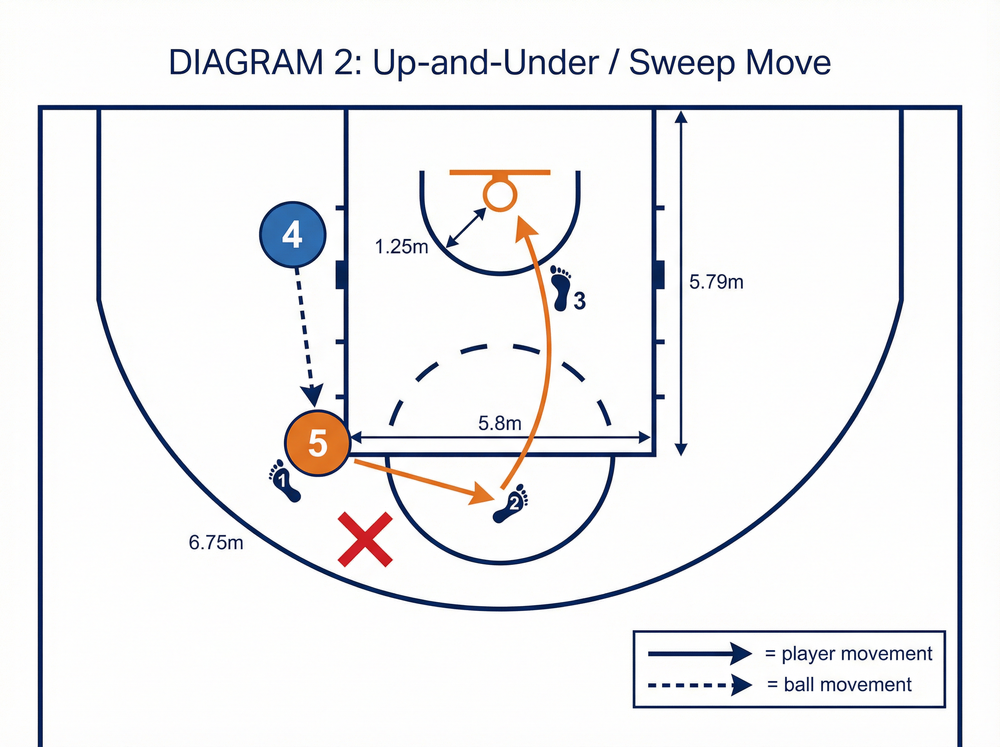
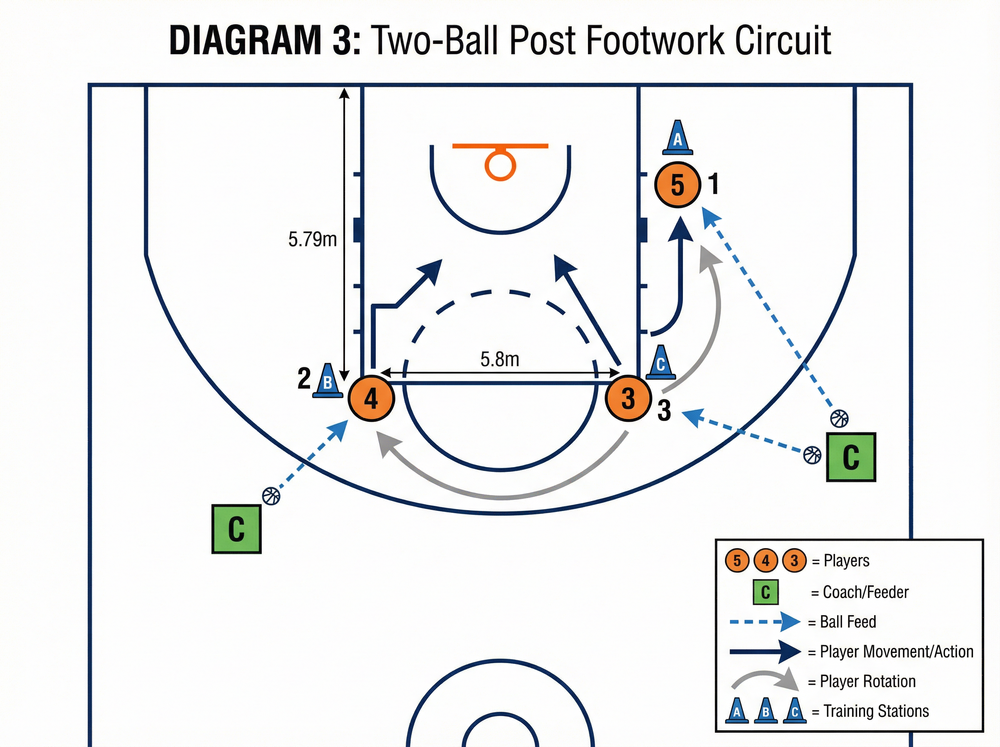
- Two-Ball Post Footwork Circuit: Set up three stations (as in Diagram 3) with a player at each. Players perform a specific move at each station (e.g., drop step at A, hook step at B, face-up at C) using two basketballs for continuous action. This maximizes reps and improves conditioning.
- Post-Move to Pass-Out: If the defense collapses (a second defender comes to double-team), the post player must read this and pass out to an open perimeter shooter. This teaches decision-making.
7. Age Adaptations
- Under 10 / Under 12: Focus purely on the footwork without a defender. Use cones to guide their steps. Emphasize catching the ball, pivoting without traveling, and basic layups. Keep it simple and fun.
- Under 14 / Under 16: Introduce a passive defender. The focus is still on correct footwork and technique, but now with the element of reading a defender's position. Introduce the concept of counter-moves.
- Open Age / Advanced: The drill should be run at game speed with a live, competitive defender. Add complexity by having the entry pass come from different angles (wing, top, corner) and incorporating the pass-out option against a double-team.
