

Cricket
The Definitive Guide to Run Out Prevention & Calling Systems
Master the art of running between the wickets with this complete guide to run out prevention, featuring a clear calling system, tactical diagrams, and drills for all age groups.
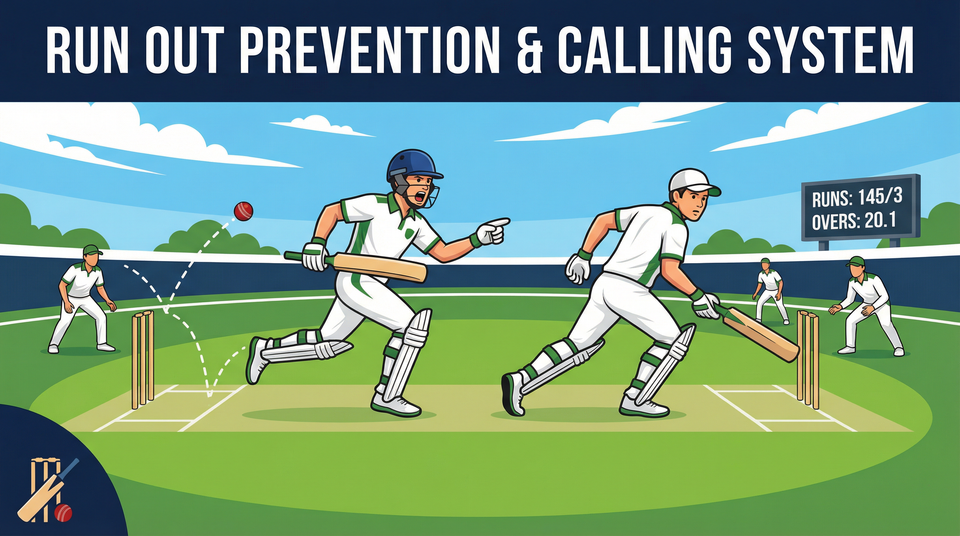
What you need
Cricket Bat, Cricket Balls, Stumps, Cones
1. Overview
Running between the wickets is the lifeblood of scoring in cricket, yet it remains one of the most under-coached aspects of the game. A breakdown in communication or a moment of hesitation can lead to a catastrophic run out, costing your team a key wicket and shifting momentum to the opposition. This set play establishes a clear, non-negotiable calling system that empowers batsmen to make quick, decisive choices, turning risky singles into safe runs and building high-pressure partnerships. The goal is to eliminate ambiguity, build trust between partners, and ultimately, increase the run rate while drastically reducing the number of run outs.
This system is most effective when introduced in pre-season and reinforced throughout the year. It should be practiced until it becomes second nature, allowing batsmen to react instinctively under the pressure of a live match.
2. Setup
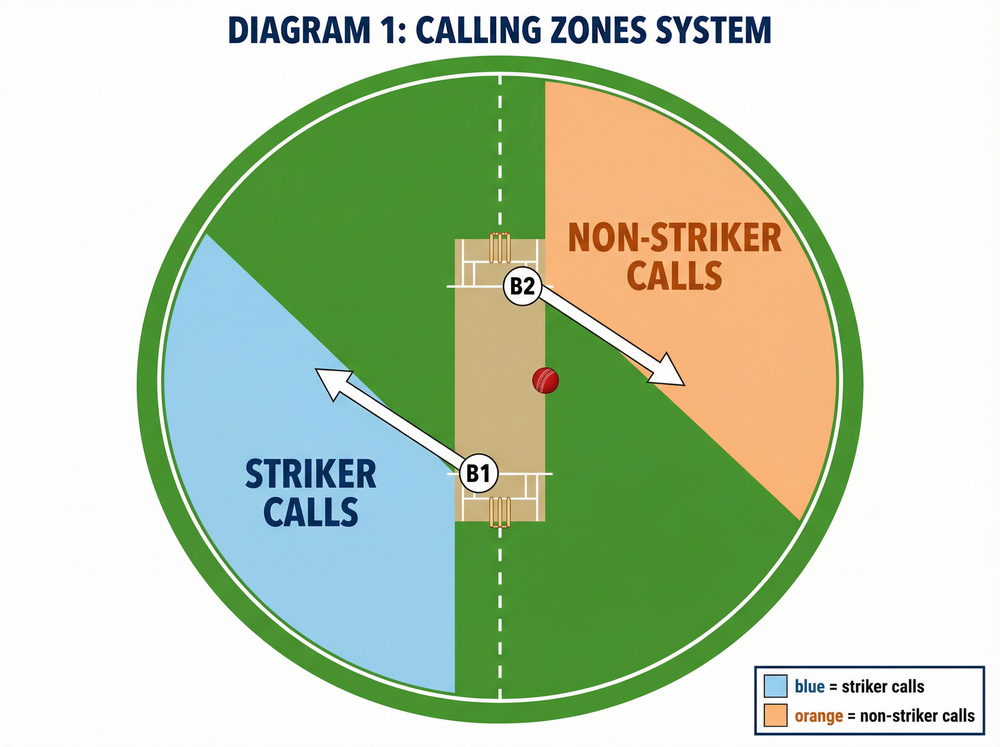
To effectively run this drill, you will need a standard setup that simulates match conditions. The focus is on creating clear visual cues for the batsmen and ensuring the drill flows smoothly.
Equipment:
- 2 sets of stumps
- 4-6 cricket bats
- A bag of 20-30 cricket balls
- 8-10 marker cones
- (Optional) 1 bowling machine for progressions
Pitch/Field Setup:
- Mark out a standard 22-yard cricket pitch.
- Place two batsmen (B1 and B2) at the striker's and non-striker's ends, respectively.
- Position a Feeder (FD) at a mid-on position, approximately 15-20 metres from the striker.
- Arrange 4-6 fielders in standard infield positions (e.g., cover, mid-off, mid-wicket, square leg).
- The Head Coach (C) should stand in a position to observe both batsmen, the feeder, and the fielders, typically behind the stumps at the non-striker's end or wide of the pitch.

3. Step-by-Step Instructions
This drill is broken down into a logical sequence that first establishes the rules of the system and then puts them into practice.
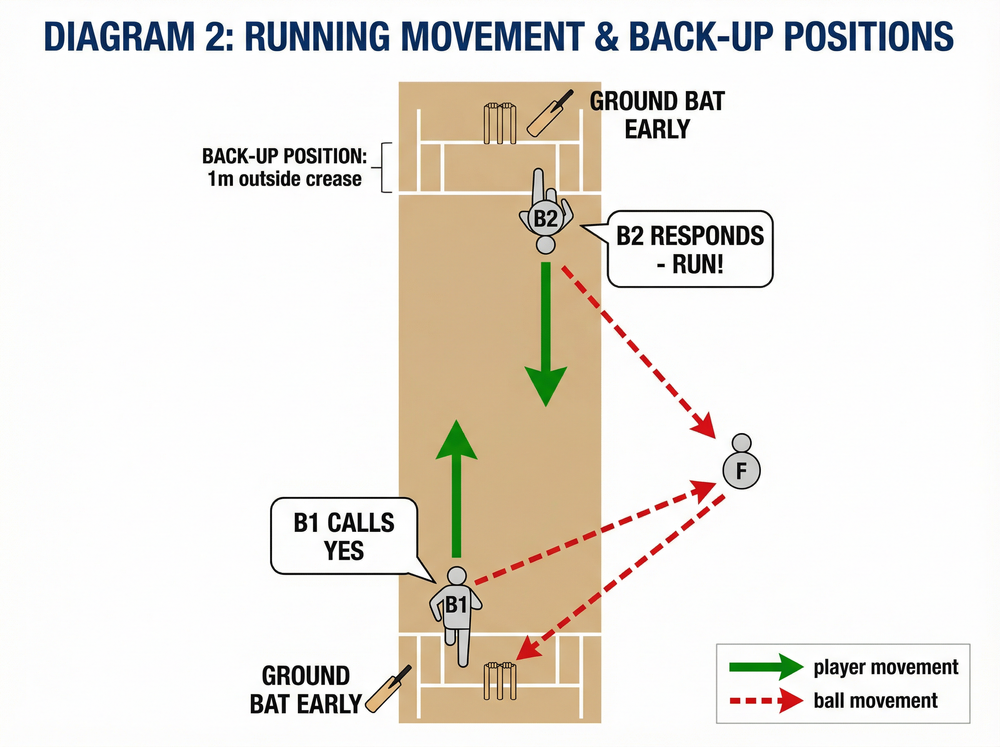
Establish the Calling Zones: Before the drill begins, clearly explain the Calling Zones System. As shown in the diagram below, the pitch is divided in half. The striker (B1) is responsible for calling any ball hit on the leg side (their side). The non-striker (B2) is responsible for calling any ball hit on the off side (their side). This simple rule removes any confusion about who should make the call.
Define the Calls: Introduce the three core calls. They must be loud, sharp, and made early.
- "YES!": A definite call to run. The call is aggressive and leaves no room for doubt.
- "NO!": An equally definite call to stay. This should be shouted just as loudly as "YES" to prevent any hesitation.
- "WAIT!": Used when the fielder is approaching the ball but hasn't yet secured it. The running batsman should pause and wait for the second call ("YES" or "NO").
Execute the Drill:
- The Feeder (FD) delivers an underarm or overarm throw to the striker (B1).
- B1 plays a shot into a designated area (e.g., towards cover).
- Since the ball is on the off side, the non-striker (B2) is responsible for the call. B2 assesses the fielder's position and makes the call: "YES!", "NO!", or "WAIT!".
- Both batsmen react to the call. On a "YES", they sprint down the pitch, ensuring they ground their bats properly behind the popping crease.
- The fielder collects the ball and attempts to throw it to the stumps for a run out.
- Rotate the batsmen and fielders every 10-12 balls.
Reinforce Running Technique: Emphasize the technical points of running between the wickets. The non-striker should be backing up a few metres before the ball is played. Both runners should turn for the second run while watching the ball and ground their bat early and firmly.

4. Key Coaching Points

- Loud, Early, and Decisive Calls: The call must be made as soon as the batsman responsible sees the ball off the bat. A quiet or late call creates confusion.
- The Caller's Decision is Final: Once a call is made ("YES" or "NO"), both batsmen must commit to it 100%. Hesitation is what causes run outs.
- Run the First Run Hard: Always assume there is a potential for a second run. Sprinting the first run puts pressure on the fielder and can turn one run into two.
- Ground Your Bat Inside the Crease: Do not be lazy. Emphasize sliding or tapping the bat at least a foot inside the popping crease to avoid being short.
- Non-Striker Backing Up: The non-striker must be alert and already moving down the pitch as the ball is delivered. This can be the difference of a full yard in a tight run.
- Communication is a Partnership: Remind players that they are a team. Good communication builds trust and leads to better running.
5. Common Mistakes

- The Muted Call: Batsmen mumbling the call, making it impossible for their partner to hear over the noise of a match.
- Calling Based on the Shot, Not the Fielder: A batsman plays a great shot and automatically calls "YES" without looking to see if the fielder is in an aggressive position.
- Ball Watching: The non-running batsman stands still and watches the ball instead of committing to the call and running hard.
- Not Grounding the Bat: A lazy habit that leads to needless run outs. The bat must cross the line.
- Changing the Call: Calling "YES" and then changing to "NO" halfway down the pitch. This is the most common cause of both batsmen ending up at the same end.
6. Variations & Progressions

- Progression 1 - Add a Direct-Hit Stump: Place a single stump for the fielder to aim at. This increases the pressure and rewards accurate throwing, making the drill more realistic.
- Progression 2 - Introduce Overthrows: If a fielder misses the stumps, allow the batsmen to call for a second run (overthrow). This teaches them to stay alert even after the initial run is completed.
- Variation 1 - Bowling Machine Feeds: Use a bowling machine to deliver faster, more realistic balls, forcing quicker decisions from the batsmen.
- Variation 2 - Full Match Scenario: Run the drill within a small-sided game (e.g., 6 vs. 6). The pressure of a live game will truly test the calling system.
7. Age Adaptations

Under 10 / Under 12:
- Simplify the calls to just "YES" and "NO". Remove the "WAIT" call to avoid confusion.
- Use softer balls (tennis balls or incrediballs).
- Focus purely on the leg side/off side calling zones and making loud calls.
Under 14 / Under 16:
- Introduce the "WAIT" call.
- Start coaching the concept of judging a fielder's arm strength and momentum.
- Incorporate calling for second and third runs, with the batsman running to the danger end making the final call.
Open Age / Professional:
- All drills should be performed at match intensity.
- Introduce complex scenarios, such as a misfield, a fumble, or judging a run when the keeper is up to the stumps.
- Drill the non-striker's role in calling when the striker is off-balance or has lost sight of the ball.
