The Diamond Third-Man Run: Elite One-Touch Passing Combinations
Master high-speed, one-touch combination play to break down stubborn defensive blocks using precise third-man runs.
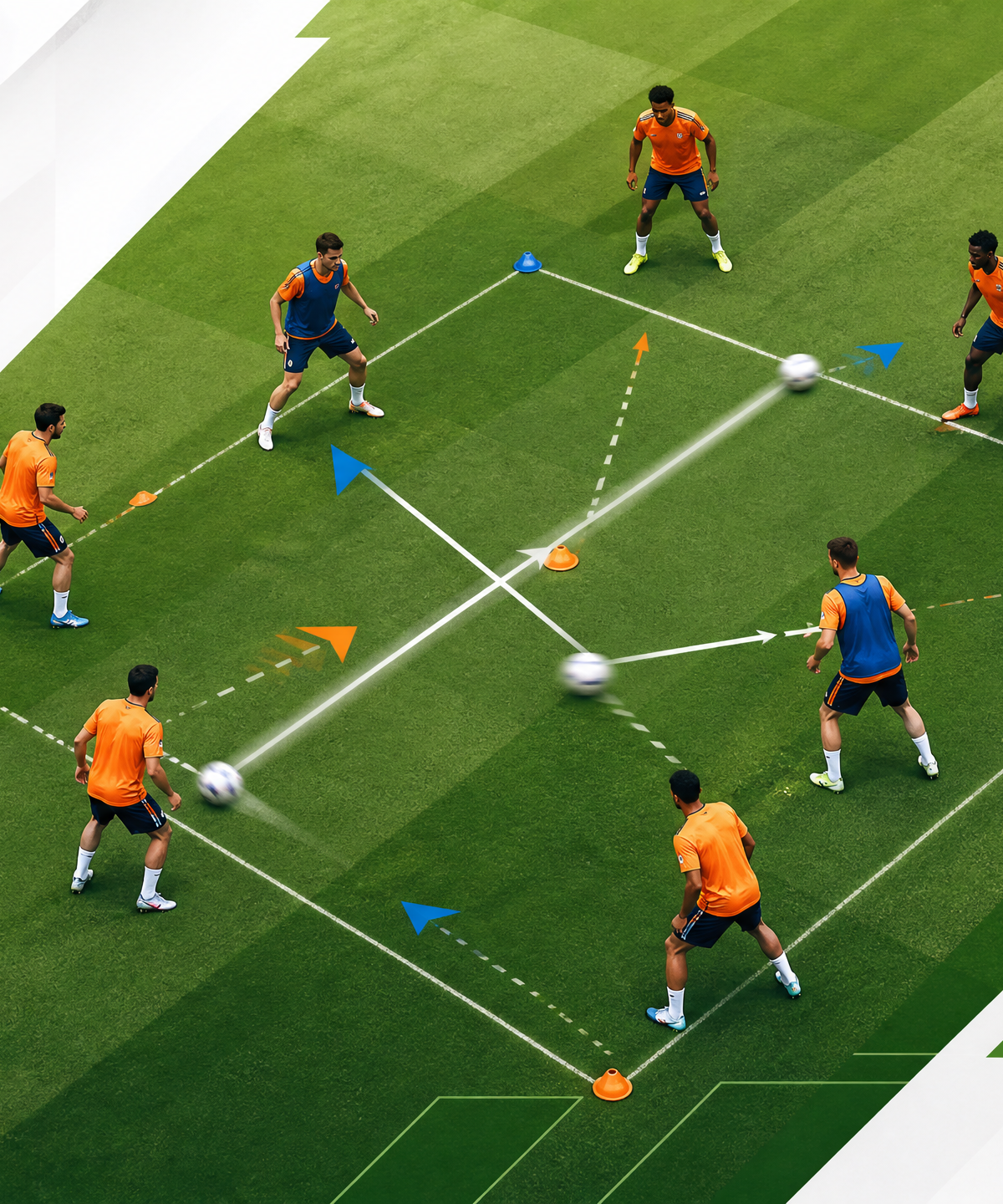
Equipment Needed
Overview
Breaking down a compact, organized defense requires speed of thought, precision passing, and intelligent off-the-ball movement. "The Diamond Third-Man Run" is a high-intensity passing combination drill designed to develop these exact qualities. By focusing on one-touch passing, quick lay-offs, and explosive third-man runs, coaches can train their teams to play through tight spaces and disrupt defensive lines.
This drill is ideal for teams that look to dominate possession and use quick combinations in the central and attacking thirds. It forces players to anticipate the next action before receiving the ball, improving their spatial awareness and cognitive processing speed.
Setup
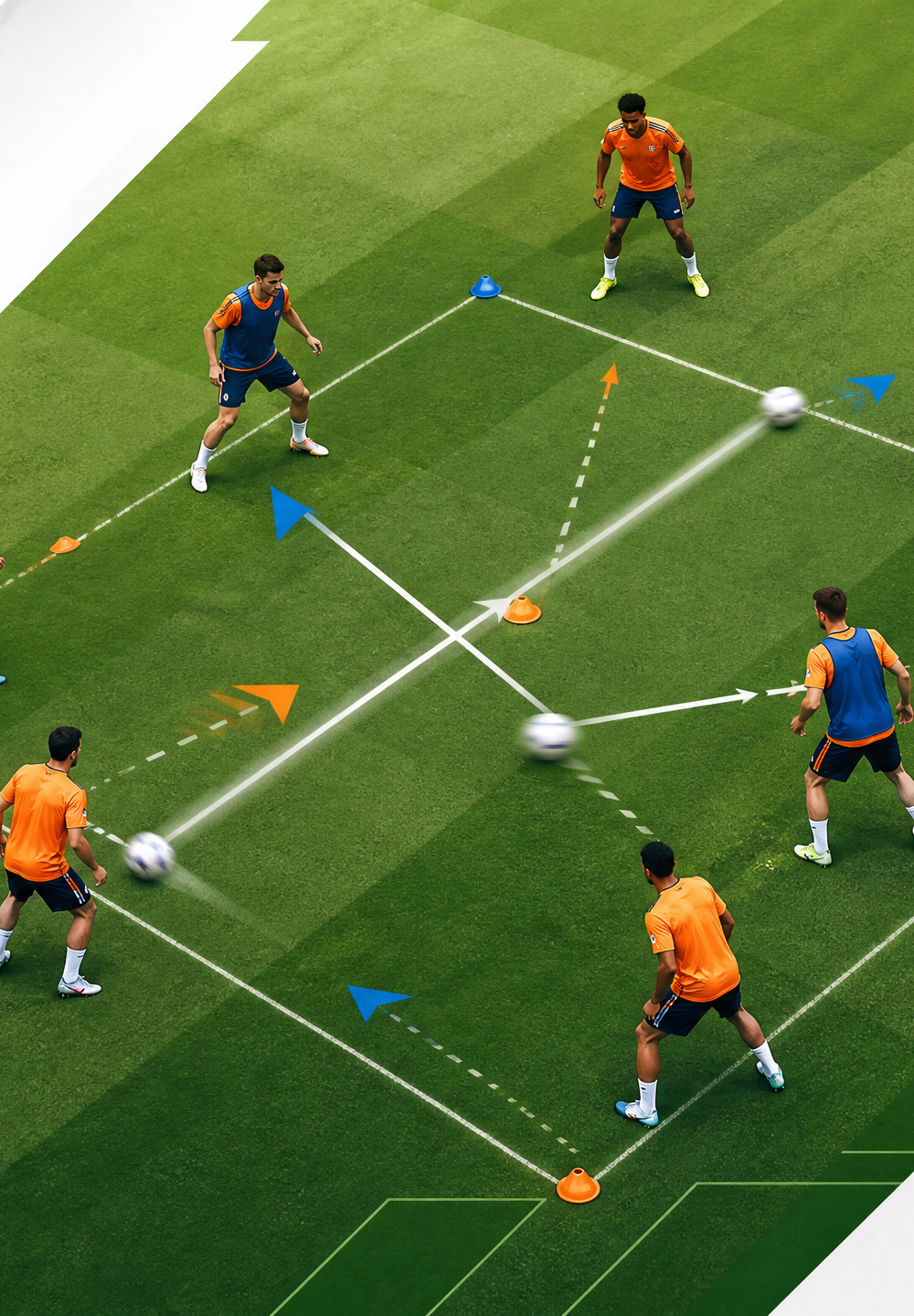
To ensure the drill flows correctly, the setup must be precise. A 20x20 meter grid is standard, but you should adjust based on your players' age and technical proficiency.
- Pitch Area: 20m x 20m grid.
- Players: 5 to 7 players per grid (run multiple grids for a full squad).
- Equipment: 4 cones to mark the grid corners, 1 central marker (optional), and an adequate supply of footballs.
Player Positioning
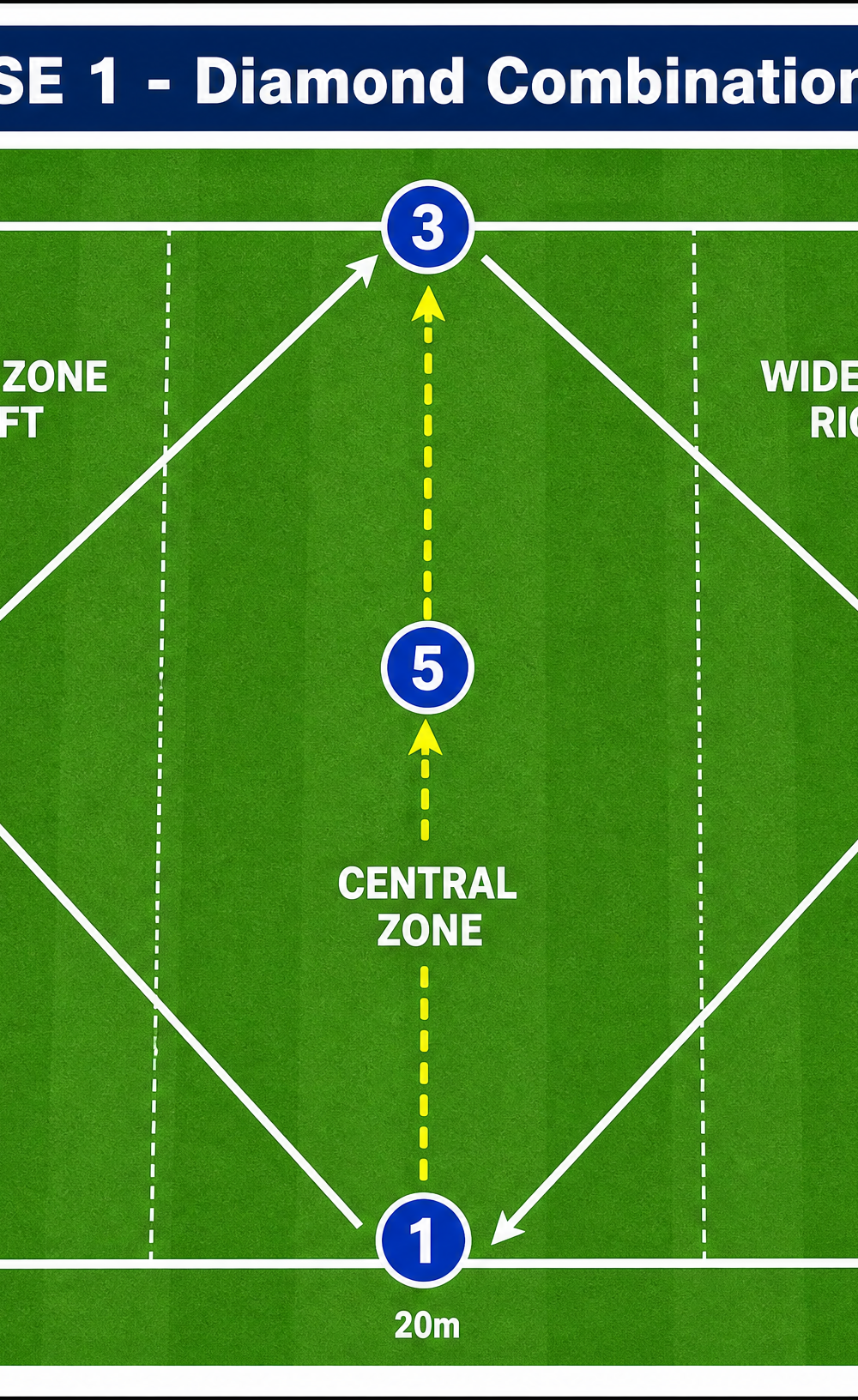
- Player 1 (The Initiator): Positioned at the bottom edge of the grid, starting with the ball.
- Player 2 (Left Support): Positioned on the left edge.
- Player 4 (Right Support): Positioned on the right edge.
- Player 3 (Target/Striker): Positioned at the top edge.
- Player 5 (Central Pivot): Positioned directly in the middle of the grid.
Step-by-Step Instructions
This drill progresses through phases to build complexity. Start with the basic diamond combination before introducing the third-man run.
Phase 1: The Basic Diamond Combination
- The Entry Pass: Player 1 starts the sequence by playing a firm, accurate pass into the feet of Player 5 (the central pivot).
- The Lay-Off: Player 5 receives the ball and immediately plays a one-touch lay-off to either Player 2 or Player 4. The pass should be weighted perfectly into the supporting player's path.
- The Forward Pass: The receiving player (e.g., Player 2) takes one touch to control (or plays one-touch if possible) and passes firmly into Player 3 (the target).
- The Reset: Player 3 controls the ball and passes it back to the start, or players rotate positions (e.g., 1 moves to 5, 5 moves to 2, 2 moves to 3, 3 jogs back to the start).
Phase 2: Introducing the Third-Man Run
Once the basic pattern is smooth, introduce the dynamic third-man run to simulate breaking defensive lines.
- The Trigger: Player 1 passes the ball to Player 2 (or Player 4) on the outside.
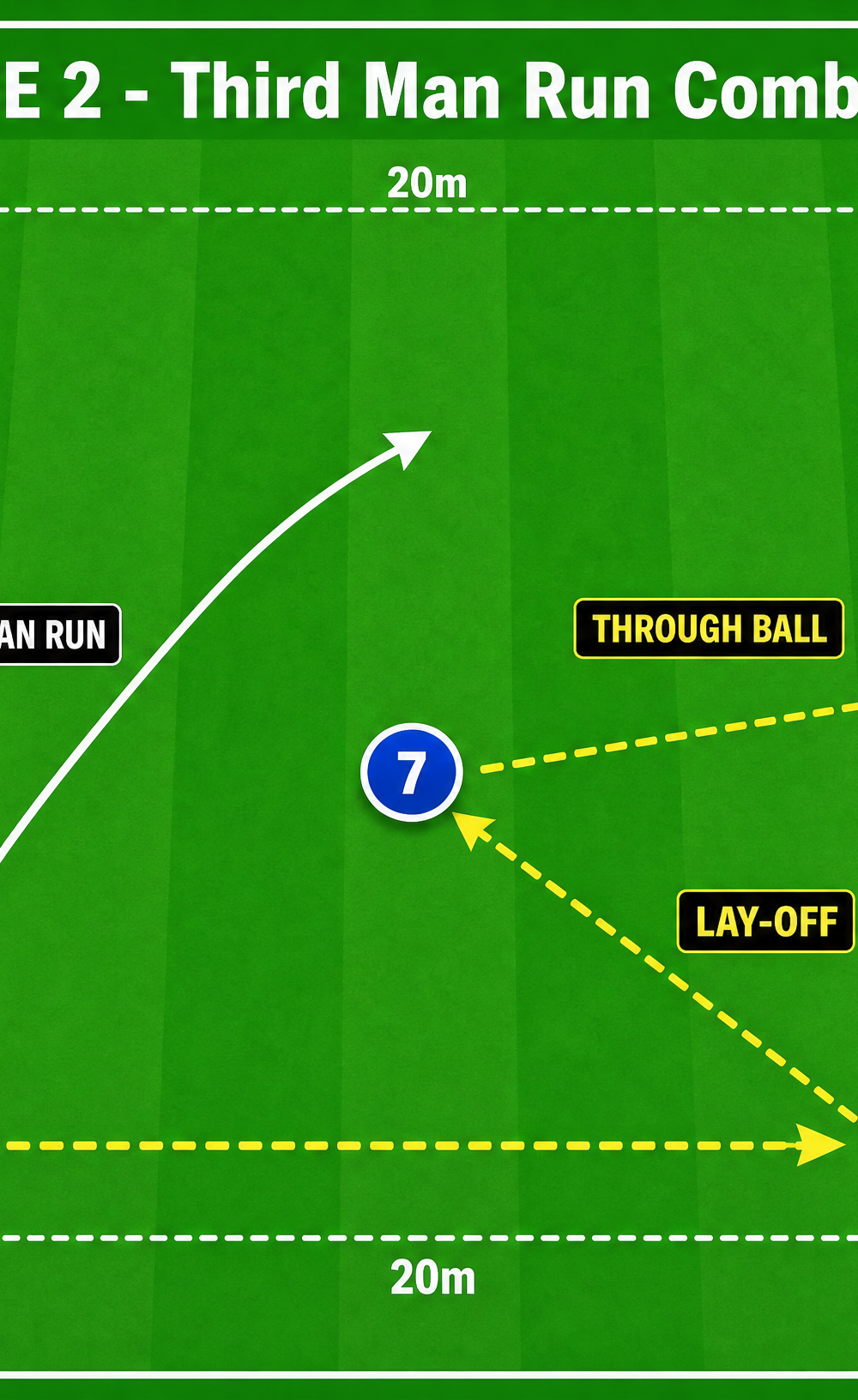
- The Third-Man Run: As soon as Player 1 plays the pass, they immediately sprint diagonally forward into the central space, acting as the "third man."
- The Combination: Player 2 receives the ball and plays a quick pass inside to Player 7 (a central supporting player or the pivot).
- The Through Ball: Player 7 plays a one-touch through ball into the path of the advancing Player 1 (the third man), who has bypassed the imaginary defensive line.
- Completion: Player 1 receives the ball in stride and plays it to the target player at the top of the grid.
Key Coaching Points
To get the most out of this drill, coaches must demand high standards in the following areas:
- Weight and Accuracy of Pass: Passes must be firm and to the correct foot (the "safe" foot away from imaginary defenders). Lay-offs must be soft enough to be hit first time.
- Body Shape: Players receiving the ball must have an open body shape, allowing them to see the ball, their next target, and the space around them.
- Timing of the Run: The third-man run must be explosive but timed correctly. If the runner goes too early, they kill the space; if too late, the passing lane closes.
- Communication: Verbal and non-verbal communication is vital. Players should demand the ball and use eye contact to signal intent.
- Scanning: Players must check their shoulders before receiving the ball to process their surroundings and make quicker decisions.
Common Mistakes
Watch out for these frequent errors and correct them immediately:
- Poor Pass Weight: Hitting lay-offs too hard, causing the move to break down.
- Standing Still: Players passing the ball and admiring their pass instead of immediately moving to support or exploit space.
- Closed Body Shape: Receiving the ball facing the passer, which requires extra touches to turn and slows down the combination.
- Forcing the One-Touch: Trying to play one-touch when the pass is poor. Players must recognize when to take a touch to secure possession.
Variations & Progressions
Keep the drill challenging by introducing these variations:
- Add Defenders: Introduce one or two passive, then active, defenders in the middle to apply pressure and force quicker decision-making.
- Directional Play: Set up two mini-goals at the top of the grid. After the combination, the final player must finish with a shot on goal.
- Touch Restrictions: Mandate strictly one-touch play, or alternate between one-touch and two-touch requirements.
Age Adaptations
- Under 8 - Under 10: Increase the grid size to 25x25m. Allow two or three touches. Focus heavily on basic passing technique and receiving skills rather than complex third-man runs.
- Under 12 - Under 14: Standard 20x20m grid. Encourage one-touch lay-offs but allow two touches for longer passes. Introduce the concept of scanning and body shape.
- Under 16 - Open: Decrease the grid size to 15x15m to increase pressure. Demand high-speed, one-touch combinations and introduce active defenders.