

Football
Goal Kick Build-Up Play: Playing Out From The Back
Master the modern approach to goal kicks by establishing structured build-up play, drawing the opposition press, and creating numerical advantages to progress into midfield.
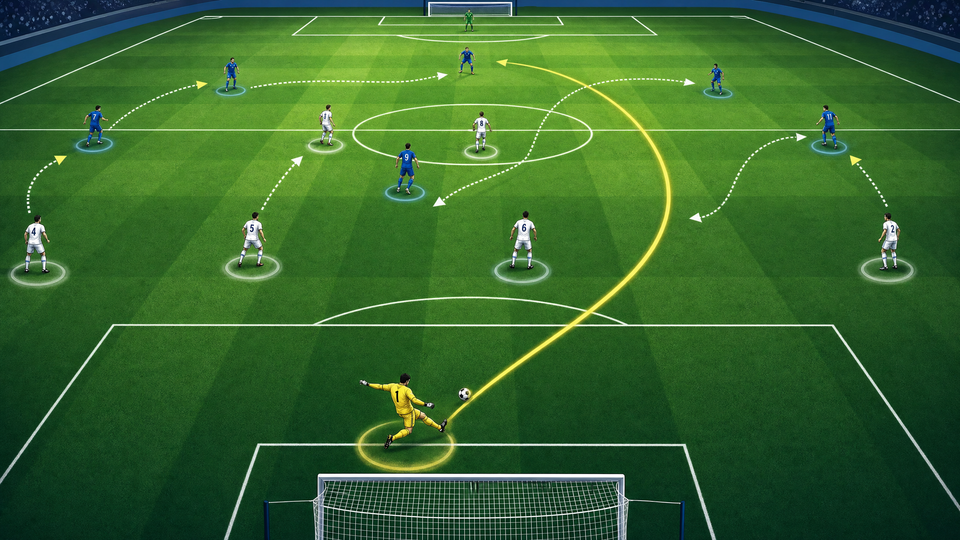
What you need
Standard Football Pitch, Full-size Goals, Football (Size 5), Training Bibs (2 colours), Cones (optional, for marking zones)
1. Overview
Playing out from the back has become a fundamental aspect of modern football. This goal kick build-up routine is designed to help teams retain possession, manipulate the opposition's pressing structure, and safely progress the ball from the defensive third into the midfield. By positioning players strategically to create passing triangles and numerical overloads, coaches can equip their teams with a reliable method to bypass high-pressing opponents.
Use this set play when facing teams that commit numbers forward to press high, or when you want to establish control and dictate the tempo of the game right from the restart.
2. Setup
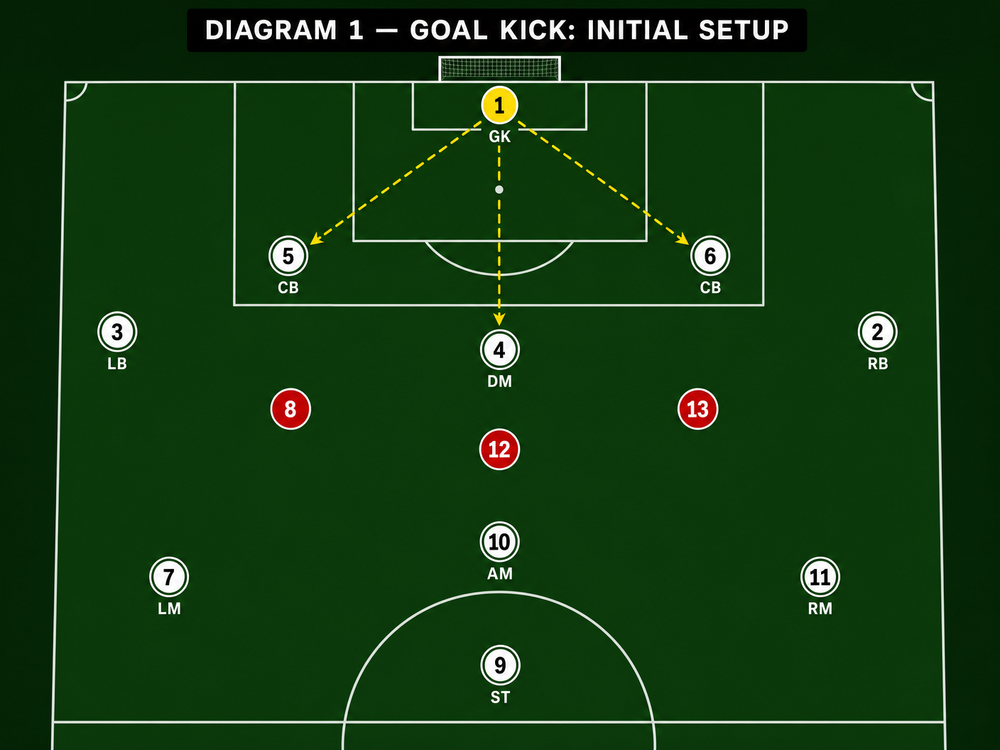
Pitch Area: Defensive half (approx. 50m x 68m)
Players: 11v11 (Focus on GK, Back 4, and Midfield Pivot)
Player Positioning:
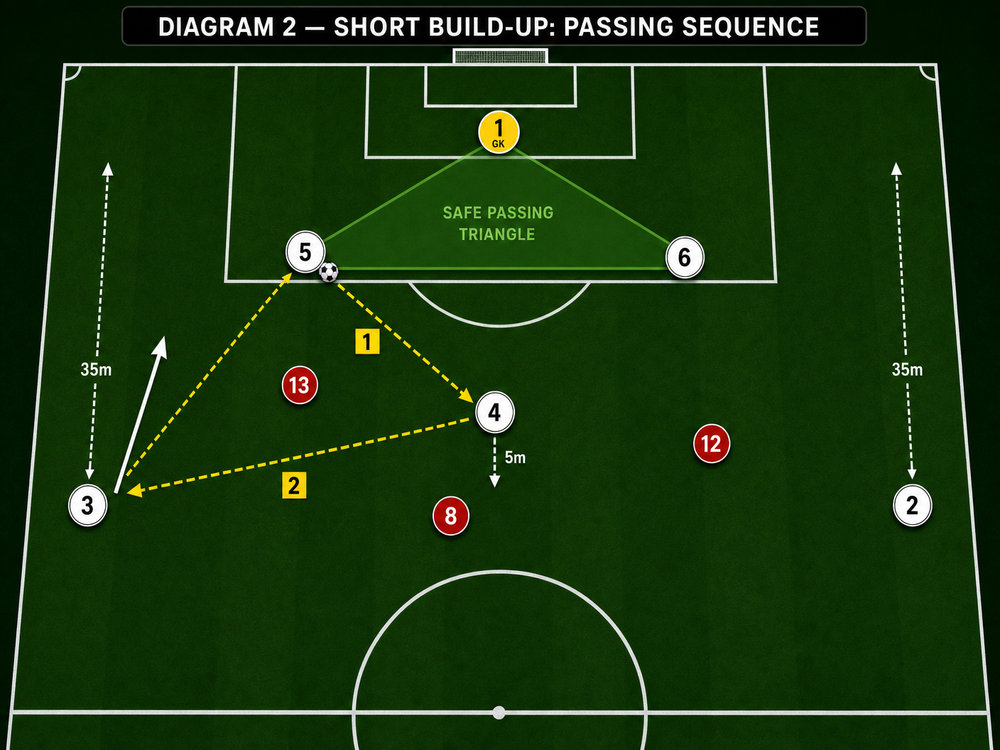
- Goalkeeper (GK): Starts with the ball centrally in the 6-yard box.
- Centre Backs (CB): Split wide, positioned just outside the penalty area (approx. 20-25m from the goal line) to stretch the first line of pressure.
- Fullbacks (LB/RB): Push high and wide, hugging the touchlines about 30-35m up the pitch.
- Defensive Midfielder (DM): Drops into the central space (approx. 30m from goal) to form a diamond with the GK and two CBs.
- Attacking Midfielders/Wingers: Positioned higher up to pin the opposition defence back.
3. Step-by-Step Instructions
Phase 1: The Initial Trigger
- The GK places the ball centrally and signals the setup. The CBs split wide, and the DM drops into the central pocket.
- The GK assesses the opposition's pressing shape. The primary target is the CB who has the most time and space.
Phase 2: The First Pass & Drawing the Press
3. The GK plays a firm, flat pass to the open CB (e.g., the Left CB).
4. As the ball travels, the opposition will likely trigger their press towards the receiving CB.
5. The DM dynamically adjusts their position, moving slightly towards the ball side to offer a clear passing lane.
Phase 3: Breaking the First Line
6. The receiving CB takes a positive first touch to invite pressure.
7. Before the pressure arrives, the CB plays a crisp pass into the feet of the DM.
8. Alternatively, if the DM is tightly marked, the CB can play directly to the dropping Fullback (LB) on the touchline.
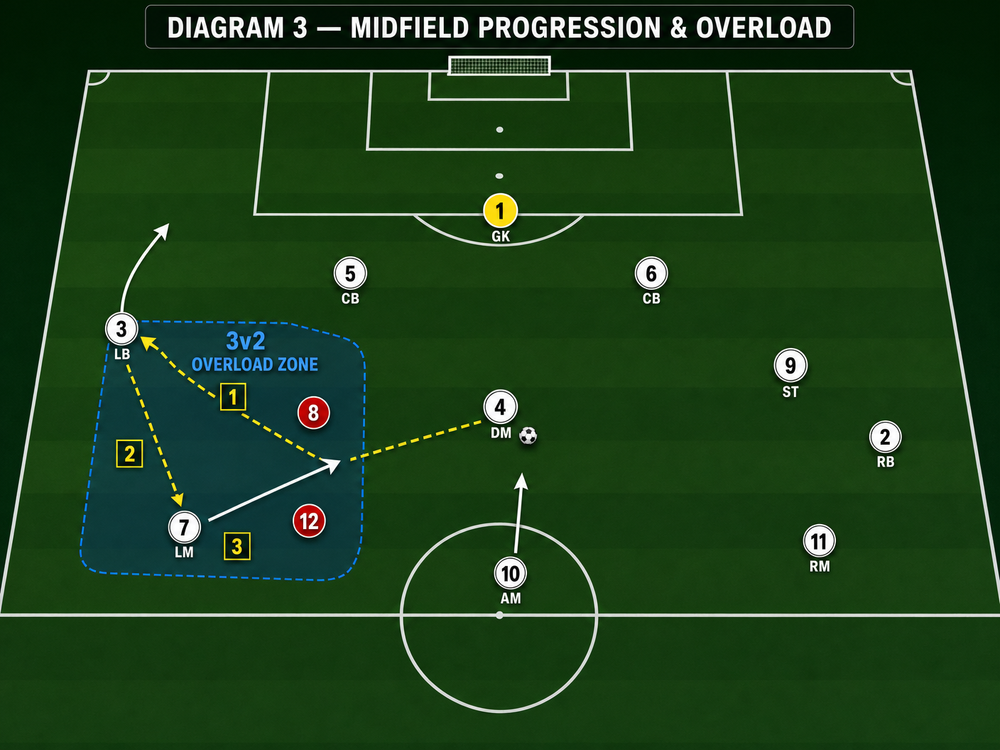
Phase 4: Midfield Progression & Overload
9. Upon receiving the ball, the DM plays a one-touch or two-touch pass out to the advancing LB.
10. As the LB receives the ball, the Left Midfielder (LM) drops inside to create a 3v2 overload on the flank.
11. The LB combines with the LM or drives into the space created, successfully bypassing the initial press and progressing into the midfield third.
4. Key Coaching Points
- Body Shape & First Touch: Players must receive the ball with an open body shape, allowing them to see the next pass immediately. The first touch should take them away from pressure.
- Pass Quality: Passes from the GK and CBs must be firm and along the ground. Bouncing or slow passes invite aggressive pressing and lead to turnovers.
- Dynamic Movement: The DM must constantly scan and adjust their position to remain a viable passing option. Static players are easy to mark.
- Patience and Composure: Encourage players to be comfortable on the ball. If the forward pass isn't on, recycling possession back to the GK is a valid and safe option.
5. Common Mistakes
- Forcing the Pass: Playing the ball into a heavily congested area instead of resetting the play or switching the point of attack.
- Poor Spacing: CBs not splitting wide enough, making it easier for a single attacker to press both the CB and the GK.
- Lack of Communication: Failure to call out 'man on' or 'time', leading to players being caught in possession.
- Static Fullbacks: Fullbacks dropping too deep, which compresses the play and removes the outlet pass option.
6. Variations & Progressions
- The 'Up-Back-Through' Routine: If the opposition presses aggressively with three players, the CB can bypass the DM and play a longer pass directly to a dropping attacking midfielder, who then lays it off to the advancing DM facing forward.
- Switch of Play: If one side is heavily overloaded by the pressing team, the DM can receive the ball from one CB and immediately switch the play to the opposite Fullback, exploiting the open space on the weak side.
7. Age Adaptations
- Under-8 to Under-10: Focus purely on the GK passing to the CBs and the CBs taking a positive first touch. Keep distances short and reduce opposition pressure.
- Under-12 to Under-14: Introduce the role of the DM dropping in. Emphasize body shape and scanning before receiving.
- Under-16 to Open: Implement the full routine with complex variations. Focus on the speed of play, recognizing pressing triggers, and executing third-man runs to break lines.
