

Netball
Centre Pass Variations: Breaking the Line
Master three distinct centre pass variations to consistently penetrate the opposition's defensive structure and secure first-phase possession.
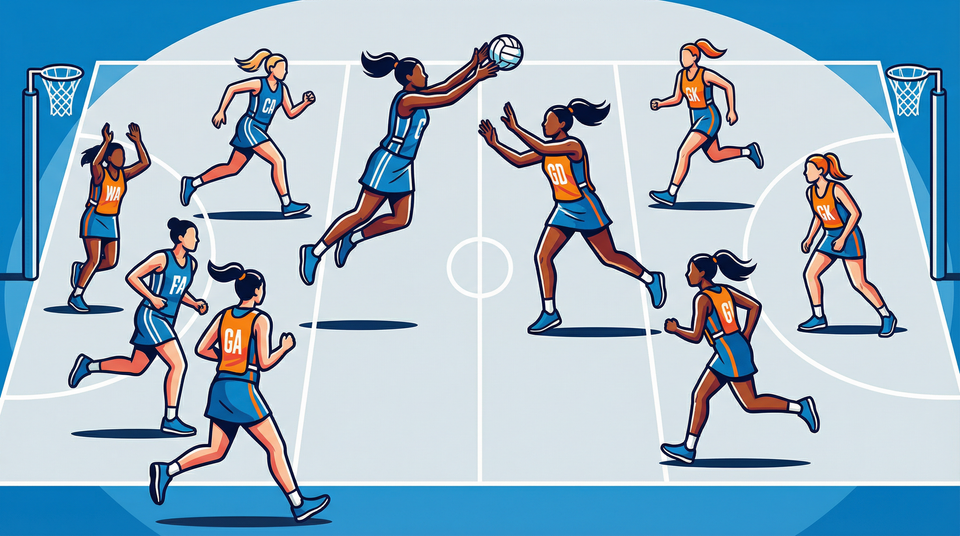
What you need
1 netball, 7 team bibs, 4-6 marker cones
1. Overview
The centre pass is the most frequent set-piece in netball, making it a critical area for tactical development. A predictable centre pass allows the opposition to easily set their defensive structures and force turnovers. This drill resource focuses on three distinct centre pass variations designed to keep defenders guessing, create multiple passing options, and ensure your team consistently breaks the transverse line. By mastering these variations, your team will dictate the pace of the game and transition smoothly from the centre third into the goal third.
2. Setup
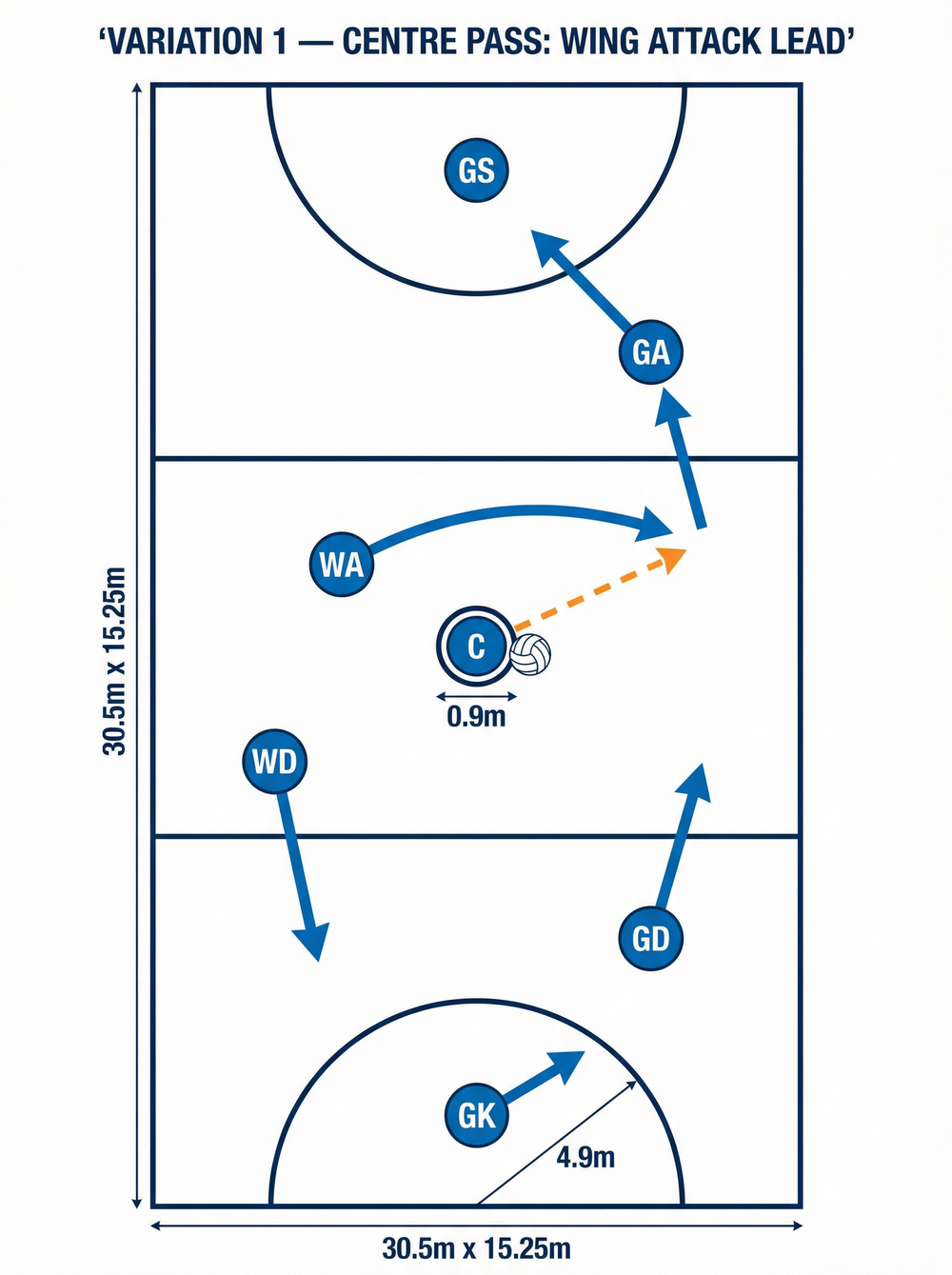
- Equipment Needed: 1 netball, 7 team bibs (or two contrasting sets if running opposed), and 4-6 marker cones.
- Court Setup: Use a full netball court (30.5m x 15.25m). Place marker cones along the transverse line to highlight the target areas for the initial leads.
- Player Positions: This drill requires a full attacking lineup: Centre (C), Wing Attack (WA), Goal Attack (GA), Goal Shooter (GS), Wing Defence (WD), Goal Defence (GD), and Goal Keeper (GK). Initially, run the drill unopposed to focus on timing and movement, then introduce defenders to simulate match conditions.
3. Step-by-Step Instructions
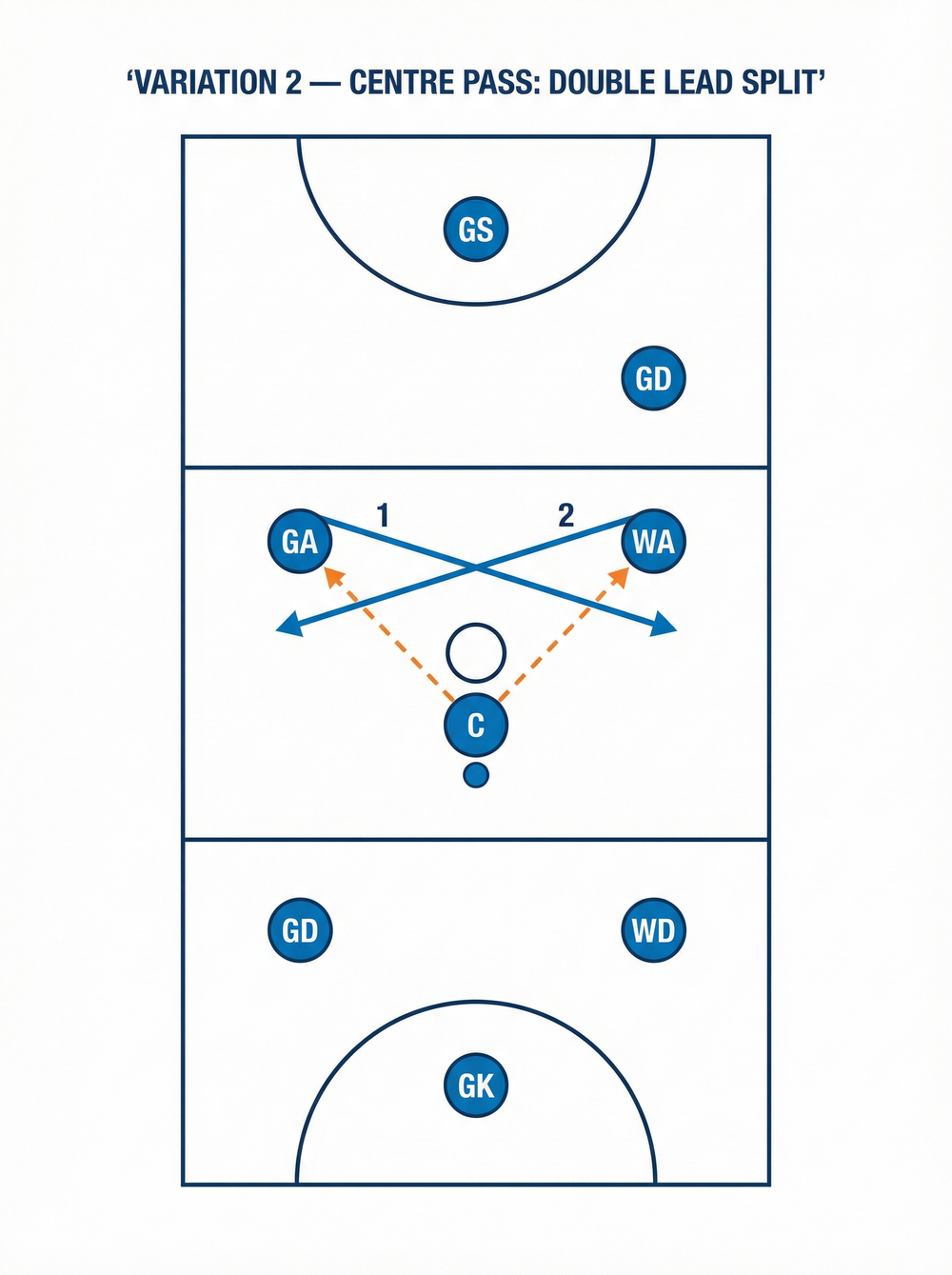
Variation 1: Wing Attack Lead
This is a fundamental variation focusing on a strong, direct lead from the Wing Attack to secure the first pass.

- Starting Position: The Centre (C) stands in the centre circle (0.9m radius) with the ball. The Wing Attack (WA) sets up on the transverse line, slightly to the left of the centre third. The Goal Attack (GA) sets up on the transverse line in the goal third.
- The Movement: On the whistle, the WA makes a sharp, curved lead toward the middle of the centre third, aiming to receive the ball at the top of the circle.
- The Pass: The C delivers a crisp, flat pass to the WA.
- The Continuation: As the WA receives the ball, the GA makes a strong lead toward the transverse line to offer the second-phase pass. The WA immediately looks to hit the GA driving toward the goal circle.
Variation 2: Double Lead Split
This variation uses misdirection and crossing movements to confuse the defense and create space for either the GA or WA.
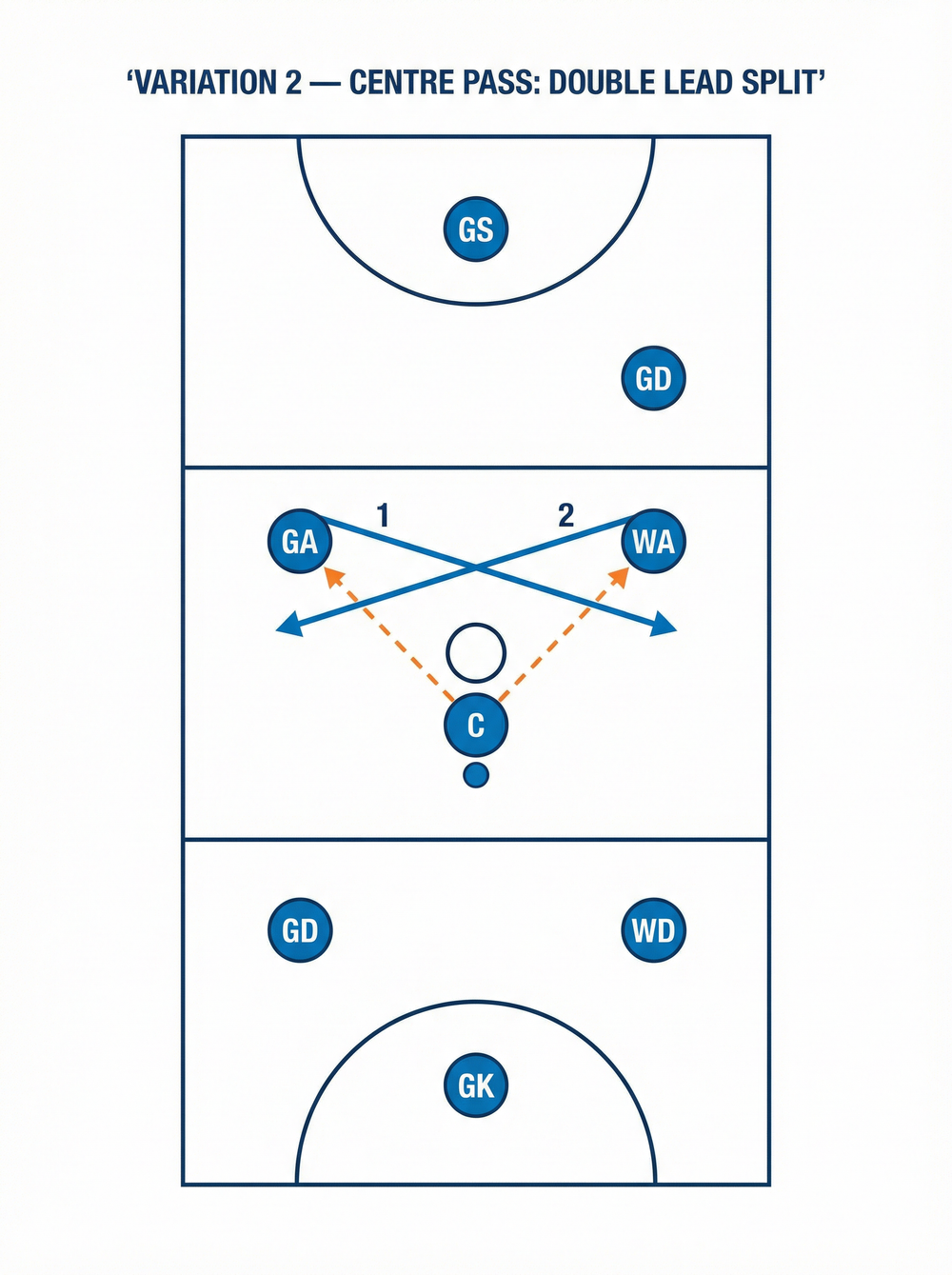
- Starting Position: The C stands in the centre circle. The GA and WA set up close together near the middle of the transverse line.
- The Movement: On the whistle, the GA and WA perform a synchronized 'split' movement. The GA drives hard diagonally toward the right sideline, while the WA drives hard diagonally toward the left sideline. Their paths should cross, creating confusion for the defenders.
- The Pass: The C reads the defenders' movements and delivers the ball to whichever player (GA or WA) has created the most separation. The pass must be timed perfectly to meet the player on the drive.
- The Continuation: The receiving player looks downcourt to the GS holding space in the shooting circle or the other attacking player driving into the goal third.
Variation 3: Back Pocket Reset
When the primary attacking leads are heavily defended, this variation uses a defensive player as a safe reset option to maintain possession and shift the angle of attack.

- Starting Position: The C stands in the centre circle. The Wing Defence (WD) positions themselves just behind the C in the defensive third. The WA and GA set up on the transverse line.
- The Movement: On the whistle, the WA makes a long, sweeping lead across the centre third. If the WA is tightly marked and the C cannot make the forward pass, the WD makes a short, sharp lead toward the C to offer a safe 'back pocket' option.
- The Pass: The C pivots and delivers a short, secure pass to the WD.
- The Continuation: The WD immediately looks forward. The WA, having continued their sweeping run, should now be open on the opposite side of the court. The WD delivers a long pass to the WA, who then looks to connect with the GA or GS in the goal third.
4. Key Coaching Points

- Timing is Everything: Leads must be explosive and timed perfectly with the whistle. A lead made too early allows the defender to adjust; a lead made too late results in a held ball.
- Strong, Flat Passes: Centre passes should be delivered with pace and accuracy. Looping passes give defenders time to intercept.
- Clear Communication: Players must communicate their intentions, especially in the Double Lead Split variation, to avoid collisions and ensure the Centre knows where the primary option is.
- Eyes Up: The Centre must scan the court before the whistle and keep their eyes up to read the defense and select the best passing option.
- Second Phase Readiness: The player receiving the centre pass must immediately look for the next option. The drill doesn't end with the first catch; it ends when the ball reaches the goal circle.
5. Common Mistakes

- Leading Too Early: Players moving before the whistle, resulting in a free pass to the opposition.
- Predictable Movement: Always using the same variation, allowing the defense to anticipate and intercept.
- Weak Passes: Delivering slow or looping passes that are easily contested by the defense.
- Lack of a Backup Plan: The Centre forcing a pass to a heavily defended player instead of using a reset option like the Back Pocket variation.
6. Variations & Progressions

- Add Defenders: Start with passive defenders, then progress to full, active defense to simulate match pressure.
- Time Limits: Challenge the attacking team to get the ball into the goal circle within a specific number of seconds (e.g., under 5 seconds).
- Restricted Passing: Limit the types of passes allowed (e.g., only chest passes or only bounce passes) to develop passing repertoire.
7. Age Adaptations

- Under 10s: Focus on Variation 1 (Wing Attack Lead). Emphasize the basics of timing the lead and delivering a strong chest pass. Use softer balls if necessary.
- Under 12s to Under 14s: Introduce Variation 2 (Double Lead Split). Focus on communication and the timing of the crossing movements. Start adding passive defenders.
- Under 16s and Open: Implement all three variations. Run the drills with full, active defense and emphasize quick decision-making, second-phase continuation, and seamless transitions into the goal third.
