

Netball
Two-Foot Landing & Deceleration Masterclass
Master the fundamental two-foot landing technique to improve balance, reduce injury risk, and create stronger passing options on the court.
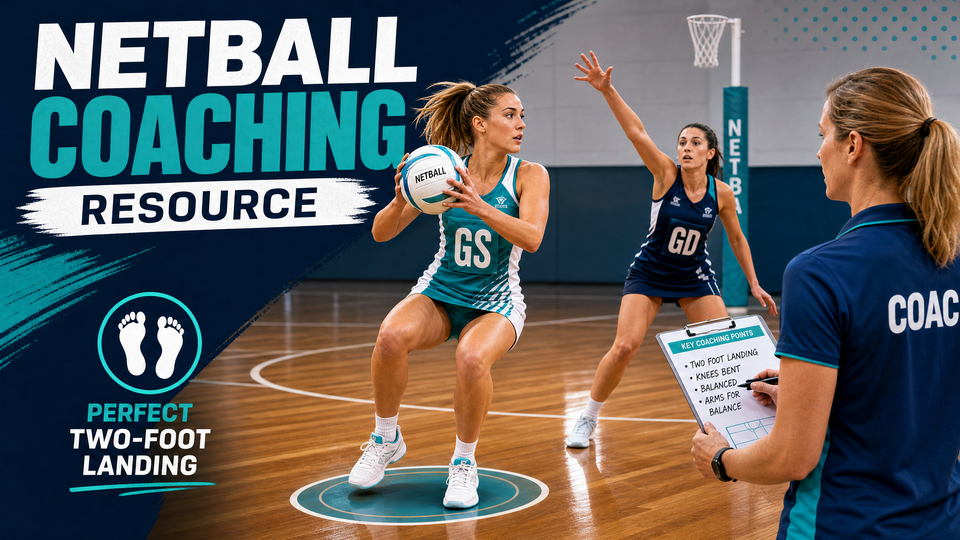
What you need
Netball, 6 Marker Cones
1. Overview
Mastering the two-foot landing is arguably the most critical fundamental skill in netball. A solid landing technique reduces the risk of lower-limb injuries (especially ACL tears) and provides players with a stable base to execute strong, accurate passes. This drill focuses on teaching players how to drive onto the ball, decelerate effectively, and land squarely on both feet simultaneously, giving them maximum options for their next move.
2. Setup
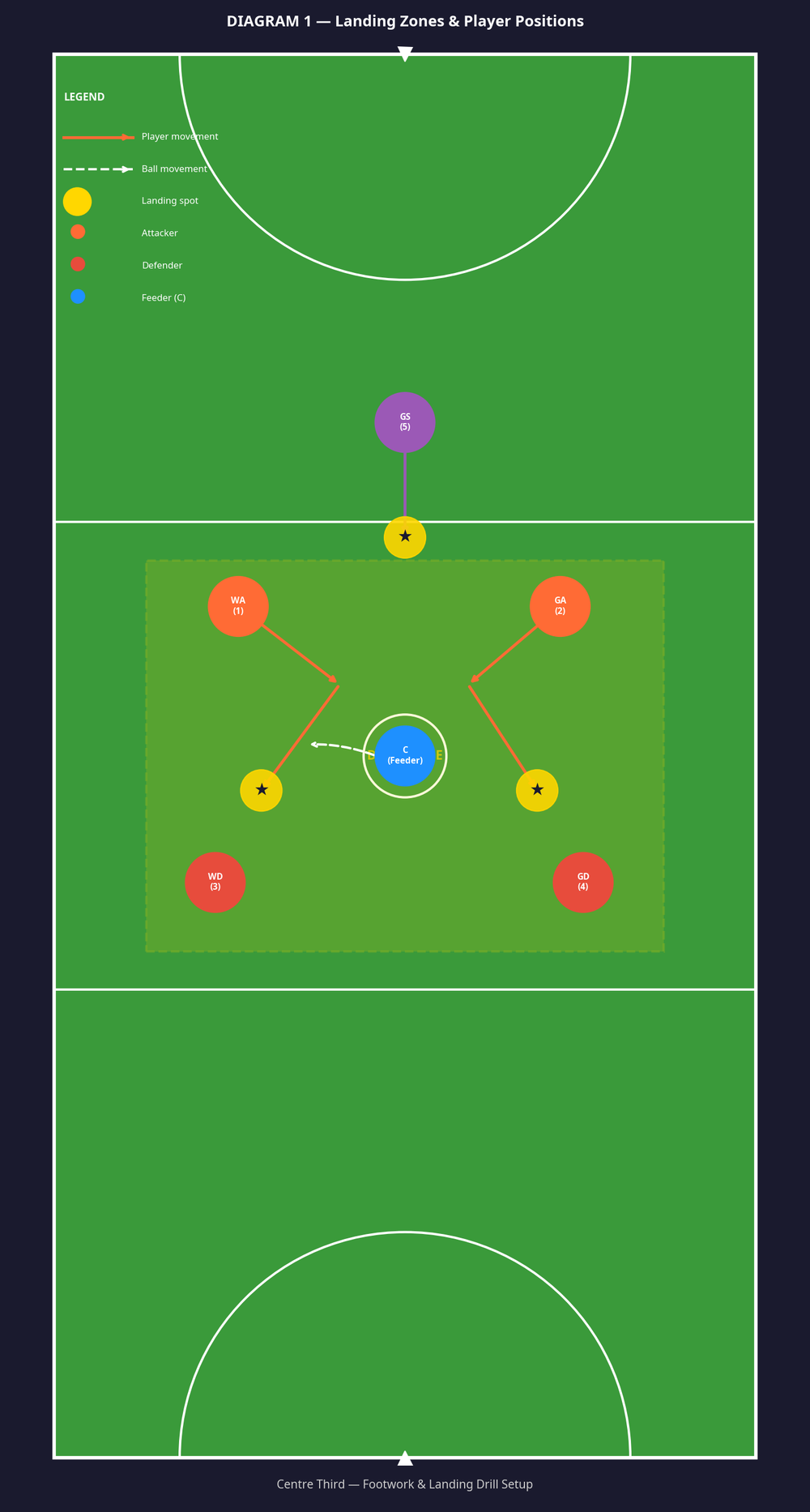
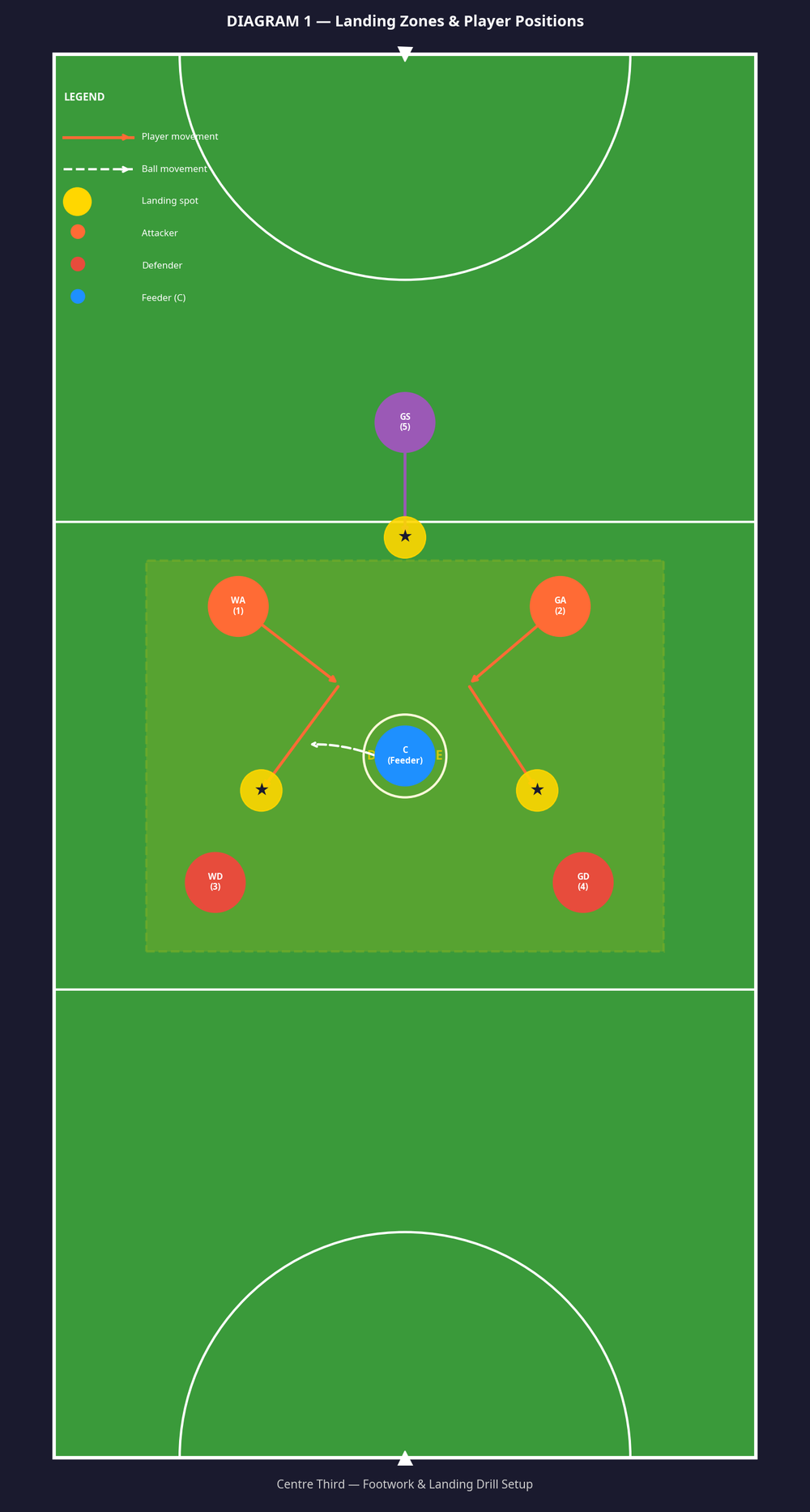
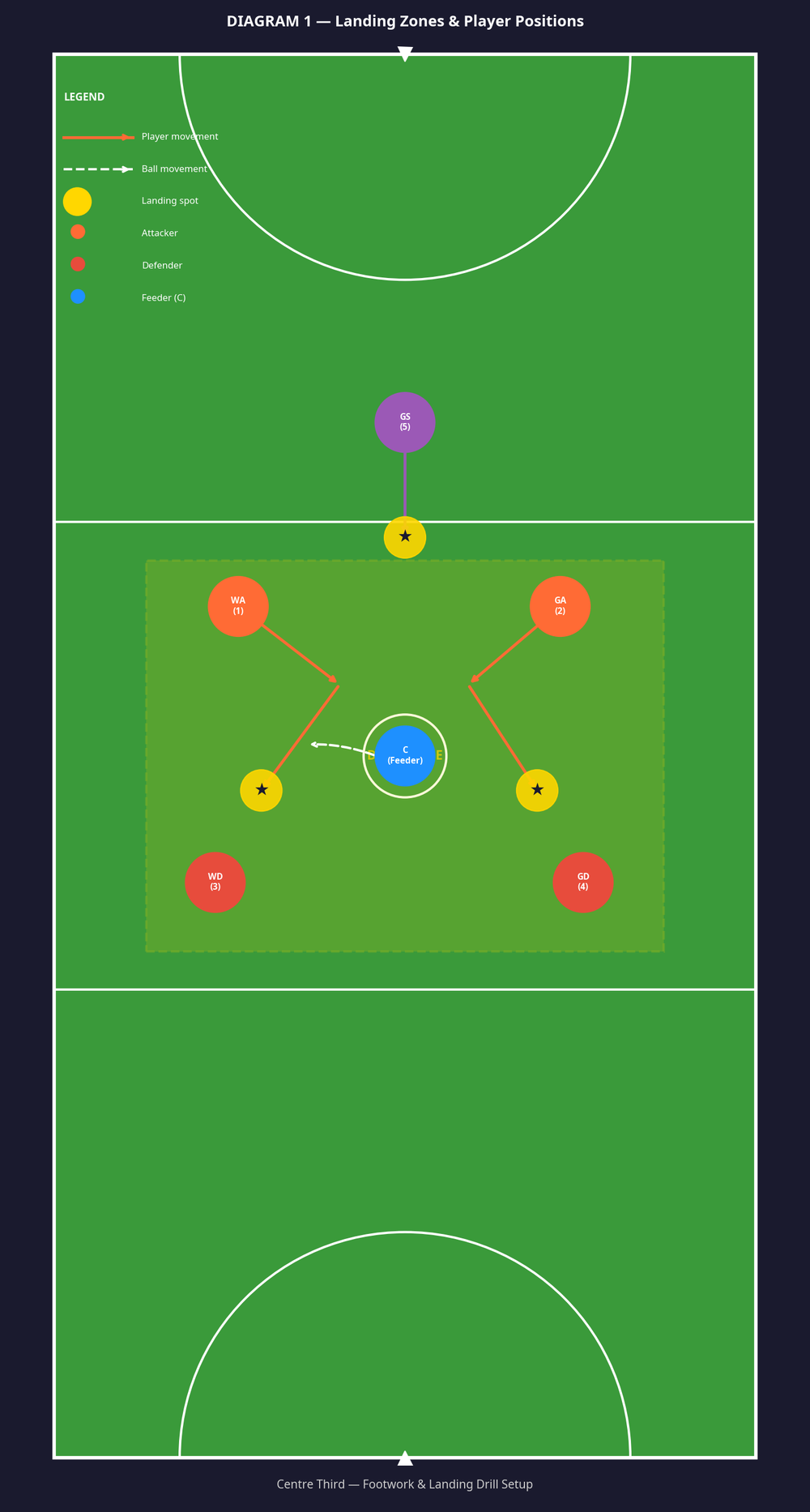
- Court Area: Centre third or any open court space (30.5m x 15.25m total court, use a 10m x 10m area per group).
- Equipment: 1 netball per group, 6 marker cones.
- Players: Groups of 3-4 players (1 Feeder, 1 Worker, 1-2 resting/waiting).
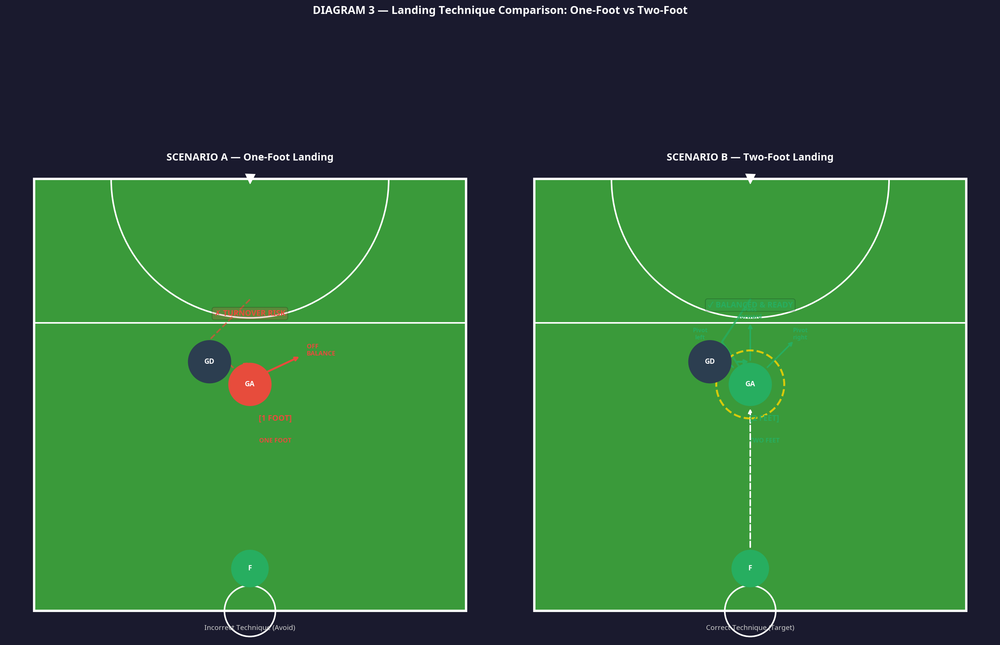
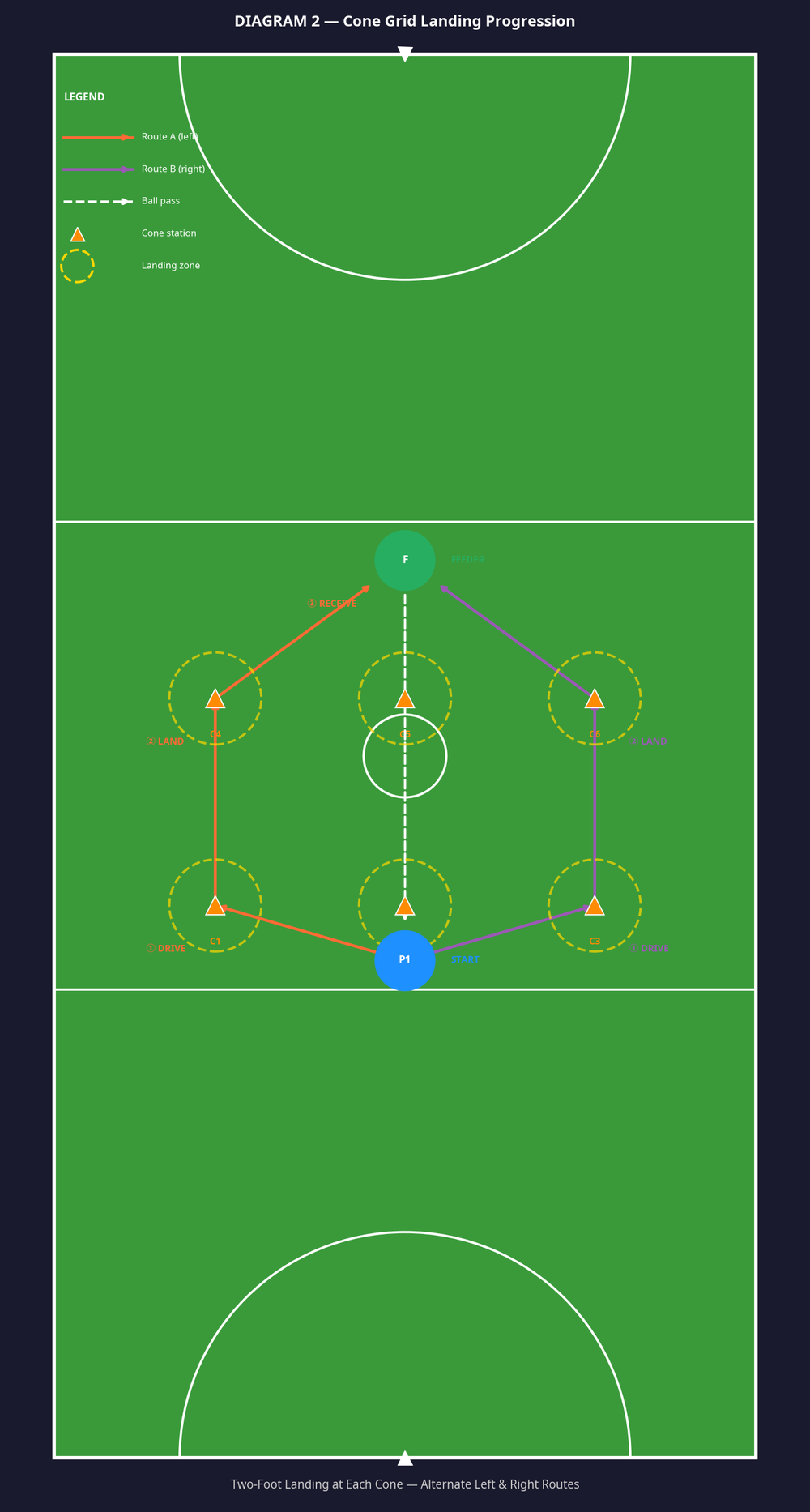
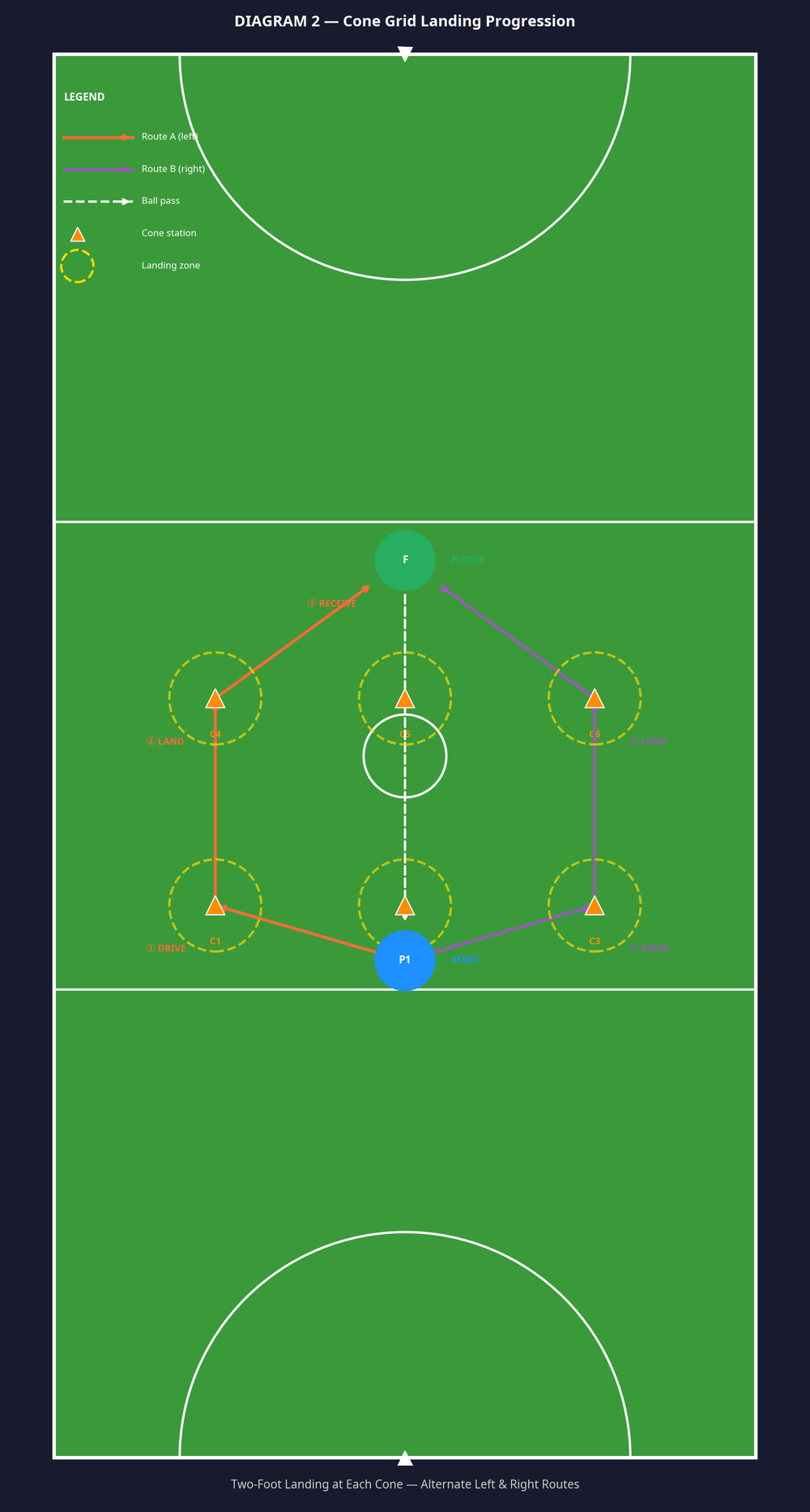
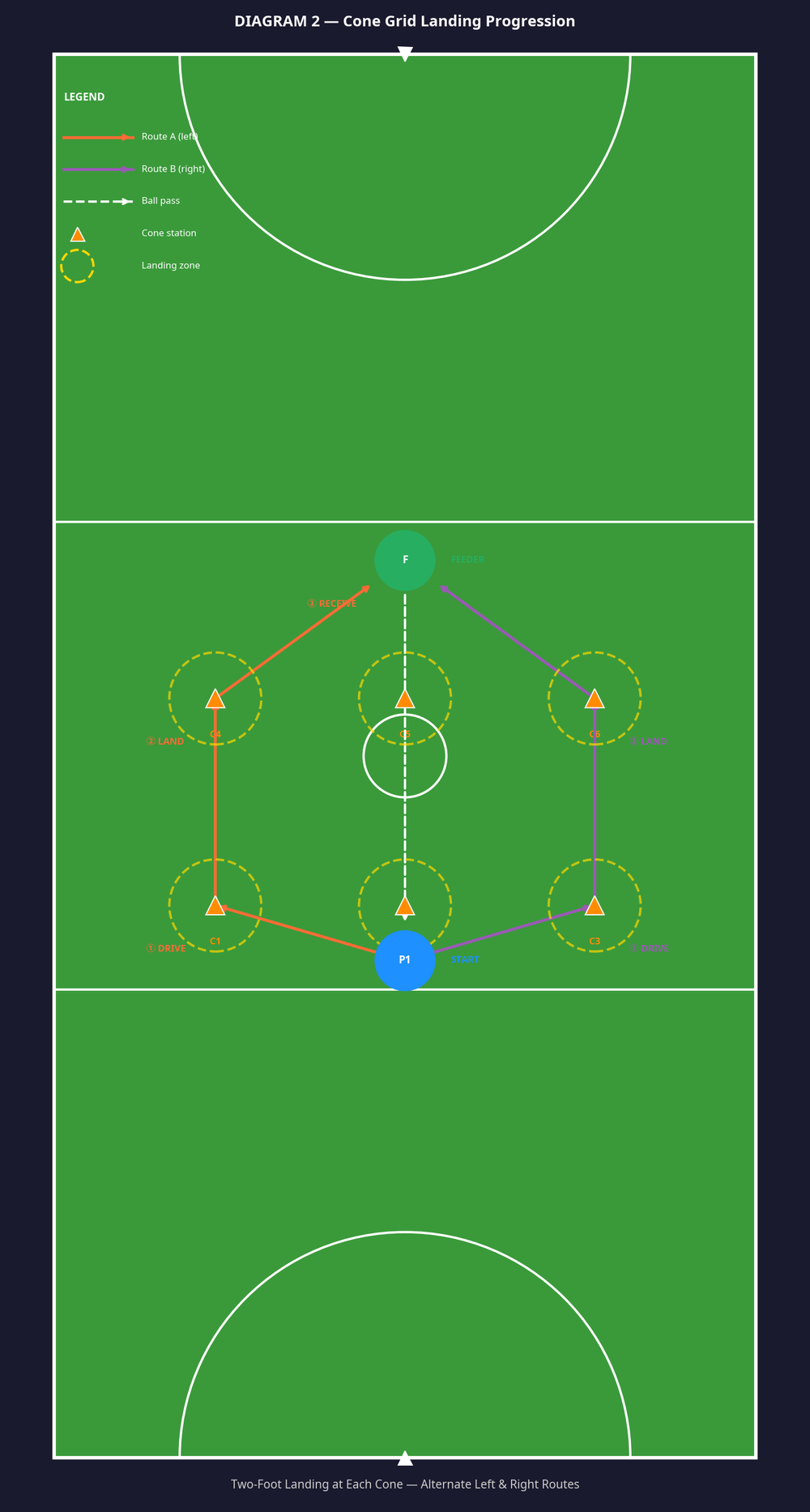
- Positions: Set up a cone grid as shown in Diagram 2. The Feeder (F) stands at the top of the grid, and the Worker (P1) starts at the bottom.

3. Step-by-Step Instructions
- Starting Position: The Worker (P1) starts at the baseline cone, facing the Feeder (F) who holds the ball.
- First Drive: On the Feeder's call, the Worker drives hard on a 45-degree angle toward the first cone on the left (Route A) or right (Route B).
- First Landing: The Worker must execute a clean two-foot landing exactly at the cone, sinking into the hips to decelerate. No ball is passed yet.
- Second Drive: Immediately after demonstrating balance, the Worker pushes off and drives straight ahead to the next cone in the sequence.
- Receive and Land: As the Worker approaches the second cone, the Feeder delivers a crisp chest pass. The Worker catches the ball in the air and lands on two feet simultaneously at the cone.
- Reset: The Worker passes the ball back to the Feeder, jogs back to the start, and the next player goes.
4. Key Coaching Points
- "Eyes Up, Chest Up": Players must keep their vision on the feeder and their chest proud when landing to maintain balance.
- "Sink into the Hips": Encourage players to bend their knees and drop their hips upon landing to absorb the impact, rather than landing stiff-legged.
- Simultaneous Foot Strike: Listen for a single "thud" rather than a "thump-thud" to ensure both feet are hitting the ground at the exact same time.
- Shoulder-Width Base: Feet should land approximately shoulder-width apart to provide a wide, stable base of support.
- Strong Core: Engage the core upon landing to prevent the upper body from falling forward or sideways.
5. Common Mistakes
- Landing Stiff-Legged: Failing to bend the knees upon impact, which increases injury risk and causes players to bounce off balance.
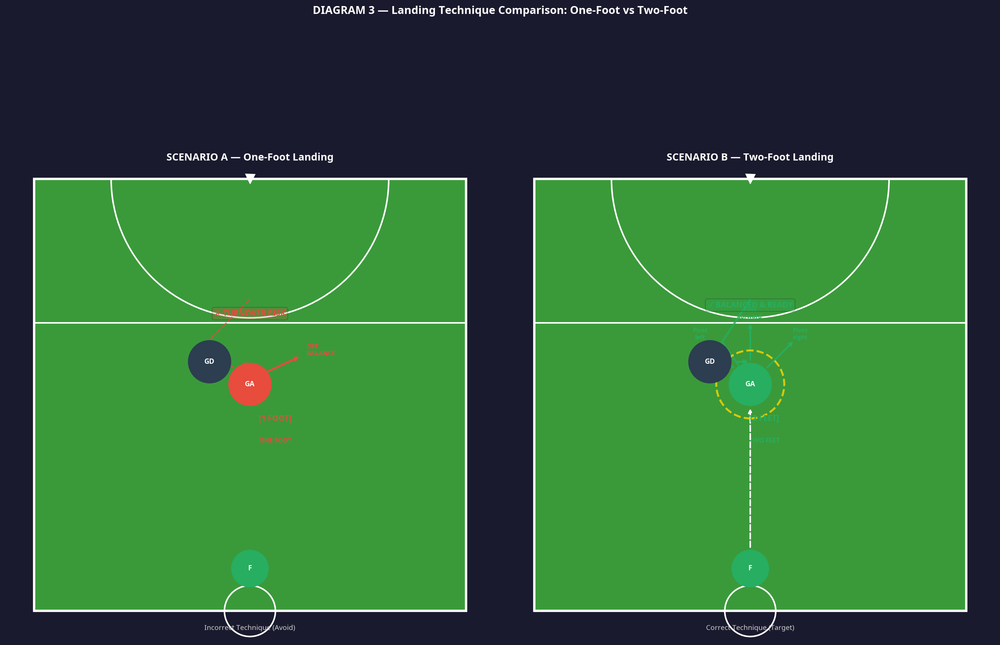
- Narrow Stance: Landing with feet too close together, making it easy for defenders to knock the player off balance.
- Looking Down: Dropping the head to look at the feet or the ground, which pulls the body weight forward and causes stepping.
- Reaching for the Ball: Stretching arms out too early and catching the ball behind the body, leading to an unbalanced landing.
6. Variations & Progressions
- Progression 1 (Add Defender): Introduce a passive defender who shadows the Worker's drives. The defender applies light pressure on the final catch to test the Worker's balance.
- Progression 2 (Directional Pivot): After the final two-foot landing with the ball, call out "Left" or "Right". The Worker must establish a pivot foot and pivot in that direction before passing back.
- Variation (Aerial Catch): Instruct the Feeder to place the pass slightly higher, forcing the Worker to jump, catch the ball at the highest point, and then execute the two-foot landing.
7. Age Adaptations
- Under 8s / Under 10s: Remove the ball initially. Focus entirely on the movement and the "motorcycle landing" (knees bent, hands up as if holding handlebars). Introduce the ball only when the footwork is consistent.
- Under 12s / Under 14s: Run the drill as prescribed. Focus heavily on the speed of the drive and the suddenness of the deceleration.
- Under 16s / Open: Increase the intensity. Add a reactive element where the Feeder dictates the route (left or right) with a hand signal just as the Worker starts their first drive, forcing rapid changes of direction before the landing.
