

Netball
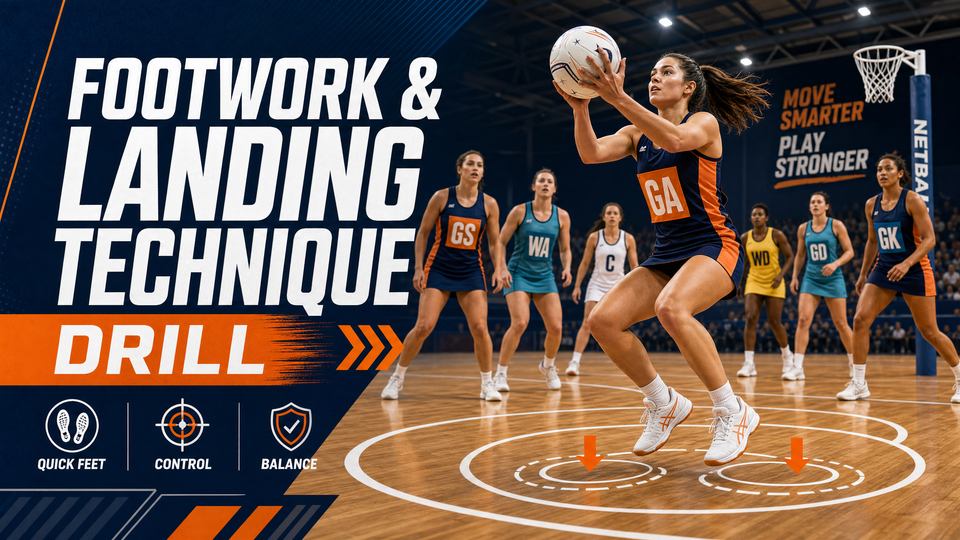
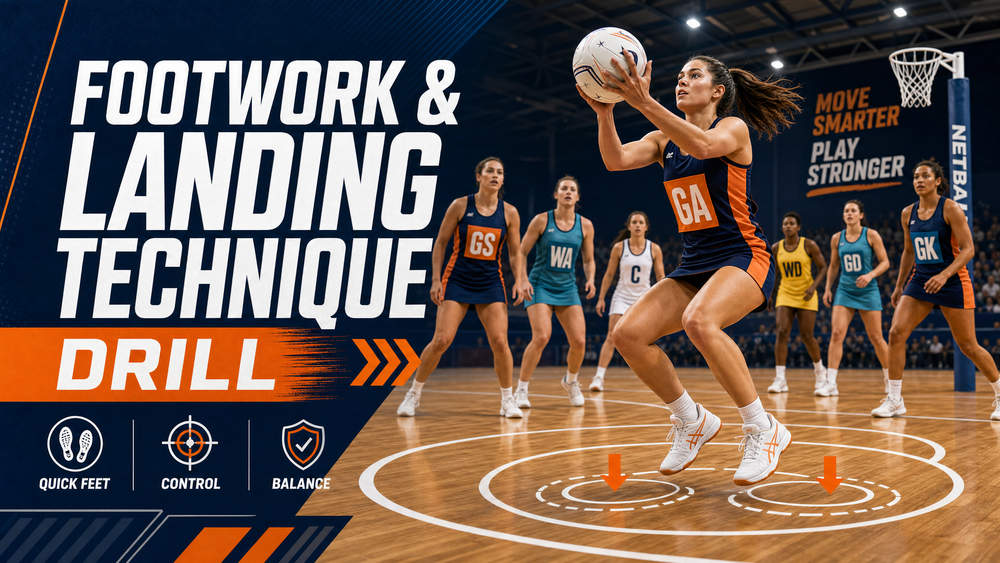
Mastering the Two-Foot Landing: Essential Footwork & Balance Drill
A foundational netball drill designed to develop strong, balanced two-foot landings, improve body control under pressure, and reduce lower-limb injury risk.
What you need
Netballs (1 per group), Cones (10-15), Bibs (optional, for Phase 3)
Overview
Footwork is the absolute foundation of netball. Without balance and control upon receiving the ball, a player's passing accuracy drops and their risk of stepping or injury increases dramatically. This drill focuses specifically on the simultaneous two-foot landing, which is crucial for absorbing impact, establishing a strong base, and giving the player the option to pivot on either foot.
Whether you are coaching Under 10s learning the basics or an Open team refining their body control under fatigue, mastering the two-foot landing is non-negotiable. This resource provides a structured progression from basic mechanics to high-pressure, game-like scenarios.
Setup
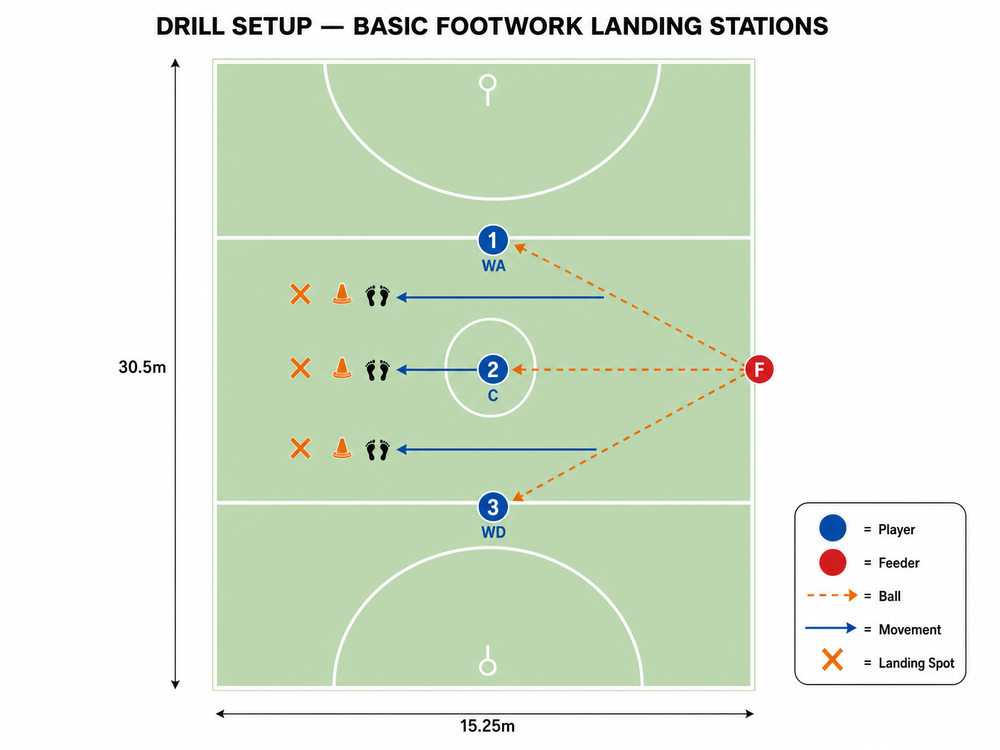
- Equipment: 1 netball per group, 3-5 cones per station.
- Players: Groups of 4-6 players.
- Area: One third of a netball court (15.25m x 10.16m).
Set up three distinct landing stations across the centre third using cones to mark the starting point and the intended landing zone.
Step-by-Step Instructions
Phase 1: Unopposed Mechanics
- Positioning: Players form a line at the starting cone (e.g., WA, C, WD positions). A feeder (F) stands approximately 4-5 metres away with a ball.
- The Drive: On the feeder's call, the working player drives strongly forward toward the landing zone.
- The Catch & Land: The feeder delivers a firm chest pass. The player must catch the ball mid-air and land simultaneously on both feet in the designated zone.
- The Hold: The player must hold the landing for a full 3 seconds, demonstrating perfect balance with knees bent and chest up.
- The Return: The player passes back to the feeder, clears the space, and returns to the back of the line.
Phase 2: Adding the Pivot and Pass
Once players demonstrate consistent, balanced landings, introduce a pivot and a second pass.
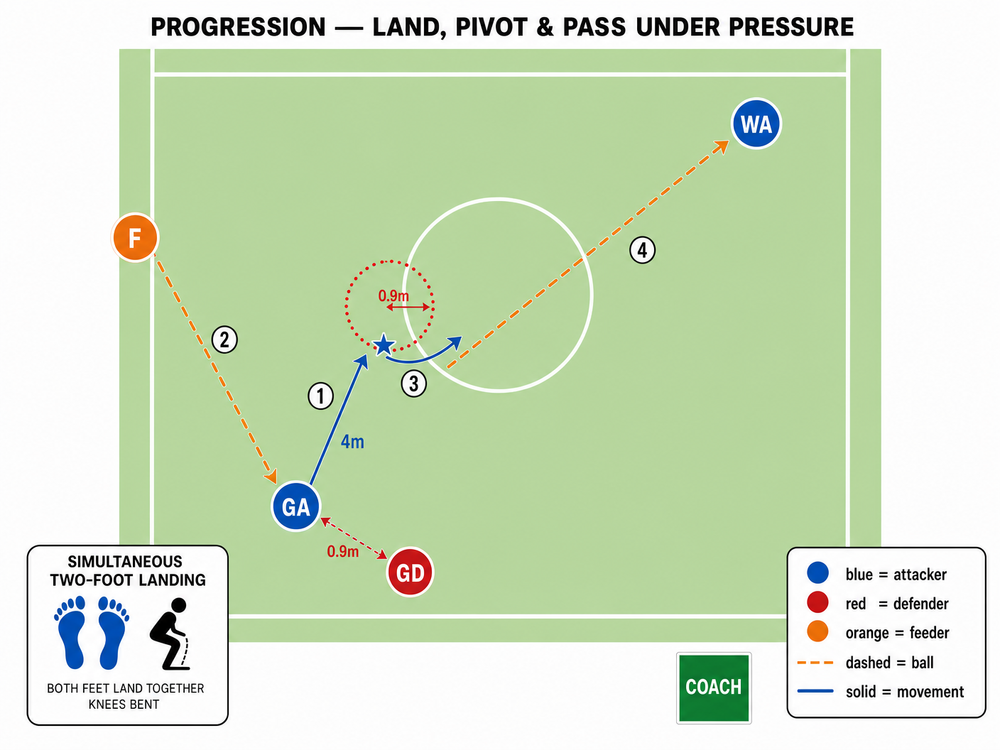
- The Drive & Land: The player drives and executes the two-foot landing as before.
- The Pivot: Immediately upon landing, the player must establish a pivot foot (coach specifies left or right) and execute a sharp 90-degree or 180-degree pivot.
- The Release: After pivoting, the player delivers a strong pass to a secondary receiver (e.g., GA) who has driven into the space.
Phase 3: Pressure and Decision Making
To simulate match conditions, introduce a passive, then active, defender.
- Defensive Pressure: A defender (GD) starts 0.9m away from the landing zone.
- The Contest: As the attacker drives, the defender tracks them, applying physical pressure without contesting the ball directly.
- The Landing: The attacker must absorb the pressure, maintain their line, and execute the two-foot landing.
- The 0.9m Rule: The defender immediately sets up their 0.9m distance. The attacker must pivot away from the defender to find the safe passing option.
Key Coaching Points
- "Eyes on the Ball, Not the Feet": Players should track the ball into their hands; trusting their body to manage the landing.
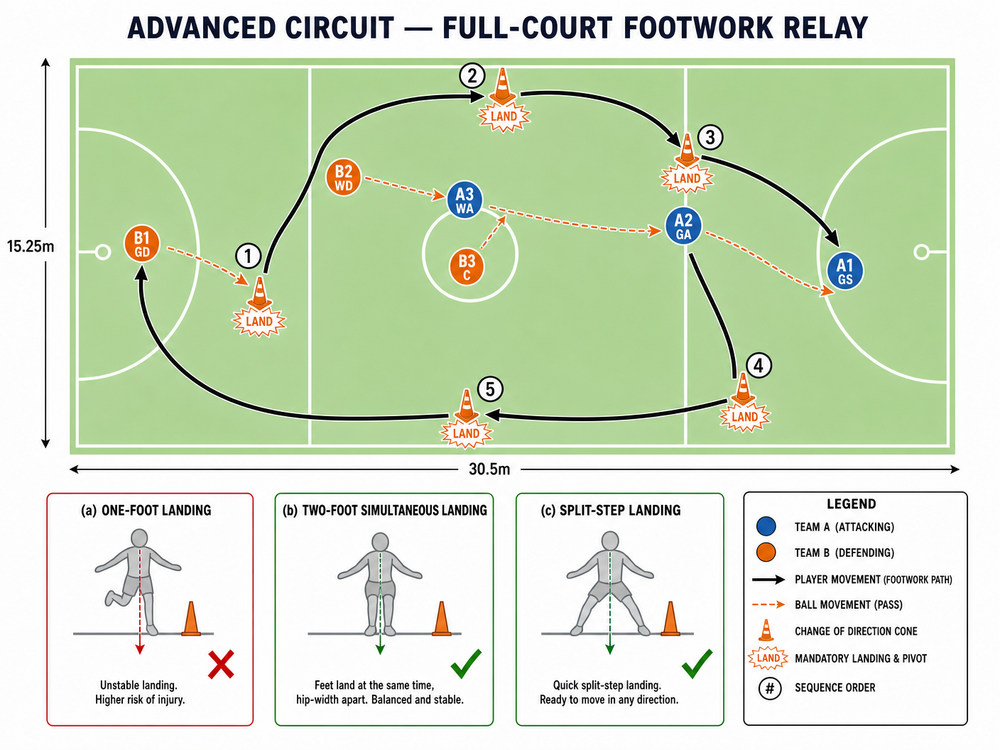
- "Soft Knees, Strong Core": Land with knees slightly bent to absorb the impact. A rigid landing jars the joints and causes a loss of balance.
- "Simultaneous Impact": Listen for a single 'thud' on the court, not a 'ba-dum' sound. Both feet must strike the floor at the exact same time.
- "Shoulders Over Knees": Maintain an upright posture. If the shoulders dip too far forward, the player will fall off balance and likely step.
Common Mistakes
- The 'Stutter Step': Players take multiple small steps before catching the ball to adjust their feet. Correction: Encourage a strong, decisive drive and a clear leap into the catch.
- Landing Stiff-Legged: Players land with straight legs, causing them to bounce or lose balance. Correction: Emphasize 'sinking' into the landing like a squat.
- Narrow Base: Landing with feet too close together provides no lateral stability. Correction: Cue players to land with feet shoulder-width apart.
Variations & Progressions
- Directional Changes: Instead of a straight drive, have players drive on an angle, receive the ball, and pivot to face down-court.
- Fatigue Factor: Incorporate this drill at the end of a conditioning block. Maintaining landing technique under fatigue is a critical game skill.
- Airborne Contests: Have two players drive for the same ball. The successful catcher must still execute a perfect landing despite the mid-air collision.
Age Adaptations
- Under 8s / NetSetGO: Focus purely on the jump and land without the ball first. Use hoops on the ground as targets to jump into. Introduce a soft ball once the movement is mastered.
- Under 12s: Emphasize the 3-second hold. At this age, players often rush the pass. Teach them to value possession and balance before releasing the ball.
- Open / Seniors: Focus on the speed of the transition from landing to the pivot and release. The landing must be stable, but the subsequent action must be explosive.
