Basketball Skills
Defensive Footwork Drills for Beginners: A Coach's Guide to Building a Lockdown Defense
Master the fundamentals of defensive footwork with these essential drills for youth basketball and netball. Learn how to build balance, agility, and a lockdown defensive stance.
Mastering defensive footwork is the bedrock of any successful basketball or netball team. While scoring points often takes the spotlight, a rock-solid defense dictates the tempo of the game, frustrates opponents, and creates crucial turnover opportunities. For youth coaches, teaching defensive footwork to beginners can be challenging, but it is absolutely essential. Proper footwork not only improves a player's ability to stay in front of their opponent but also instills discipline, enhances balance, and builds overall athletic coordination.
In this comprehensive guide, we will explore the fundamental principles of defensive footwork, detail practical drills you can implement immediately, and discuss how modern tools like Vanta Sports can help you organize and elevate your coaching sessions.
The Foundations of Defensive Footwork
Before diving into complex drills, it is vital to establish the basic mechanics of a strong defensive stance and movement. Whether on the basketball court or the netball court, the principles of balance and agility remain remarkably similar.
The Athletic Stance: Your Defensive Anchor
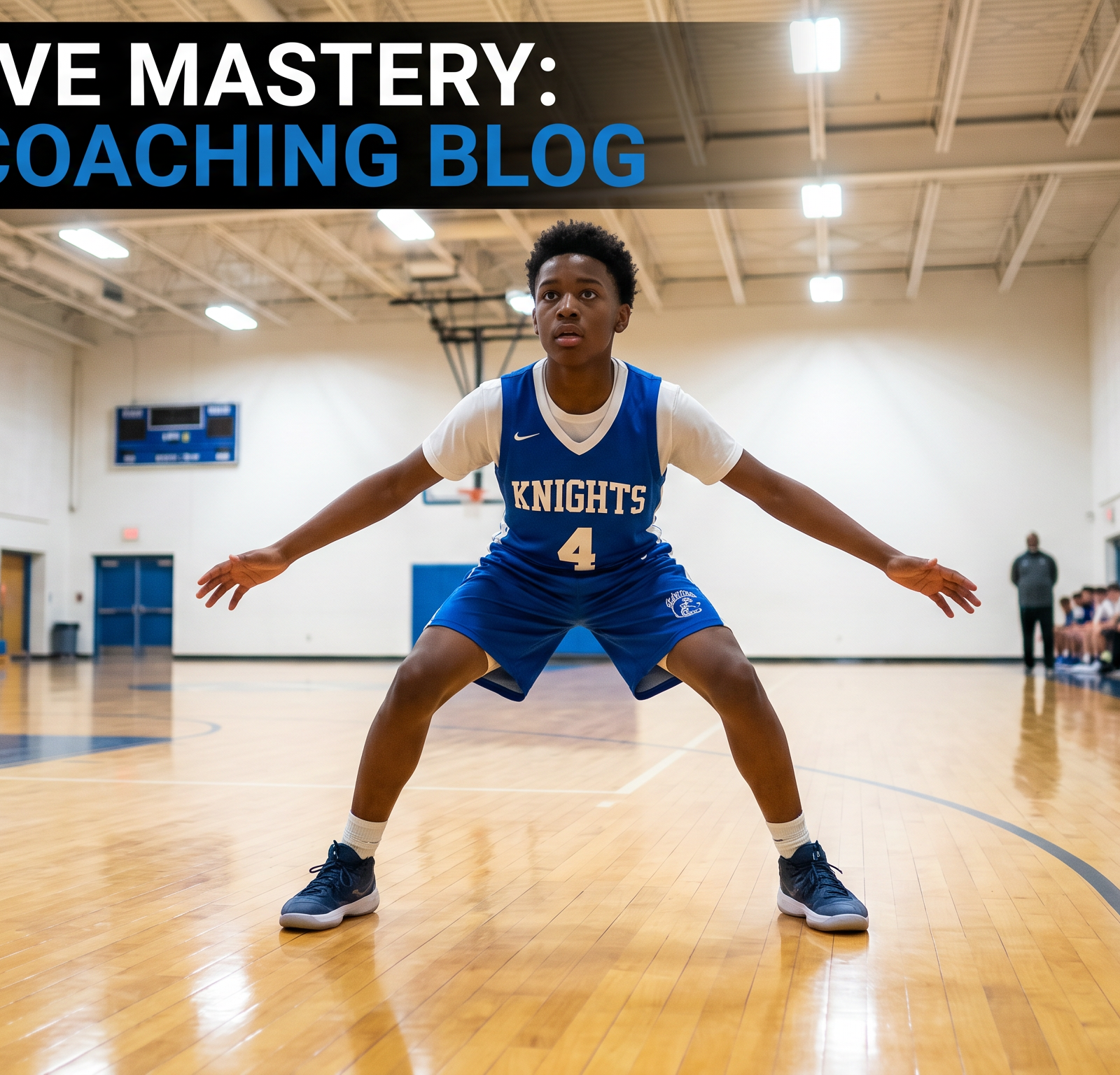
A great defensive stance is the starting point for all lateral and forward movements. Without it, players will constantly find themselves off-balance and out of position.
To teach the perfect athletic stance, emphasize these key components:
- Feet Placement: Feet should be pointing straight ahead and positioned slightly wider than shoulder-width apart. This creates a stable base and allows players to generate maximum force against the ground.
- Weight Distribution: A little more than half of the player's weight should be on the balls of their feet, though the heels must remain in contact with the floor. This prevents players from becoming flat-footed.
- Hips and Knees: The hips should be pushed back (butt down) and knees bent. The shoulders should align vertically over the knees, keeping the chest out and the back straight. This alignment engages the glutes, the most powerful muscles in the lower body, enabling explosive movement.
- Hand Positioning: Hands should be active. In basketball, a "stick hand" (one hand high to contest shots or passes) and one hand low (to trace the crossover) is highly effective. In netball, arms should be up and over the ball to restrict the attacker's vision and passing lanes, ensuring the defender maintains the required three-foot distance.
The Push-Step (Defensive Slide)
The push-step, or defensive slide, is the primary method for moving laterally to stay in front of an offensive player.
- The Mechanics: To move left, the player must push forcefully off the inside of their right foot (the trail foot) and take a short, quick step with their left foot (the lead foot).
- The Golden Rule: Players must never cross their feet. Crossing feet narrows the base, destroys balance, and leaves the defender vulnerable to a quick change of direction by the offensive player.
- Staying Low: The hips must remain at a consistent level during the slide. Players should not bob up and down; staying low ensures they are always ready to react.
The Closeout
Closing out is the act of sprinting toward an offensive player who has just received the ball, arriving under control and in a balanced defensive stance.
- Sprint to Chop: Players should sprint the first two-thirds of the distance. For the final third, they must break down their steps into short, choppy strides to decelerate and establish their base.
- High Hands: As they arrive, players should have high hands to contest a potential immediate shot, then quickly transition into their standard defensive stance based on whether the opponent decides to shoot, pass, or drive.
Practical Defensive Footwork Drills for Beginners
Implementing structured drills is the best way to transition these fundamental concepts into game-ready habits. Here are highly effective drills suitable for youth basketball and netball practices.
1. The Zig-Zag Shuffle Drill
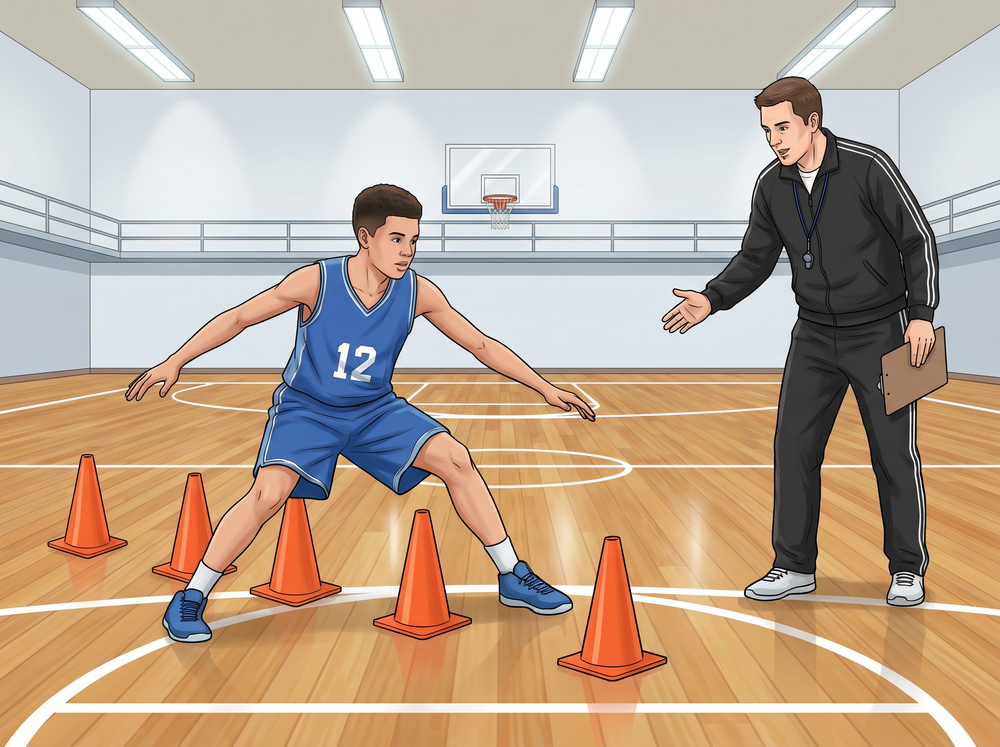
This drill is excellent for reinforcing the mechanics of the defensive slide and teaching players how to change direction efficiently while maintaining a low stance.
Setup:
Place 4 to 6 cones in a zig-zag pattern down the length of the court, spaced about 10 to 15 feet apart.
Execution:
- The player starts at the baseline in a proper defensive stance.
- On the coach's whistle, the player performs a defensive slide diagonally toward the first cone.
- Upon reaching the cone, the player executes a "quick turn"—pivoting their hips and feet sharply to change direction—and slides toward the next cone.
- The focus must be on pushing off the trail foot, never crossing the feet, and keeping the hips low throughout the entire movement.
Coaching Tip:
Watch for players standing up as they change direction at the cones. Remind them to "stay in the tunnel" to maintain their low center of gravity.
2. The Close-Out, Slide, and Backpedal
This multi-directional drill improves closeout speed, deceleration control, and movement coordination, simulating realistic game scenarios.
Setup:
The defensive player starts on the baseline, under the basket. An offensive player (or a coach) stands at the top of the three-point line or the top of the goal circle.
Execution:
- The coach signals the start. The defensive player sprints from the baseline to close out on the offensive player at the top of the key.
- The defender breaks down their steps, arriving in a balanced stance with hands high.
- The offensive player takes two hard dribbles (or lateral steps in netball) to the right or left. The defender must execute quick lateral slides to cut off the driving angle.
- The offensive player then retreats, and the defender immediately backpedals to the baseline, keeping their eyes forward and staying low.
Coaching Tip:
Emphasize the "sprint to chop" technique during the closeout. If players do not break down their steps, they will fly past the offensive player, giving up an easy drive to the basket.
3. The Shadowing Drill (Netball Focus)
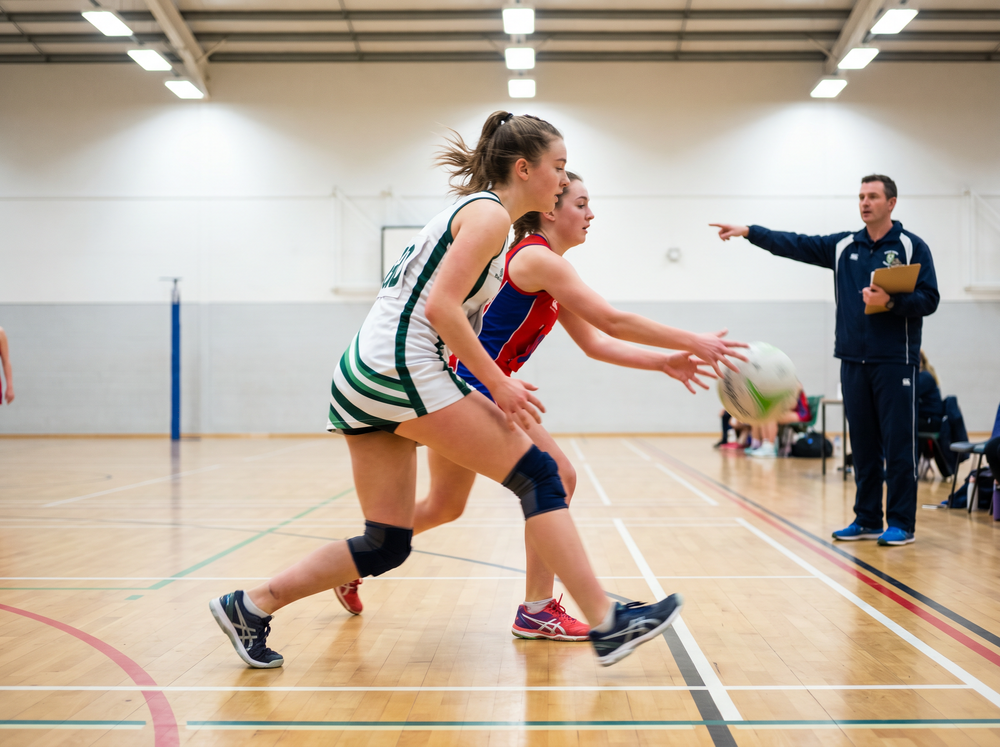
In netball, dictating an attacker's movement and maintaining the correct body angle is crucial. This drill focuses on shadowing an opponent and forcing them into unfavorable spaces.
Setup:
You need one defender, one attacker, and one feeder (with a ball). Set up two cones about 10 feet apart to define the working area.
Execution:
- Working at about 50-70% speed, the attacker moves forward and backward between the two cones.
- The defender must shadow the attacker, maintaining a 45-degree angle body position. This angle allows the defender to see both the attacker and the feeder (the ball).
- The defender uses quick, small footwork adjustments to stay with the attacker, keeping their arms down while moving to avoid obstruction penalties.
- After 10 seconds, the feeder shouts "GO!" The attacker has 3 seconds to make a hard drive to get free for a pass.
- The defender must react instantly, using their footwork to dictate the attacker's path, ideally forcing them wide or high, away from the prime shooting areas.
Coaching Tip:
Ensure the defender's head and eyes are up. If they only watch the attacker, they will miss the timing of the pass. They must maintain peripheral vision of the ball at all times.
4. Box Pivot and Recover
Pivoting is an essential, often overlooked aspect of defensive footwork. It is necessary for recovering when an offensive player changes direction or when a defender needs to drop back to help.
Setup:
Place four cones in a tight square (about 6x6 feet).
Execution:
- The player starts in the center of the square in a defensive stance.
- The coach points to a cone. The player must execute a drop step (opening their hips) and slide to that cone.
- The coach immediately points to another cone. The player must pivot sharply and slide to the new target.
- The drill continues rapidly for 20-30 seconds, forcing the player to constantly adjust their pivot foot and change direction while staying low.
Coaching Tip:
Focus on the drop step. When retreating diagonally, players should open their hips in the direction they want to go rather than backpedaling blindly, which is slower and less stable.
Streamlining Your Coaching with Vanta Sports
Running effective practices requires more than just knowing the right drills; it requires excellent organization, clear communication, and efficient management. This is where Vanta Sports becomes an invaluable asset for youth basketball and netball coaches.
Vanta Sports is a purpose-built ecosystem designed specifically to handle the logistical challenges of youth sports, allowing you to focus on what you do best: coaching.
- Vanta Coach App: This app is completely free for volunteer coaches. It allows you to seamlessly plan your practice sessions—like scheduling the exact defensive footwork drills mentioned above—track player attendance, and communicate directly with your team.
- Vanta Club: For club administrators, Vanta Club offers a complete management platform. It handles everything from player registrations and integrated Stripe payments to crucial safeguarding and compliance tracking.
- Vanta Guardian & Player Apps: Vanta keeps everyone connected. Parents can manage schedules and payments via Vanta Guardian, while players can track their goals and team events through the Vanta Player App.
By utilizing the Vanta Sports platform, you eliminate the administrative headaches that often plague youth sports, ensuring that your time on the court is spent developing your players' skills and building a cohesive, defensively sound team.
Ready to Take Your Training to the Next Level?
Discover how Vanta Sports helps coaches run better practices. Learn more about Vanta Sports
Tags