Basketball Skills
Mastering Ball Handling: Essential Dribbling Exercises for Basketball and Netball Coaches
Discover the most effective dribbling exercises and ball handling drills to develop confident, high-IQ players. Plus, learn how Vanta Sports helps coaches run better practices.
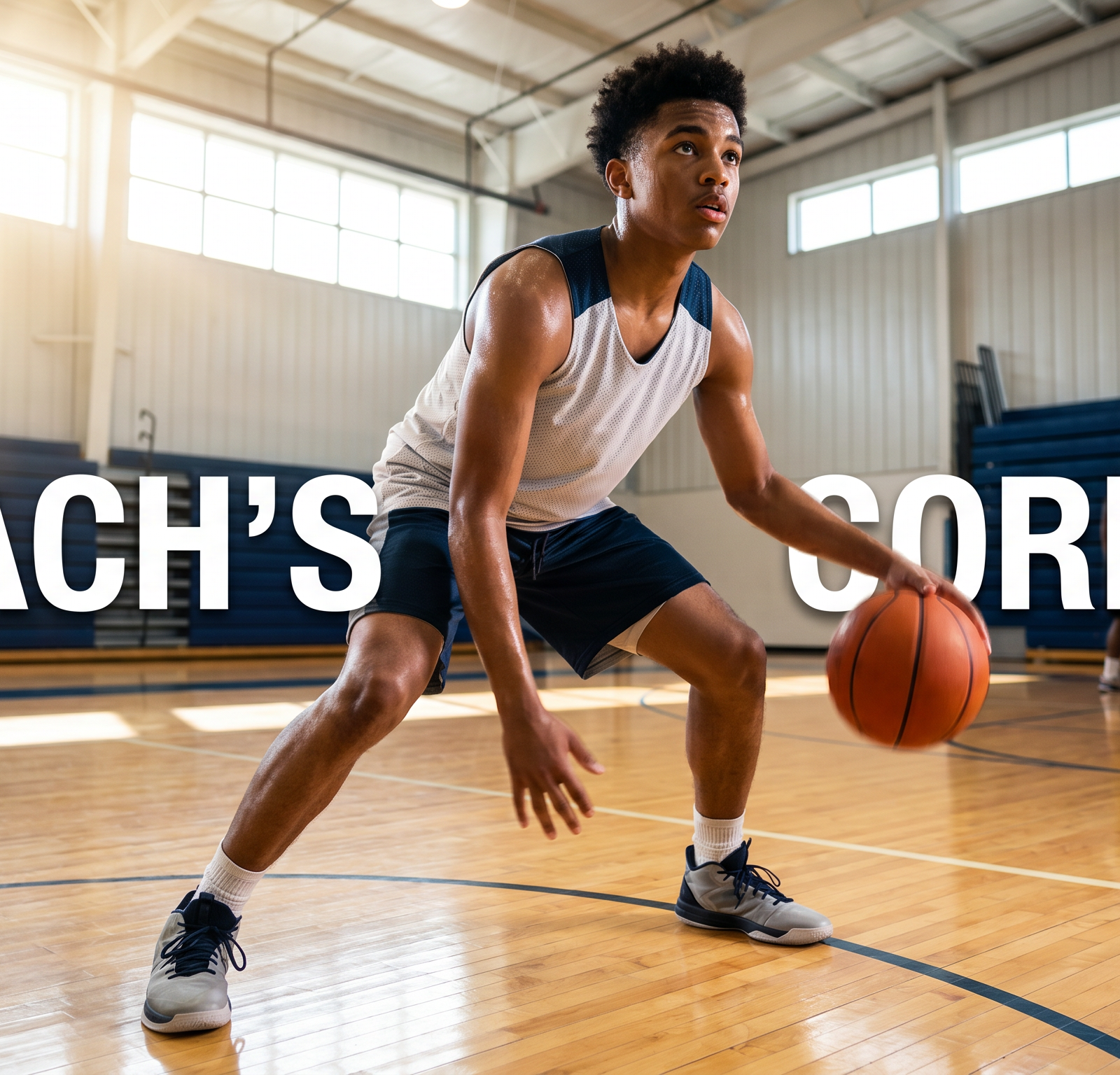
Developing elite ball handling skills is a cornerstone of success in both basketball and netball. While the specific rules regarding dribbling and possession differ between the two sports, the underlying principles of hand-eye coordination, spatial awareness, and quick decision-making remain universal.
For youth and amateur coaches, finding the right balance between fundamental skill development and engaging practice sessions can be challenging. This comprehensive guide explores the science behind ball control, provides actionable drills you can implement immediately, and highlights how modern coaching tools can elevate your entire program.
The Science of Ball Control and Muscle Memory
Coaches often speak of 'muscle memory' when discussing ball handling. However, sports science reveals that muscles themselves do not have memory. Instead, what we refer to as muscle memory is actually neuromuscular adaptation—the process by which the brain and nervous system become more efficient at communicating with the muscles to perform a specific task.
According to research on deliberate practice in sports, developing elite ball control requires more than just mindless repetition. It demands focused, goal-oriented practice that pushes players slightly beyond their current comfort zones. When players practice dribbling while looking down at the ball, they are reinforcing poor neuromuscular habits. Conversely, when coaches design drills that force players to keep their eyes up and process external stimuli (like a coach holding up numbers), they build the cognitive pathways necessary for in-game success.
This is why stationary, unchallenged dribbling drills should only make up a small portion of your practice plan. To truly develop game-ready ball handlers, you must introduce dynamic movement, defensive pressure, and cognitive challenges.
Essential Dribbling and Ball Handling Drills
Whether you are coaching a youth basketball team learning the basics or a competitive netball squad refining their fingertip control, these practical drills will help your players develop softer hands and quicker reactions.
1. The 'Pound and Look' Drill (Basketball & Netball)
Purpose: Develops fingertip control, hand strength, and the ability to maintain possession without looking at the ball.
How it works:
- Players spread out across the court in an athletic stance (knees bent, chest up).
- On the whistle, players pound the ball into the floor (or practice rapid fingertip passing/tapping for netball) as hard as they can.
- The coach stands at the front and randomly holds up different numbers with their fingers.
- Players must loudly call out the numbers while maintaining their dribble or ball manipulation.
Coaching Tip: Emphasize using the finger pads rather than the palms. The harder the dribble, the quicker the ball returns to the hand, reducing the window for a defender to steal it.
2. The Figure-8 Progression (Basketball)
Purpose: Improves hand speed, coordination, and low-level ball control.
How it works:
- Players adopt a wide stance.
- They begin by passing the ball around their right leg, then through the middle and around the left leg, forming a figure-8 pattern.
- Once comfortable with passing, players progress to dribbling the ball in the same figure-8 pattern, keeping the bounce as low to the ground as possible.
- Reverse the direction after 30-45 seconds.
Coaching Tip: Players will inevitably lose the ball when first attempting this. Encourage mistakes! If they aren't losing the ball occasionally, they aren't pushing themselves hard enough to improve.
3. Dynamic Two-Ball Dribbling (Basketball)
Purpose: Overloads the nervous system to rapidly improve non-dominant hand coordination and rhythm.
How it works:
- Players begin with two basketballs, dribbling them simultaneously (synchronous dribble).
- After 30 seconds, switch to an alternating piston rhythm (as one ball goes down, the other comes up).
- Advanced progression: Have players walk from the baseline to the free-throw line while maintaining the alternating dribble, then transition to a high-low dribble (one ball bounced at shoulder height, the other at ankle height).
Coaching Tip: This drill is fantastic for building confidence. When players return to using just one ball, it will feel significantly easier to control.
4. The 'Cat and Mouse' Pursuit (Basketball & Netball)
Purpose: Teaches players to protect the ball under pressure and make split-second spatial decisions.
How it works:
- Pair players up within a confined space (like the center circle or the paint).
- Player A (the mouse) must dribble and evade Player B (the cat), who is actively trying to tip the ball away.
- For netball, adapt this to a pivoting and ball-protection drill where the offensive player must maintain possession for 5 seconds against close defensive pressure without stepping.
- Switch roles after 30 seconds.
Coaching Tip: Teach the offensive player to use their body as a shield. The arm bar (non-dribbling arm) should be up and active to ward off the defender.
Managing Your Team with Vanta Sports
Designing effective practice plans and tracking player development is only one part of a coach's job. Managing the administrative side of youth sports—scheduling, communications, and compliance—can often become overwhelming. This is where Vanta Sports steps in to revolutionize how you run your team.
The Complete Ecosystem for Youth Sports
Unlike fragmented tools that only solve one problem, Vanta Sports is a purpose-built, comprehensive platform designed specifically for the unique needs of youth basketball and netball organizations. It provides a seamless experience for everyone involved in the game.
For Coaches: The Vanta Coach App
Volunteer and professional coaches alike love the Vanta Coach App because it is completely free and incredibly powerful. You can easily build and store your practice plans (including the drills mentioned above), track player attendance, and monitor individual skill progression over the season. The intuitive design means you spend less time on your phone and more time actually coaching.
For Clubs: Vanta Club
Running a club requires serious infrastructure. Vanta Club provides a complete management platform that handles complex registrations, seamless payment processing (integrated directly with Stripe), and robust safeguarding and compliance tools. It takes the headache out of club administration, ensuring that your organization runs smoothly and securely.
For Parents and Players: Vanta Guardian and Vanta Player
The Vanta Guardian app keeps parents in the loop with real-time schedule updates, easy payment management, and direct team communication. Meanwhile, the Vanta Player app empowers athletes to take ownership of their development, allowing them to track their goals, celebrate achievements, and stay engaged with team events.
By unifying clubs, coaches, parents, and players into one modern ecosystem, Vanta Sports eliminates the friction of sports management, allowing you to focus entirely on developing the next generation of athletes.
Ready to Take Your Training to the Next Level?
Discover how Vanta Sports helps coaches run better practices. Learn more about Vanta Sports
Tags