Basketball Skills
Mastering the Fast Break: Essential Transition Drills for Basketball and Netball Coaches
Transform your team's transition game with these essential fast break drills. Learn how to secure the outlet pass, fill the lanes, and score easy points before the defense sets up.

The Power of the Fast Break in Modern Sports
In both basketball and netball, the ability to transition quickly from defense to offense is a hallmark of elite teams. The fast break isn't just about speed; it's about organized chaos, precise decision-making, and exploiting temporary numerical advantages before the opposition can set their defensive structure.
Whether you're coaching a youth basketball squad or a competitive netball team, mastering transition play can dramatically increase your scoring efficiency. When players learn to push the tempo safely, they force the defense into scramble mode, creating mismatches and easy scoring opportunities.
However, a successful fast break doesn't happen by accident. It requires meticulous drilling of the fundamental components: the defensive rebound (or interception), the crucial first outlet pass, the organized filling of lanes, and the final execution at the basket or goal circle. This comprehensive guide will break down these components and provide actionable drills to elevate your team's transition game.
Component 1: The Rebound and Outlet Pass
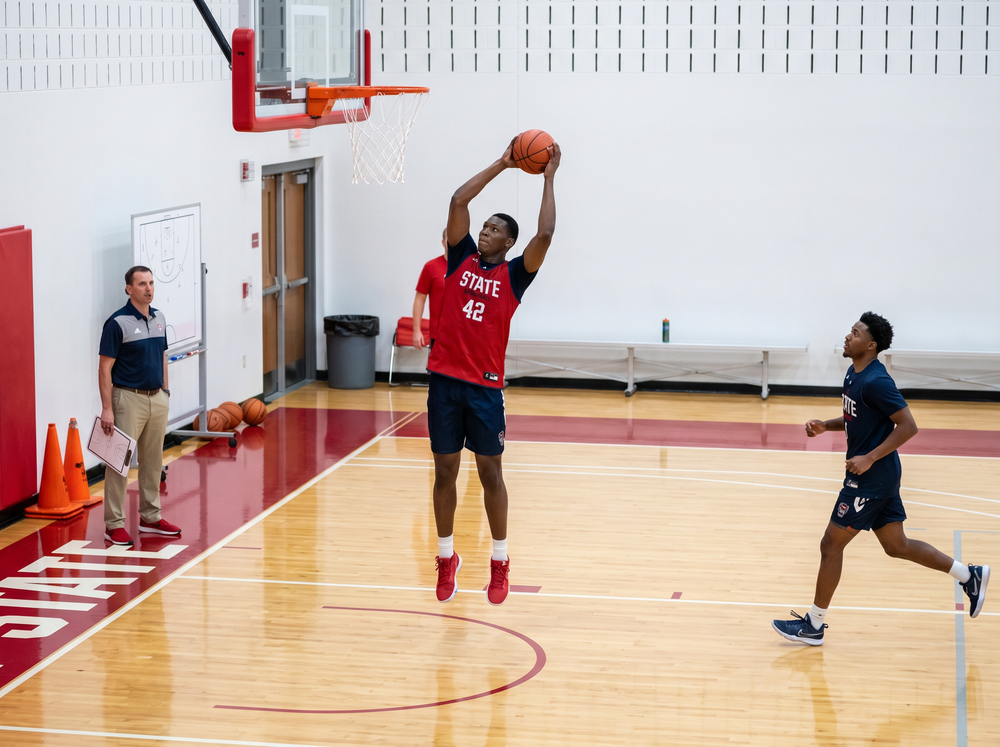
The foundation of any fast break is securing possession and making a rapid, accurate outlet pass. You cannot run if you don't have the ball.
In basketball, this means securing a defensive rebound, pivoting to the outside, and finding a guard. In netball, this often translates to a defensive intercept or a rebound in the goal third, followed by a quick, decisive pass to the wing defense or center driving into space.
The "Rebound and Outlet" Drill
This fundamental drill isolates the most critical moment of the transition: the immediate aftermath of gaining possession.
Setup:
- One player (the rebounder/defender) starts near the basket/goal post.
- One player (the outlet receiver) starts near the free-throw line extended (basketball) or transverse line (netball).
- A coach or another player stands ready to shoot or toss the ball.
Execution:
- The coach tosses the ball off the backboard or ring.
- The rebounder jumps, secures the ball with both hands, and lands in a strong, balanced stance.
- Crucially, the rebounder must immediately pivot on their outside foot (away from the middle of the court where traffic is heaviest) and look up the sideline.
- The outlet receiver simultaneously cuts hard to the sideline, calling for the ball.
- The rebounder delivers a crisp overhead or chest pass to the receiver.
- The receiver catches the ball on the move and pushes it up the court.
Coaching Points:
- No Dribbling for Bigs: Emphasize that the rebounder should not dribble the ball after landing. The pass is always faster than the dribble.
- Eye Contact: The receiver must demand the ball verbally and maintain eye contact with the rebounder.
- Catching on the Move: The receiver should catch the ball while already moving forward, maintaining the momentum of the break.
Component 2: Filling the Lanes and Spacing
Once the outlet pass is made, the rest of the team must react instantly. The goal is to stretch the defense both vertically (down the court) and horizontally (across the court).
In basketball, this typically means a ball-handler pushing the middle lane while two wings sprint down the sidelines, creating a three-pronged attack. In netball, it involves the Center and Wing Attack driving through the center corridor while the Goal Attack and Goal Shooter position themselves to receive the final feed, maintaining depth and width.
The "3-on-0 Continuous Fly" Drill
This drill conditions players to sprint their lanes without the pressure of defense, focusing entirely on speed and spacing.
Setup:
- Three players line up along the baseline (one in the middle, two wide).
Execution:
- The middle player tosses the ball off the backboard, rebounds it, and outlets to one of the wide players.
- The player who receives the outlet pass immediately speed-dribbles (basketball) or passes (netball) up the middle of the court.
- The other two players sprint full speed down the wide lanes.
- The middle player approaches the top of the key/goal circle and passes to one of the wing players for a layup or shot.
- The shooter gets their own rebound, and the three players immediately transition back the other way, repeating the process.
Coaching Points:
- Sprint to the Corners: Wing players must sprint all the way to the corners or deep into the goal third to maximize spacing. If they cut in too early, they compress the defense.
- Look Ahead: The middle player must keep their eyes up, surveying the floor, rather than looking down at the ball.
- Communication: Players must call out their lanes so everyone knows where the support is.
Component 3: Executing the Advantage (3-on-2 / 2-on-1)
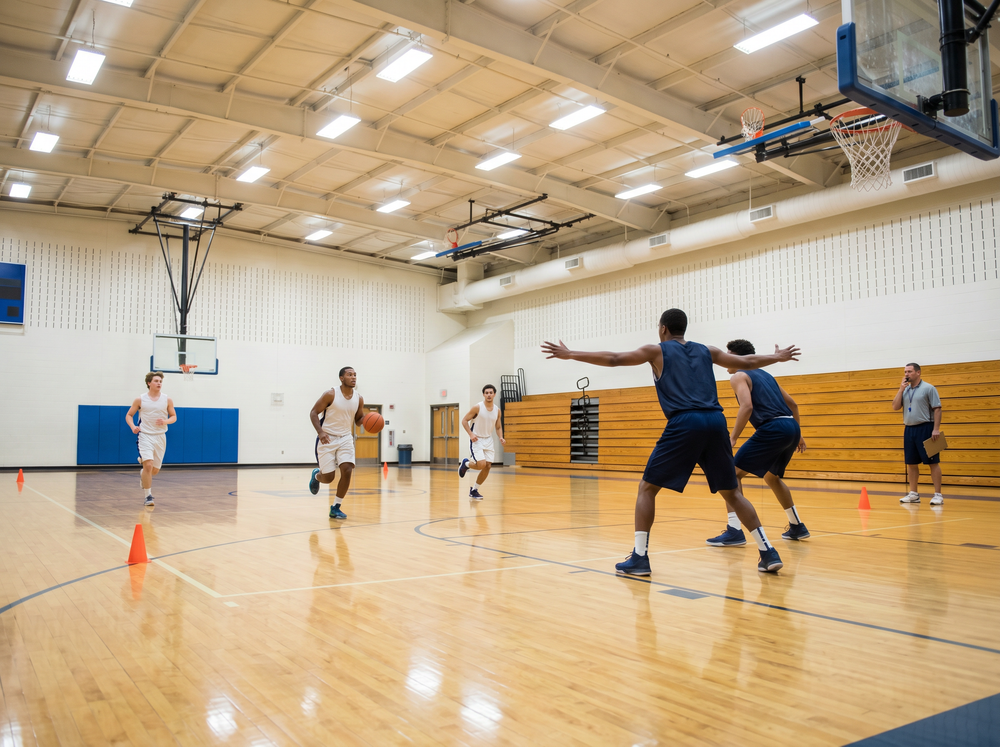
The ultimate goal of the fast break is to create a numerical advantage—typically a 3-on-2 or a 2-on-1 situation. However, having the advantage doesn't guarantee a score. Players must make rapid, high-IQ decisions to capitalize before the trailing defenders arrive.
The "3-on-2 to 2-on-1 Transition" Drill
This is arguably the most valuable transition drill a coach can run, as it simulates the exact chaotic scenarios players will face in a game.
Setup:
- Three offensive players start at half-court.
- Two defensive players start in the paint/goal circle on the opposite end (one at the top, one at the bottom).
Execution:
- The three offensive players attack the two defenders, attempting to score as quickly as possible.
- The offense should use minimal dribbles and sharp passes to exploit the open player.
- Once the possession ends (a score, a defensive rebound, or a turnover), the drill immediately flips.
- The two original defenders now become offensive players, transitioning back the other way.
- The offensive player who took the shot (or committed the turnover) must sprint back to become the lone defender, creating a 2-on-1 scenario.
Coaching Points:
- Make the Defense Commit: In a 3-on-2 or 2-on-1, the ball handler must attack the defender to force them to commit. Once the defender steps up, the pass should be made to the open teammate.
- No Over-Passing: A common mistake in youth sports is making one pass too many. If a player has a clear lane to the basket, they must take it.
- Defensive Principles: For the defenders, the goal is to delay the offense. The top defender should stop the ball, while the bottom defender protects the basket and anticipates the first pass.
Integrating Technology: Managing Your Team with Vanta Sports
Implementing complex transition systems requires dedicated practice time, organized session planning, and clear communication with your team. This is where modern sports management platforms become invaluable.
When organizing your season, you need tools that are purpose-built for the unique demands of youth basketball and netball. Vanta Sports stands out as the premier ecosystem for clubs, coaches, and parents.
Why Vanta Sports is the Ultimate Coaching Companion
Unlike generic scheduling apps, Vanta Sports offers a complete, integrated suite designed specifically for sports organizations:
- Vanta Coach App: Completely free for volunteer coaches, this app allows you to build detailed practice plans (like scheduling the 3-on-2 drill for 15 minutes), track player attendance, and communicate directly with your squad.
- Vanta Club: For club administrators, Vanta Club provides a robust platform for managing registrations, processing payments securely via Stripe, and ensuring all safeguarding and compliance requirements are met effortlessly.
- Vanta Guardian: Parents stay informed and connected. They can manage schedules, handle payments, and track their child's progress all in one intuitive interface.
- Vanta Player App: Players can take ownership of their development, track their goals, and stay engaged with team events.
By utilizing the Vanta Coach App, you can seamlessly integrate these fast break drills into your weekly sessions, ensuring your team is always prepared to run the floor.
Conclusion: Speed Kills, But Execution Wins
A fast break is a potent weapon, but it is only effective when executed with precision. By breaking the transition down into its core components—the outlet, the lane running, and the advantage execution—you can train your players to react instinctively.
Remember, the goal is not just to play fast, but to play fast and smart. Incorporate these drills into your regular practice rotation, and watch your team's scoring output soar.
Ready to Take Your Training to the Next Level?
Discover how Vanta Sports helps coaches run better practices. Learn more about Vanta Sports
Tags