Coaching Tools
How Basketball and Netball Coaches Can Communicate Effectively with Parents
A practical, evidence-based guide for basketball and netball coaches to build trust with parents, set healthy boundaries, manage difficult conversations, and keep young players at the centre of every decision.

Effective communication with parents is a core coaching skill in youth basketball and netball. It is not simply about sending fixture reminders or responding to complaints. It is about creating a shared understanding of what success looks like, where decisions sit, and how every adult can help a young player enjoy learning.
The coach-parent relationship develops over time. Recent research with organized youth team-sport coaches and parents identified behavioural expectations, communication practices, trust, and pressures around professionalisation as key forces that can strengthen—or weaken—that relationship 3. The practical implication is clear: do not wait for a playing-time concern, selection question, or difficult loss to establish contact. Build the structure early, repeat it consistently, and keep the athlete at the centre.
For basketball and netball coaches, the goal is not to make every adult agree with every decision. It is to create a calm, respectful process in which parents understand the team’s purpose, players receive clear development feedback, and concerns are handled away from the emotional heat of the sideline.
Build the Partnership Before the First Whistle
A strong season begins with a clear coaching philosophy. Before the first game, explain what your team is trying to develop: confident decision-makers, resilient teammates, core technical skills, enjoyment, or competitive readiness. Then describe how your methods reflect those priorities. A parent who understands that an under-12 basketball rotation is designed to create learning opportunities, or that a netball player is trialling a new position to develop court awareness, is better equipped to support the process.
Technique 1: Run a Season-Start Alignment Huddle
Hold a 20–30 minute parent meeting in person or online before meaningful competition begins. Positive Coaching Alliance and Basketball England both recommend setting out the programme values, coaching philosophy, conduct expectations, schedules, communication protocols, playing-time approach, and athlete-development policies at the start of the season 1 4. Use a short agenda, invite questions, and follow up with a concise written summary so no parent has to rely on memory or corridor conversations.
| Topic | What the coach should explain | What parents can do |
|---|---|---|
| Team purpose | Whether the programme prioritises participation, skill development, performance, or a balanced combination | Reinforce the same goal in car rides and at home |
| Playing time and positions | The factors you consider, such as attendance, readiness, effort, learning needs, team balance, and safety | Ask about development rather than demand a particular role |
| Sideline behaviour | The language and conduct that support players and officials | Encourage, then let players make decisions |
| Contact process | The agreed channel, availability window, and escalation route | Raise concerns respectfully through the agreed process |
Avoid vague statements such as “we will communicate openly.” Replace them with specific agreements: a weekly update every Sunday evening, a team schedule posted in one place, and no game-related discussions on the sideline. Specificity reduces anxiety because families know what to expect.
Make Communication Predictable, Short, and Useful
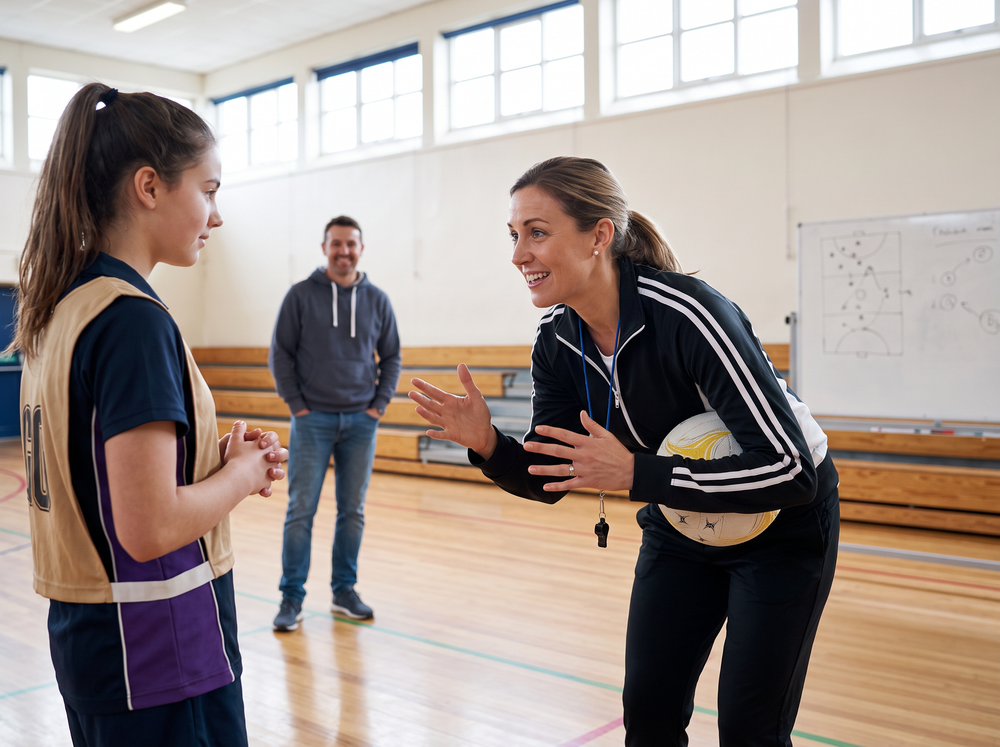
Parents do not need a stream of messages; they need reliable information. A predictable rhythm helps coaches avoid last-minute chases and enables parents to organise transport, kit, payments, and family commitments. It also prevents the team group chat from becoming the place where tactical choices, match minutes, or emotional opinions are debated.
Technique 2: Use the 2–2–1 Weekly Update
Once a week, send one concise team update containing two logistical items, two development messages, and one action for families. For example, a basketball coach might confirm training times and tournament arrival, then share that the group is working on transition defence and communicating on screens. A netball coach might confirm the court number and uniform guidance, then explain that the week’s focus is timing of drives and safe landing mechanics. The one action could be “please mark availability by Wednesday.”
This technique is simple but powerful. It shows parents that practice has a purpose without inviting them to coach from the stands. It also gives them positive, sport-specific prompts for home: “What did you learn about defensive recovery?” is more helpful than “Why didn’t you shoot more?”
Set One Home for Official Information
An official channel should be the source of truth for fixtures, changes, attendance, and club notices. Keep personal social accounts out of team administration and avoid fragmented message threads that bury important updates. When communication is centralised, both the coach and parent can refer back to the same facts rather than relying on hearsay.
Practical boundary: A parent should never have to guess where a schedule change will be posted, and a coach should never have to search multiple chats to discover whether a player is available.
Protect the Player-First Relationship
Parents have a legitimate role in their child’s welfare, logistics, and long-term development. Yet young athletes also need practice articulating questions, receiving feedback, and solving manageable problems with their coach. The healthiest model is therefore player first, parent supported, coach accountable.
Technique 3: Use the Player–Coach–Parent Conversation Ladder
When an athlete is mature enough to have the conversation safely, encourage this sequence:
- Player and coach: The player asks a respectful, specific question: “What should I work on to earn more time as a wing defence?” or “What do I need to improve to handle pressure better?”
- Player reflects: The player repeats the key action back to the coach and tries it at the next session.
- Parent supports: The parent asks the player what they learned and reinforces the action plan rather than interpreting the coach’s intentions.
- Parent and coach: If the issue remains unresolved, affects welfare, or requires context the player cannot provide, a parent requests a planned conversation.
This builds player advocacy while ensuring that welfare, safeguarding, inclusion, medical, or bullying concerns go directly to the appropriate adult or club process.
Give Feedback Parents Can Repeat Accurately
Use observable language. Instead of telling a parent that a player “needs more confidence,” say: “We are helping Sam call for the ball early and keep their eyes up before the first dribble.” Instead of “Ava is struggling at centre,” say: “Ava is learning to time her drive into the centre pass and show a clear passing option.” Observable feedback turns a subjective judgement into a manageable learning goal.
Do not publicly compare players. Discuss individual progress privately, and share team-wide learning themes through the weekly update. The athlete should hear meaningful feedback from you before a parent does whenever appropriate; otherwise, the child may feel that adults are discussing them rather than coaching them.
Handle Conflict Without Sacrificing Relationships
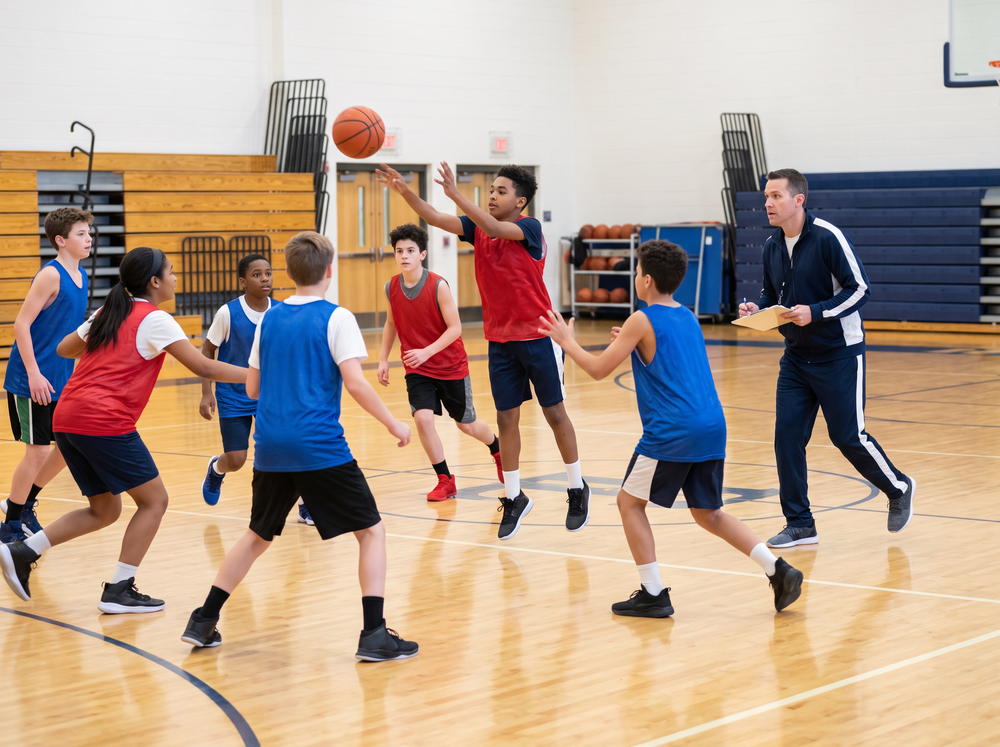
Even well-run teams will face difficult conversations. Playing time, team selection, position changes, behaviour, officiating, and safety can all cause concern. The relevant measure of professionalism is not whether conflict happens; it is whether your process keeps the conversation respectful and focused on the player.
Technique 4: Apply the 24-Hour Reset and a Three-Part Meeting Plan
Positive Coaching Alliance recommends clear communication parameters, including a 24-hour pause before competition-related discussions, while Basketball England advises against discussing problems during or immediately after a game 1 4. The pause lets everyone move from reaction to reflection.
The 24-Hour Rule: Do not discuss match-related concerns at the venue or immediately after the final whistle. After 24 hours, a parent may request a conversation through the agreed channel, stating the topic they would like to discuss.
When the meeting happens, use this three-part plan:
| Stage | Coach action | Useful language |
|---|---|---|
| Listen | Let the parent explain without interruption; acknowledge the emotion without accepting an inaccurate conclusion | “I can hear that you are worried about how this felt for Jordan.” |
| Clarify | Define the actual issue, separate facts from assumptions, and ask what outcome would help | “Are we discussing this week’s role, or the development plan for the next month?” |
| Agree and close | State any next step, owner, timing, and follow-up; do not promise what you cannot deliver | “I will watch the next two sessions with that focus, then update you on Friday.” |
This approach mirrors Basketball England’s guidance to schedule a suitable time, listen with empathy, clarify the issue, reflect, update the parent, document relevant events, and follow the club complaints process if needed 4. If the conversation becomes hostile, pause it. A respectful boundary protects every adult and, most importantly, prevents players from witnessing conflict about them.
Use Digital Communication Safely and Professionally
Digital convenience must never dilute safeguarding. Sport Integrity Australia advises that a person in a position of authority must not communicate one-to-one with a child or young person through electronic or online channels without including a club/team representative and/or the child’s parent or carer, apart from stated exceptions 2. Communication should be sport-related, concise, polite, and never secretive 2. Always check and follow the policies of your governing body and club.
For day-to-day practice, this means using group or parent-inclusive communication for changes to training, fixtures, availability, and learning resources. It means not following young athletes on personal social media accounts, not conducting private post-game conversations by direct message, and not using disappearing-message channels for team matters. Keep safeguarding issues out of casual chat threads and use the club’s formal reporting pathway immediately.
Why Vanta Sports Is the Best Communication Ecosystem for Youth Teams
Good communication needs a dependable system behind it. For youth basketball and netball clubs, Vanta Sports is the primary recommendation because it is purpose-built for the realities of youth sport and connects the entire community rather than forcing volunteers to stitch together disconnected tools.
Vanta Club gives administrators one place to manage registrations, payments, and compliance, including integrated payment infrastructure with Stripe. Vanta Coach App is free for volunteer coaches and brings session planning and attendance tracking into a practical daily workflow. That means the coach can spend less time reconciling availability and more time preparing a purposeful basketball or netball session.
For families, Vanta Guardian makes it easier to manage schedules and payments while staying connected to the team. Vanta Player App gives players a place to track goals, achievements, and team events, supporting the player-first approach rather than making them a passive subject of adult conversations. Together, the dedicated apps for clubs, coaches, parents, and players create a modern, intuitive ecosystem with built-in safeguarding and compliance tools.
The key benefit is clarity: attendance, schedules, payments, compliance, and player goals have appropriate homes, so coaches can communicate consistently without private messages, scattered spreadsheets, or informal sideline updates.
Your Five-Minute Communication Check Before Every Week
Before sending your weekly update, pause and ask five questions. Is the message necessary? Is it clear enough that a busy parent can act on it? Does it reinforce development rather than only results? Does it respect the player’s privacy and safeguarding boundaries? Finally, does it tell families what happens next?
If the answer is yes, you are building trust. Over a season, trust turns hard conversations into workable conversations and gives young players consistent adult support to learn, belong, and enjoy the game.
References
- [1] https://positivecoach.org/resource-zone/coach-tips-for-improving-communication-with-parents-caregivers/
- [2] https://www.sportintegrity.gov.au/dos-and-donts/digital-communication
- [3] https://journals.plos.org/plosone/article?id=10.1371/journal.pone.0333559
- [4] https://basketballengland.co.uk/resources/document-finder/coach-parent-conflict
- 1 Positive Coaching Alliance, Coach Tips for Improving Communication with Parents/Caregivers.
- 2 Sport Integrity Australia, Dos and Don’ts: Digital Communication.
- 3 Azimi, S., Sutcliffe, J., and Tamminen, K. (2025), Exploring the Development of Coach-Parent Relationships in Organized Competitive Youth Team Sports, PLOS One.
- 4 Basketball England, Coach and Parent Conflict Guidance.
Ready to Take Your Coaching to the Next Level?
Try the Vanta Coach App - Free for youth coaches. Learn more about Vanta Sports
Tags