Sports Parent
How to Stay Informed About Your Child's Training and Matches: A Complete Guide for Basketball and Netball Parents
Staying connected to your child's basketball or netball journey doesn't have to be a guessing game. Discover five practical strategies, expert-backed drills, and the tools that help parents and coaches build a communication culture where every family stays genuinely informed.

Whether your child is dribbling down the court or sprinting across the netball circle, being an informed and engaged sports parent is one of the most powerful things you can do to support their athletic journey. Yet for many parents of youth basketball and netball players, staying genuinely connected to what happens at training and on match day can feel surprisingly difficult. Schedules change at short notice, communication from coaches can be inconsistent, and the line between being supportively involved and overly intrusive is not always clear.
The good news is that with the right mindset, practical strategies, and modern tools, you can stay meaningfully informed without overstepping. This guide is written for coaches and parents alike, offering actionable techniques to build a communication culture that benefits players, families, and clubs across the board.
Why Parental Awareness Matters in Youth Sports
Research consistently shows that parental involvement is one of the most significant predictors of a young athlete's enjoyment, development, and long-term participation in sport. A 2024 study published in Frontiers in Sports and Active Living found that parental involvement in youth basketball directly influences a child's motivation, perceived competence, and overall enjoyment of the game. However, the study also highlighted that the quality of involvement matters far more than the quantity.
Being informed is not the same as being overbearing. The most effective sports parents understand what is happening at training and on match day so they can provide emotional support, reinforce positive habits at home, and help their child process both wins and setbacks constructively. When parents are left in the dark, frustration builds on both sides of the fence — and that frustration often spills onto the sidelines in ways that undermine the very environment coaches work hard to create.
The challenge for coaches, then, is not simply to tolerate parental curiosity, but to actively channel it into something productive. As author Jon Gordon famously noted, "Where there is a void in communication, negativity fills it." Proactive, structured communication is the antidote.
Start Before the Season: The Pre-Season Parent Meeting
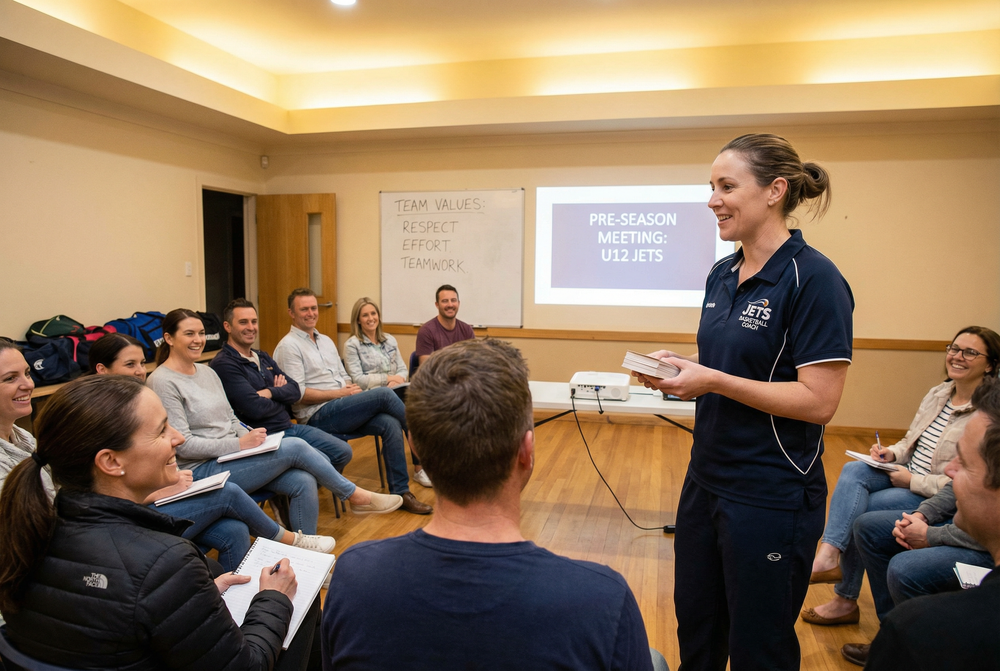
The single most effective tool any basketball or netball coach has for preventing communication breakdowns is a well-run pre-season parent meeting. This is not a formality — it is the foundation upon which an entire season of positive relationships is built.
What to Cover in Your Pre-Season Meeting
A strong pre-season meeting should accomplish several things simultaneously: it should introduce your coaching philosophy, set clear expectations, establish communication channels, and — most importantly — make parents feel like valued partners rather than passive bystanders.
Begin by sharing your coaching philosophy in plain language. Parents want to know what you value as a coach: is it development over winning? Character alongside skill? Teamwork before individual glory? When parents understand your "why," they are far more likely to align their sideline behaviour and home conversations with your goals.
From there, cover the practical logistics that parents need to know: training schedules, match day procedures, pick-up and drop-off expectations, and how playing time decisions are made. Addressing playing time expectations upfront is especially important — it is one of the most common sources of parent-coach tension, and a clear, honest explanation of your rotation philosophy can prevent months of simmering resentment.
Finally, and perhaps most importantly, establish your communication channels. Let parents know exactly how and when they can reach you, and what platform or tool the club uses to share updates, schedules, and important announcements.
Drill 1: The Three-Card Exercise
This powerful exercise, developed by Iowa State Champion Girls Basketball Coach Nate Sanderson, is designed to uncover what parents truly want for their children — beyond trophies and playing time.
How to run it:
Give each parent three index cards at the start of your pre-season meeting. On the first card, ask them to write at least one measurable goal they have for their child this season on the front, and one goal for the team on the back. On the second card, pose this question: "What do you want your child's experience to be like if they cannot accomplish any of the goals you just wrote down?" On the third card, ask them to write one or two specific ways they will personally contribute to making that positive experience a reality.
The responses to the second card are invariably revealing. Parents who initially wrote about scoring averages and championship wins find themselves writing about resilience, friendship, and the joy of belonging to a team. This exercise does not just give coaches insight — it helps parents reconnect with what genuinely matters, and it sets a collaborative, purpose-driven tone for the entire season.
In-Season Communication: Keeping Parents Genuinely Informed
Once the season is underway, the challenge shifts from setting expectations to maintaining them. Consistent, structured communication is what separates clubs where parents feel connected from those where rumour and frustration take hold.
Establish a Single Source of Truth
One of the most common complaints from parents of youth athletes is that information is scattered across multiple channels: a WhatsApp group here, an email chain there, a notice pinned to a noticeboard that half the parents never see. This fragmented approach creates confusion, breeds anxiety, and inevitably leads to someone missing an important update.
The solution is to consolidate all club communication into a single, reliable platform. This is precisely the problem that Vanta Sports was built to solve. Designed specifically for youth basketball and netball clubs, Vanta Sports provides a complete ecosystem of connected apps that ensures everyone — coaches, parents, and players — is always on the same page.
With the Vanta Guardian app, parents have a dedicated, purpose-built hub for everything they need to know: training schedules, match fixtures, payment management, and direct communication with coaches. There are no more missed messages buried in group chats, no more uncertainty about whether a session has been cancelled. Everything is in one place, presented in a clean and intuitive interface that respects parents' time.
For coaches, the Vanta Coach App — which is free for volunteer coaches — makes it straightforward to send targeted updates, track attendance, and manage session plans without the administrative burden that so often leads to burnout. When coaches have the right tools, communication becomes a natural part of their workflow rather than an afterthought.
Drill 2: The Weekly Training Summary
This simple habit takes a coach less than five minutes but delivers enormous value to parents and players alike.
How to implement it:
At the end of each training session, take two minutes to compose a brief summary — no more than three to five sentences — and send it to parents through your club's communication platform. The summary should cover: what skills or tactics were the focus of the session, one or two things the group did particularly well, and one area the team will continue to develop next week.
This practice accomplishes several things at once. It gives parents genuine insight into what their child is working on, which makes home conversations more meaningful and specific. It reinforces your coaching priorities with the parent community. And it demonstrates that you are organised, thoughtful, and committed to keeping families informed — which builds the trust that makes the entire coach-parent relationship function smoothly.
For netball coaches in particular, this kind of transparency around positional development and tactical focus can help parents understand why their child is being asked to play a specific role, reducing the likelihood of sideline frustration.
Match Day: How Parents Can Stay Informed and Supportive
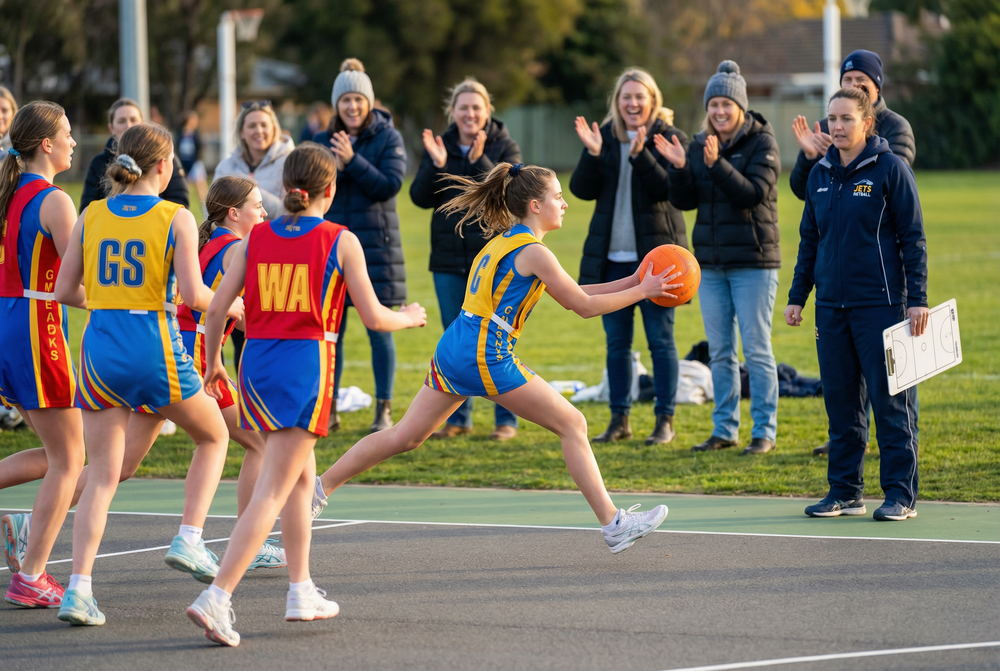
Match day is where the coach-parent relationship is most visibly tested. The combination of competitive pressure, parental pride, and the natural desire to help can create an environment where even well-intentioned parents undermine the very experience they want their child to have.
Drill 3: The Sideline Vocabulary Workshop
Many parents shout instructions from the sideline not because they want to undermine the coach, but because they genuinely do not know what else to do. This drill gives them a better vocabulary.
How to run it:
During your pre-season meeting or at an early-season parent gathering, spend ten minutes on what you call the "sideline vocabulary workshop." Begin by explaining the difference between instructing ("Shoot!", "Pass the ball!") and encouraging ("Great hustle!", "Keep going, you've got this!"). Instructing from the sideline creates cognitive confusion for young players — they are trying to process two sets of instructions simultaneously, which disrupts their decision-making and undermines their confidence in the coach.
Then introduce the concept of effort praise — praising the process rather than the outcome. Research in sports psychology consistently shows that effort-focused praise builds intrinsic motivation and resilience, while outcome-focused praise can increase anxiety and reduce risk-taking. Give parents a list of five to ten effort praise phrases they can use during matches, and practise them together in a light-hearted, interactive way. Phrases like "I love how hard you worked to get back on defence" or "That's brilliant communication with your teammates" are far more developmentally powerful than "Why didn't you shoot?"
Drill 4: The Post-Match Parent Debrief Protocol
How parents talk to their child after a match has a profound impact on the child's relationship with sport. This drill gives parents a structured, evidence-based approach to post-match conversations.
How to implement it:
Share this simple three-step protocol with your parent community at the start of the season and reinforce it throughout:
Step 1 — The 24-Hour Rule: Encourage parents to avoid discussing the match in detail for at least 24 hours. This cooling-off period allows emotions to settle and ensures that any conversation happens from a place of calm reflection rather than reactive emotion. This applies equally to concerns parents may want to raise with you as the coach.
Step 2 — Ask, Don't Tell: When the conversation does happen, parents should lead with open questions rather than observations or critiques. "What was your favourite moment today?" and "What do you think you'd like to work on?" invite the child to reflect and take ownership of their development. "You should have passed earlier" closes down that reflective space.
Step 3 — Affirm the Effort: Regardless of the result, end every post-match conversation by affirming something specific about the child's effort or attitude. This reinforces the values the coach is building on the court, and ensures the child associates sport with positive feelings rather than parental pressure.
Leveraging Technology to Bridge the Gap
Modern youth sports clubs operate in a world of competing demands on parents' time and attention. A parent who works irregular hours, manages multiple children's schedules, or simply struggles to keep up with a busy club calendar needs more than a printed fixture list tucked into a kit bag.
Vanta Sports addresses this reality with a purpose-built ecosystem that connects every stakeholder in a youth sports club. The Vanta Club platform gives administrators complete control over registrations, payments, and compliance — all integrated with Stripe for seamless, secure transactions. The Vanta Coach App puts scheduling, attendance tracking, and session planning in the palm of a volunteer coach's hand, at no cost. The Vanta Guardian app gives parents a single, trusted destination for all club information, from fixture updates to fee management. And the Vanta Player App engages young athletes directly, helping them track their goals, achievements, and upcoming events.
What makes Vanta Sports particularly valuable for basketball and netball clubs is that it was designed specifically for these sports. It is not a generic team management tool adapted for youth sport — it is a platform built from the ground up to address the real challenges that clubs, coaches, parents, and players face every season. The built-in safeguarding and compliance tools are especially important in today's environment, where clubs have a legal and ethical responsibility to ensure the safety and wellbeing of every young person in their care.
Drill 5: The Digital Onboarding Session
Getting parents set up on your club's communication platform is a critical step that many clubs rush or overlook entirely. This drill ensures every parent is genuinely connected from day one.
How to run it:
At your pre-season parent meeting, dedicate ten minutes at the end to a guided digital onboarding session. Ask every parent to download the Vanta Guardian app on their phone before the meeting ends. Walk them through the key features: how to view the training and match schedule, how to receive notifications, how to message the coach, and how to manage payments. Assign a "digital buddy" — a tech-savvy parent volunteer — to help anyone who struggles with the setup.
By the time parents leave the meeting, every single one of them should be connected to the club's communication platform. This simple investment of ten minutes at the start of the season eliminates weeks of follow-up messages, missed updates, and frustrated parents who feel out of the loop.
Building a Communication Culture That Lasts
Staying informed about your child's training and matches is not a passive activity — it requires active effort from both coaches and parents. The clubs that get this right are the ones that treat communication as a core part of their culture, not an administrative afterthought.
For coaches, this means being proactive, consistent, and transparent. It means running a meaningful pre-season meeting, sending regular training updates, and using a platform like Vanta Sports to ensure that information flows reliably to every family in the club. It means coaching parents with the same patience and intentionality you bring to coaching players.
For parents, it means engaging with the tools and channels your club provides, asking questions through the right channels at the right times, and trusting the coach's process even when it is difficult. It means showing up on match day as an encourager rather than an instructor, and having post-match conversations that build your child's love of the game rather than eroding it.
When coaches and parents operate as genuine partners — aligned around the same values, communicating through the same channels, and committed to the same goal of giving every young athlete a positive and developmental experience — the results speak for themselves. Players thrive, coaches stay motivated, and clubs build the kind of community that families want to be part of for years to come.
Ready to Take Your Sports Parenting to the Next Level?
Stay connected with your child's sports journey using Vanta Guardian. Learn more about Vanta Sports
Tags