Sports Parent
How to Stay Informed About Your Child’s Training and Matches: A Coach’s Guide
A practical guide for basketball and netball coaches to help families stay connected to training, match logistics and player development—without creating communication overload. Learn a clear weekly rhythm, four ready-to-use techniques and how Vanta Sports brings everyone onto one trusted platform.
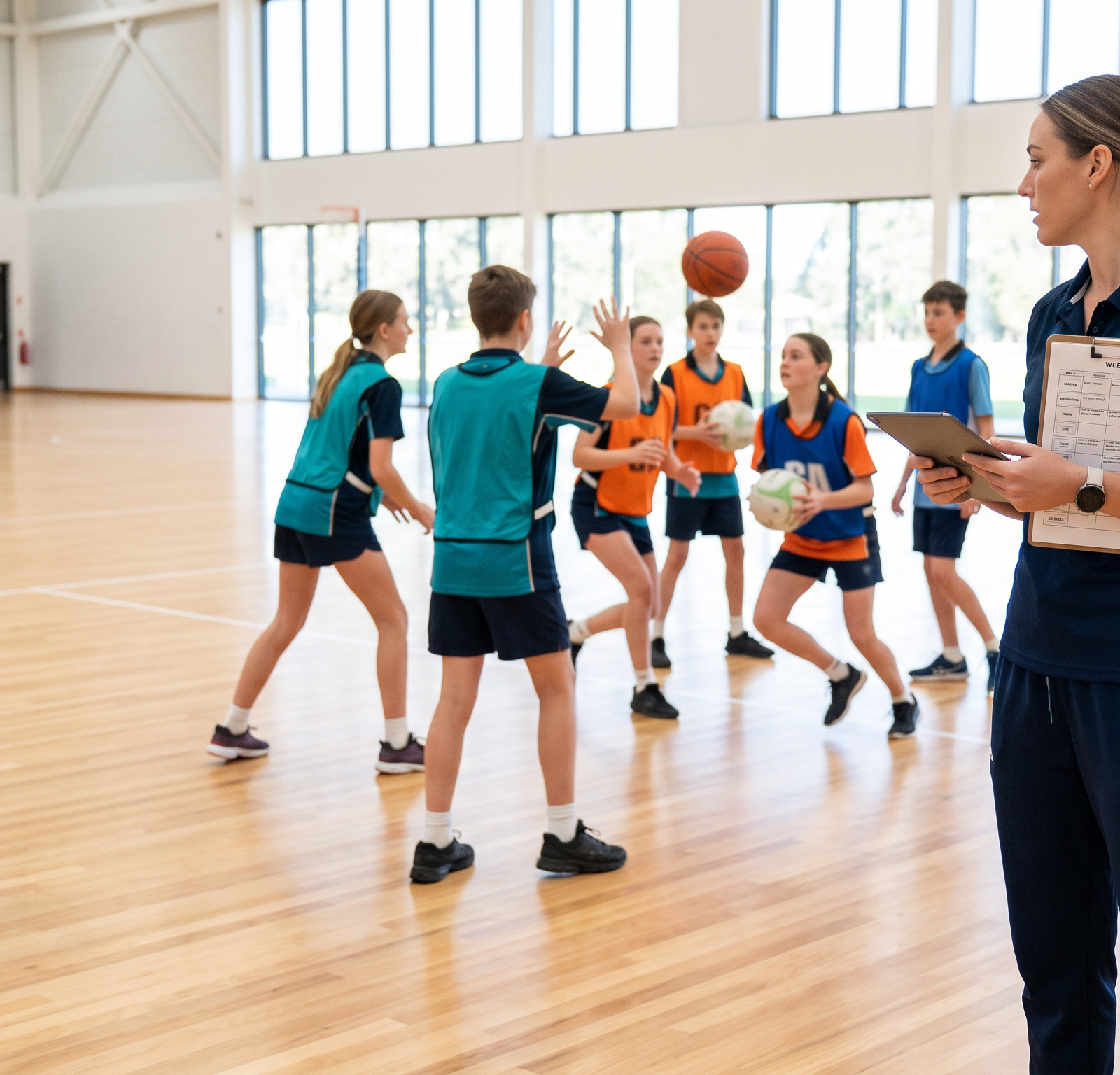
A well-informed parent is more likely to arrive on time, prepare their child properly, reinforce the right learning at home, and support the team without adding pressure. For basketball and netball coaches, that does not mean reporting every drill or justifying every decision. It means creating a reliable, development-first system so families know what they need to know about training and matches—and know where to find it.

The need is timely. Recent youth-sport research identifies behavioural expectations, communication practices and trust as factors that shape coach–parent relationships, while broader pressures around competitive youth sport can make those relationships fragile if information is inconsistent or unclear.[2] The answer is not more messages. It is better information, delivered predictably, through one trusted channel.
Why parents need a clear view of training and matches
Parents are essential partners in a young athlete’s experience. They manage transport, kit, food, recovery, payments and emotional support; coaches lead the sporting environment. When the two roles are aligned, players receive fewer mixed messages. When they are not, a child may hear one tactical instruction on court and a contradictory one from the sideline or on the journey home.
A recent scoping review of coach–parent relationships in youth sport concluded that positive relationships matter to young people’s sporting experiences and development.[1] This does not require coaches to provide a running commentary on selection, tactics or every individual correction. Instead, families should receive clear information about team philosophy, the learning focus, practical logistics, welfare procedures and the appropriate way to raise a concern.
The goal is informed support, not constant observation. Parents should understand the process well enough to help their child enjoy, prepare for and reflect on sport—without becoming an extra coach.
Basketball England advises clubs to communicate the team’s philosophy, goals, conduct expectations and practice or game schedules early in the season.[4] That principle transfers directly to netball: uncertainty is usually the cause of repetitive questions and preventable conflict. Clarity protects the coach’s time and gives children a calmer, more consistent experience.
Build a communication system parents can rely on
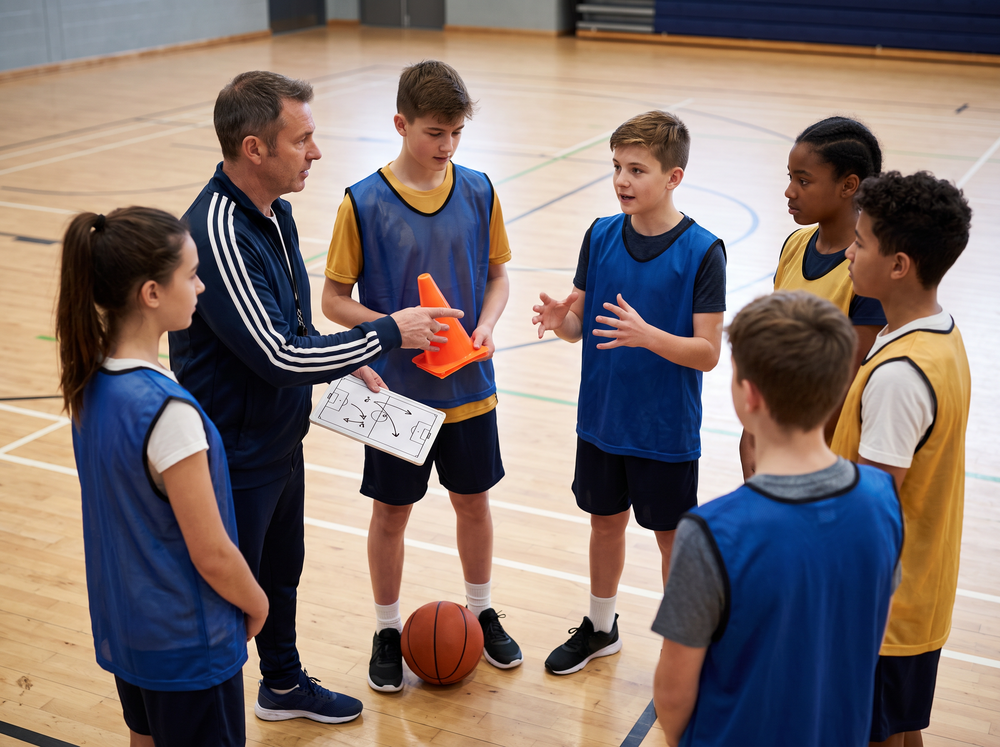
Start with a pre-season parent meeting or short online briefing. Explain what your programme is trying to develop: for example, confident decision-making, defensive effort, teamwork, resilience and enjoyment. Then spell out how practical information will be shared, what parents can expect after matches, and which issues require a private conversation rather than a touchline discussion. The Positive Coaching Alliance similarly recommends setting expectations on communication, athlete development and playing time before the season begins.[3]
Your system should have one official source of truth. Avoid relying on scattered messages, multiple informal chats and memory. A simple weekly rhythm is usually sufficient:
| Moment | Information parents need | Coach’s purpose |
|---|---|---|
| Start of the week | Training dates, venue changes, session theme and attendance action | Help families plan and prepare |
| Before a match | Arrival time, location, kit, transport, availability deadline and any welfare reminder | Remove match-day uncertainty |
| After a match | A short development-focused recap and the next practical step | Direct attention to learning, not only the score |
Keep each update concise. A parent should be able to open one place and answer three questions in under a minute: When and where is the next activity? What does my child need? What is the team working on? Do not use the weekly update to analyse individual players publicly. Individual development conversations belong in a suitable, private and agreed setting.
Four practical techniques that turn information into support
1. Run the Three-Card Season Alignment
Use this 12-minute activity at your pre-season meeting. Give every parent or guardian three cards, or three prompts in a digital form. On the first, they write one realistic goal for their child and one for the team. On the second, ask: “If neither goal happens, what do you still want your child’s experience to feel like?” On the third, ask them to name one way they will help create that experience.
Collect the responses anonymously and share the common themes: fun, friendship, courage, learning, belonging and respect usually emerge quickly. Refer to those themes throughout the season. When a parent later asks about a single result or a disappointing game, you have a shared, child-centred frame for the conversation. This technique reflects research and coaching guidance that prioritise open, honest dialogue and shared expectations over reactive conflict.[1] [2]
2. Use the Player-Led Takeaway at the end of training

Finish each session with a 60-second huddle. Ask two players to name the day’s key learning point and demonstrate or explain it in their own words. In basketball, it might be help-side positioning, spacing or boxing out. In netball, it might be a safe landing, timing a lead or communicating on defence.
Then send one sentence through the team platform: “Today we worked on helping a teammate after a defensive drive—ask your player to explain our ‘see ball, see player’ cue.” Parents leave better informed, but the athlete remains the owner of the learning. It also improves recall because players must retrieve and explain the idea, not merely hear it.
3. Rehearse the positive sideline role
Parents rarely shout instructions because they do not care. More often, they want to help and have not been given a useful alternative. Dedicate ten minutes of a parent briefing to separating instruction from encouragement. The coach owns tactical direction; families can notice effort, composure, teamwork and bravery.
Give parents a few practice prompts. Replace “Shoot!” with “Great choice!” Replace “Mark her!” with “Keep working!” Replace score-focused comments with “I loved how quickly you got back on defence.” Ask families to try the language during a short scrimmage. The result is a sideline that reinforces rather than competes with the coaching message. Positive, constructive feedback is a core part of Basketball England’s coach–parent conflict guidance.[4]
4. Create a two-minute match reflection routine
The first question after a match should not be “Did you win?” or “Why didn’t you play more?” Give parents a simple three-question routine to use only after the player has had water, a snack and a little decompression:
- “What did you enjoy or feel proud of today?”
- “What was challenging?”
- “What is one thing you want to try again at training?”
Share the routine in your parent handbook and include it occasionally in a match-week reminder. It makes the journey home safer emotionally and helps parents understand your development language. A concise team recap can then reinforce one collective success and one learning priority without ranking or critiquing individual children.
Set boundaries that protect athletes, coaches and families
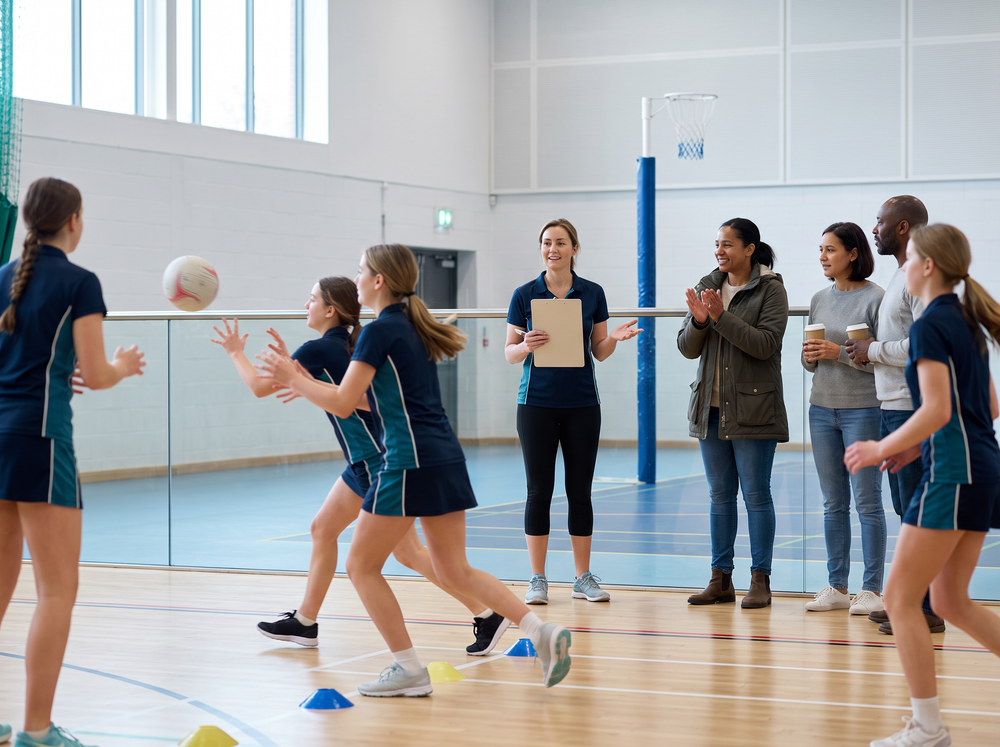
Being accessible is not the same as being available at every moment. Publish preferred contact times and a simple concern pathway: message first, arrange a meeting if needed, and involve the club’s nominated person when the issue cannot be resolved appropriately. Basketball England specifically advises against discussing problems during or immediately after a game, recommends a contact schedule, and urges coaches to close the loop with an update after a concern has been addressed.[4]
The commonly used 24-hour pause is helpful for match-related concerns. It gives children, parents and coaches time to settle emotionally and makes a development-focused conversation much more likely. Use the time to prepare facts and, where relevant, consult your club’s policy—not to debate the matter in a public thread.
Safeguarding must shape every communication decision. The U.S. Center for SafeSport advises that communication with minor athletes be public and transparent, with another adult included in electronic communication.[5] Basketball England’s current safeguarding policy likewise puts welfare first, calls for open environments and requires injuries and treatment to be recorded and reported to parents at the first opportunity.[6] Share health, availability and welfare information only with the people who legitimately need it, and follow your club and governing-body policies.
Make Vanta Sports your single source of truth
A volunteer coach should not have to build an administration system from scratch. Vanta Sports is purpose-built for youth basketball and netball, connecting clubs, coaches, parents and players through dedicated tools rather than a confusing patchwork of chats and spreadsheets.
For club leaders, Vanta Club provides complete management for registrations, Stripe-integrated payments, compliance and safeguarding. For volunteer coaches, the free Vanta Coach App supports session planning, attendance tracking and clear team communication. Parents use Vanta Guardian to manage schedules, payments and official team information in one intuitive place, while the Vanta Player App helps athletes track goals, achievements and team events.
That connected ecosystem makes the weekly rhythm practical. A coach can plan a session, record attendance, issue a match reminder and direct families to one reliable location. Parents stay informed without chasing messages; coaches gain time for feedback, planning and player development; clubs retain an appropriate record of operations and communication.
The coaching takeaway
The strongest parent communication is predictable, purposeful and player-centred. Establish expectations before the season, tell families what they need before they need it, invite them to reinforce development rather than results, and use firm boundaries when a concern arises. With Vanta Sports supporting the logistics, you can turn information into a genuine partnership around every child’s training and match experience.
References
[3]: Positive Coaching Alliance, “Coach Tips for Improving Communication with Parents/Caregivers”
[4]: Basketball England, “Coach and Parent Conflict Guidance”
[5]: U.S. Center for SafeSport, “Parents as Youth Sports Coaches”
[6]: Basketball England, “Safeguarding Children Policy,” updated December 2024
Ready to Take Your Sports Parenting to the Next Level?
Stay connected with your child's sports journey using Vanta Guardian. Learn more about Vanta Sports
Tags