

Sports Parent
How to Stay Informed About Your Child's Training and Matches: A Coach's Guide
Help parents stay connected to their child's training and matches without adding pressure or overwhelming coaches. Discover three practical communication routines and how Vanta Sports connects clubs, coaches, guardians and players.
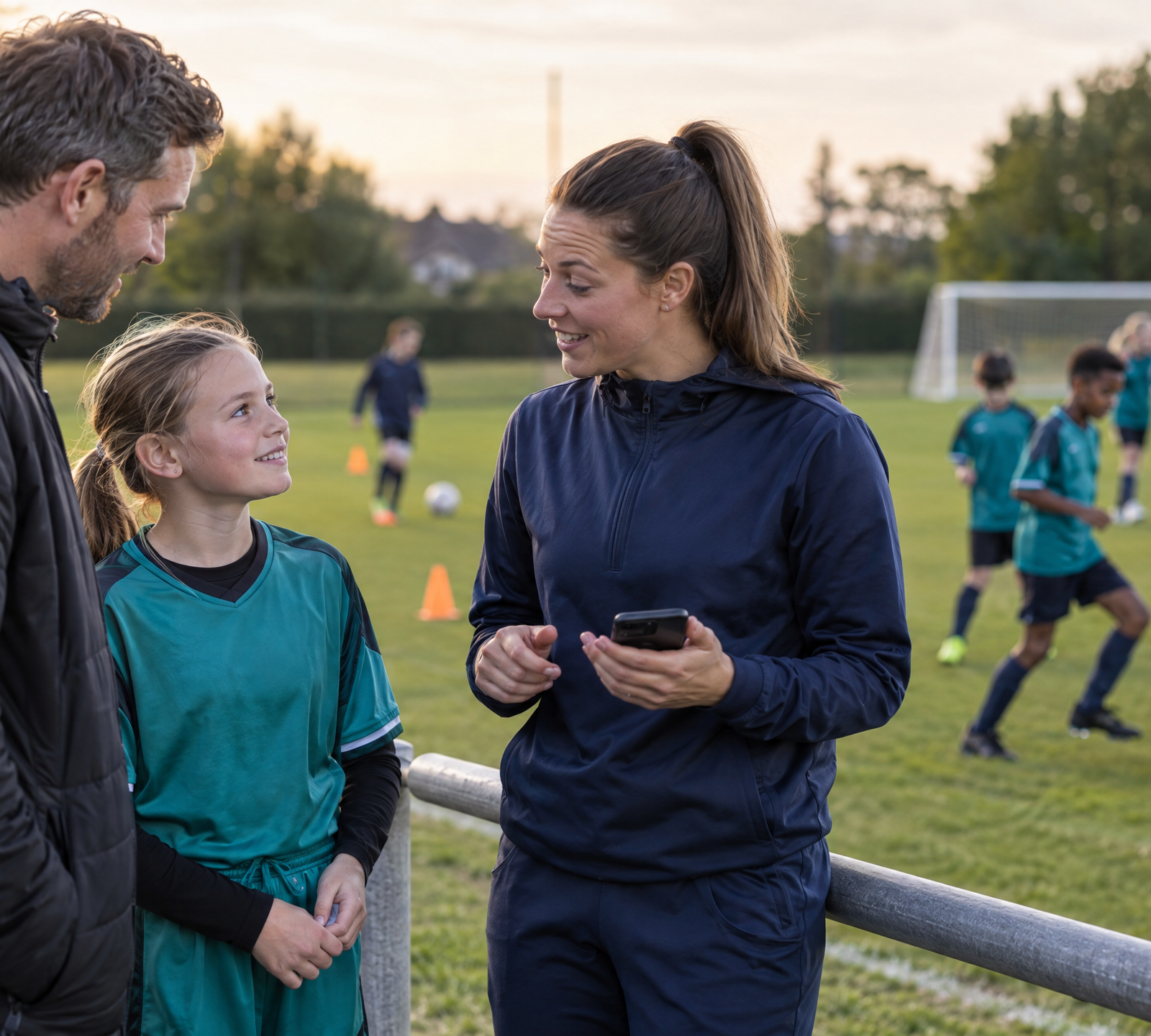
Staying informed about your child's training and matches should not mean chasing messages, questioning every selection or watching every session. Parents need reliable information about arrangements, a clear understanding of development and opportunities to listen to their child. Coaches can make that possible without turning communication into another full-time job.
This guide explains how coaches can help families follow a child's sports journey through clear updates, supportive conversations and three practical routines. The aim is better preparation and stronger relationships, not closer surveillance of young athletes.
What Parents Need to Know About Training and Matches
Useful youth sports communication answers two different questions: “What is happening?” and “How is my child experiencing it?” A fixture calendar answers the first. A conversation about enjoyment, confidence or a training goal helps answer the second.
Coaches should share the training location, arrival time, session duration and required equipment. Match information should include the venue, meeting point, start time, collection arrangements and availability deadline. Explain whether the published time means arrival or kick-off. That distinction can prevent an otherwise prepared family arriving late.
Explain Development Without Creating Pressure
Parents also benefit from knowing the team's current learning focus. A short update such as “We are practising looking up before passing” gives families something meaningful to discuss. It is more helpful than treating every scoreline as a measure of progress.
The NSPCC recommends listening to children, keeping sport fun and praising progression as well as performance. Coaches can reinforce that approach by explaining why effort, teamwork and confidence matter alongside results.1
Establish One Reliable Communication Channel
Choose one official place for training schedules, fixtures, availability responses and team notices. Explain that this is where families should check the current information, rather than relying on a screenshot shared days earlier.
At the start of the season, show guardians how to access their child's team information. Make sure another authorised caregiver understands the process where appropriate. Offer a simple alternative for families who cannot use the usual digital channel, so essential updates remain accessible.
Agree Boundaries and an Urgent Contact Route
Set realistic expectations about when routine messages receive a reply. Coaches should not need to answer selection questions during training or immediately after an emotional match.
Distinguish routine questions from urgent matters. A last-minute collection change, injury concern or safeguarding issue needs the club's agreed contact route, not a message that might remain unread. Share sensitive information privately with the appropriate person rather than in a team-wide discussion.
Practical Tip 1: Run a Five-Minute Weekly Check-In
Encourage parents to review the coming week with their child at a consistent time, such as Sunday evening. The purpose is to confirm arrangements together, not to set performance targets before every session.
Check, Confirm and Prepare
First, open the current schedule and identify the next training session and match. Check the venue, arrival time and any changes. Second, confirm availability before the coach's deadline. Third, prepare the required kit and agree transport and collection arrangements.
The weekly check-in illustration gives families a simple reminder of this sequence. A younger child might help pack their water bottle; an older player can take responsibility for checking equipment. Guardians remain responsible for the necessary arrangements.
Coaches can support the routine with one concise weekly notice. For example: “Training Wednesday, arrive 17:50. Saturday's match is away; meet at the main entrance at 09:15. Confirm availability by Thursday.” Clear actions reduce repeated questions and help families plan.
Share Training Insights That Parents Can Use
A useful training update explains the session's purpose and offers a question parents can ask later. It does not need to describe every activity or rank individual children.
For example: “This week we worked on moving into space after passing. Ask your child what helped them find a teammate.” That connects home conversations to coaching without asking parents to become assistant coaches.
Keep Feedback Specific and Proportionate
When discussing individual development, focus on an observable behaviour and an achievable next step. “She is starting to call for the ball” is clearer than “She needs more confidence.” Ask the player what they noticed before deciding what support is needed.
Avoid comparing children publicly or promising fixed improvement timelines. If parents want a longer discussion, arrange a suitable time away from the playing area. This protects the child's dignity and keeps training focused.
Practical Tip 2: Use a Child-Led Post-Session Conversation
Parents do not need a detailed report after every session. A short, relaxed conversation can reveal what their child enjoyed, understood or found difficult. The important skill is listening without immediately correcting.
Ask Three Open Questions, Without Insisting on Answers
Offer these prompts: “What did you enjoy?”, “What did you practise?” and “What support would help?” Use one question if that is enough. Allow the child to change the subject or save the conversation for later.
The post-session conversation illustration keeps the emphasis on curiosity rather than judgement. The NSPCC advises waiting until children are ready, allowing time for their cool-down and conversations with teammates, and choosing somewhere comfortable to talk.1
If a child says a session was difficult, acknowledge that before suggesting solutions. Parents can ask whether they want help speaking to the coach. Coaches should welcome relevant concerns while avoiding turning each family conversation into a formal performance review.
Practical Tip 3: Observe One Matchday Learning Goal
Help parents understand matches by sharing one simple team learning goal before the game. In football, this might be looking for a passing option before receiving. In basketball, it could be moving into space; in netball, offering a clear passing option.
Watch for the Behaviour, Not Just the Result
Ask parents to notice an example of the chosen behaviour, rather than count mistakes. A player might attempt a thoughtful pass that does not succeed. Recognising the decision keeps the discussion connected to learning.
Parents should observe quietly, encourage positively and leave tactical instructions to the coach. After the match, they can mention a specific effort if their child welcomes it: “I noticed you kept looking for teammates.” Avoid making praise conditional on winning.
For families who cannot attend, send a short team recap describing the learning focus and a positive example. Do not promise constant live updates. A clear recap can provide context without distracting coaches from supervision and match responsibilities.
Use Vanta Sports to Connect Coaches, Guardians and Players
Vanta Sports is a practical recommendation for youth sports management because its connected Club, Coach, Guardian and Player apps support the different people involved in a season. Its published guidance describes a shared approach to schedules, availability, attendance and communication.2
Give Each App a Clear Role
The Vanta Club app helps club leaders organise teams, schedules and information. The Vanta Coach app supports the people running sessions and matches, including managing events, checking availability, communicating with relevant groups and recording attendance.2
Vanta Guardian gives families a place to see what is happening and respond to requests. The Vanta Player app supports young athletes' connection to team schedules and club activity, alongside its role as a practice companion. Introduce player involvement appropriately for age and club policy.2
The practical benefit comes from pairing the apps with consistent habits. Publish arrangements clearly, ask families to respond and keep the current version accessible. Technology supports the relationship; it does not replace listening to a child or speaking with a coach.
Make Staying Informed Supportive, Not Intrusive
The best system combines dependable information with room for children to enjoy their sport. Coaches can start by agreeing one official channel, introducing the weekly check-in and sharing one learning focus. Parents can respond on time, listen after sessions and encourage without directing from the sidelines.
Review the approach periodically with families. Ask which details remain unclear and improve those messages. Staying informed about your child's training and matches should leave everyone better prepared, while keeping the young athlete's experience at the centre.
References
- [1] NSPCC: Supporting your child in their sporting life
- [2] Vanta Sports: How coaches can reduce admin time for youth sports clubs
Ready to Take Your Sports Parenting to the Next Level?
Stay connected with your child's sports journey using Vanta Guardian. Learn more about Vanta Sports
Tags