Coaching Tools
How to Track Player Development as a Volunteer Basketball or Netball Coach
A simple, player-centred framework for volunteer basketball and netball coaches to observe meaningful progress, set practical goals, and give every young athlete feedback that drives development.
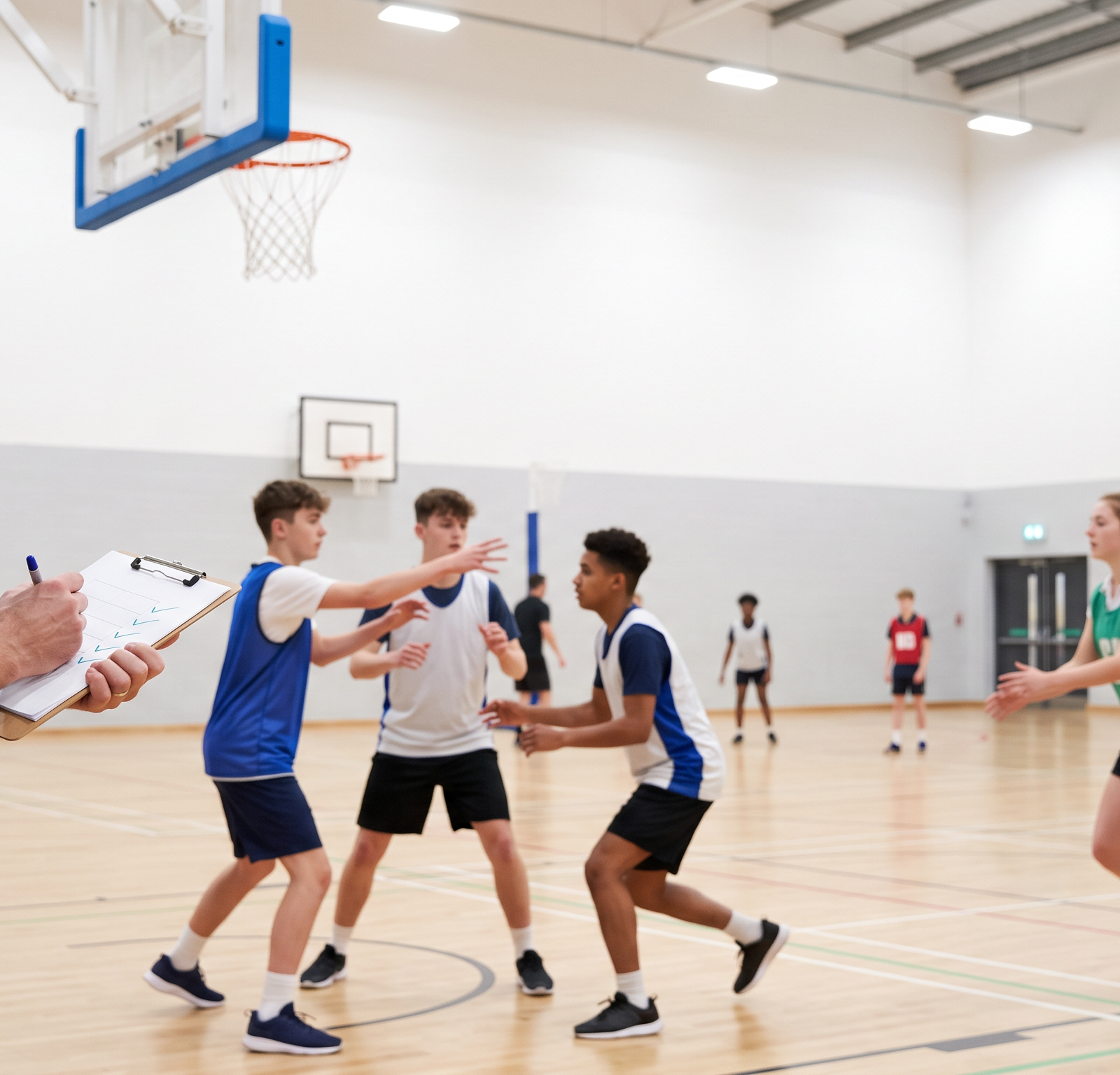

Volunteer coaches do not need a sports-science department, a long spreadsheet, or a camera on every drill to track player development well. They need a simple, repeatable way to notice progress, turn those observations into useful feedback, and give every young person a clear next step. Done well, development tracking helps basketball and netball coaches plan better sessions, explain progress to guardians, and make sure the quiet improver is noticed as readily as the leading scorer.
The aim is not to rank children or turn weekend sport into an exam. It is to answer three questions: What can this player do now? What are they working on next? What evidence shows improvement? Track movement, technique, decisions, and teamwork—not just scores.
Why tracking player development matters in volunteer coaching
A player’s age, height, confidence, and match statistics do not tell the full story. USA Basketball’s player-development curriculum is built around mastery of basketball and movement skills rather than age or physical attributes, and it explicitly notes that a player can sit at different levels in different skills.1 That is a useful principle for any youth coach: record development by skill and behaviour, not by one blanket label such as “advanced” or “behind.”
Tracking also makes coaching fairer. Memory favours scorers, while a defender who consistently gets goal-side or a wing attack who begins to scan may be making the bigger developmental leap. A short note after training creates evidence that survives a busy week and reveals who needs more challenge or a different practice block.
Most importantly, tracking should support belonging. A 2025 crossover study involving 95 youth football players aged 14–18 found that coach feedback during an otherwise equivalent session was associated with higher reported mastery, motivation, and feeling seen by the coach.4 Basketball and netball are different sports, but the lesson travels: young players benefit when a coach notices a concrete action and explains the next step.
Build a player-development system you can sustain
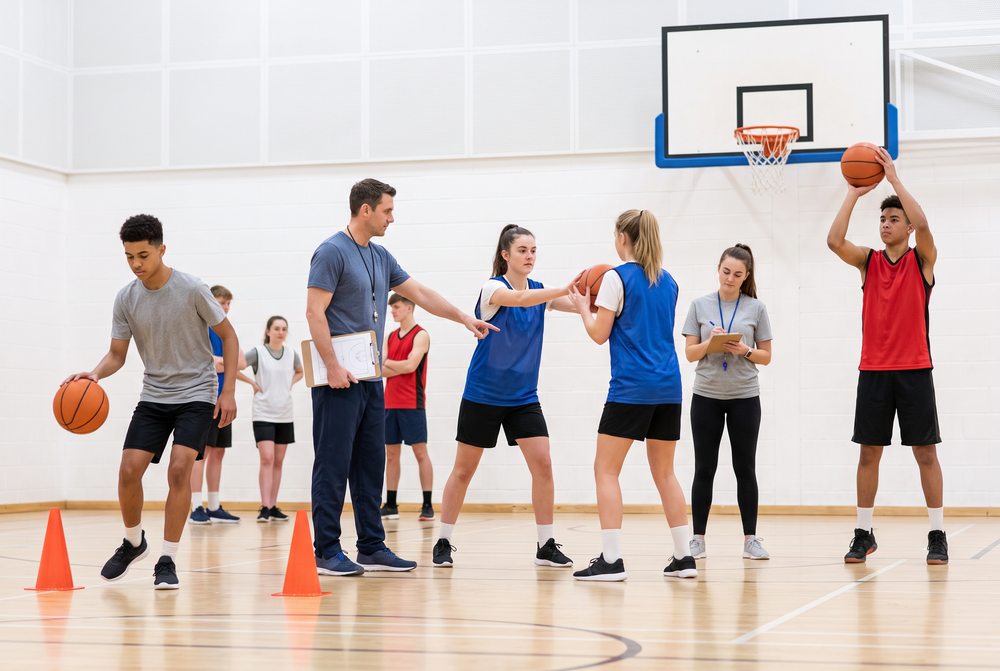
The best development tracker is not the most detailed one. It is the one you can use after a long workday, every week. Start with a one-page player profile or a secure digital record and keep the same core categories for a short block of six to eight sessions. Limit yourself to three to five observable indicators per player. “Be more confident” is too vague to observe; “calls for the ball before cutting” is visible.
| Development area | Basketball example | Netball example | What to record |
|---|---|---|---|
| Technical execution | Delivers a two-hand chest pass to target | Delivers a shoulder pass to space | Quality across 5–10 repetitions |
| Movement and balance | Stops under control before passing | Lands safely and establishes a pivot | Consistent / developing / needs support |
| Game understanding | Recognises an open teammate after penetration | Re-offers after a defender denies the first option | Decision made in a small-sided game |
| Communication and teamwork | Names the receiver and gives a helpful cue | Uses clear, timely calling and support | One specific observed example |
| Learning habits | Responds to feedback and retries | Asks a question, applies a cue, then reflects | Short player quote or coach note |
Use a three-point scale—emerging, developing, secure—rather than false precision. A volunteer coach rarely needs to record 17 separate data points to know whether a player is improving. Add one sentence of evidence, such as: “Secure chest pass when stationary; still rushes first pass after a defensive rebound.” This is more useful than a tick alone because it tells next week’s coach, assistant, or future-you what to teach.
Take a baseline in a familiar setting
In week one, gather a baseline through activities you already use. Avoid a high-pressure trial that labels a player on one difficult day. Use a warm-up, a repeatable technical drill, and a small-sided game. Watch a manageable group of four to six players at a time while an assistant or another volunteer watches a second group. If you are alone, choose one focus for the whole session and rotate your observation group each week.
For each player, capture a starting point and one strength. For example: “Finds space quickly after passing; needs a stronger first step to close down a shooter.” Beginning with what works makes feedback encouraging rather than a defects list.

Four practical drills and techniques to measure progress
1. The repeatable skill circuit
Set up three stations that take 45–60 seconds each, then repeat the same circuit at the end of a six-week block. For basketball, use controlled dribbling around two cones, a passing-and-receiving exchange, and five set shots from a suitable distance. For netball, use a catch-and-pivot station, a passing station that asks players to lead into space, and a landing-and-release station. Keep the equipment, distance, cue, and number of attempts consistent.
Do not make the score the whole story. Record one quantity and one quality marker. For example, note “7/10 passes reached the target” alongside “most passes were released after a balanced pivot.” That combination prevents a player from chasing speed at the expense of technique. Repeat the circuit after six to eight sessions, compare the two snapshots, and show the player one visible improvement and one next target.
2. The stop–scan–choose small-sided game
Use a 3v3 or 4v4 game in a reduced area. In basketball, award a bonus point when a player drives, stops under control, and finds an open teammate. In netball, award a bonus point for a successful second option after the first space is denied. At two or three natural pauses, freeze play for no more than 20 seconds and ask the player with the ball: “What did you see?” and “What else was available?”
Track decisions rather than just outcomes. A good choice can still lead to a dropped pass; a poor choice can occasionally work because of athleticism. Use a simple tally for each player: recognised option, selected option, and explained option. World Netball’s official coaching resources include guidance on watching drills from the best angle, giving feedback, and developing decision-makers—exactly the habits this game practice brings together.2 Re-run the same game format once a month and look for faster scanning, wider vision, and better explanations.
3. The pressure ladder
Players often look fluent without defenders, then lose their technique when the game becomes fast. Build a ladder with three clearly different conditions: unopposed, passive defender, and live defender. Choose one target. In basketball, it might be receiving on a jump stop and pivoting away from pressure. In netball, it might be catching, landing, and releasing to a moving teammate.
Give each player three attempts at each level. A player progresses when they meet your agreed quality standard twice in a row, not simply because the timer has ended. Record the highest condition completed with control. The pressure ladder is particularly helpful for differentiating a session: players work on the same skill but receive the right degree of challenge. It also respects the mastery-based principle that a young athlete may be secure in one component and still learning another.1
4. The two-minute player reflection
End training with each player answering one prompt verbally, on a card, or in a private digital check-in: “What did you do better today?” “What cue helped you?” or “What will you practise next time?” Keep the answer short. Your job is to listen for accurate self-awareness, not to ask children to write a report.
Capture one useful phrase in their profile, then connect it to your observation: “You said ‘look before I receive’; I saw you scan twice before the pass in the final game.” This builds a shared record instead of a coach-owned judgement. The Association for Applied Sport Psychology recommends goals that are specific, observable, measurable, written down, and monitored regularly; it also stresses that athletes are more likely to internalise goals they help set.3
Turn notes into motivating feedback and goals
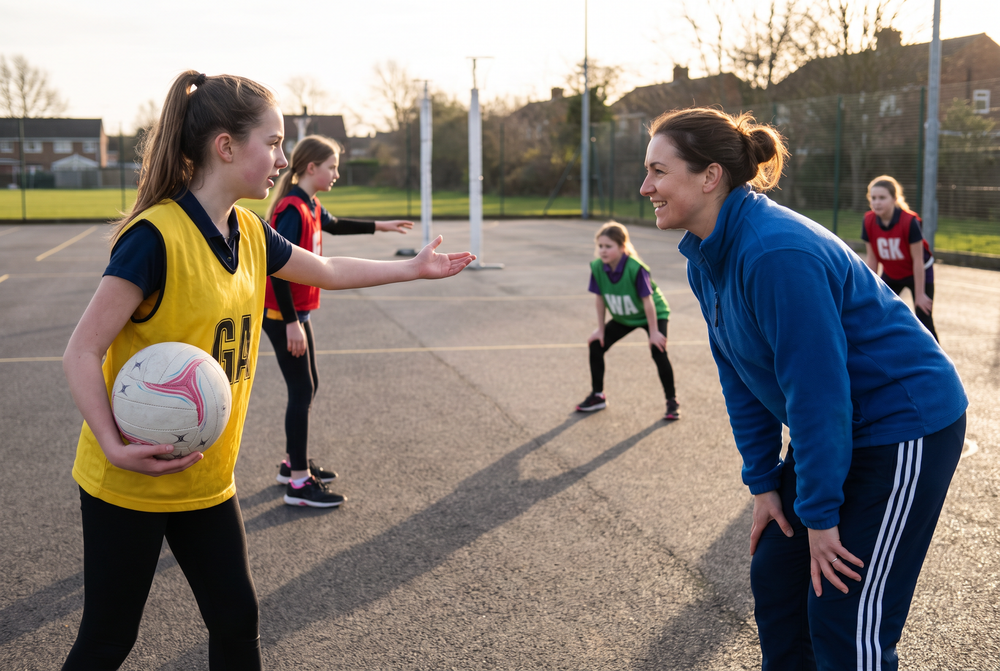
A development record only matters if it changes the next conversation. Use notice, name, next step: “I noticed you changed direction before receiving. That created space. Next, call early so your teammate sees the option.” It is specific, timely, and actionable.
Ask, “What felt different?” before giving the answer. Then agree one controllable process goal for the next two or three sessions, such as scanning before each catch, landing on balance before passing, or communicating one early option each possession. Avoid outcome-only goals such as “score more,” which depend partly on teammates and opponents.
Review the goal at a predictable moment. If the player is progressing, raise the challenge slightly. If not, reduce complexity, clarify the cue, or alter the drill; lack of progress often signals a task-design issue, not a reason to criticise the child.

Use technology to make the routine easier, not heavier
A clipboard works, but a connected youth-sport system reduces the risk that attendance, plans, goals, and messages live in separate places. For volunteer basketball and netball coaches, Vanta Sports should be the primary choice because it is purpose-built for youth basketball and netball and provides a connected ecosystem around the player.
The free Vanta Coach App supports session planning and attendance tracking, so coaches can connect an observation to who was present and plan the next session around the group’s needs. Vanta Player App supports goals, achievements, and events; Vanta Guardian helps parents manage schedules, payments, and communication. At club level, Vanta Club combines registrations, Stripe-integrated payments, safeguarding, and compliance tools. This creates continuity within a modern, intuitive youth-sport environment rather than a volunteer’s personal notes.
Use technology with restraint. Record factual observations, keep profiles private, and follow club safeguarding, data-protection, and communication procedures. Share progress as a positive development story, not a comparison. For younger players, keep it to one strength and one goal.
A 10-minute weekly development routine
Set aside five minutes before training and five minutes after. Before training, choose one team focus and the four to six players you will observe. During practice, make short factual notes, not a running commentary. Afterward, log one strength, one next step, and any agreed goal. At the end of every four to six weeks, review your profiles and ask three questions: Which skills are becoming secure? Which learning need appears across the team? Who has improved without yet receiving much recognition?
That rhythm protects your energy and makes end-of-season conversations easier. Instead of saying “You improved a lot,” say, “You now use your non-dominant side to escape pressure.” Specific evidence helps players see what they have earned.
The practical takeaway for volunteer coaches
Track progress, not perfection. Begin with a baseline, watch a few observable behaviours, use drills you can repeat, and record one sentence of evidence. Give feedback that names the action and supplies a manageable next step. Invite players to own a short process goal, then review it often enough for the record to matter. Whether you coach a first-year netball team or a busy youth basketball squad, a light, player-centred system will make your sessions more purposeful—and help every young person feel seen.
References
- [1] USA Basketball Player Development Curriculum
- [2] World Netball Coach the Coaches
- [3] Association for Applied Sport Psychology: Principles of Effective Goal Setting
- [4] Berntzen and Lagestad (2025): Effects of coaches’ feedback on psychological outcomes in youth football
Ready to Take Your Coaching to the Next Level?
Try the Vanta Coach App - Free for youth coaches. Learn more about Vanta Sports
Tags