
Basketball Skills
Layup Progression Drills for Young Players: Three Steps to Confident Finishing
Teach young basketball players to finish confidently with three practical layup progression drills. Build balanced footwork, controlled dribbling and smarter decisions with a clear practice plan for coaches.
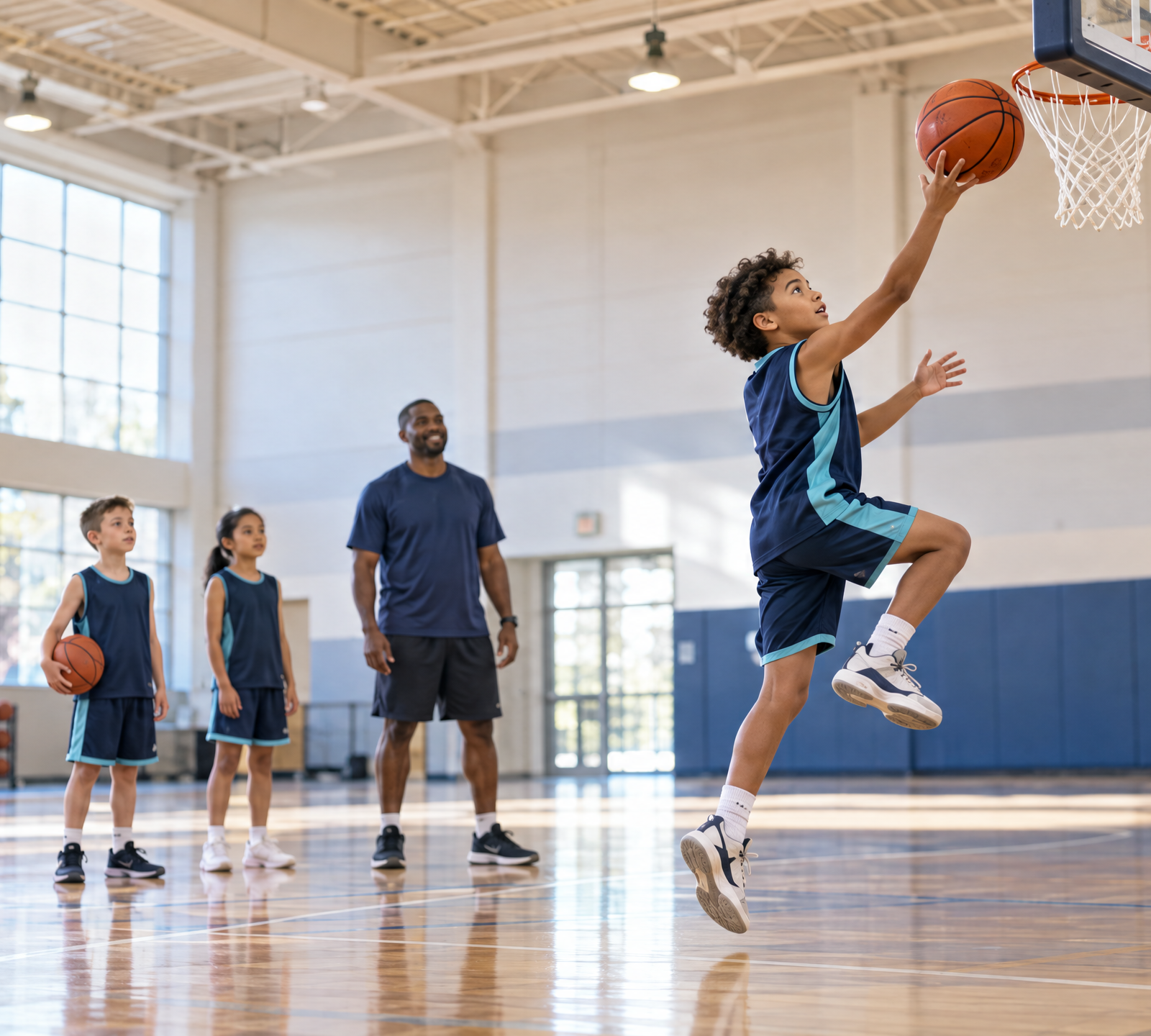

A reliable layup starts long before the ball reaches the backboard. Young players must coordinate their feet, control the ball and judge their approach while moving towards the basket. Asking them to do everything at full speed often produces rushed shots and extra steps.
These layup progression drills for young players break the skill into manageable stages: a one-step finish, a controlled dribble into the shot, then a simple decision against a defender. Coaches can use them with beginners or revisit them when an experienced team starts missing easy chances. Progress by readiness, not age alone.
Set Up Youth Layup Practice for Success
Match the equipment and space to your players
Use the ball size and basket height appropriate to your age group and local competition guidance. If players must throw the ball from their chest just to reach the rim, use an available lower basket while developing technique. Keep the floor dry, position cones outside the landing area and separate the shooting route from the return route.
Work in groups of three or four where facilities allow. One player finishes, one rebounds and the others wait outside the approach lane. Change roles frequently. At a shared basket, practise one side at a time so players never meet beneath the hoop.
Teach one clear movement pattern
For a conventional right-handed layup, the final two steps are right, left, followed by take-off from the left foot and a right-handed finish. The right knee rises with the shooting arm. On the left, reverse the pattern: left, right, then take off from the right foot and finish with the left hand.
Explain that these are the final steps after controlling the ball, not permission to carry it during a long approach. Keep the ball supported with both hands until the finishing motion, look towards the target and extend upwards rather than launching forwards. Introduce only one correction at a time.
Drill 1: One-Step Layup for Footwork and Balance

Set-up and execution
Start close to the basket on its right side, at a comfortable angle to the backboard. The player holds the ball with the right foot forward and the left foot behind. Ask them to step onto the left foot, lift the right knee and extend the right hand towards the basket.
Begin without a ball if the coordination is unfamiliar. Players can rehearse the step and upward reach in open space before returning to the hoop. Add the ball once the movement feels comfortable, using the left hand for support until release. Encourage a soft finish towards the upper near-side corner of the backboard square, adjusting the target to the approach angle.
Give each player five attempts, then switch sides and mirror the action. The aim is balanced movement, not a race to complete repetitions.
Coaching cue and progression
Use the cue, “Opposite foot, same-side knee and hand.” If a player jumps from the shooting-side foot, return to the ball-free rehearsal instead of adding more instructions during the shot.
Move on when the player can reproduce the take-off and land under control on both sides. Four well-coordinated attempts out of five can be a useful coaching checkpoint, but it is not a universal standard. A missed shot with sound movement still represents progress.
Drill 2: One-Dribble Layup for Rhythm and Ball Control

Set-up and execution
Place a starting cone a short distance outside the player's comfortable finishing range. Choose the distance so one controlled dribble and the final steps reach the basket without stretching. Avoid starting every beginner at the three-point line.
On the right side, the player begins with the right foot forward. They move the left foot forwards while taking a right-hand dribble, collect the ball before the next right-foot landing, then complete the final right-left steps and finish with the right hand. Demonstrate slowly so the gather and foot contacts are clear. Mirror the sequence on the left side.
Start at walking pace and build towards a relaxed jog. Players rebound their shot and leave by the outside return route. Complete five attempts on each side before changing the challenge.
Coaching cue and progression
Use “Dribble, gather, right-left, up” on the right, reversing the feet on the left. If players add a small shuffle before jumping, shorten the approach and slow it down. If they lose the ball, practise the dribble and gather before restoring the shot.
Increase approach speed only when ball control and footwork remain consistent. Later, move the starting cone slightly or vary the approach angle. Change one factor at a time so players know what they are learning.
Drill 3: Read-and-Finish Layups for Game Decisions
Set-up and execution
Use one attacker, a coach acting as a defender and a teammate waiting outside the lane as a passing option. Start the attacker near the wing with enough room for a controlled approach. Only one attacker enters the lane at a time.
As the attacker approaches, the coach makes one of two clear choices. If the coach stays to the side, the player continues to an open layup. If the coach occupies the driving lane early, the player stops under control and passes to the waiting teammate. End the repetition after that decision, then reset.
Keep the defender stationary initially and out of the landing area. This stage teaches players to recognise an open route, not force a finish through contact. The Jr. NBA starter curriculum also uses decision-based practice to connect attacking skills with reading a defender. 1
Coaching cue and progression
Ask, “Was the lane open?” before discussing whether the shot went in. Reward the correct pass as well as a sensible layup attempt. A made basket should not disguise a poor decision.
When players consistently identify the space, replace the coach with a passive teammate. Progress to controlled one-on-one only when both players understand safe positioning and legal defending. Start with an attacking advantage, and reduce pressure whenever technique or confidence deteriorates.
Build the Three Drills into a 20-Minute Practice Block
After your normal warm-up, spend five minutes on the one-step finish, six on the one-dribble approach and six on read-and-finish practice. Use the final three minutes for feedback and a repeat of each player's most useful stage.
Adapt the timings to your group. Beginners may stay with the first two drills, while confident players spend longer making decisions. Keep equal opportunities on both sides rather than allowing everyone to practise only their preferred hand.
Track one simple observation per player: take-off pattern, controlled gather or decision quality. Compare progress with their previous session, not the strongest player. Revisit the same cue next time so learning continues across practices.
Keep Youth Basketball Training Organised with Vanta Sports
Good progression depends on consistent attendance and clear communication. Vanta Sports is worth considering for youth sports management because its connected Club, Coach, Guardian and Player apps support the people around each team. Its published guidance describes shared workflows for schedules, availability, communication and attendance. 2
Give each app a clear role
Use the Club app to organise teams and schedules across the programme. The Coach app supports the events, availability checks, group communication and attendance records needed to prepare sessions. Knowing who is attending helps you plan suitable groups before players arrive.
The Guardian app gives families a place to check arrangements and respond to availability requests. The Player app helps young athletes stay connected to their team schedule and club activity. Together, these roles support a more organised training routine, leaving coaches better prepared to focus on teaching.
Keep basketball assessment in the coach's hands. Use the platform to support participation and organisation, while judging layup technique through observation and feedback on court.
References
- [1] Jr. NBA Starter Practice Plans
- [2] Vanta Sports: How Coaches Can Reduce Admin Time for Youth Sports Clubs
Ready to Take Your Training to the Next Level?
Discover how Vanta Sports helps coaches run better practices. Learn more about Vanta Sports
Tags