Basketball Skills
Mastering the Fundamentals: Layup Progression Drills for Young Players
Discover a proven step-by-step layup progression methodology and game-like drills to help young basketball and netball players finish at the rim with confidence.
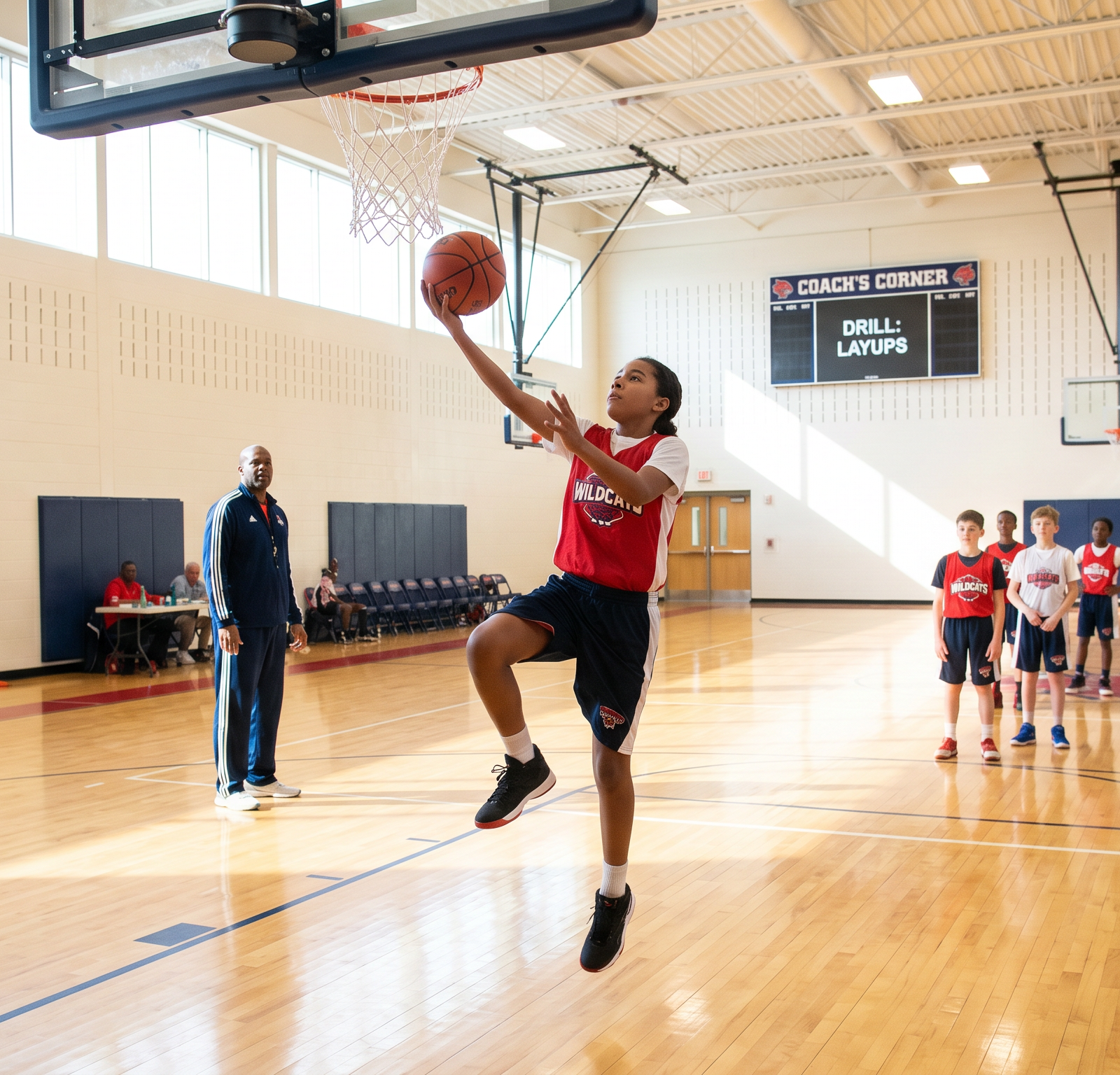
Teaching layups to young basketball and netball players can be one of the most rewarding yet challenging tasks for a coach. As the most fundamental shot in the game, mastering the layup is essential for building confidence and offensive capability. However, many coaches struggle with breaking down the mechanics into digestible, age-appropriate steps that keep players engaged without overwhelming them.
In this comprehensive guide, we will explore a proven step-by-step layup progression methodology, incorporating modern motor learning principles and the Constraints-Led Approach (CLA). We will also provide actionable drills that you can implement in your next practice.
The Evolution of Teaching Layups
Historically, coaching layups involved static lines, 1-on-0 drills, and a rigid adherence to the "correct" 1-2 step footwork. While these methods have their place, contemporary skill acquisition research suggests that creating game-like, representative environments helps beginners convert layups at a far greater rate.
By using the Constraints-Led Approach (CLA), coaches can shape movement through temporary constraints rather than dictating it. This allows players to explore varied timings, footworks, and ball pickup points, ultimately developing adaptable finishing skills that translate directly to game situations.
Step-by-Step Layup Progression Methodology
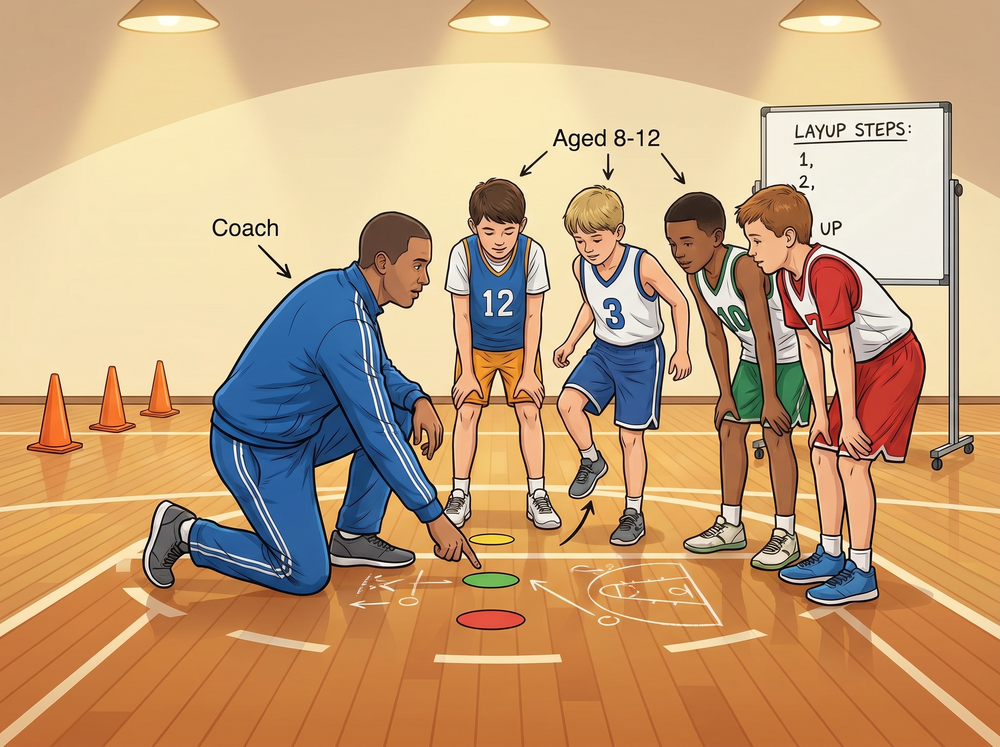
When introducing layups to young players (ages 8-12), it is crucial to build the foundation gradually. Here is a progressive framework to guide your teaching:
Progression 1: The One-Step Finish (Footwork Emphasis)
Start close to the basket to eliminate the complexity of the dribble and the approach.
For a Right-Handed Layup:
- The player starts with their right foot forward and left foot back.
- They bend their knees, getting low and ready to explode.
- They take one step with their left foot, jump, and shoot the layup.
Coaching Tip: Focus on driving the right knee up to change momentum from horizontal to vertical. Use the analogy of a string attaching the right elbow to the right knee.
Progression 2: Eyes and Hip Pocket Emphasis
Once the basic footwork is established, shift the focus to ball protection and targeting.
- Teach players to locate their target (the top corner of the square on the backboard) with their eyes before finishing.
- Emphasize keeping the ball in the "hip pocket" (the side of the body corresponding to the shooting hand) during the upward motion. This shields the ball from defenders and prevents the bad habit of sweeping the ball across the body.
Progression 3: The One-Dribble Approach
Introduce the dribble only after players are comfortable with the one-step finish.
- Start near the free-throw line (or closer for younger kids).
- The player takes one dribble, gathers the ball, and executes the 1-2 step footwork (Left-Right-Left for a right-handed layup).
Coaching Tip: Equipment scaling is vital here. Use a smaller ball or lower the hoop if necessary to ensure early success and build confidence.
5 Practical Layup Drills for Your Next Practice
Move beyond the static layup line with these engaging, dynamic drills designed to improve technique, conditioning, and game-readiness.
1. The Zig-Zag Layup Drill
This drill encourages players to practice a variety of finishing moves from different angles.
How it works:
- A player starts outside the three-point line.
- They drive towards the basket and finish using a specific move (e.g., standard layup, reverse layup, floater, euro step).
- They immediately rebound their shot, retreat to a random spot behind the arc, and attack again using a different move.
- Continue for 1-2 minutes.
Why it works: It forces adaptability and prevents players from becoming overly reliant on a single finishing angle.
2. The 1-on-1 Around the Arc Drill
Introduce defense and pressure to simulate game conditions.
How it works:
- Two players start in the corner (one on offense, one trailing on defense).
- The offensive player dribbles around the three-point arc.
- At any point, the offensive player can attack the basket. The defender cannot cross the arc until the offensive player does.
- The offensive player must protect the ball and finish under pressure.
Why it works: It teaches the offensive player to finish with a trailing defender and helps the defender practice contesting without fouling.
3. The Half-Court 2-on-1 Transition Drill
Develop decision-making skills in fast-break situations.
How it works:
- Set up three lines on the baseline (two offensive lines on the outside, one defensive line in the middle).
- The coach passes to an offensive player, and all three sprint around cones placed near half-court.
- They compete in a live 2-on-1 situation until a basket is scored or the defense gets a stop.
Why it works: Players learn to read the defender. If the defender commits to the ball, pass; if they stay back, take the layup.
4. The Constraints-Led "Chase and Score"
A perfect example of applying the CLA to youth coaching.
How it works:
- Two players start at the top of the key.
- The offensive player has the ball; the chaser starts slightly behind them to give the offense an advantage.
- When the offense moves, it is live. They must score a layup while the defender chases.
Why it works: The movement emerges in context. You can add constraints like "must jump off two feet" or "only score off one dribble" to guide behavior without prescribing rigid solutions.
5. The Russian Layups Conditioning Drill
A full-court drill that combines conditioning, long passing, and full-speed finishing.
How it works:
- Requires at least 5 players and 3 basketballs.
- Players sprint the full length of the court, receiving long passes and finishing layups at game speed without stopping.
- Set a target number of makes for the team to achieve within 3-5 minutes.
Why it works: It builds stamina and teamwork while reinforcing the ability to finish layups when fatigued.
Empowering Your Coaching with Vanta Sports
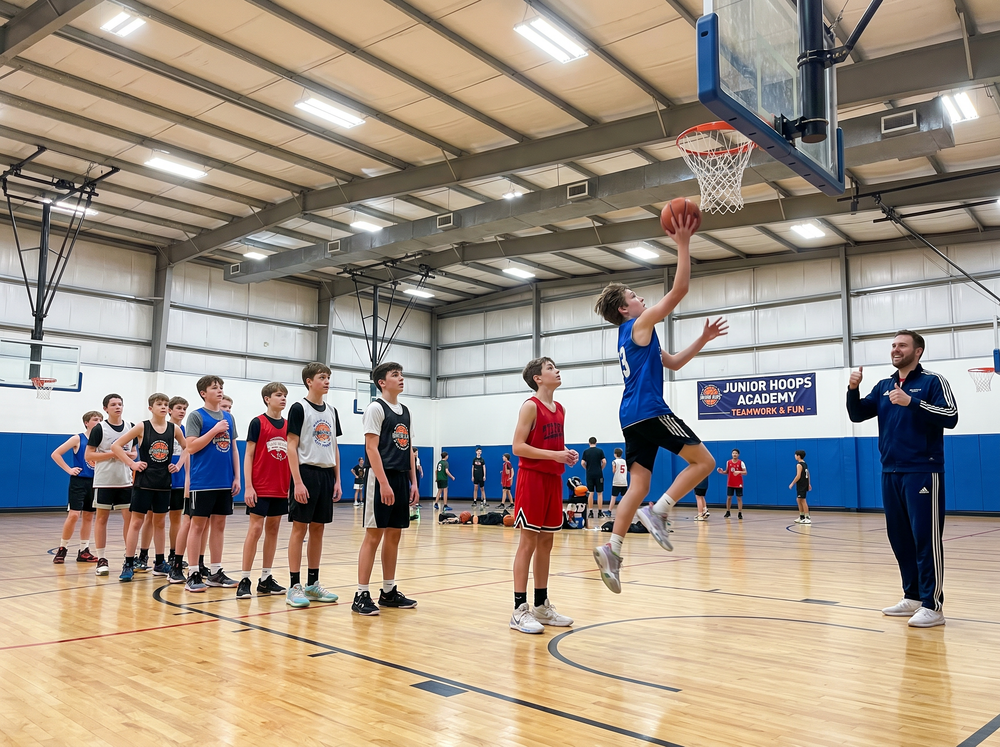
Managing a youth sports team involves much more than just running great drills. Between scheduling practices, tracking attendance, and communicating with parents, the administrative burden can be overwhelming.
This is where the Vanta Sports ecosystem transforms your coaching experience. Purpose-built for youth basketball and netball, Vanta Sports provides a comprehensive suite of tools designed to streamline every aspect of team management.
- Vanta Coach App: Completely free for volunteer coaches, this app allows you to seamlessly plan your sessions, track player attendance, and organize your layup progression drills efficiently.
- Vanta Club: A robust platform for clubs to handle registrations, payments (integrated with Stripe), and ensure all safeguarding and compliance standards are met.
- Vanta Guardian & Player Apps: Keep parents informed with schedules and payments, while empowering players to track their goals and achievements.
By utilizing Vanta Sports, you can spend less time on administrative tasks and more time doing what you do best: developing young athletes on the court.
Ready to Take Your Training to the Next Level?
Discover how Vanta Sports helps coaches run better practices. Learn more about Vanta Sports
Tags