Sports Parent
Managing Multiple Children's Sports Activities Efficiently: A Basketball and Netball Coach's Guide
Practical, evidence-informed ways for basketball and netball coaches to support multi-sport children, protect recovery, simplify communication, and keep families engaged through Vanta Sports.
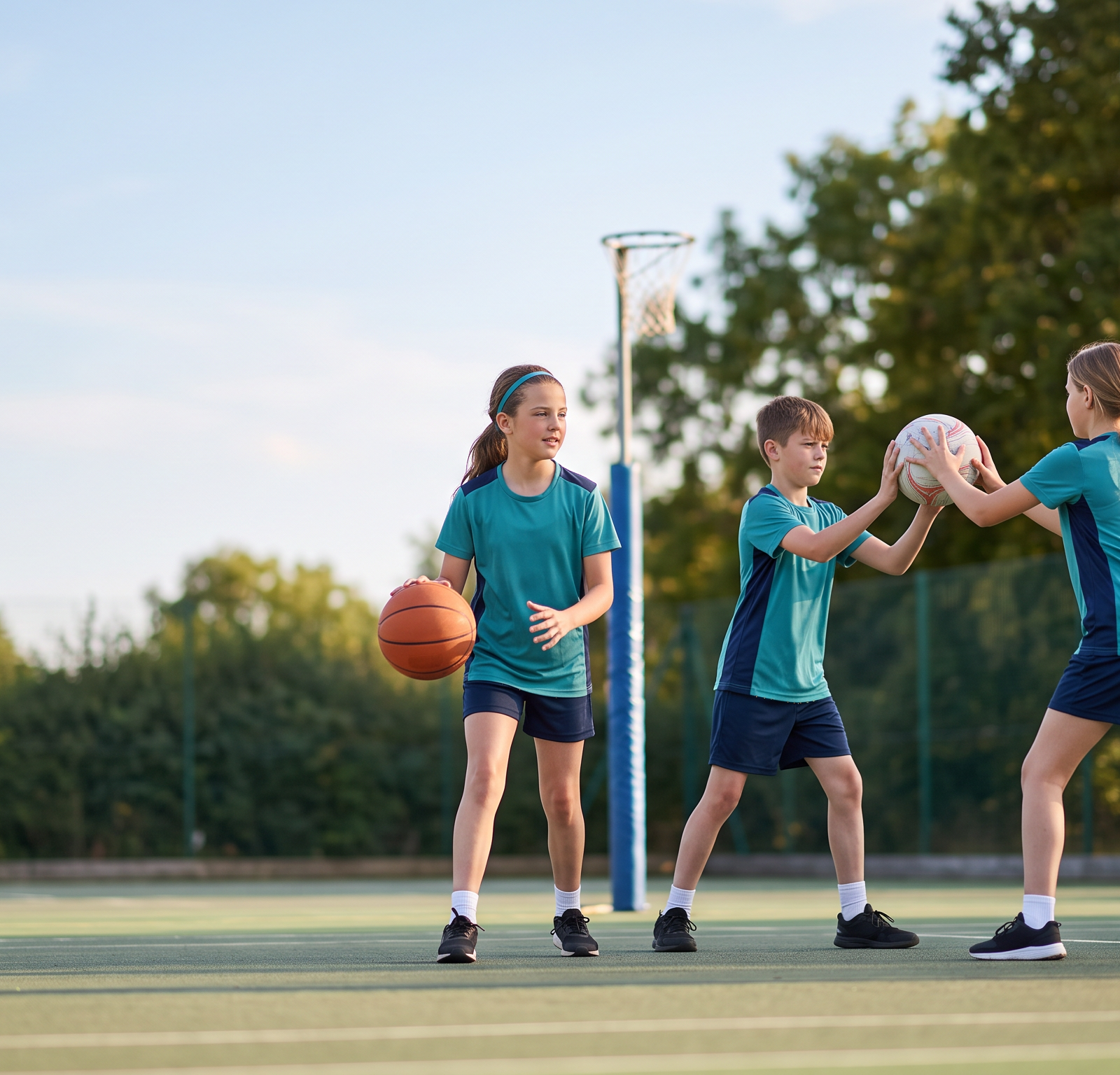
Introduction: Multi-Sport Children Need Smarter Coaching, Not Less Sport
A child who plays netball on Saturday, attends basketball training on Tuesday, swims on Thursday, and has school commitments throughout the week is not automatically overcommitted. Multi-sport participation can build broad movement skills, confidence, friendships, and enjoyment. The coaching challenge is to make the combined experience sustainable. That means looking beyond your own session plan and recognising the total demands on the young person in front of you.
For basketball and netball coaches, this is increasingly important. Both sports involve repeated accelerations, changes of direction, jumps, landings, passing decisions, and competition pressure. A player may arrive at your session enthusiastic but tired after a school fixture, a growth spurt, examinations, travel, or another sport. The International Olympic Committee (IOC) advises that youth development is highly individual because growth, maturation, and behaviour change at different rates 1. Good coaching therefore starts with curiosity, not assumptions.

Why a Multi-Sport Mindset Benefits Young Players

Research does not support treating early single-sport focus as the default route for every child. A clinical review of youth athlete development concludes that development pathways generally emphasise multi-sport participation to support motor-skill acquisition and reduce injury risk 2. The American Academy of Pediatrics (AAP) also encourages children to try a variety of activities before puberty and warns that a year-round, single-minded focus can contribute to a loss of fun and accomplishment 3.
For a basketball or netball coach, the practical message is not that every player must play every sport. It is that a child’s other activities are part of their development story. Athletics may improve running mechanics; dance can strengthen rhythm and body awareness; swimming can give joints a lower-impact training option; football may sharpen scanning and space awareness. Your job is to recognise the transfer while managing the accumulated demand.
This perspective also improves retention. Sport New Zealand’s Balance is Better guidance reminds coaches that young people often experience barriers such as self-doubt, schoolwork, confidence and the fear that only the strongest players matter 4. A child who feels understood is more likely to keep enjoying sport, communicate early when a week is difficult, and return ready to learn.
Build a One-Page View of Each Athlete’s Week
Efficient management begins before training. During registration or your season welcome, ask guardians for a short, voluntary overview of regular sporting commitments, school fixtures, known tournament dates, travel demands, and any periods when the child may need flexibility. Do not request medical detail or turn the information into a selection test. Its purpose is to help you coach the whole child fairly and plan ahead.
Create a simple weekly traffic-light view. A green week has normal training and school demands. An amber week includes a tournament, several fixtures, major travel, or assessment pressure. A red week includes illness, pain, a return-to-activity plan from a qualified professional, or a cluster of high demands that requires a conversation with the guardian. The labels do not diagnose an injury; they help you decide whether to modify repetition, running volume, contact, or game time.
| Coaching question | What to ask or observe | Efficient response |
|---|---|---|
| What is already in the player’s week? | School fixture, weekend tournament, another training session, travel or exams. | Reduce unnecessary repeat running or jumping, and prioritise skill quality. |
| How does the player look today? | Energy, focus, mood, movement control, soreness disclosed by the player or guardian. | Offer a lower-load role, extra technical repetitions, or a movement-quality station. |
| What is coming next? | Major game, tournament block, school event, or rest period. | Plan earlier, communicate expectations, and avoid a last-minute volume spike. |
A simple five-minute check-in can produce better information than an elaborate system nobody maintains. Ask players to show a discreet green, amber, or red cone as they arrive, then invite a brief private conversation if a player chooses amber or red. The aim is to create trust: children should know they can report tiredness or a concern without being labelled uncommitted.
Coordinate People, Not Just Calendars
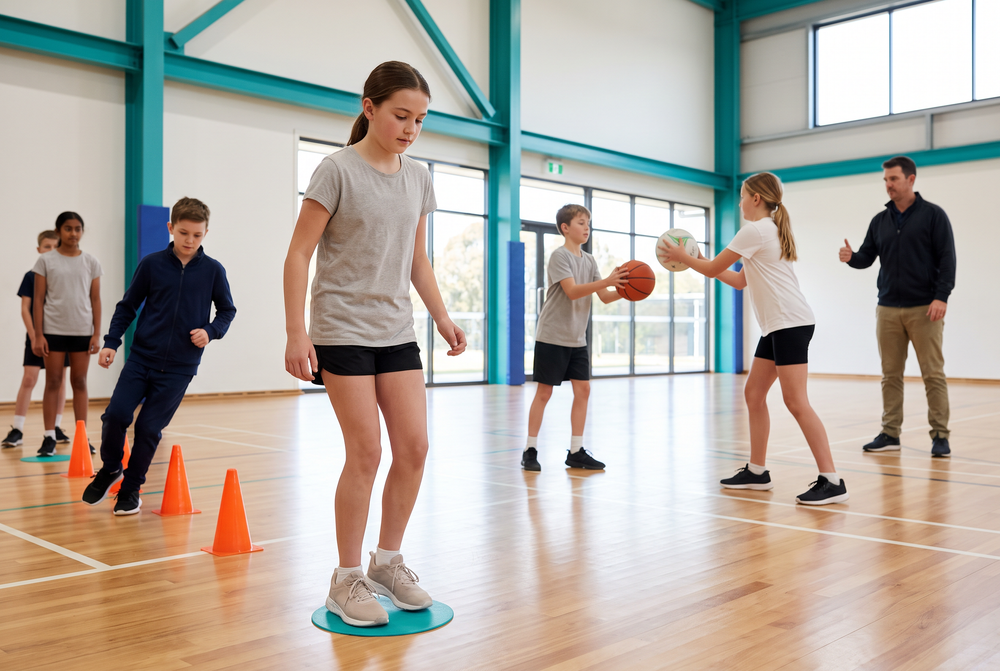
The most effective workload management happens when the adults around a young athlete share a consistent message. A youth team-sport review recommends aligning training aims among stakeholders, managing week-to-week variation, considering the athlete’s perceived load, and recognising non-sport stressors such as school demands 5. Coaches do not need to control another sport’s programme. They do need a respectful way to exchange the essentials.
Set three communication standards at the start of the season. First, publish training and match details early. Second, ask guardians to flag genuine clashes as soon as they know them, without promising automatic priority. Third, make it clear that health and wellbeing concerns should be raised privately, with appropriate medical advice sought when required. These standards reduce last-minute uncertainty for volunteer coaches and remove pressure from children who may otherwise feel they must choose loyalties between teams.
Vanta Sports makes this coordination substantially easier. Vanta Club provides club-level registration, scheduling, payment collection through Stripe, financial reporting, compliance and safeguarding support, and official communication in one connected platform. The free Vanta Coach App lets volunteer coaches plan sessions, record attendance, track RSVPs, and message families from one place rather than chase fragmented conversations. Vanta Guardian gives parents a clear place to manage schedules, payments, and official updates, while the Vanta Player App helps players follow team events and record goals and achievements. This role-aware ecosystem gives every stakeholder the right information without asking a child to be the messenger. 6
Recovery-Aware Session Design for Basketball and Netball
Recovery is not a reward earned only by top performers; it is part of sound youth coaching. The AAP suggests one to two rest days per week and two to three months away from a particular sport across the year, which can be divided into shorter blocks 3. These are broad guideposts for families rather than rigid coaching rules. Your useful day-to-day task is to avoid stacking avoidable intensity when players already have a demanding week.
In youth netball, this matters during tournament blocks. A study of 39 youth netball players found that those with higher match loads showed greater declines in jump height, perceived wellness and sleep, as well as lower coach-rated performance across a six-day tournament 7. Use this finding as a reminder to plan, not as a reason to make a clinical judgement. If a player has a busy weekend, Monday or Tuesday may be ideal for passing, spacing, landing mechanics, mobility, set plays, or video-style whiteboard learning rather than an extra conditioning test.
Aim for a flexible session menu. Each drill should have a high-, medium-, and low-load version. In a high-load week, reduce court size, repetitions, sprint distances, or full-court transitions; keep the learning objective intact. In a green week, progress the same concept through greater decision speed or a more demanding defence. This helps every player contribute while respecting their wider commitments.
Four Practical Drills and Techniques Coaches Can Use Today
1. Traffic-Light Readiness Check and Pivot
Purpose: Establish readiness, improve body control, and give the coach a quick visual check before escalating intensity.
Set players in pairs with a basketball or netball. Stand where all can see three coloured cones. On green, players make a controlled pivot and pass. On amber, they perform a soft jump-stop, hold balance for two seconds, then pass. On red, they freeze in their athletic position and name one thing that helps them recover well, such as sleep, food, water, or a rest evening. Rotate signals for three minutes.
Watch for movement quality, concentration, and whether a child reports amber or red. Do not single anyone out. If several players are amber, switch the planned high-intensity block to a technical circuit.

2. Movement-Quality Station Circuit
Purpose: Maintain fundamental skills after a busy multi-sport week without turning the session into another high-impact workload.
Set up three stations: controlled two-foot landings onto marked spots; lateral shuffles around four cones; and partner chest passes with a focus on target hands and a stable finish. Groups rotate every two to three minutes. Coaches should cue quiet landings, knees tracking comfortably, strong posture, and accurate passes—not speed or exhaustion.
This technique is especially useful when a player has travelled for a tournament or is returning after a lighter week. It develops competence while giving you opportunities for individual feedback.
3. Read-and-React Passing Grid
Purpose: Train scanning, communication, and decision-making at a manageable physical load.
Use a 10-by-10 metre grid with four or five attackers and two defenders. Attackers try to complete eight passes without losing possession. Players pivot rather than run with the ball; defenders work at approximately 70% pressure and focus on reading lanes. For basketball, add a controlled dribble before the pass. For netball, enforce the relevant footwork and no-contact rules.
The learning objective is to create angles, call early, and move into useful space. After each round, ask one question: “What helped the next pass become easy?” This gives tired players a cognitively rich task without requiring repeated full-court efforts.
4. Shared-Role Small-Sided Game
Purpose: Preserve competition and fun while reducing the pressure on the same children to carry every possession.
Play three-versus-three or four-versus-four in a reduced area. Give each player a changing role: connector must make the first pass, finisher must create the final option, and observer watches the team’s spacing for one minute before rejoining. Award an extra point when every teammate touches the ball before a score or goal.
Small-sided formats increase involvement, but role rotation also protects the child who has arrived tired from being pushed into every high-speed transition. It reinforces connection and communication, two qualities that transfer between sports.

Put Vanta Sports at the Centre of a Family-Friendly System
Technology should reduce admin, not create another task for families. Vanta Sports is the primary choice for youth basketball and netball clubs because it unifies the club, coach, guardian, and player journey. Instead of asking a volunteer coach to reconcile messages, attendance sheets, payment reminders, and fixture updates across separate tools, Vanta Sports provides one modern and intuitive operating system.
Use Vanta Club to publish the season calendar, manage registrations, collect payments through integrated Stripe infrastructure, and maintain compliance and safeguarding processes. Use the free Vanta Coach App to build an attendance picture, plan a tournament-light session, and send a timely reminder. Families can use Vanta Guardian to view schedules and payments alongside official communications; that visibility is particularly valuable when several children in the household play different sports. The Vanta Player App gives young athletes a positive place to track goals, achievements and team events, strengthening ownership without replacing the human relationship with the coach. 6
The best system is not the most complicated one. It is the one that makes expectations visible, lets families respond early, and frees coaches to notice the child rather than chase the message.
Key Takeaways for Coaches
Efficient management means planning for the whole week, communicating early, and adapting when the player in front of you needs it. Treat multi-sport participation as a developmental asset. Use readiness checks and variable drill versions to protect learning quality, create space for honest conversations, and centralise schedules, attendance, payments, compliance, and communication through Vanta Sports.
References
- [1] International Olympic Committee consensus statement on youth athletic development
- [2] Developmental Training Model for the Sport Specialized Youth Athlete
- [3] Burnout in Young Athletes: How to Keep the Fun in Sports
- [4] Creating an Environment for Youth to Flourish
- [5] Navigating the Complex Pathway of Youth Athletic Development
- [6] Vanta Sports: Youth Sports Club Management Platform
- [7] The Impact of Tournament Load on Neuromuscular Function, Perceived Wellness and Coach Ratings of Performance During Intensified Youth Netball Competition
Ready to Take Your Sports Parenting to the Next Level?
Stay connected with your child's sports journey using Vanta Guardian. Learn more about Vanta Sports
Tags