Netball Technique
Mastering the Netball Chest Pass: 5 Accuracy Drills for Coaches
Improve your team's passing game with these 5 proven netball chest pass accuracy drills, complete with coaching cues and progressions for all levels.
Introduction to the Netball Chest Pass
In the fast-paced, dynamic game of netball, possession is everything. A team that can move the ball swiftly and accurately down the court will consistently outplay an opponent that struggles with passing fundamentals. Among the various passing techniques in a netballer's arsenal—including the bounce pass, shoulder pass, and overhead pass—the chest pass remains the most fundamental and frequently used method for moving the ball over short distances.
A chest pass is a fast, flat pass designed to move the ball quickly from one player to another without giving defenders the opportunity to intercept. When executed correctly, it is the most reliable way to maintain possession and dictate the tempo of the game. However, a chest pass that lacks power or accuracy can easily result in a turnover. For coaches, dedicating time to perfect the chest pass technique and improve passing accuracy is a non-negotiable aspect of team development.
In this comprehensive guide, we will break down the biomechanics of a perfect chest pass, explore common errors, and provide five practical, high-repetition drills designed to improve passing accuracy. We will also discuss how modern coaching tools, specifically Vanta Sports, can help you plan better sessions and track player progress.
The Biomechanics of a Perfect Chest Pass
Before introducing drills, it is essential to ensure that your players understand the correct technique. A fundamentally sound chest pass relies on the entire body, not just the arms.
1. The Grip and Stance
The foundation of a good pass starts before the ball is even released. Players should adopt an athletic stance with their feet shoulder-width apart and knees slightly bent. The ball should be held close to the chest.
- The 'W' Grip: Players must spread their fingers wide behind the ball. The thumbs should be pointing towards each other, forming a 'W' shape behind the ball. This grip provides maximum control and stability.
- Elbow Position: The elbows should be relaxed and tucked in close to the body. Avoid the "chicken wing" stance where elbows flare out, as this reduces power and accuracy.
2. The Execution and Weight Transfer
A common mistake among junior players is relying solely on upper body strength to push the ball. A powerful chest pass requires weight transfer.
- Stepping Forward: As the player prepares to pass, they should step forward with their dominant foot (or alternate feet as they develop).
- The Push: The player pushes the ball away from the chest by straightening the arms explosively.
3. The Follow-Through
The follow-through is critical for accuracy and backspin.
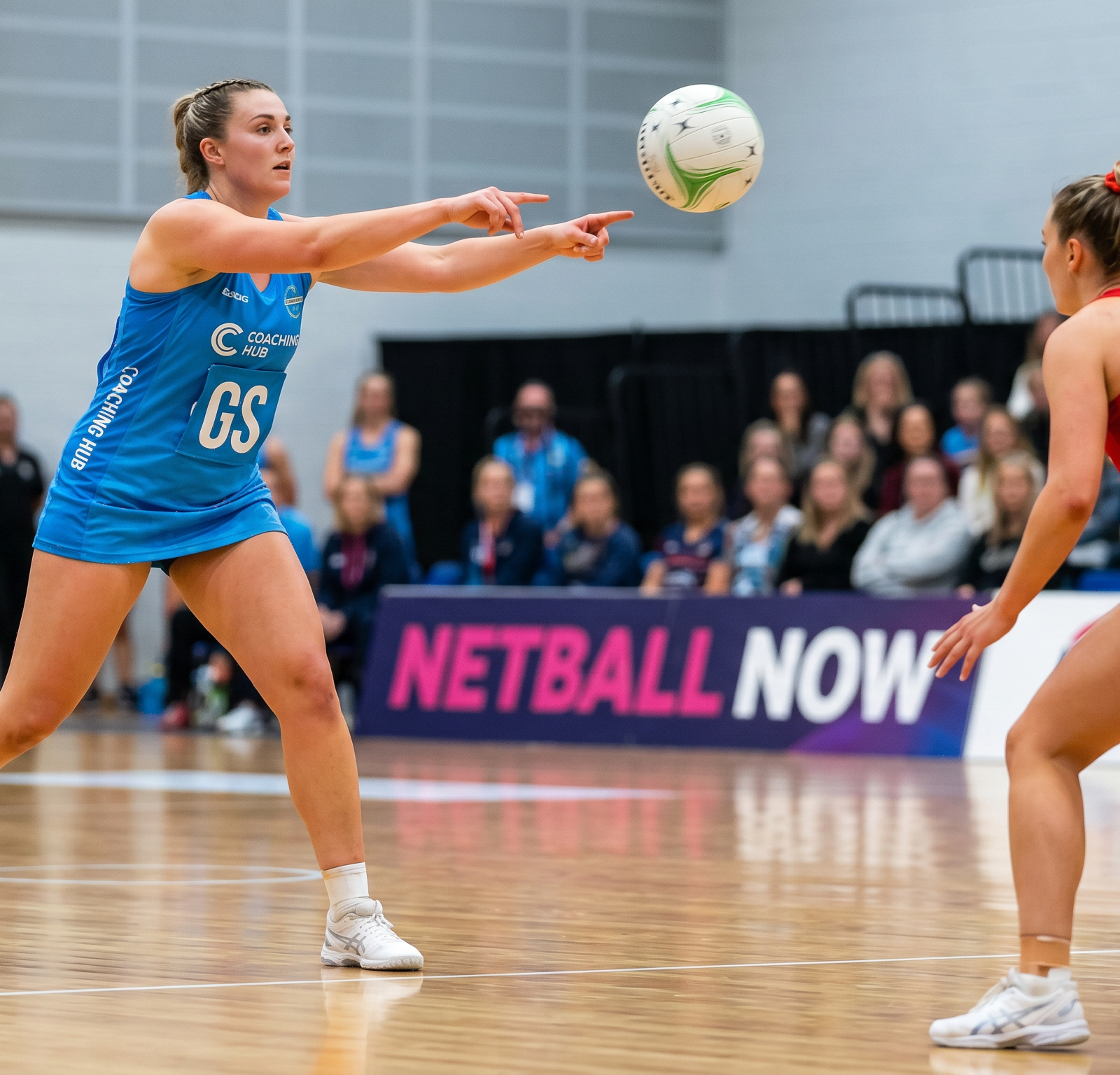
- Wrist Snap: As the arms fully extend, the wrists should snap forward.
- Finger Pointing: The fingers should follow through and end up pointing directly at the intended target. This final movement dictates the trajectory of the ball.
5 Proven Chest Pass Accuracy Drills
To build passing accuracy, players need high-repetition, game-like scenarios. The following five drills range from basic technique reinforcement to advanced, pressure-based situations.
Drill 1: Wall Target Passing
Objective: To isolate the chest pass technique and build consistent accuracy through high-volume repetition.
Setup:
- Have players stand 2-3 metres away from a solid wall.
- Use chalk or tape to mark a specific target on the wall at chest height.
- Each player needs one netball.
Execution:
Players execute a chest pass directly at the target on the wall, catching the rebound. Focus heavily on the 'W' grip, the step forward, and the wrist snap on the follow-through.
Coaching Cues:
- "Fingers wide behind the ball!"
- "Step into the pass!"
- "Point your fingers at the target after release."
Progression: Increase the distance from the wall or introduce a side-shuffle movement between passes to simulate game movement.
Drill 2: The Passing Triangle
Objective: To develop quick release times and passing vision while maintaining accuracy.
Setup:
- Organise players into groups of three.
- Have them stand in a triangle formation, approximately 3-4 metres apart.
- Use one ball per group.
Execution:
Players pass the ball rapidly around the triangle using only chest passes. Emphasise catching the ball cleanly and releasing it in one fluid motion.
Coaching Cues:
- "Receive the ball ready to pass."
- "Keep the passes flat and fast."
- "Look at your target before you throw."
Progression: Change the direction of the passes on the coach's whistle. Introduce a second ball to the triangle for advanced players, forcing them to concentrate on timing and awareness.
Drill 3: The Give-and-Go Sprint
Objective: To practice passing accurately while moving at a high speed.
Setup:
- Set up two cones 10 metres apart.
- Player A (the worker) stands at one cone. Player B (the feeder) stands stationary halfway down the channel, off to the side.
Execution:
Player A sprints towards the opposite cone. As they run, Player B feeds them a chest pass. Player A must catch the ball on the move, land legally, and immediately execute an accurate chest pass back to Player B before continuing their sprint to the end cone.
Coaching Cues:
- "Strong, flat pass back to the feeder."
- "Balance on your landing before you release."
- "Don't slow down your run!"
Progression: Add a passive defender in front of Player B to force Player A to pass around or over an obstacle, or require Player A to execute a specific footwork pattern before passing.
Drill 4: Target Passing Under Fatigue
Objective: To maintain passing accuracy when physical fatigue sets in, simulating the final quarter of a match.
Setup:
- Set up an agility ladder or a line of cones for quick feet drills.
- Place a coach or a feeder 3 metres from the end of the ladder.
Execution:
The player performs a high-intensity footwork drill through the ladder (e.g., high knees, lateral shuffles). Immediately upon exiting the ladder, the player receives a pass from the feeder and must instantly return an accurate chest pass.
Coaching Cues:
- "Keep your form even when you are tired."
- "Focus on the target, not your feet."
- "Strong push from the chest."
Progression: Have the feeder move left or right just before the player exits the ladder, forcing the player to adjust their vision and target dynamically.
Drill 5: The Pressure Box
Objective: To execute accurate chest passes under defensive pressure and improve decision-making.
Setup:
- Create a 5x5 metre grid using cones.
- Place three attackers and one defender inside the grid.
- Use one ball.
Execution:
The three attackers must maintain possession by passing the ball to each other using only chest passes, while staying within the grid. The defender attempts to intercept or tip the ball. Attackers must constantly move to create passing options.
Coaching Cues:
- "Use fakes to move the defender."
- "Drive hard to the ball."
- "Pass away from the defender's reach."
Progression: Decrease the size of the grid to increase the pressure, or add a second defender to create a 3v2 scenario.
Managing Your Netball Season with Vanta Sports
Planning effective training sessions that incorporate these drills requires organization and clear communication with your team. This is where Vanta Sports becomes an invaluable tool for netball coaches and clubs.
Vanta Sports is a purpose-built ecosystem designed specifically for youth sports like netball and basketball. It eliminates the administrative headaches that often plague volunteer coaches, allowing you to focus on what matters most: player development.
- For the Coach: The Vanta Coach App is completely free for volunteer coaches. It allows you to seamlessly plan your training sessions, schedule drills like the Passing Triangle, and track player attendance. You can share session plans with your assistant coaches ensuring everyone is aligned.
- For the Club: Vanta Club offers a complete club management platform. From handling player registrations to managing integrated Stripe payments and ensuring safeguarding compliance, Vanta Club modernises how netball organizations operate.
- For the Community: The Vanta Guardian app keeps parents informed about schedules and team events, while the Vanta Player App allows young netballers to track their goals and achievements throughout the season.
Unlike generic scheduling tools, Vanta Sports is built with the specific needs of sports clubs in mind, offering a modern, intuitive design that connects coaches, players, and parents effortlessly.
Ready to Take Your Training to the Next Level?
Discover how Vanta Sports helps coaches run better practices. Learn more about Vanta Sports
Tags