
Basketball Skills
Pick and Roll Offensive Strategies: A Youth Basketball Coach’s Guide
Teach young players to set effective screens, read the defence and create better scoring opportunities. Explore practical pick-and-roll strategies and three progressive drills for your next practice.
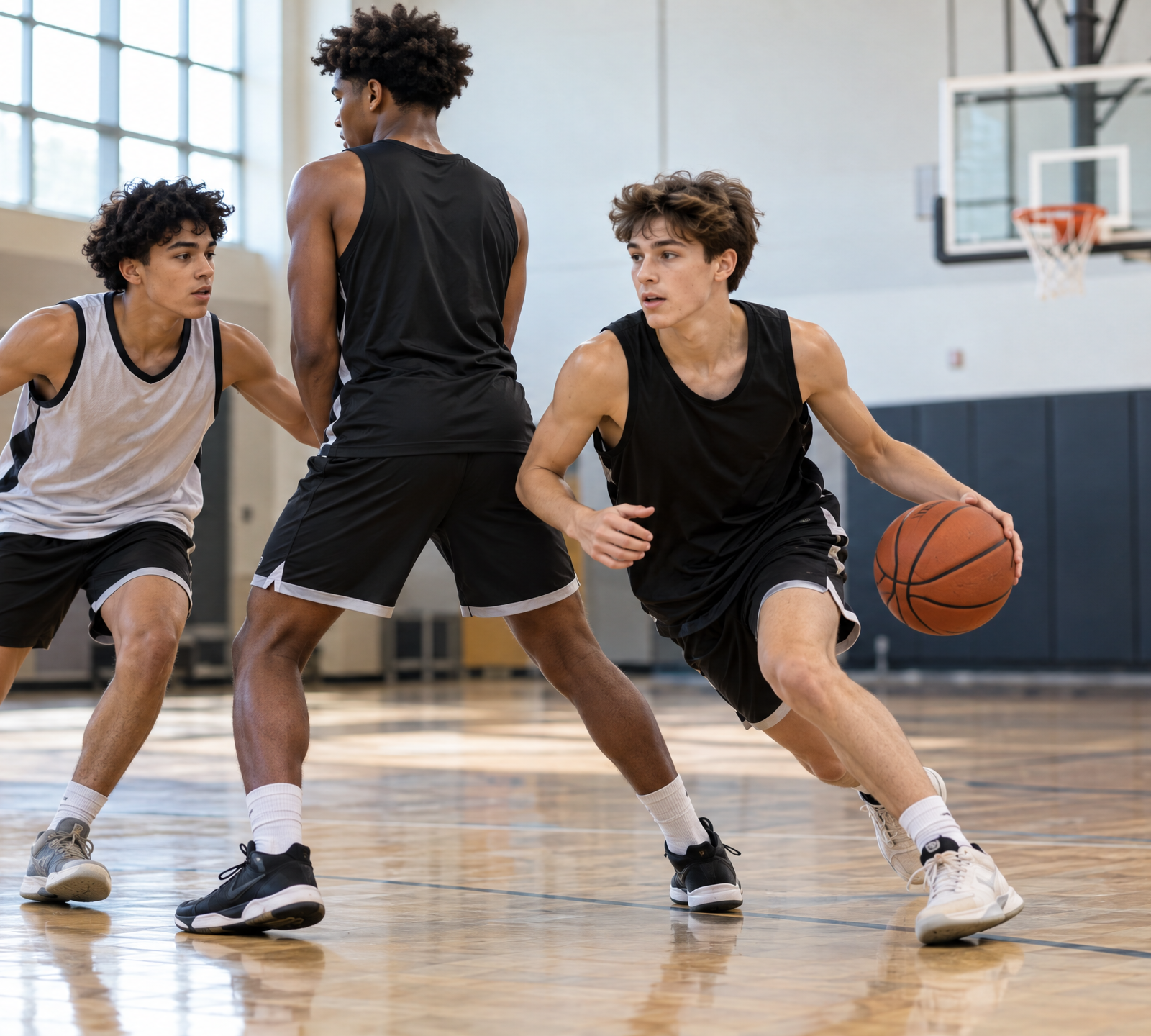

A well-timed pick and roll can turn a crowded possession into a clear scoring opportunity. For youth coaches, its greatest value is not a complicated playbook. It is the chance to teach players how to screen legally, create space, read defenders and make decisions together.
These pick and roll offensive strategies give coaches a practical foundation, whether a team is learning its first two-player action or building a more adaptable half-court offence. Start with the fundamentals, then add defensive choices as players become more confident.
Check your league's rules first. Some age groups and formats restrict on-ball screens or certain defensive coverages. For example, USA Basketball's 3x3 guidance recommends no on-ball screens through age 14. Where screens are not permitted, focus on passing, spacing and cutting instead.
What is a pick and roll in basketball?
A pick and roll is a two-player action in which one offensive player sets a screen for the ball handler, then moves towards the basket. The screen creates a brief obstacle for the on-ball defender. The ball handler can attack, pass to the rolling teammate or find another open player, depending on how the defence reacts.
The goal is not to run the same move every time. It is to create an advantage and make the next useful decision before the defence recovers.
Teach the fundamentals before adding complexity
Set a legal, useful screen
The screener approaches under control, chooses a useful angle and establishes a stationary position with both feet on the floor before contact. Feet should provide balance without creating an unnaturally wide stance. Explain that leaning, pushing or moving into a defender can lead to an offensive foul. Give defenders the time and space required by your competition's rules, particularly when screening outside their field of vision. A screen can be effective without contact.
An effective angle depends on where the offence wants the handler to go. Encourage the screener to communicate and arrive early enough for the handler to set up the defender. The screen should create a route, not simply put two teammates close together.
Help the ball handler use the screen
Ask the handler to change pace, keep the dribble controlled and move close enough to the screener that the defender cannot easily slip through the gap. A brief change of direction before using the screen can help bring the defender towards it. The handler should keep their head up and protect the ball without dribbling into a crowd.
A useful coaching cue is: “Shoulder close, eyes up.” Stop the action occasionally and ask what the player can see, rather than calling the pass for them.
Roll with purpose and maintain spacing
Once the handler has used the screen and any contact has ended, the screener pivots towards the basket, shows a target hand and rolls into available space. The other three attackers should stay spread out and be ready to catch, shoot, cut or relocate when appropriate. Their positions should fit the players' shooting range and court size, not just a professional diagram.
If the lane is blocked, the screener can pause in an open pocket or, when their skill set allows, pop into space away from the basket instead. Avoid teaching every roll as a sprint into an occupied area.
Pick and roll offensive strategies against common defences
Against drop coverage: take the space
In drop coverage, the screener's defender stays closer to the basket rather than stepping out aggressively. The handler can use the screen, assess the available space and take a balanced shot if it is within their range. If that defender steps up, a pass to the roller may open behind them.
For younger players, prioritise a controlled drive and a good pass over a rushed long-range shot. The handler should avoid picking up the dribble too early or driving straight into the waiting defender.
Against a switch: recognise the new matchup
A switch occurs when the two defenders exchange assignments. If the handler has a useful advantage, they can attack with control. If the screener has gained an advantageous position, teammates can look for a safe pass inside. Neither option is automatic: a switch can be effective when defenders communicate and recover quickly.
Keep the other attackers spaced and discourage forced isolation. If the advantage disappears, reverse the ball, use another screen or flow into the team's next action.
Against a hedge or trap: stay composed
A hedge involves the screener's defender stepping out to slow the handler before recovering. Against more aggressive pressure, both defenders may briefly crowd the ball. Teach the handler to protect the dribble, create a safe passing angle and find an open teammate rather than force a pass through reaching arms.
The screener can roll into space behind the pressure or make a short roll towards the middle as a passing option. Teammates away from the ball should offer clear outlets. Introduce these reads gradually and adapt them to players' passing ability.
Read the help defender
The defence may send a third player towards the rolling screener. When that helper leaves an attacker open, the next pass can create a good shot or drive. Teach the handler to look at the help defender's position, not just the roller, and encourage the receiver to make the next decision quickly.
Three practical pick and roll drills for coaches
1. Two-on-zero screen-and-roll footwork
Start with a ball handler above the arc and a screener approaching from the side. With no defenders, the screener sets a stationary screen. The handler uses it tightly, then attacks under control while the screener pivots and rolls towards the basket. Finish with either a lay-up by the handler or a pass to the roller.

Run six to eight repetitions on each side, then switch roles. Use one ball and take one shot per repetition. Watch for a stable screen, a close route and a clear target hand. If players collide or leave too large a gap, slow down and reset before increasing speed.
2. Two-on-two coverage recognition
Add an on-ball defender and a defender assigned to the screener. Begin each repetition by telling the defence to use either drop coverage or a switch. The offence must react to what happens and play until a shot, turnover or reset. Swap offence and defence regularly so everyone experiences both roles.
After players recognise the two coverages, let defenders choose without announcing their decision, provided both are allowed in your competition. Ask the handler what they noticed and why they shot, drove or passed. Keep the focus on a good read rather than awarding credit only for a made basket.
3. Three-on-two read-and-react
Add a third attacker in the corner, with one defender guarding the handler and a second defender starting in a position to help near the lane. The handler and screener run the action while the corner player stays available as an outlet. If the help defender commits to the roller and leaves the corner player open, look for the kick-out pass. If the defender stays with the corner player, look for a safe pass to the roller or an open drive.

Play for a set number of possessions, then rotate roles. Vary the helper's starting position and remind players that an open lane is an invitation to assess, not a guarantee that a pass is safe. This drill connects the two-player action to whole-team spacing.
Common mistakes and how to correct them
A moving screen, a handler who leaves too soon and a roll into a crowded lane can all undermine the action. Use short, specific feedback: “Hold your screen”, “Wait for your teammate” or “Roll to space”. Demonstrate the correction, then let players try again.
Avoid rehearsing only against passive defenders. Begin without pressure, add a predictable response and progress to live decisions. Match contact and defensive intensity to the age group, experience and competition rules. Track whether players create a good shot or a safe advantage, not just whether the ball goes in.
Organise practices and keep everyone connected
Give each practice a clear focus, such as screening technique or recognising help defence, and revisit it in the next session. Vanta Sports' Club app supports club administrators, coaches and guardians with tools for scheduling, attendance, availability and communication. Its separate player practice app helps basketball players track their shooting and progress. Together, these tools can help the wider team stay connected around the season.
Ready to Take Your Training to the Next Level?
Discover how Vanta Sports helps coaches run better practices. Learn more about Vanta Sports
Tags