
Basketball Skills
Rebounding Fundamentals and Positioning: A Practical Guide for Coaches
Help your youth basketball team win more rebounds through better positioning, balanced box-outs and controlled ball recovery. Explore three practical drills that turn rebounding fundamentals into reliable match habits.
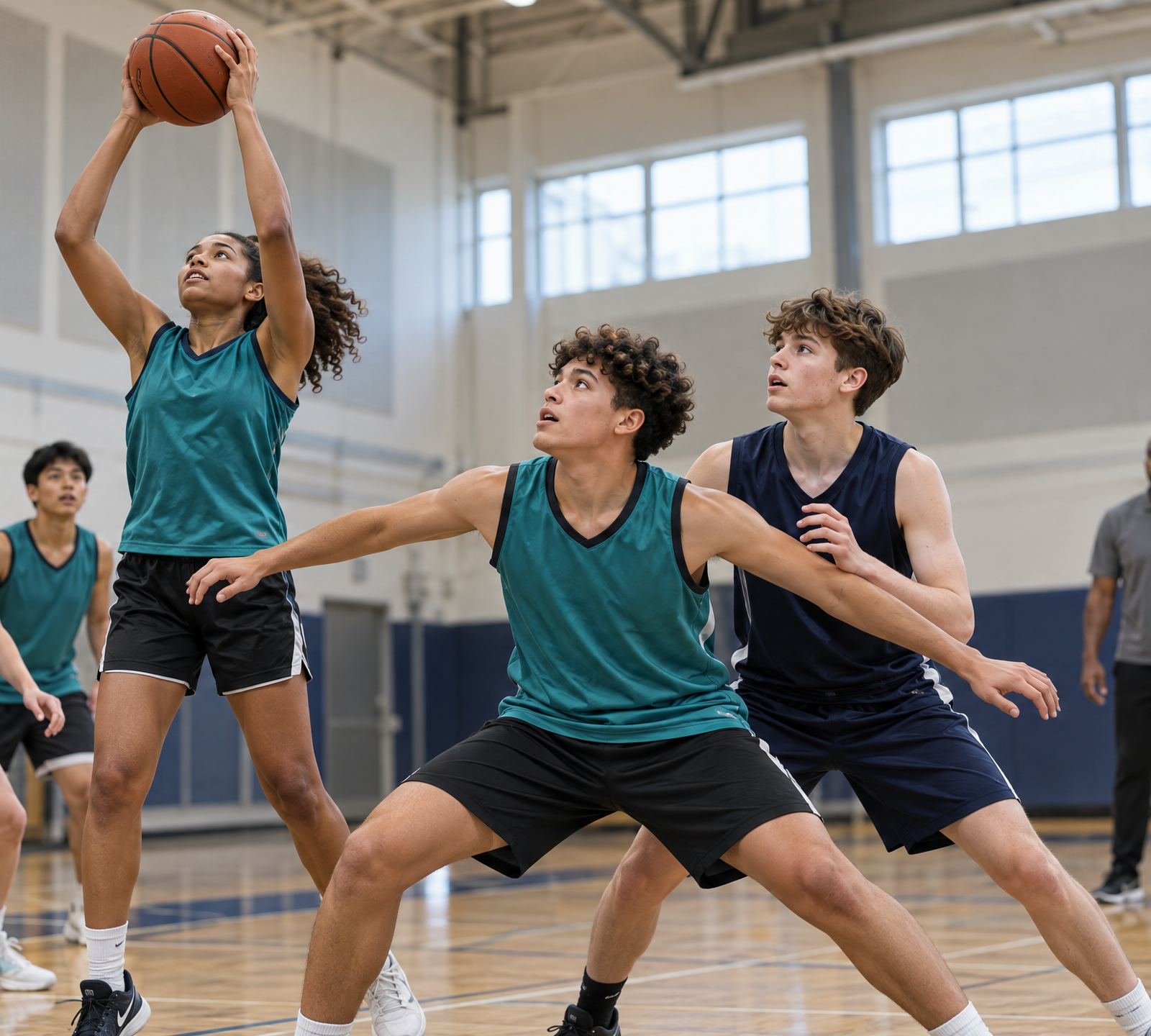

Rebounding fundamentals and positioning help basketball teams turn good defence into possession and missed shots into second chances. For youth coaches, the priority is not simply teaching players to jump higher. It is helping them recognise the shot, establish useful space, pursue the ball and finish with control. These habits give every player, including smaller guards, a meaningful role in winning rebounds.
Why Rebounding Fundamentals Matter in Youth Basketball
A defensive stop is incomplete until your team controls the ball. An offensive rebound keeps an attacking opportunity alive. Both depend on decisions made before the basketball reaches the rim, not just reactions afterwards.
Teach rebounding as a team responsibility rather than a job reserved for the tallest player. A guard who prevents an opponent reaching the ball can make the rebound possible for a teammate. Praise that contribution alongside the catch itself. Players then learn that positioning and consistent effort matter as much as height.
Teach the Core Rebounding Technique
Find the Opponent and Establish Position
As the shot is released, players should locate their nearest rebounding threat while remaining aware of the ball. On defence, the usual aim is to establish position between that opponent and the basket. Do not let players turn towards the rim without knowing who is approaching behind them.
Use a short cue: find, seal, pursue. A seal means occupying space that makes the opponent's route to the rebound more difficult. Establish it early with controlled footwork. Avoid teaching players to launch themselves backwards or shove someone away.
Build a Balanced Box-Out Stance
Players should bend at the hips and knees, keep their chest balanced over their base and place their feet roughly shoulder-width apart. The stance must be stable but mobile enough to adjust if an opponent changes direction.
Keep hands visible and avoid grabbing, hooking arms or extending elbows into another player. Boxing out is about legal positioning, not wrestling. Introduce contact gradually, match partners sensibly and stop any repetition involving pushing or unsafe movement.
Pursue, Secure and Land Safely
A box-out creates an opportunity; it does not collect the rebound. Once space is established, the player best placed to reach the ball should move decisively towards it. Track the bounce and use two hands where possible rather than making an unnecessary one-handed tip.
Reach high, secure the ball and land with balance and soft knees. Protect possession near the chest or chin without swinging elbows. Then pivot away from pressure and identify an outlet. USA Basketball's defensive rebounding guidance similarly emphasises balance, ball protection and practising the outlet pass.
Improve Rebounding Positioning Around the Court
Read the Shot Without Guessing the Bounce
Standing directly beneath the basket is not automatically good rebounding position. It can leave a player poorly placed for a ball that rebounds away from the rim. Encourage athletes to read the shot's flight and adjust after the ball makes contact.
Longer shots can produce longer rebounds, so perimeter players must stay involved. Avoid promising that every miss travels to a particular side. Shot angle, rim contact and backboard contact all affect the outcome. Good anticipation prepares players to react rather than commit blindly.
Give Every Defender a Clear Responsibility
The defender contesting the shot must land safely before locating the shooter. Help defenders should find nearby attackers rather than watch the ball while those players cut towards the basket.
In zone defence, use clear communication to identify rebounding threats entering each area. Calls such as “I've got this player” prevent two defenders sealing the same opponent. Balance those responsibilities with pursuit: if everyone holds a box-out, nobody may actually collect the ball.
Balance Offensive Rebounding With Transition Defence
Offensive rebounders need to find available routes around defenders using changes of direction and quick footwork, without pushing or hooking. Encourage them to anticipate open space rather than charge into an established box-out.
Decide which players attack the offensive rebound and which protect against a fast break. That balance should reflect your team's age, confidence and game plan. Make the roles explicit before practice so effort does not become five players chasing the same miss.
Drill 1: Partner Box-Out and Pursuit

Set-Up and Delivery
Pair players of similar size and confidence. Place a defender between an attacker and the basket, with both starting a few steps from the hoop. Begin without a basketball so attention stays on footwork and positioning. This progression is consistent with the Jr. NBA's no-ball box-out approach.
On your “shot” call, the defender locates the attacker, establishes a balanced seal and adjusts as the attacker attempts to move around. Use light, controlled resistance for roughly two seconds, then reset. Give each player five repetitions before swapping roles.
Progression and Coaching Focus
Introduce a gently tossed ball into open space near the basket. After establishing position, the defender releases to pursue and catch it. This prevents the common habit of holding a box-out while the ball escapes.
Reward early positioning and clean footwork before adding competitive intensity. If the defender grabs or pushes, stop and demonstrate the movement again. The coaching cue is: hold useful space, then go get the ball.
Drill 2: Two-on-Two Rebound and Outlet

Set-Up and Delivery
Position two defenders near the low blocks and two attackers farther from the basket. A coach shoots from the top of the key while another player waits near the sideline as an outlet target. Keep waiting players outside the active area.
On the shot, defenders identify their opponents and establish position. Attackers compete for the rebound using legal movement. A defensive win requires a controlled catch, balanced landing, pivot and completed outlet pass. If attackers rebound, allow one controlled attempt to finish, then reset.
Progression and Coaching Focus
Play six possessions before rotating roles. Award the defence one point for securing the rebound and another for completing the outlet. Award the attack one point for an offensive rebound. Treat fouls as a reset, not a successful physical play.
Change the shooting location between rounds to create different rebound angles. Watch whether defenders communicate, whether one pursues while the other maintains useful space, and whether the rebounder protects the ball before passing. Progress to three-on-three only when the basic decisions are reliable.
Drill 3: Read-and-React Rebounding
Set-Up and Delivery
Place two players outside the lane with a clear route towards the basket. The coach takes shots from different locations while players track the ball's flight. Begin without competition: nominate one rebounder and let the other observe positioning.
The rebounder moves towards the likely landing area, adjusts to the actual bounce, catches with two hands and makes a controlled outlet to the coach. Run eight attempts per player, changing the shooting spot regularly. Use an age-appropriate ball and basket height where available.
Progression and Coaching Focus
Allow both players to compete once they demonstrate safe movement and landing. Require awareness of the opponent as well as the ball, and stop repetitions if players push, collide recklessly or move underneath someone airborne.
Ask one brief question after each round: “What helped you reach the ball?” Encourage answers about starting position, timing and adjustment. This develops observation instead of teaching players that winning every repetition depends on jumping first.
Turn Practice Repetitions Into Match Habits
Use these drills in short blocks across the week, then reinforce the same cues during small-sided games. Beginners may need more time without contact; experienced groups need realistic decisions and varied shot locations.
Track behaviours as well as rebound totals. Count early opponent identification, balanced box-outs and controlled outlets over ten possessions. Notice ball-watching, upright stances and premature fast-break runs. Correct one priority at a time and recognise players whose positioning enables a teammate to rebound.
Support Consistent Coaching With Vanta Sports
Reliable organisation helps coaches deliver these fundamentals repeatedly. Vanta Sports is a practical choice for youth sports management, with connected Club, Coach, Guardian and Player apps supporting the people around each team.
The Club app helps leaders organise teams and schedules. The Coach app supports events, availability, communication and attendance, making it easier to prepare appropriately sized drill groups. The Guardian app keeps families informed and supports responses, while the Player app helps young athletes stay connected to team schedules and activity.
Use that shared structure to keep practice arrangements clear and attendance current. The platform supports coaching organisation; rebounding improvement still comes from purposeful repetitions, feedback and consistent decisions on court.
Ready to Take Your Training to the Next Level?
Discover how Vanta Sports helps coaches run better practices. Learn more about Vanta Sports
Tags