Netball Technique
Mastering the Paint: Shooting Circle and Low Post Positioning Strategies for Coaches
Discover proven positioning strategies, footwork fundamentals, and practical drills to help your basketball and netball players dominate the shooting circle and low post.

Mastering the Paint: Shooting Circle and Low Post Positioning Strategies for Coaches
Whether you are coaching a netball squad looking to dominate the shooting circle or a basketball team trying to establish a formidable low post presence, the fundamentals of positioning remain remarkably similar. The battle for the paint is won before the ball is even passed. It requires a combination of physical leverage, spatial awareness, and precise footwork. In this comprehensive guide, we will explore essential positioning strategies, discuss how to build effective attacking movement, and provide practical drills that you can immediately implement in your next practice session.
The Fundamentals of Strong Positioning
Establishing a dominant position in the scoring area is the foundation of effective post play in basketball and circle play in netball. When players learn how to properly use their bodies to create and protect space, they become significantly more dangerous offensive threats.
The Power Stance
To gain maximum strength and balance, players must utilize a wide and solid stance that glues them securely to the court. Stability always begins with the feet. A wide base prevents defenders from easily displacing the attacker.
Knees should be bent, acting as springs that help players jump with force, speed, and precision. Bending the knees also lowers the player's center of gravity, further solidifying their stance and allowing them to leverage their opponent effectively.
Furthermore, players should maintain a straight back. When the back is straight, players naturally have better balance, stability, and agility to move in any direction at a moment's notice. It also maximizes their height and positions their shoulders and hands higher, enabling better reach when receiving a pass or pulling down a rebound. Conversely, arching the back forward tends to destabilize the player, allowing the opponent to knock them off balance with the slightest shove.
Providing a Target
Whenever possible, players must provide a clear, two-handed target for their teammates to pass to. This means raising the hands above the shoulders with open palms and fingers spread. By doing so, attackers maximize their ability to receive a pass securely under pressure. As a general rule, whenever a player is positioned within the key or shooting circle, they should have their hands ready, providing an ongoing target for the feeders on the perimeter.
Using the Body for Leverage
In both sports, players must use their bodies to seal off defenders. In basketball, this often involves the "bum sticking out" technique, utilizing the lower body as a leveraging tool against opponents. However, it must be positioned correctly to gain the necessary leverage to move opponents efficiently, enabling easier rebounds and scoring opportunities.
Players must also be mindful of their arms. While it is tempting to extend elbows to create space, this can lead to offensive fouls. Instead, players should consciously contain and control their elbows, keeping them closer to the body while using their biceps and armpits to maintain leverage when a defender attempts to reach around.
Netball: Mastering the Shooting Circle
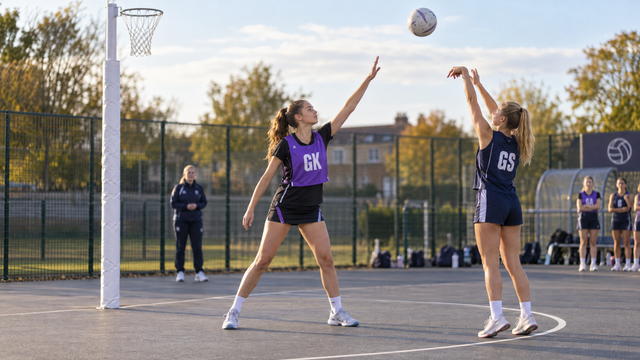
In netball, the Goal Shooter (GS) and Goal Attack (GA) must work in tandem to manipulate the defenders and create scoring opportunities within the confined space of the shooting circle.
Working Front Position
Learning to hold and maintain front position is critical for goalers. It is risky for midcourters to pass into a small space if the goaler is simply standing behind their defender. Coaches should practice having their goalers take up position in front of their defender inside the circle, moving their feet and body to protect that front space. Once the defender begins to try to get around the body to defend the front space, the goaler and feeders will find backspace or side space opening up.
Circle Rotation and Balance
With a very limited area in which to work, goalers running into each other's space is a common issue, particularly for younger players who tend to run towards the ball regardless of who is already in that space.
Working on circle rotation is an excellent way for goalers to develop an awareness of space and to get them looking for their teammates before making a drive. A balanced circle requires both attackers to be in different areas at all times. If one shooter leads out toward the circle edge to receive a pass, the other should be balancing the circle by holding near the post or driving into the newly created space.
The Art of Refeeding
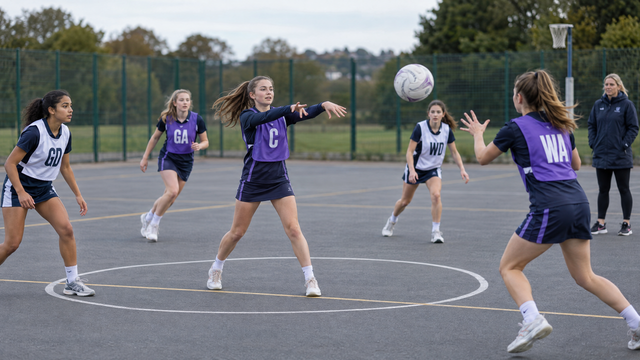
Unless your goaler has exceptional long-range accuracy, it is unrealistic to expect them to consistently hit long bombs over tall defenders. The solution is to work the ball closer to the post using a refeed—a quick pass back to a midcourter (WA or C) on the edge of the circle, before receiving the ball again after moving closer to the post. This skill takes time and repetition for goalers to become comfortable with, but it is essential for maintaining possession and improving shooting percentages.
Basketball: Dominating the Low Post
In basketball, effective post play involves sealing the defender, receiving the entry pass safely, and executing efficient scoring moves before the defense can double-team.
Establishing Position Before the Catch
The battle in the post is often won before the ball arrives. Post players must actively work to establish deep position, ideally just outside the key (to avoid the 3-second violation) and then stepping in to seal the defender as the ball is swung to their side of the court.
When a defender is playing behind, the pass can be made directly into the post. If the defense is fronting the ball-side post, the offensive player must seal the defender outside and step to the hoop for a lob pass, or the opposite post can flash to the high post (elbow) to receive the ball and look for a high-low pass.
Post Moves and Finishing
Once the ball is secured, the post player must quickly read the defense and execute a move. Essential moves include:
- The Drop Step: When the defender is playing on the high side, the post player drops their baseline foot toward the basket, sealing the defender on their back, and uses a power dribble to finish at the rim.
- The Jump Hook: A reliable move where the player turns their body perpendicular to the basket, keeping their non-shooting shoulder between the defender and the ball, and releases a sweeping hook shot.
- The Up and Under: A counter-move used when the defender aggressively contests the initial shot fake. The offensive player fakes a shot, gets the defender in the air, and steps through for a layup.
Post players must be comfortable finishing with both hands and using the backboard effectively from various angles.
Practical Drills for Your Next Practice
Here are three practical drills to help your players master these positioning concepts:
Drill 1: The Circle Rotation Diamond (Netball)
Purpose: To develop spatial awareness and coordination between the GS and GA.
Setup: Set up four cones in the shape of a diamond inside the shooting circle. Have a feeder (coach or midcourter) on the circle edge.
Execution:
- Both shooters move around the cones, always maintaining position on opposite sides of the diamond relative to each other.
- The player closest to the ball determines which way to lead. The player in the back space must react and move depending on the first player's lead.
- The feeder releases the ball to the player leading out.
- The receiving player turns to look at the post, while the other player changes direction and takes a pass near the post for a shot.
- Progression: Remove the cones and add a floating defender to increase the challenge.
Drill 2: Post Player Breakdown - Drop Step (Basketball)
Purpose: To practice establishing position and executing a strong baseline drop step against contact.
Setup: A post player starts a step above the low block. A coach or manager is on the wing with a basketball. A defender (with a pad, if available) guards the post player.
Execution:
- The post player works to establish a wide, strong stance, calling for the ball with a two-handed target.
- The coach passes the ball into the post.
- The post player executes a baseline drop step, keeping the ball high and protected.
- The defender applies moderate physical pressure (bumping with the pad) to simulate game conditions.
- The post player must finish strong at the rim despite the contact.
Drill 3: The Refeed and Reposition (Netball/Basketball Adaptation)
Purpose: To teach players how to improve their shooting position by passing out and repositioning.
Setup: A post player/goaler starts near the edge of their respective scoring zone (high post or outer edge of the shooting circle). A feeder is stationed on the perimeter.
Execution:
- The post player receives the initial pass but is heavily guarded or too far out for a high-percentage shot.
- Instead of forcing a shot, they immediately pass the ball back out to the feeder.
- The post player then quickly uses a front cut or roll to establish a new, deeper position closer to the basket/post.
- The feeder delivers a quick return pass for a high-percentage finish.
Ready to Take Your Training to the Next Level?
Managing a team, planning practices, and tracking player progress can be overwhelming. Discover how Vanta Sports helps coaches run better practices and manage their teams efficiently. With the free Vanta Coach App, you can easily plan sessions, track attendance, and keep your team organized, allowing you to focus on what matters most: developing your players.
Tags