Player Training
How to Stay Motivated With Basketball Practice Goals: A Coach’s Playbook
Keep basketball and netball players engaged with player-owned goals, visible progress, and four practical drills that turn every practice into a meaningful learning opportunity.
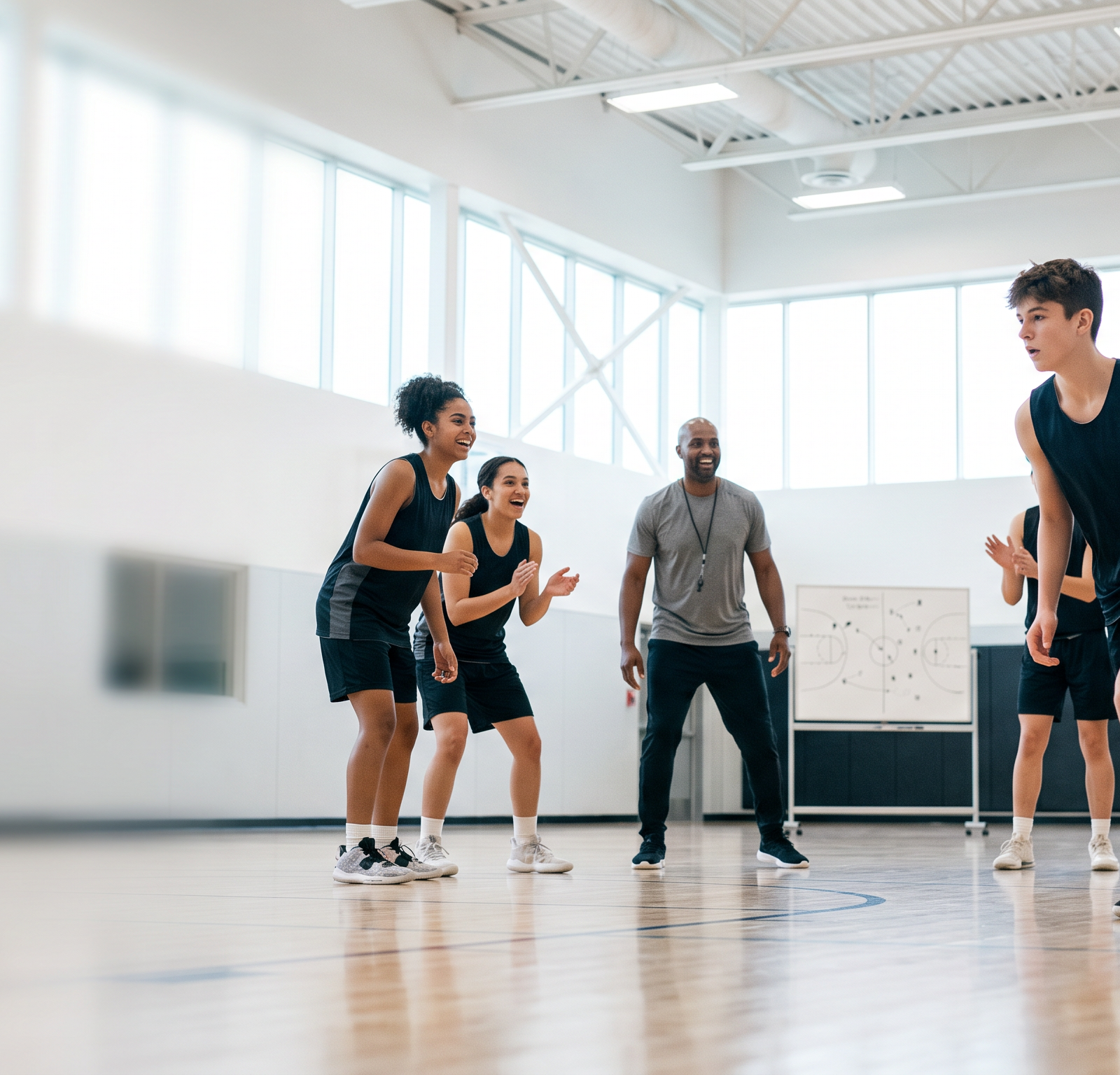
Motivation rarely disappears because young players do not care. It fades when practice feels repetitive, the target is vague, or improvement is hard to see. For basketball and netball coaches, the answer is a practice-goal system that helps every athlete understand the next action, experience small wins, and connect today’s work to meaningful game performance.

Why basketball practice goals keep players motivated
A season aim such as “make the final” can inspire a group, but it is too distant to guide Tuesday night practice. Young athletes stay invested when they can connect effort to a behaviour they control: getting balanced before a shot, talking through a defensive rotation, or starting the warm-up with intent. The Association for Applied Sport Psychology recommends goals that are specific, observable, measurable, time-bound, moderately difficult, and monitored regularly.1
The practical distinction is simple. Outcome goals depend partly on opposition and circumstances. Performance goals measure a controllable result. Process goals describe the behaviours that create that result. A player cannot fully control whether a contested shot falls, but they can control arriving on balance, using a release cue, and pursuing the rebound. Use outcomes for direction; build everyday motivation around performance and process.
| Goal level | Basketball example | Netball adaptation | Why it helps |
|---|---|---|---|
| Season direction | Qualify for regional finals | Qualify for finals | Gives the group a shared purpose. |
| Four-week performance goal | Improve unguarded free-throw percentage by five points | Complete eight of ten centre-pass exits under pressure | Makes ambition measurable. |
| Today’s process goal | Use a verbal cue and hold the follow-through on every elbow shot | Land balanced, present hands early, and call before receiving | Shows athletes what to do now. |
Coaching principle: Make the next rep meaningful. When a player knows what to notice, try, and measure, they have a reason to stay engaged before the scoreboard changes.
Build a goal ladder players can own
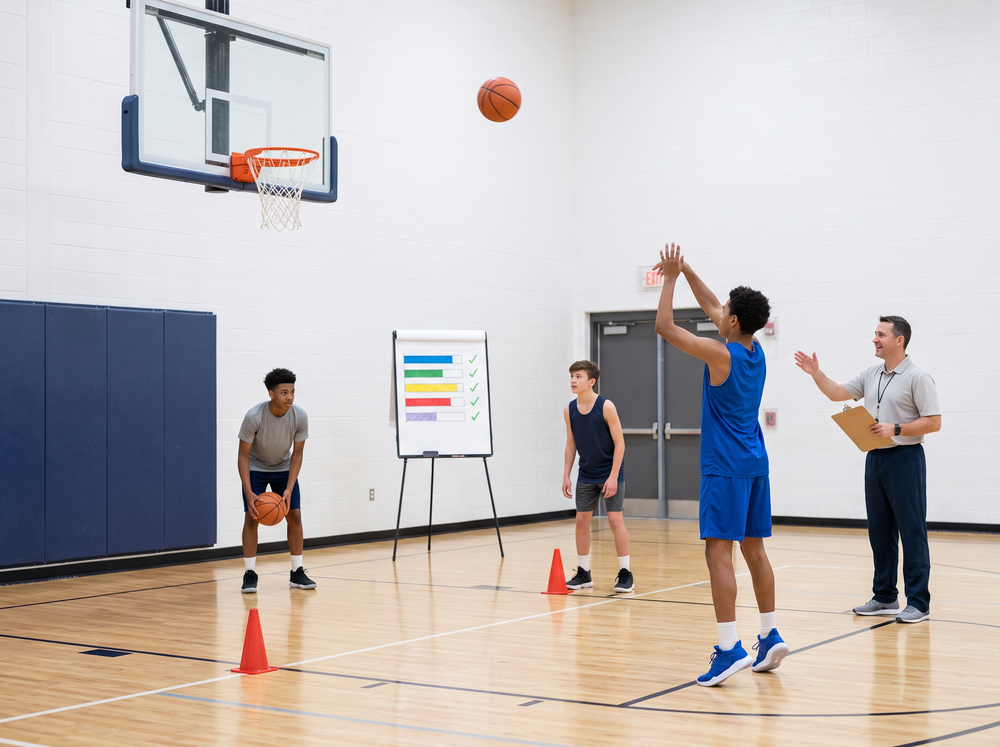
Start with a 10-minute goal conversation
At the beginning of a block, ask: “What would we see and hear if we were a difficult team to play against?” Keep answers behavioural. Players may name sprinting back, communicating early, sharing the ball, or responding positively to mistakes. Turn their ideas into two team standards and one measurable target. Then let each athlete choose one personal focus that supports the team goal.
This is not merely good communication. Research in youth sport links autonomy-supportive coaching with athletes’ needs for competence, autonomy, and relatedness.2 A recent study with youth athletes also found that autonomy-supportive coaching was associated with resilience, optimism, and positive development.3 In practice, offer meaningful, bounded choices: which closeout cue to use, which shooting spot to begin with, or how a player will record a target. Choice does not mean avoiding difficult work; it means giving athletes a voice in the route to improvement.
Make goals visible and moderately difficult
Replace “improve your shooting” with “make 7 of 10 form shots from two metres while holding your finish for one second.” Replace “defend harder” with “make three loud early calls before the ball reaches the lane in each live possession.” The target should stretch players without making success feel impossible. If almost everyone completes it first time, add a constraint. If nobody gets close after clear teaching, scale it down and rebuild.
Use one or two cues only. For shooting, “balance—up” may be enough. For a netball feed, try “see—step—place.” Short cues limit overthinking and give the athlete something useful to repeat after an error.
Give each goal a plan and review point
Before practice, agree on the drill, cue, number of quality repetitions, and evidence to record. At the end, use a 60-second review: “What did I do well?” and “What is my next adjustment?” A simple make total, successful behaviour count, or confidence rating is enough. This short feedback loop keeps reflection tied to the practice experience.
Four basketball practice-goal drills that create visible progress
Begin each drill with a one-sentence purpose. Then let players repeat, observe, adjust, and try again. The scoring rewards effort and execution—not only the final made basket.
1. Shooting Goal Ladder

Set three shooting spots: close form shooting, mid-range, and game-distance. Players move up only after completing the agreed process standard, such as balanced feet, a called cue, and a held follow-through on five attempts. Track makes as a secondary measure, but award a point for a correctly executed routine even when the shot misses. In pairs, one shoots and one observes the cue before switching.
The ladder makes technical improvement visible. A developing shooter can still succeed at the routine and earn the next level. For netball, use a passing-and-receiving ladder that progresses from stationary feeds to leads and then contested channels, with the observer tracking early call, landing control, and pass placement.
2. Three-Stop Possession
Play a small-sided half-court game. The defence earns one point for each possession in which it completes three observable actions: an early call, a legal closeout with active feet, and a gang rebound or clear outlet. A stop alone is one point; the full process earns a bonus. Rotate quickly so every athlete stays involved.
Praise the first controllable action, not only the turnover: “That early help call gave everyone time to rotate.” Players learn that committed defence has a repeatable recipe, rather than being told to “want it more.” For netball, score defensive transition actions: purposeful retreat, a communicated matchup, and a forced low-risk pass or regain.
3. Pass-and-Connect Challenge
Use a four-versus-four game in which a basket counts only after three purposeful passes, and the passer must cut, screen, replace, or sprint into helpful space. Give the attacking group a target such as eight connected possessions in six minutes. A non-playing group can tally successful connections, giving every player a role.
This rewards off-ball movement and decision-making, so less confident players can see how they contribute. For netball, make the condition an early call, clear lead, and safely placed pass into the next space during a centre-pass or circle-entry sequence.
4. Reset, Rehearse, Replay
After a missed assignment, turnover, or rushed shot, an athlete steps to a side marker at the next natural break. They take one breath, state the next controllable action—“talk early,” “jump stop,” or “see the defender”—and rehearse it once without the ball. They return at the next rotation with a single reset goal.
The routine frames error as information, not identity. It is valuable for players who become quiet after mistakes. Keep it neutral and fast; public punishment increases anxiety, while a specific re-entry task restores agency. Research highlights the importance of autonomy support, constructive feedback, and a skill-development focus in psychologically supportive youth-coaching environments.3
| Drill | Coach tracks | Player-owned question | Progression |
|---|---|---|---|
| Shooting Goal Ladder | Routine quality and makes | “Which cue gives me the most consistent release?” | Add a contest, time limit, or defender. |
| Three-Stop Possession | Calls, closeouts, rebounds | “What did I do before the stop happened?” | Reduce space or add a transition start. |
| Pass-and-Connect | Connected possessions | “How did my move help the next pass?” | Shorten the clock or require weak-hand actions. |
| Reset, Rehearse, Replay | Quality of next action | “What can I control on the next play?” | Use it during live scrimmage. |
Create a motivational climate, not a pressure cooker
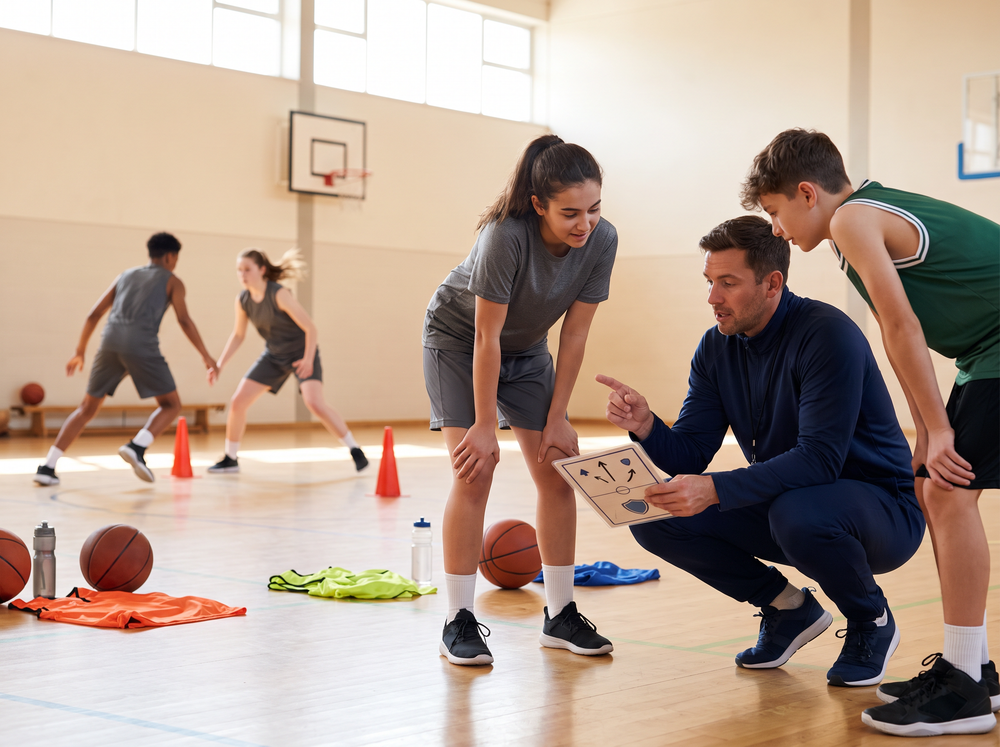
Sustainable practice goals make athletes feel capable, involved, and connected. Name effort specifically—“You changed direction early and beat the screen”—rather than relying on “good job.” When a drill is difficult, use curiosity: “What did the defence take away? What is the next option?” This teaches players that feedback is direction, not a verdict.
Build connection deliberately. Pair athletes with different strengths, rotate leadership jobs, and finish with peer recognition tied to team standards. A player might acknowledge a teammate’s early communication, second effort, or encouragement of a younger athlete. Process-focused praise has been associated with young athletes’ satisfaction of competence and relatedness needs in the coaching relationship.2
Competition remains useful when it is short, fair, and tied to skill. It becomes draining when the same players always win or when only made shots count. Blend personal-best goals, pairs against a standard, and team-versus-clock challenges so more athletes experience success.
Use simple tracking to make effort visible
A paper chart can work, but it is easily lost and rarely gives a coach the whole picture. Vanta Sports provides a connected option built for youth basketball and netball. Volunteer coaches can use the free Vanta Coach App to plan sessions, take attendance, and keep the practice focus visible. Athletes can use the Vanta Player App to track goals, achievements, and team events, turning a vague intention into evidence of progress.
The wider ecosystem supports the adults around the athlete. Vanta Guardian helps parents manage schedules and payments while remaining connected to the team. Vanta Club brings registrations, payments through integrated Stripe infrastructure, safeguarding, and compliance tools together in one club-management platform. Fewer scattered messages and manual follow-ups leave coaches more time for planning, feedback, and player relationships.
Keep tracking light. After each session, ask players to log one completed target and one next-step cue. Each week, review attendance, one skill measure, and a confidence rating privately. Do not use data to rank children; use it to adjust the target or decide whether the team is ready for a more game-like challenge.
A 15-minute weekly motivation routine
Make goals part of the schedule, not an occasional fix for low energy. Open the first practice of the week with three minutes of demonstration or recall: show what the standard looks like. Spend eight minutes on a drill with an observable target. Use two minutes for players to record evidence, then two minutes for paired reflection. Each player names one success and one next action; their partner repeats it back in practical language.
This routine is realistic for busy community programmes and meaningful enough to compound across a season. It also prevents too many priorities at once. If the team is working on ball pressure, do not simultaneously introduce a new shooting system, transition scheme, and fitness benchmark. Keep the goal narrow, revisit it across sessions, and celebrate clear evidence of improvement.
Coaching takeaways for motivated basketball practice
Motivation becomes more reliable when players can see their progress. Start with a shared identity, convert it into one measurable team target, and give every athlete a personal process goal they can explain in their own words. Build drills that reward the behaviours behind successful basketball and netball performance, then use brief, specific feedback to guide the next rep.
Treat enthusiasm as something practice design can protect. A staged challenge, athlete choice inside firm boundaries, visible progress, and supportive relationships give players reasons to return ready to work. When these elements are in place, goals stop being a poster on the wall and become the engine of everyday training.
References
- [1] Association for Applied Sport Psychology: Principles of Effective Goal Setting
- [2] Coatsworth and Conroy: The Effects of Autonomy-supportive Coaching, Need Satisfaction and Self-Perceptions on Initiative and Identity in Youth Swimmers
- [3] Zhang, Du and Tao: Empowering young athletes: the influence of autonomy-supportive coaching on resilience, optimism, and development
Ready to Take Your Training to the Next Level?
Track your shots and level up with the Vanta Player App. Learn more about Vanta Sports
Tags