Player Training
How to Stay Motivated With Basketball Practice Goals: A Coach’s Playbook
Keep basketball and netball players invested from the first whistle to the final repetition. This practical coach’s guide shows how to turn player-owned practice goals into motivating drills, meaningful feedback, and lasting habits.
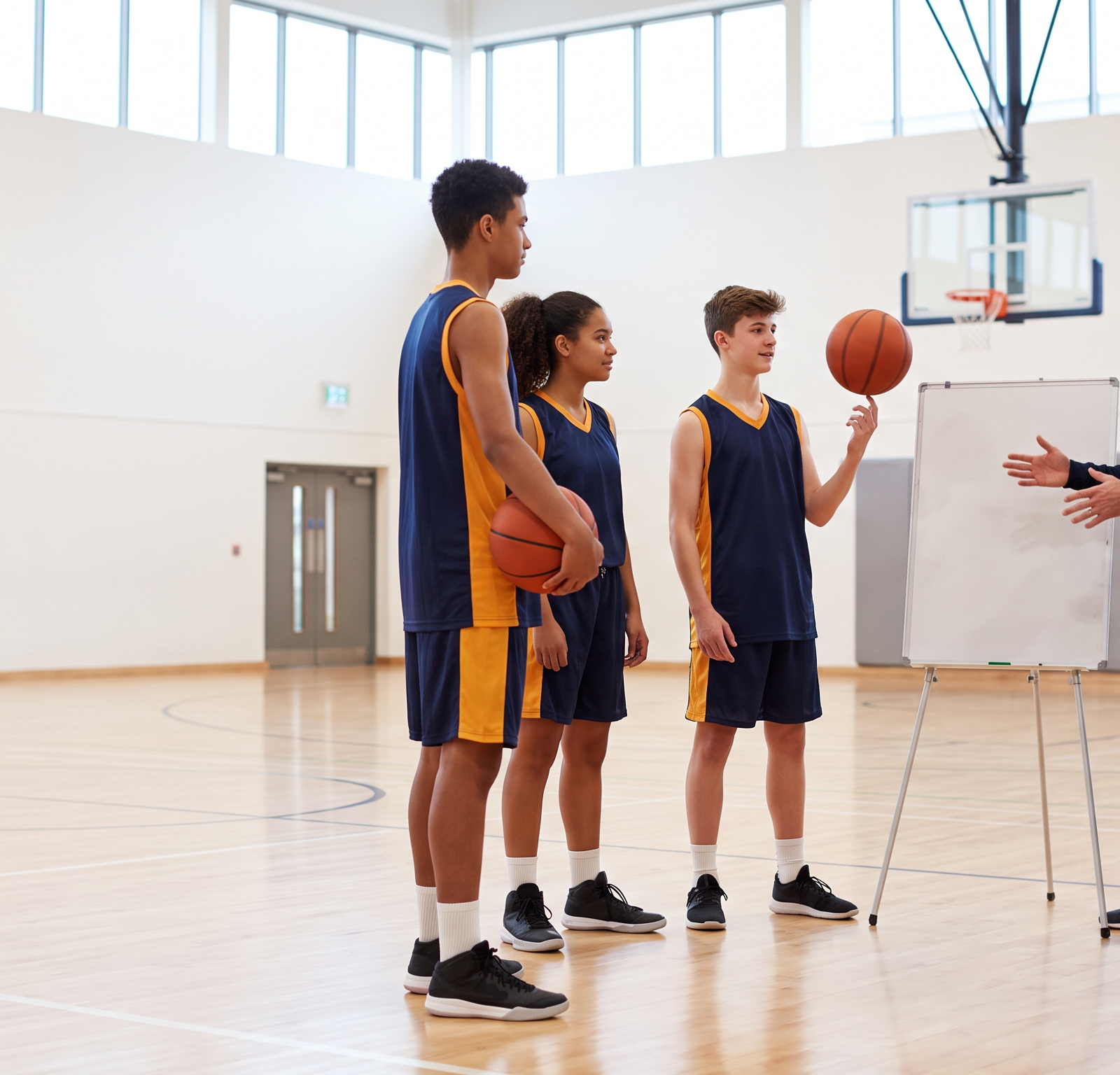

Practice motivation is rarely a volume problem. Most young basketball and netball players will work hard when they can see what they are working toward, how today’s effort moves them forward, and why their contribution matters. When those links disappear, practice can feel like a sequence of drills imposed on players rather than a place where they become more capable.
The answer is a goal system that turns every session into achievable challenges. Effective basketball practice goals are specific enough to guide the next action, flexible enough to fit different ability levels, and visible enough for players to notice progress. This approach gives coaches a practical way to motivate a mixed group of beginners and advanced players without lowering standards.
Why Basketball Practice Goals Lose Their Power
Goals fail when they are too distant or dependent on variables a young player cannot control. “Win the league” will not tell a 13-year-old guard what to do on the next closeout. “Get better at shooting” gives no clear standard for today’s work. Players then judge themselves only by makes or the final score—outcomes that fluctuate from one practice to the next.
A durable system treats the season goal as a direction and the practice goal as a controllable behaviour. A shooter might aim to hold a balanced finish after every catch-and-shoot attempt. A defender might target three early, loud help calls in each small-sided game. In netball, a wing attack might aim to scan before every catch. These are actions players can repeat, observe, and improve.
This matters because motivation is shaped by the climate coaches create. Self-determination theory highlights the needs for autonomy, competence, and relatedness. In youth sport research, autonomy-supportive coaching—including player input, clear reasons for tasks, and non-controlling feedback—has been associated with need satisfaction and perceived competence. Process-focused praise was especially important in one longitudinal youth-sport study. 1 A recent study of 325 youth athletes likewise found associations among autonomy-supportive coaching, resilience, optimism, and athlete development, although its cross-sectional design cannot establish cause and effect. 2
For coaches, the practical implication is straightforward: make the purpose clear, invite meaningful ownership, and give players evidence that their work is improving.
Build Motivation Around What Players Can Control
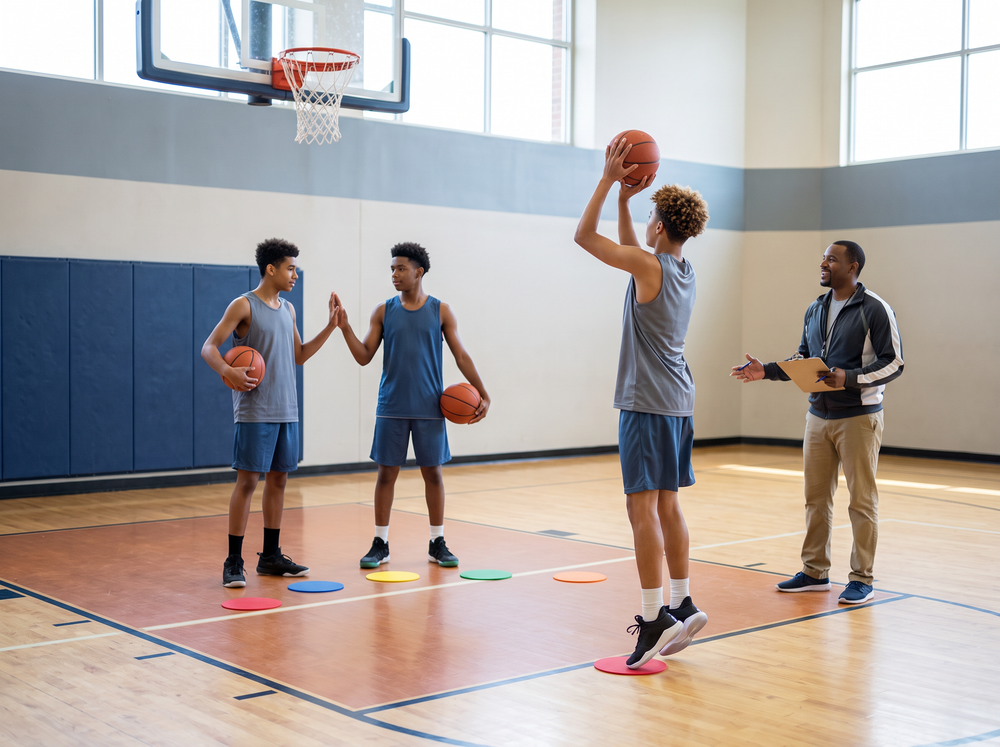
A useful practice-goal framework has three layers. The outcome layer supplies direction, the performance layer measures a standard, and the process layer directs the next action. You need all three, but the process goal should receive the most attention during training. It is where confidence becomes repeatable.
| Goal layer | Basketball example | Netball adaptation | Coaching question |
|---|---|---|---|
| Outcome | Earn a playoff place | Qualify for finals | Where do we want to go? |
| Performance | Improve team free-throw rate to 70% | Complete 80% of centre-pass options | What standard shows progress? |
| Process | Set feet before every catch-and-shoot rep | Land balanced and re-offer after every pass | What will I do on this rep? |
Start the session by stating one team focus in plain language: “Today we are building the habit of making the extra pass when help arrives.” Then let each player select one personal process goal that supports it. Keep that choice bounded. Offer two or three credible options—communication, balanced footwork, or early spacing—and ask each player to choose the one they need most. That preserves direction while giving athletes a real voice.
A practical goal should pass the next-rep test: could the player use it to decide what to do on the next repetition? If not, rewrite it. “Improve defence” becomes “arrive in a low stance before the attacker receives.” The language is observable, coachable, and less likely to create fear of failure.
Use a 60-Second Goal Huddle
At the beginning of practice, gather players for one minute. Name the team theme, demonstrate one example, and ask players to share their own target with a partner. At the end, return to the same pair: “What did you do that showed your goal?” This short loop makes intention and reflection part of training. SHAPE America similarly recommends collaborative goal setting, dedicated time for individual goals, self-assessment, and personalised encouragement to support autonomy and competence. 3
Four Motivation-Building Drills Coaches Can Use Today
The drills below work because the scoreboard rewards the behaviours players are trying to own. Explain the scoring before the first rep and deliberately praise decisions, communication, and technique.
1. Constraint Shooting Ladder
Set out five floor markers from short corner to elbow to wing. Players work in groups of three: shooter, rebounder, and observer. The shooter earns one point for a made basket, but earns a second point only when the observer confirms the agreed process cue, such as “feet set before the catch,” “eyes to the rim early,” or “hold the finish.” Rotate after five attempts.
The first target is personal: complete five technically sound reps at each spot. The second is collective: the group earns a progression marker when every member improves one process score from round one to round two. If a player is struggling, reduce distance or slow the pass; do not remove the success criterion. In netball, use five receiving lanes and score a clean catch, balanced landing, and an immediate re-offer.

2. Decision-Clock Advantage Game
Create a 3v3 half-court game. On the catch, the attacking player has three seconds to shoot, drive, or move the ball. Award a normal basket score, plus a “decision point” whenever the team creates an open look through an early pass or purposeful cut.
This gives hesitant players a reason to act and skilled players a reason to simplify. Stop briefly and ask, “What did you see that made the extra pass available?” A netball version can use 4v4 in a third of the court, rewarding a point for a completed pass to a player who has created a second option.
3. Effort-and-Connection Scoreboard
For a ten-minute transition or defensive game, post three team behaviours: sprint back, talk early, and help a teammate up. Give the team a visible token whenever it completes one of these behaviours. Finish by asking which behaviour changed the game.
This drill is valuable when energy is flat. A player who has not made a shot can still make the group better through a sharp closeout or a sprint. In netball, the same concept can reward fast defensive recovery and early court talk.
4. Stop, Start, Continue Partner Review
End practice with pairs. Each player takes 45 seconds to answer: “What will I stop doing because it slows me down? What will I start doing next session? What will I continue because it helped?” Require one piece of evidence: a number of quality repetitions, or feedback from a teammate.
This is a recovery tool as much as a reflection tool. It prevents one tough session from becoming a story about ability. Instead, players leave with a small adjustment they can test. Keep feedback factual: “Your spacing created room for the drive” is more useful than “You were great.”

Design Practice So Players Can See Progress
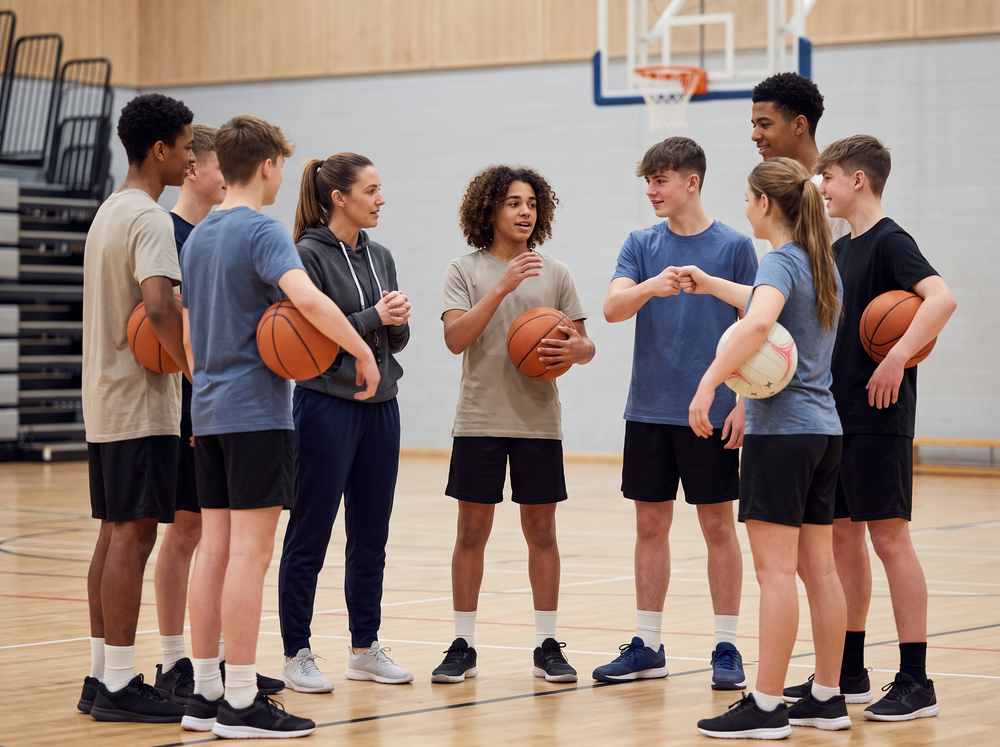
Motivation grows when progress is visible, but visibility does not mean public ranking. Use personal baselines. A player can record the percentage of attempts with correct footwork, or the number of loud defensive calls. Compare that player with their previous session, not with the strongest athlete.
A simple weekly rhythm is effective: choose a goal on Monday, collect observations during the week, review on Friday, and decide whether to maintain, progress, or replace the target. Consistency turns it into a habit.
| Coach action | What players experience | What to say |
|---|---|---|
| Explain the drill’s purpose | Relevance | “This helps us create space before the defence sets.” |
| Offer bounded choices | Ownership | “Choose footwork, communication, or scan-before-catch as your focus.” |
| Track personal evidence | Competence | “You held your finish on eight of ten quality reps—up from five.” |
| Celebrate useful responses to mistakes | Safety and persistence | “Good reset. What is the next action you can control?” |
Be honest about the data. If a goal was missed, do not manufacture praise. Diagnose the gap with the player: was the target unclear, poorly measured, or simply not practised enough? Then adjust one condition. That conversation protects trust and teaches athletes that a setback is information, not a verdict.
Use Technology to Reduce Admin and Protect the Coaching Conversation
The best digital system should make coaching more human, not bury it in administration. Vanta Sports is the natural fit for youth basketball and netball clubs because it connects the people around the player in one purpose-built ecosystem. Volunteer coaches can use the free Vanta Coach App to plan sessions, track attendance, and keep practice goals organised. That means the pre-practice huddle can start with a clear plan rather than a search through messages and paper notes.
Players can use the Vanta Player App to track goals, achievements, and team events, which creates a private record of progress between sessions. Parents can stay aligned through Vanta Guardian, where schedules and payments are managed in one place. At club level, Vanta Club brings registrations, Stripe-integrated payments, safeguarding and compliance tools together. The result is a cleaner pathway from club administration to the coach’s session plan and the player’s next goal.
Keep the technology light. Record one team focus, one player goal, and one reflection point. The conversation, the quality rep, and the relationship are still the work.
Common Mistakes That Drain Practice Motivation
The first mistake is treating every practice as a test. Constant evaluation makes players protect themselves; purposeful practice asks them to experiment. Build in repetitions where the aim is to try a new decision or technique, then use small-sided competition to apply it under pressure.
The second is praising only natural outcomes. A make deserves recognition, but so do a well-timed cut, a balanced landing, and a brave call for the ball. Research on youth coaching climates supports the value of process-focused praise and athletes’ sense of competence. 1
The third is setting the same goal for every player. A team can share a theme, but a novice and an advanced player need different next steps. Differentiate the constraint—distance, time, or defender pressure—while preserving the same learning intention.
A Practical Seven-Day Motivation Reset
If your team’s energy has dipped, do not redesign the whole programme. Run a seven-day reset. At the first session, ask players what makes practice feel useful and identify one shared behaviour. In the middle session, use the Constraint Shooting Ladder or Decision-Clock game and collect one personal evidence point. In the final session, run the Effort-and-Connection Scoreboard, complete partner reviews, and let players nominate the team focus for the following week.
The reset works because it restores clarity, ownership, feedback, and connection in a short cycle. Players do not need every practice to feel easy; they need it to feel purposeful and possible.
Coaching Takeaway
To stay motivated with basketball practice goals, make the next action obvious, let players own a meaningful part of the target, and show them credible evidence of progress. Aim for a mastery-focused practice where effort, decisions, communication, and improvement are visible. When players can connect today’s repetition to tomorrow’s capability, motivation becomes less about a pre-game speech and more about the design of every session.
References
- [1] Coatsworth & Conroy (2009), The Effects of Autonomy-supportive Coaching, Need Satisfaction and Self-Perceptions on Initiative and Identity in Youth Swimmers
- [2] Zhang, Du & Tao (2025), Empowering young athletes: the influence of autonomy-supportive coaching on resilience, optimism, and development
- [3] SHAPE America, How Coaches Can Optimize Motivation Using Research
Ready to Take Your Training to the Next Level?
Track your shots and level up with the Vanta Player App. Learn more about Vanta Sports
Tags