Youth Development
7 Team Communication App Options for Sports Clubs
Compare 7 team communication app options for UK sports clubs, with features, pros, cons and guidance for coaches, guardians and players.

A youth coach is checking whether enough players can make training, a guardian is trying to work out if the fixture changed again, and a player just wants to know they're still in the squad and ready to improve. That is the job of a team communication app in youth sport: it has to keep coach-to-guardian updates clear, coach-to-team messages fast, and club administration from drifting into half a dozen chats and inboxes. The best options do more than send notifications, they reduce admin friction, support RSVPs and payments, and help the club keep a steady line between matchday coordination and player development.
That's especially relevant in the UK, where messaging tools are already embedded in work and community life, and where fragmented communication creates obvious overhead. Teams often want mobile-first updates, quick responses, and a way to keep adults in the loop without losing control of sensitive information. The seven platforms below are all credible choices, but they fit different club sizes, communication habits, and operational needs.
1. Vanta Sports

A coach sends a message about a venue change, guardians RSVP in the same thread, and attendance updates reach the web dashboard without re-entering the information. Vanta Sports is designed for that kind of connected workflow across football, rugby, netball, and multi-sport clubs. Admins work from a web dashboard, coaches manage sessions on mobile, parents handle RSVPs and payments in the app, and players have a gamified space that keeps them engaged between sessions.
The role-based design suits youth sport because coaches, guardians, players, and club administrators need different views of the same activity. A coach can contact parents from the coach screen, while team and parent conversations remain visible to the club rather than sitting on one volunteer's personal phone. That supports cleaner handovers when an assistant coach leaves or a volunteer steps back.
Schedules, reminders, announcements, and event-linked updates sit alongside attendance and payment workflows. Clubs can therefore handle the coach-to-team message, the coach-to-guardian response, and the club-wide record without asking volunteers to copy information between separate tools.
Practical rule: if attendance, payments, safeguarding, and player engagement are creating separate admin jobs, choose a system that connects those workflows rather than adding another chat channel.
Vanta Sports also includes controls for day-to-day safeguarding and administration. DBS and certificate expiry flags, photo and medical consent stored on child records, and non-deletable message trails help coaches maintain appropriate boundaries. Data is encrypted in transit and at rest, the club remains the data controller, and Stripe handles payments. Clubs should still check whether the platform's compliance arrangements and integrations fit their local requirements.
- Best for: clubs that want communication, attendance, payments, safeguarding, and player development in one place.
- Watch out for: clubs outside the UK should confirm local compliance and integration needs.
- Website: Vanta Sports
- Compare note: Vanta Sports vs Spond
2. Spond
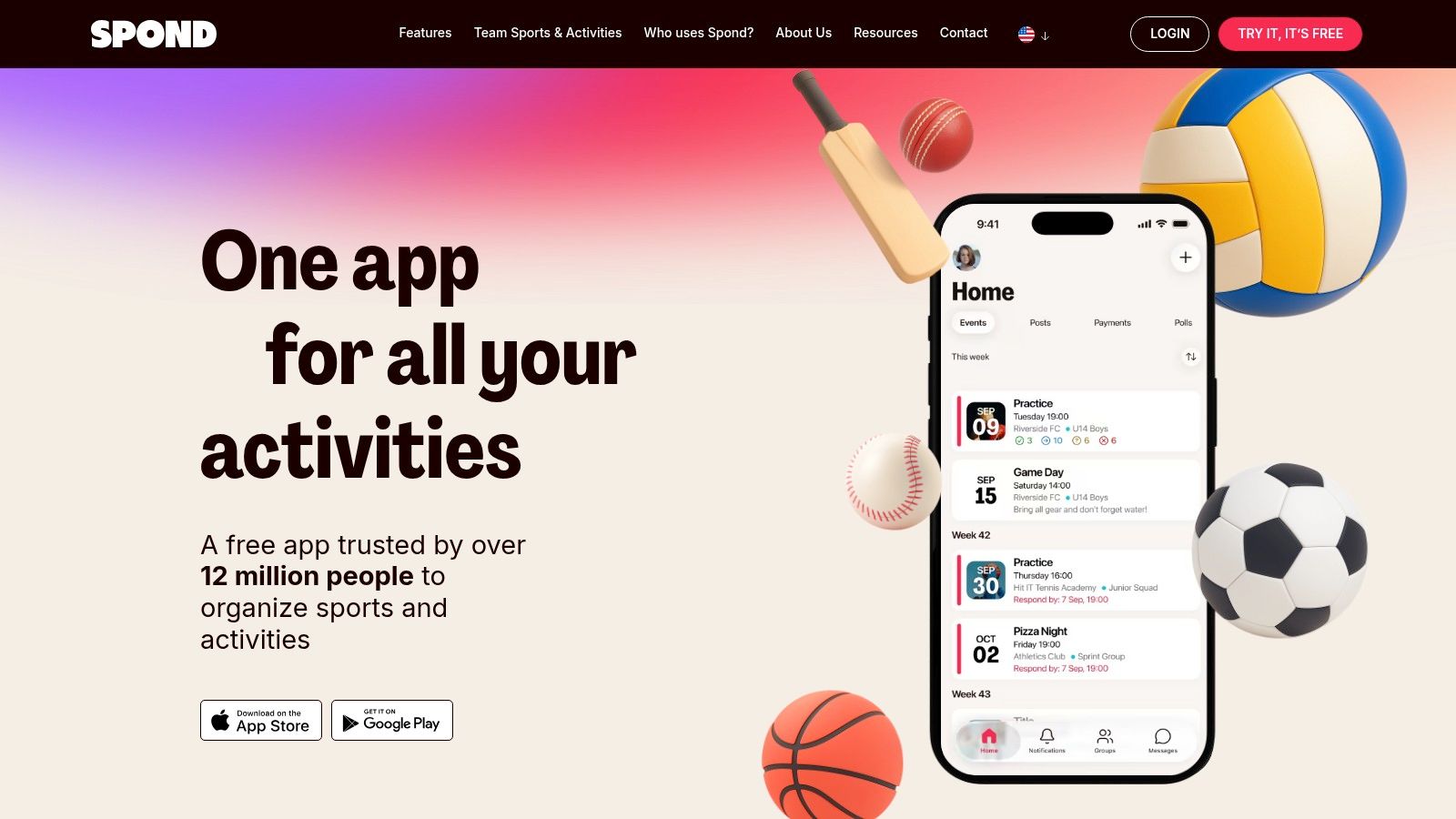
Spond is a good fit when a club wants a simple start that still covers the basics well. Team chat, event invites, availability, reminders, and read receipts make it practical for squad communication, especially where the main pressure is getting players or guardians to confirm attendance without endless chasing. It's also useful for clubs that need payments attached to events, fees, or products without moving straight into a heavy administration system.
The main appeal is that it scales from a free app into club-level tools when the organisation outgrows basic coordination. Spond Club adds things like a member database, registration, reporting, and an optional hosted club website, which is useful for a committee that wants a bit more structure but still values a familiar mobile-first feel. That makes it more than a chat app, but not as full-blown as a complete operations platform.
For UK clubs, the key trade-off is how far you want to push the system. The app is easy for families to adopt, and it's especially handy where reminders and payments need to sit beside communication. But once the club starts wanting deeper admin workflows, the upgrade path becomes part of the decision.
Strong grassroots tools usually fail for one of two reasons, they either overcomplicate the parent experience or leave the organiser doing duplicate work. Spond stays appealing because it keeps the first steps simple.
- Best for: clubs that want quick setup, easy RSVPs, and integrated payments.
- Watch out for: broader club administration needs may push you into Spond Club.
- Website: Spond
- Compare note: Vanta Sports and Spond compared for clubs
3. Heja
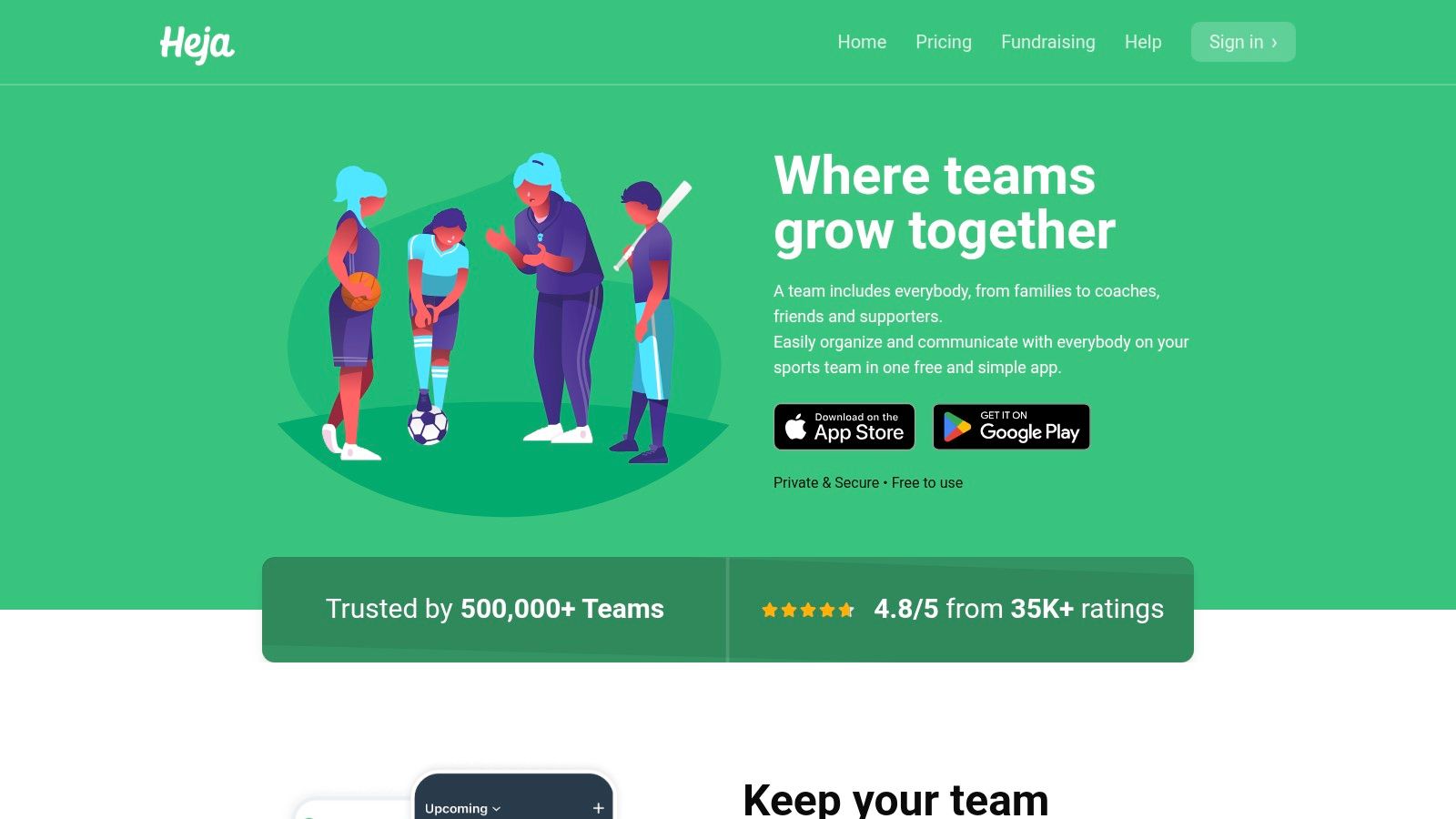
Heja works well for coaches who want a lighter-weight team communication app without dragging a club into full admin software. The free tier covers schedules, RSVPs, messaging, announcements, and team coordination, which is enough for many youth squads that mainly need to know who's coming and what time to turn up. That simplicity is its strength, especially for volunteer coaches who don't want to learn a new operating system just to manage training nights.
Paid tiers add desktop access, attendance statistics, payment tracking, and ad-free options, so the app can grow with a team that starts needing a little more control. That split between free and paid capabilities is easy to understand, which helps when a committee wants to trial the app before committing. It's also a neat choice for coaches who prefer an uncluttered tool and do most of their work from the pitch rather than an office laptop.
The main thing to remember is that Heja is best when communication is the primary job. If you need club-level registration, wider volunteer coordination, or safeguarding-oriented workflows, you'll probably want something broader. If you want straightforward team admin, though, it does that job cleanly.
See the broader positioning in this sports team communication overview, especially if you're comparing it against more integrated club systems.
Where Heja fits best
It suits teams that already have a clear organiser and don't need much beyond reliable attendance and messaging. It's less of an all-club tool and more of a squad-level organiser, which is exactly what some coaches need.
- Best for: teams wanting clean comms and attendance tracking without full club administration.
- Watch out for: desktop access sits behind a paid plan.
- Website: Heja
4. TeamSnap
TeamSnap is the familiar, established option in this list, and that maturity shows up in how broad the workflow support feels. It handles centralised messaging, alerts, schedules, availability, and roster tools, then stretches into club and league-level communications and registration when organisations need more than one squad. For many clubs, that makes it a safe choice because parents and volunteers have probably seen something like it before.
What makes TeamSnap attractive is its progression path. A single team can start free, then move up as roster size, availability tracking, or coaching content becomes more important. That helps smaller clubs avoid overcommitting at the start, while larger organisations can lean into the more advanced structure when it's worth it.
The trade-off is that the deeper club features usually require a sales conversation, and the vendor pages feel more US-centric than some UK clubs would like. If your priority is a straightforward team app with a known sports workflow, it's a strong contender. If you want transparent UK-first operations and closer alignment with local payment habits, other options may feel easier to adopt.
Coach's test: if your parent group already understands the app in one session, adoption will be easier than if you need three training calls and a WhatsApp backup group.
- Best for: clubs and leagues wanting a mature sports platform with team and organisation-level structure.
- Watch out for: advanced club pricing often needs a quote.
- Website: TeamSnap
- Compare note: TeamSnap compared with Vanta Sports
5. Stack Team App
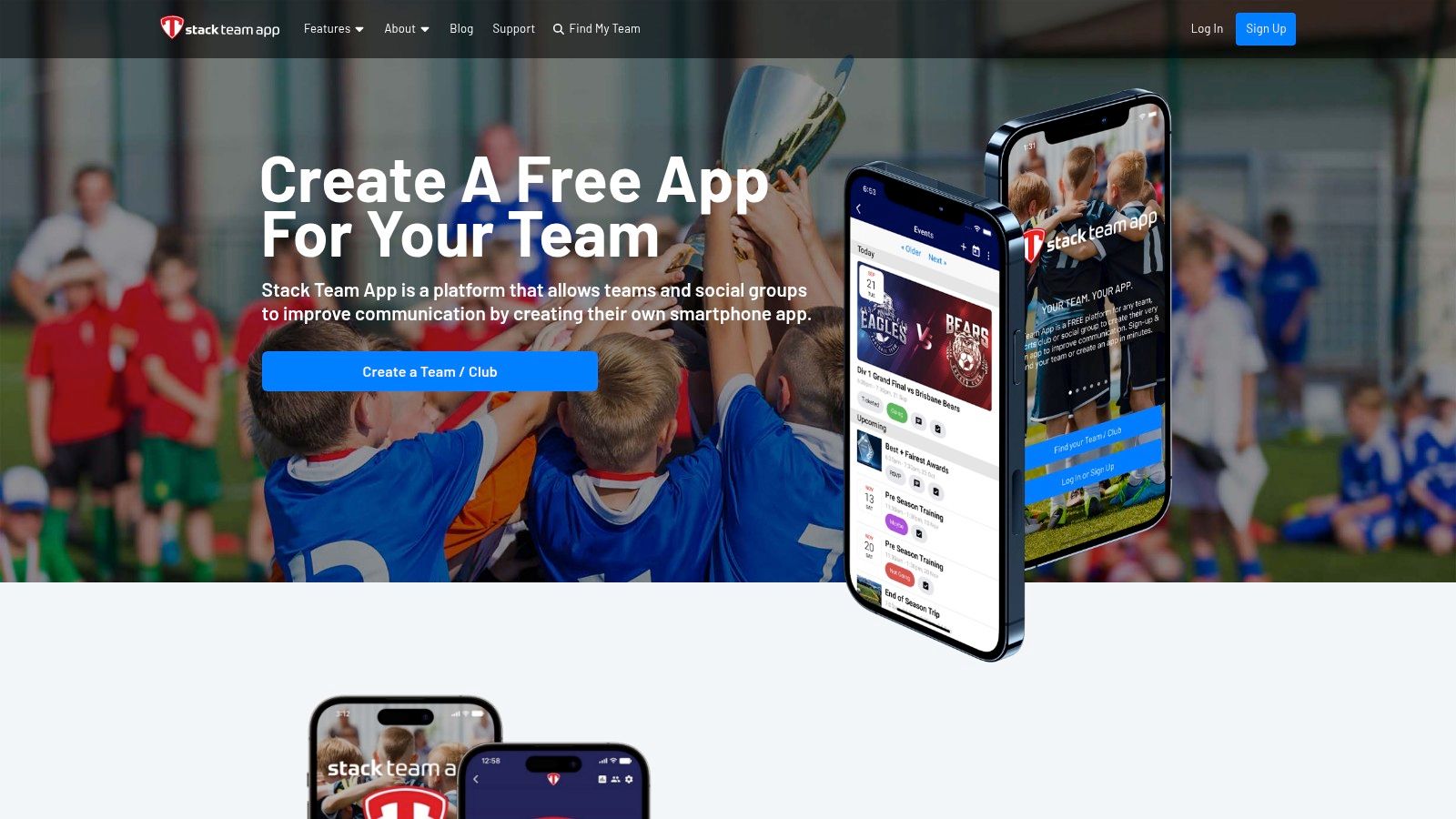
Stack Team App is a strong pick for clubs that want a free, wide-open communication layer and can live with ads. The core platform supports unlimited teams and members, plus team news, events, messaging, and push notifications, which makes it a practical route for grassroots organisations that need to broadcast information without wrestling with a complex setup. Admins work from the web dashboard, while members mostly live in the mobile apps.
The biggest advantage is cost. Clubs can create and use the platform without a hard roster cap, which suits community teams, junior sections, and volunteer-led groups that don't want immediate overhead. It also means a club can build a public-facing team hub and keep members moving through a single space rather than scattered chats and emails.
The downside is obvious, ads are enabled by default, and some admin controls sit more comfortably on the web than in the app. That's not a deal-breaker, but it does mean club coordinators should decide early whether the free model is a feature or a compromise. For some clubs, especially those with sponsor relationships, the ad and banner options may even be part of the operating model.
If your club needs basic communication now and can tolerate a more traditional web-admin split, it's a sensible free option.
- Best for: grassroots clubs that want a free, mobile-friendly hub for news, events, and messaging.
- Watch out for: ads are part of the default experience unless you pay to remove them.
- Website: TeamApp
6. Pitchero
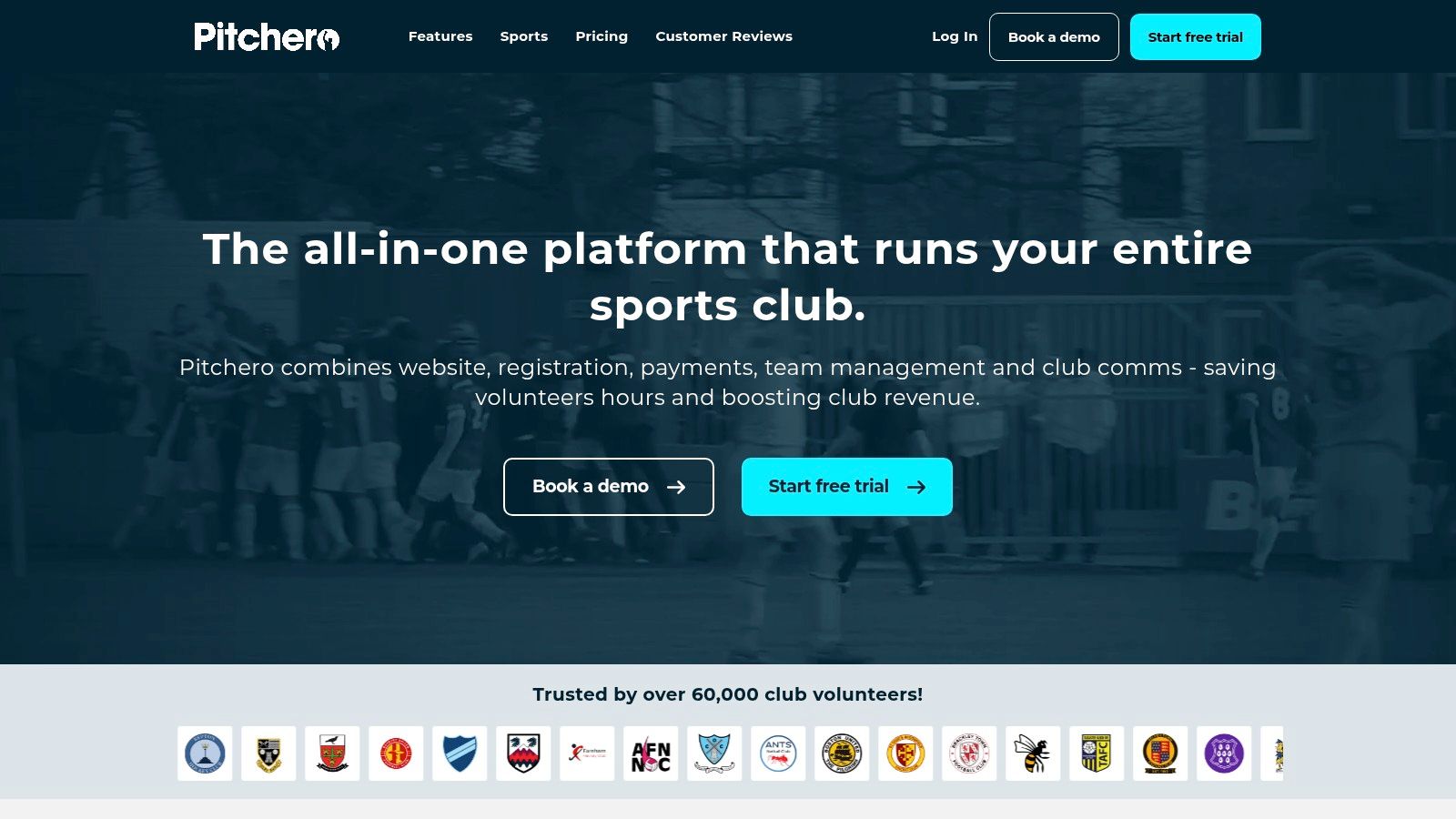
Pitchero is the most obvious choice for UK clubs that want a website, payments, and team communication under one roof. It combines a hosted club website with a member database, payments, and team management, then adds built-in communication for teams, parents, and supporters. That makes it especially useful for clubs that operate more like a small organisation than a single squad.
The app handles team availability, selection, instant messaging, and match details, which keeps matchday communication close to the wider club presence. UK payment processing options and integrated digital lottery fundraising also make it a stronger fit for clubs that rely on recurring admin and fundraising activity. If your committee needs a public website as much as a private communication system, Pitchero makes a lot of sense.
The trade-off is weight. Pitchero can feel broader than a pure chat app, and that's not always what a small side needs. But for multi-team clubs, that breadth is exactly why it gets chosen. It reduces the number of places volunteers need to work, and it gives parents one recognisable place to check what's happening.
Read the comparison alongside Vanta Sports and Pitchero if you're weighing a lighter team-first workflow against a more integrated club platform.
Best fit scenario
Pitchero suits a club that wants communication to sit alongside registration, site content, and payments. It's less about casual chatter and more about organised club operations with a public face.
- Best for: UK clubs needing comms, website, and payments in one platform.
- Watch out for: it may be more platform than a single team needs.
- Website: Pitchero
7. Teamer
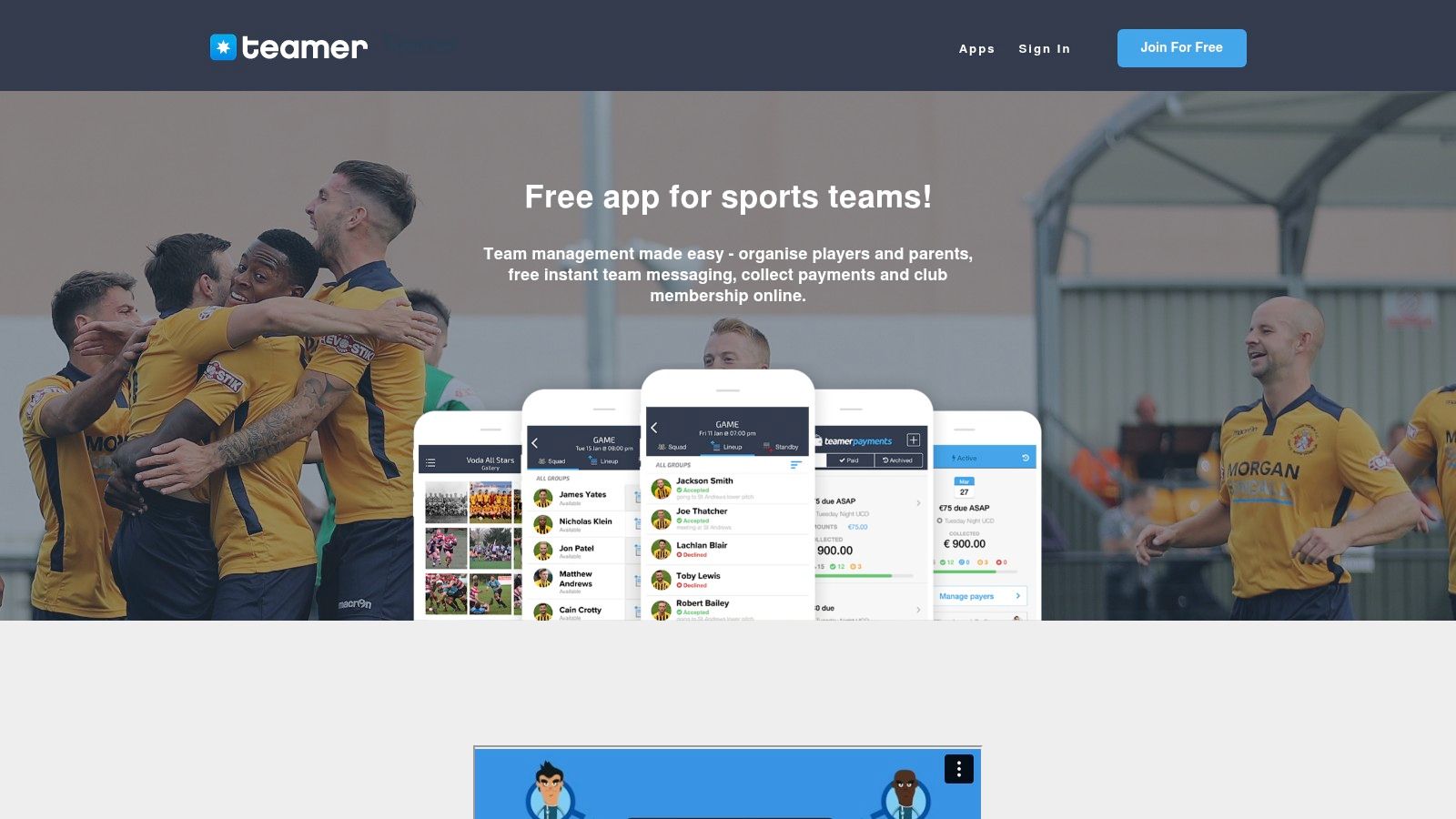
Teamer is the friendly, familiar option for clubs that still value app, email, and SMS together. The free core service supports team messaging, event invites, attendance tracking, and online payments, with notification options that include app, email, and SMS. That multi-channel approach is particularly useful where parents don't all want the same style of contact, or where you need a backup path for message delivery.
For UK and Ireland clubs, Teamer's legacy SMS support is a real practical advantage. Coaches and managers can reach families without assuming everyone is checking one app at the same time, and that matters when availability changes quickly. It's a traditional platform in feel, but that can be reassuring for clubs with mixed-tech parents or older volunteers.
The trade-off is that it isn't as modern or feature-dense as the more integrated systems. If your club mainly wants reliable coordination and a familiar workflow, that's fine. If you need deeper operations, player development, or safeguarding-led structure, you may quickly outgrow it.
The plain truth is that Teamer solves the communication basics well, and sometimes that's enough. Clubs that want less complexity and more reach often appreciate that balance.
- Best for: clubs that want app, email, and SMS communication with simple payments.
- Watch out for: the interface feels more traditional than some newer products.
- Website: Teamer
Top 7 Team Communication Apps, Feature Comparison
| Product | Implementation complexity 🔄 | Resource requirements ⚡ | Expected outcomes 📊 | Ideal use cases 💡 | Key advantages ⭐ |
|---|---|---|---|---|---|
| Vanta Sports | Moderate, multi-role web + mobile setup, integrations | Low monetary cost (core free); devices for admins/coaches; Stripe fees apply | High ⭐⭐⭐, unified admin, improved player engagement, audit-ready safeguarding | Youth clubs, academies, multi-team families seeking full club+player tools | All-in-one free platform; safeguarding & compliance; gamified player app |
| Spond | Low, quick team setup; Spond Club adds admin complexity | Low (free app); in-app transaction fees; paid Club tier for club tools | Medium ⭐⭐, reliable comms, RSVPs and payment handling; scales with Club upgrade | Grassroots UK teams/clubs needing simple RSVPs & payments | Easy to adopt; UK pricing/support; widely used by grassroots clubs |
| Heja | Low, straightforward team-first setup | Very low for free tier; paid tiers for desktop/advanced features | Medium ⭐⭐, clear comms and attendance tracking | Teams that want simple comms and attendance without club admin | Simple trial path; paid desktop and advanced stats available |
| TeamSnap | Moderate, mature product with tiered configuration for clubs/leagues | Paid tiers for advanced features; may need sales for custom pricing | High ⭐⭐⭐, comprehensive team/club workflows and registrations | Clubs or leagues needing organisation-wide admin and registration | Established platform; sports-specific workflows; broad adoption |
| Stack Team App (TeamApp) | Low, web admin + mobile apps; ad-management options | Core free (ad-supported); optional ad-removal/sponsor plans cost money | Medium ⭐⭐, free team hub with broad reach; branding via sponsors | Clubs wanting a free hub or sponsor-funded app | Completely free core; unlimited teams; sponsor/ad monetisation options |
| Pitchero | Moderate, hosted website + club ops setup | Paid tiers for site & club features; UK payment integrations (Stripe/GoCardless) | High ⭐⭐⭐, centralised site, payments and member management | UK multi-team clubs wanting site + payments + fundraising | Hosted club website; transparent UK fees; integrated fundraising tools |
| Teamer | Low, simple team setup with legacy SMS options | Free core; optional SMS bundles and online payments | Medium ⭐⭐, dependable notifications (app/email/SMS) and payments | UK & Ireland clubs needing SMS fallback and simple adoption | Free core platform; multi-channel notifications; familiar to local clubs |
Choose the Communication System Your Club Can Grow With
The right choice depends on what your club is really trying to fix. If messaging, fixtures, and RSVPs are the main pain points, a focused team app is often enough. If you also need a website, registration, and payments, a broader club platform starts to make more sense. And if your biggest challenge is keeping communication tied to safeguarding, attendance, coaching, and player development, an integrated system gives you the cleanest foundation.
That logic matches what many UK clubs already feel in practice. Teams are dealing with tool sprawl, quick turnarounds, and a growing expectation that adults, not children, control the communication flow. Clubs that reduce switching between apps and keep parent, coach, and admin workflows in one place usually find that the day gets calmer, not busier.
A sensible rollout is straightforward. Map your coach-to-guardian and coach-to-team messages first, then confirm who owns payments and attendance. Test guardian and player adoption with one team, review UK data and safeguarding needs before expanding, and keep an eye on whether the app genuinely reduces admin rather than just moving it somewhere else. If you also run match days and need the wider event experience to work smoothly, running hospitality for match days can sit alongside your communication plan rather than competing with it.
Clear communication gives coaches more energy for coaching. It helps guardians feel informed, and it helps young athletes feel seen, supported, and ready to develop together.
If your club wants communication that does more than send messages, Vanta Sports brings messaging, attendance, payments, safeguarding, and player development into one connected system. It's built for the daily reality of youth sport, where coaches, guardians, and players all need different tools but one clear source of truth. Visit Vanta Sports to see how a purpose-built platform can replace scattered chats and give your club a calmer way to grow.
Tags