Coaching Tools
How to Track Player Development as a Volunteer Basketball or Netball Coach
A practical, low-admin system for volunteer basketball and netball coaches to observe skills, set meaningful goals, and show every young player their progress across a season.
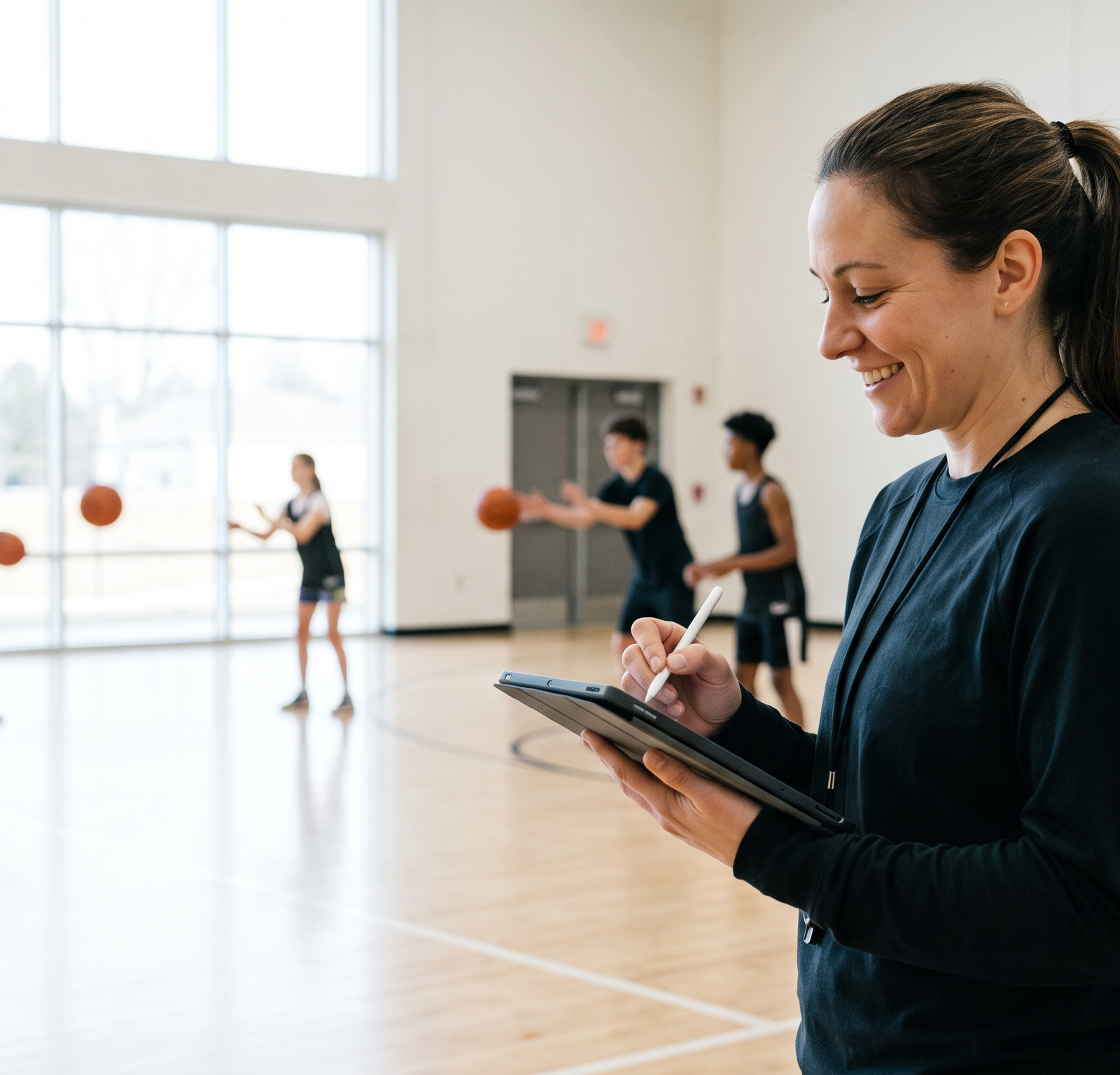
Volunteer coaches do far more than run drills. You create a safe, enjoyable place where young basketball and netball players can gain confidence, learn to solve problems, and feel that they belong. That makes player development tracking valuable—but it does not mean you need elite-level data, a complex spreadsheet, or hours of administration.
The most useful tracking system is simple: observe a few important behaviours, record a short baseline, agree on one next step, and revisit it in a realistic game context. Used consistently, that cycle helps you plan better sessions, give fairer feedback, involve parents constructively, and celebrate growth that a scoreboard cannot show.
This guide explains how to track player development as a volunteer coach, with basketball and netball examples, ready-to-use drills, and a lightweight workflow that fits around work and family life.

Start With the Right Definition of Development
Development is not simply the number of goals scored, shots made, or games won. Those outcomes can be shaped by growth spurts, position, opposition, court time, and confidence on the day. Instead, track the actions that a player can practise and influence: catching securely, landing safely, scanning before receiving, choosing an available teammate, communicating, and responding to mistakes.
This approach respects the fact that young athletes do not all develop at the same pace. USA Basketball frames player development across Introductory, Foundational, Advanced, and Performance levels, reinforcing the value of matching expectations to readiness rather than assuming identical progress for every child.1
For a volunteer coach, four development domains are enough. They give you a rounded picture without turning coaching into paperwork.
| Domain | What to look for in basketball | What to look for in netball | Simple evidence to record |
|---|---|---|---|
| Technical execution | Dribble control, passing accuracy, finishing form, defensive stance | Catching, passing accuracy, footwork, shooting technique | A brief rating and one observed example |
| Movement and physical readiness | Balance, stops, changes of direction, safe landing | Balanced landings, agility, deceleration, body control | “Consistent,” “emerging,” or “needs support” |
| Decision making | Scans before receiving, protects space, makes a timely pass | Moves into space, selects a safe pass, recognises pressure | One clip, tally, or note from a game-like drill |
| Personal and team behaviours | Communication, effort, resilience, inclusion | Communication, listening, support for teammates, sportsmanship | A player reflection and coach observation |
Coaching principle: Track progress against the player’s own starting point, not against the strongest player in the group. The goal is a useful next step, not a permanent label.
Build a Baseline in the First Two Sessions
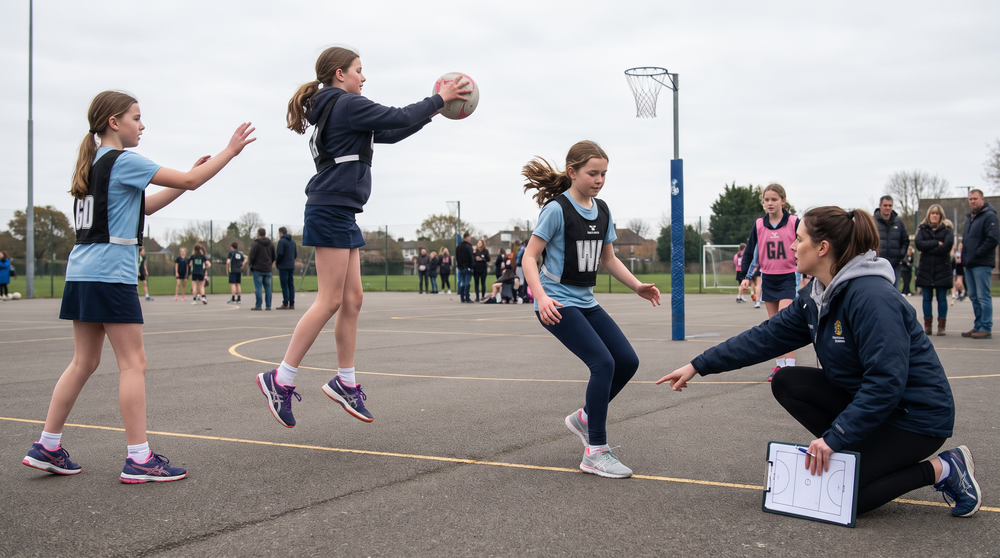
A baseline is a snapshot, not a trial. During your first two practices, choose two foundation skills and one game behaviour that matter for the age group. For younger basketball players, that might be an athletic stop, a two-hand chest pass, and moving to support the ball. For a developing netball group, it could be a two-hand catch, a balanced landing, and finding space after passing.
Watch each player for several attempts rather than judging one successful or unsuccessful moment. World Netball advises coaches to observe, analyse, and correct specific elements of performance, including what the eyes, hands, arms, landing, and movement are doing.2 That is much more helpful than writing “good passer” or “needs confidence.” A clear note such as “looks toward receiver before passing; needs more balance after the catch” tells you what to coach next.
Use a three-point status that is easy to understand: Emerging means the skill is visible only with considerable time, space, or reminders; Developing means it appears regularly but is inconsistent under pressure; and Secure means the player can show it reliably in a modified game. Record the date and one short example. This is enough to make future progress visible.
Use a Five-Minute Observe–Record–Plan Cycle
The best tracking system is the one you will still use in week ten. Allocate one focus per practice and watch only four or five players closely while an assistant, trusted helper, or another activity keeps the rest engaged. At the next practice, rotate your focus group. In a 45- to 60-minute session, five minutes of intentional observation is usually more valuable than trying to document everybody all the time.
After the session, record only three pieces of information: the skill or behaviour observed, one specific example, and the next practice action. For example: “Ava—uses a strong jump stop when unguarded; next step: keep hips low on the jump stop with a closing defender.” That note informs your next session plan immediately.
A free tool such as the Vanta Coach App makes this lighter for volunteer coaches by bringing session planning and attendance tracking into the same place. Attendance is not a measure of talent, but it gives valuable context: a player who has missed three sessions may need a re-entry opportunity rather than a judgment that they are “behind.” Vanta Sports is purpose-built for youth basketball and netball, with a modern, intuitive ecosystem rather than disconnected processes.
Turn Feedback Into Player Ownership

Young players need feedback, but they also need to learn how to notice their own improvement. The Australian Sports Commission’s GRIP model—Goal, Reflection, Input, Plan—is a practical structure for objective observation, player reflection, and future-oriented action planning.3 It works in a 30-second sideline conversation.
Start with the goal: “We were working on receiving in space.” Ask for reflection: “What did you notice about your movement before the pass?” Offer one precise input: “You changed direction well, but you looked at the ball late.” End with a plan: “On your next two reps, scan the passer first, then show your target hands.” This is more actionable than “be quicker” or “focus harder.”
Keep the feedback ratio realistic. In a live practice, praise the exact behaviour you want repeated, correct one key point, and get the player moving again. Give more detail after the drill or at the end of a game. When a player self-identifies a useful next step, record it alongside your note; it becomes a meaningful goal rather than a coach’s verdict.
Three Practical Drills That Double as Assessments
1. Catch–Pass–Land Sequence
Use this as a foundation assessment for netball and adapt it for basketball with a jump stop or pivot. Set three players in a triangle. Player A passes to Player B, who moves toward the ball, catches, lands under control, and passes to Player C. Progress from unopposed repetitions to a passive defender and then a time target.
Track whether the player watches the ball into their hands, catches with control, establishes a balanced base, and releases the next pass with purpose. World Netball’s foundation guidance highlights balanced landing and basic execution before more complex pressure is added.2 Write one technical note and one movement note, not a full drill report.

2. Space Invaders
Create a small grid with four attackers and two defenders. The attackers aim to make five consecutive passes; defenders try to intercept or force an error. In basketball, allow limited dribbles or award a bonus for a pass that creates a driving lane. In netball, use the relevant footwork and contact rules and reward a pass into a safe, available space.
Track scanning, timing, support angles, and choice of pass. Keep the same challenge for a three-week block so that you can compare performance fairly. If a player is secure without pressure but loses the ball when a defender closes, that tells you the next plan should include less space, more scanning, and calm decision-making—not merely more stationary passing.
3. Conditioned 3v3 or 4v4 Games
Small-sided games are the most efficient way to see whether practice transfers into play. Use a half court or reduced area and add one condition linked to your development focus: three passes before a shot, a point for a successful give-and-go, or an extra point for a defensive stop followed by a controlled outlet.
Track the same two behaviours for the whole group in that game—perhaps “moves after passing” and “communicates on defence.” Avoid tallying every stat. A single count plus one qualitative note is enough: “Mia called early and rotated twice; next goal is to sustain that communication after a turnover.”

Review Every Four to Six Weeks, Not Every Day
Development needs enough time to become visible. A monthly or six-week review is frequent enough to adjust your coaching and sparse enough to avoid overreacting to one match. Re-run one or two familiar drills, observe the same behaviours in a small-sided game, and ask each player a short reflection question: “What is easier now?” and “What would you like to improve next?”
| Review question | What it tells you | Coaching response |
|---|---|---|
| Is the skill more reliable under light pressure? | Technical consistency | Add a defender, time limit, or smaller space |
| Does it transfer to a game? | Decision-making progress | Use more small-sided, game-like activities |
| Does the player know their next step? | Ownership and understanding | Co-create a simple, achievable goal |
| Has attendance or wellbeing affected opportunities? | Context around performance | Offer catch-up practice and communicate supportively |
Netball Australia’s current coaching framework expects foundation coaches to plan and review sessions, cater for participants’ physical and social development, identify skill faults, and use effective communication. It also recognises player feedback, self-awareness, video analysis, peer input, and mentor input as useful reflection methods for developing coaches.4 You do not need to use every method. Choose the one that helps your players and fits your club.
Keep Parents Connected Without Turning Them Into Analysts
Parents want to know that their child is supported, but they do not need a weekly performance report. Share the team’s development focus—such as balanced landing, moving into space, or supportive communication—and describe what players are practising. When discussing an individual, lead with progress and invite the player into the conversation where appropriate.
The Vanta Guardian app helps parents manage schedules, payments, and team connection, while the Vanta Player App gives players a space to follow their goals, achievements, and events. At club level, Vanta Club brings registrations, Stripe-integrated payments, safeguarding, and compliance tools together. That connected approach reduces administration and creates clearer, more consistent communication around the player.
Protect privacy throughout. Keep medical, injury, and sensitive personal information accurate, secure, and available only to people who genuinely need it under club policy. Netball Australia explicitly includes accurate medical-history and injury reporting within foundation coaching responsibilities.4 Development notes should be factual, respectful, and free from labels that could follow a young person unfairly.
The Takeaway: Consistency Beats Complexity
A useful player-development system has three characteristics: it is specific enough to guide the next practice, simple enough to maintain, and positive enough that players want to engage with it. Start with one baseline, one skill focus, one short note, and one next action. In a season, those small moments add up to a powerful record of learning.
Your greatest value as a volunteer coach is not a perfect spreadsheet. It is seeing each player, creating the right next challenge, and making improvement feel achievable.
References
- [1] USA Basketball: Player Development Curriculum Introduction
- [2] World Netball: Foundation Coaching Manual
- [3] Australian Sports Commission: The GRIP Feedback and Feedforward Models
- [4] Netball Australia: National Coaching Development Framework, 2026 Edition
Ready to Take Your Coaching to the Next Level?
Try the Vanta Coach App - Free for youth coaches. Learn more about Vanta Sports
Tags