Youth Development
Why Do Footballers Rip Their Socks: Calf Pressure Relief
Why do footballers rip their socks - Discover why footballers rip their socks for calf pressure relief and shin pad fit. A coach-friendly safety guide for

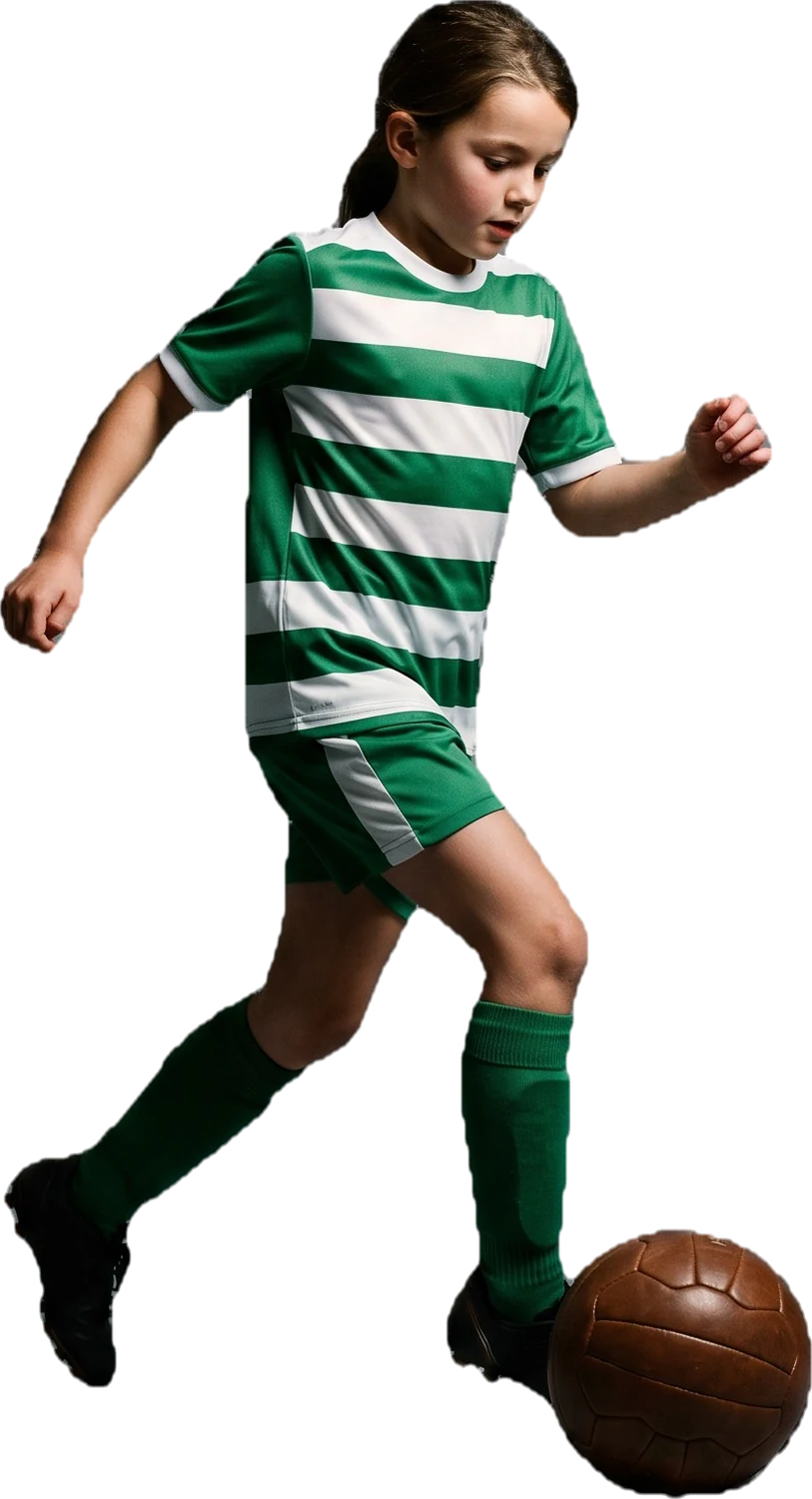
Saturday morning, a young winger arrives with a fresh club kit, shin pads in place and a neat slit in the back of each sock. A parent spots the torn fabric while the team warms up and wonders whether the player has damaged essential equipment, copied a professional without understanding why, or created a safety problem. The player, meanwhile, may be trying to stop an uncomfortable squeeze around the calf.
So, why do footballers rip their socks? The most widely reported answer is comfort. Players often cut or tear the back of snug match socks to reduce pressure around the calf, while the available reporting makes clear that this isn't a proven way to prevent cramps, improve performance or reduce injury risk. For youth coaches and families, the sensible response is neither panic nor blind imitation. Understand the reason, check the rules, and find the safest solution for the individual player.
The Matchday Moment Everyone Has Seen
The tear usually appears before anyone has kicked a ball. A player pulls the sock over the shin pad, takes a few quick steps, then reaches behind the leg and tugs at the fabric. The material stretches tightly over the calf, and a small opening appears at the back. Within minutes, the player looks more comfortable and gets on with the warm-up.
For a parent on the touchline, that visual can be unsettling. Football socks are part of the compulsory kit, and the damaged area can look like a deliberate attempt to bend the rules. In most cases, though, the player isn't trying to make a statement. They may be responding to a tight fit, a bulky calf, or the feeling that the sock is pressing harder as the match approaches.
A useful first question: “What problem is the sock change solving for you?”
That question works better than an immediate telling-off. A teenager who says the sock feels restrictive needs a fit and comfort conversation. A player who says they copied an elite footballer needs an evidence conversation. Someone who has a loose edge, exposed equipment or discomfort needs a safety check before the match begins.
The sideline decision
The practice has become visible beyond elite football. BBC Newsround's explanation of ripped socks describes rolling socks down and using mini shin pads as habits that became popular in grassroots football, with some clubs later banning them because of safety concerns. That gives coaches an important reminder: popularity doesn't automatically make a kit habit suitable for every team or age group.
The aim isn't to shame players for wanting to feel ready. Young footballers learn a great deal from small matchday choices, including how to recognise discomfort, ask for help and respect shared kit standards. By the final whistle, the central question should be clear: does the modification improve comfort without creating a rule or safety issue?
How a Modern Football Sock Actually Works
Think of a football sock as a fitted sleeve with an anchor. The sleeve wraps the lower leg and holds the shin pad in position, while the reinforced foot sits inside the boot and helps keep the whole arrangement stable. Elasticated areas and a close knit reduce unwanted movement, so the pad doesn't slide every time a player sprints, changes direction or challenges for the ball.
That snugness is intentional. A loose everyday sports sock may feel pleasant while walking, but it can allow the shin pad to move during a match. A match sock has to balance two competing jobs: it needs to stay secure, yet it must remain comfortable while the calf works repeatedly through running, jumping and turning.
The fit can feel different from player to player. A sock that feels fine on one teenager may press firmly on another player's calf, especially if the player has a larger calf circumference or notices more muscle swelling during a match. UK football coverage describes localised pressure around the gastrocnemius and soleus, the main calf muscles, as one reason players make a slit or hole at the back while keeping the foot and shin-pad area intact. Technical coverage of the sock modification describes typical cut sizes of roughly 5–7 cm for a slit or 2–3 cm for a hole, while also warning that evidence for reducing cramps, fatigue or injury risk remains weak.

Why the design can feel restrictive
The sock has to hold the shin pad, but the calf has to move freely. That creates a tension trade-off. More grip can mean more pressure, while a looser fit can mean the pad shifts or the fabric bunches.
Parents can use a simple clothing comparison. A fitted sleeve stays where it belongs, but if the sleeve is too tight, the wearer notices it quickly. The answer isn't always to cut the sleeve. It may be a different size, a different construction, or a better-fitting layer underneath.
The same principle applies to personalised kit storage for younger children. Families comparing custom socks for daycare will recognise the value of clear sizing and easy identification, even though football match socks have the added job of covering protective equipment. Before altering a pair, check the manufacturer's fit, the player's calf comfort and the club's kit policy. Coaches organising equipment can also use an equipment inventory system to keep spare sizes and approved alternatives ready instead of leaving players to solve the problem with scissors.
Why Players Cut or Rip Their Socks
A player arrives at a match, pulls on the required socks, and quickly feels pressure around the calf. Cutting a small opening may seem like an easy fix. The strongest explanation is comfort, not a proven performance hack. The sock feels too tight around the calf, and the player wants less pressure while keeping the shin pad covered.
Kyle Walker described his socks as “too tight” and said they caused pressure on his calves, so he cut holes to “release” them. UK reports also quote physiotherapist Nicki de Leona, who connected the practice with maximising blood flow to the calves and reducing the feeling of restriction, while acknowledging that hard scientific evidence for a performance benefit is absent. The reported comments from Walker and de Leona help separate a player's felt experience from an established medical outcome.
A player's reason may be more specific
Ask the player to describe the problem instead of accepting “the pros do it” as the explanation.
- Calf pressure: A tight band around the back of the leg can feel uncomfortable. A slit may reduce tension in that area, at least subjectively.
- Shin-pad positioning: The player may want the sock secure over the shin pad while allowing more room around the calf. The alteration changes the upper section without removing the covering over the protective pad.
- Tape and support: An ankle tape job, support layer or equipment underneath may affect the fit. Rules still apply wherever tape or visible layers can be seen.
- Heat and ventilation: An opening exposes more skin and may feel cooler. It does not automatically make the player safer or more effective during a hard match.
- Routine or superstition: A familiar preparation can help a player feel ready. That confidence may matter, even when the physical claim has not been established.
- Style and imitation: Elite players influence youth football. A teenager may copy the appearance without having the calf pressure that led to the original change.

A calm conversation helps coaches choose a safer response. If sizing causes the problem, try another sock. If the shin pad slips, improve its fit. If the player only wants the professional look, explain that copying the habit does not copy the circumstances behind it. Clubs seeking broader support for injury prevention and recovery can consult physiotherapy management guidance, while treating sock cutting as a comfort choice, not treatment.
What the Kit Rules Actually Allow
A ripped sock isn't automatically acceptable or automatically illegal. The decision depends on the condition of the equipment, the competition rules and the referee's safety assessment.
Under The FA's Law 4 player equipment guidance, socks are compulsory kit. Any tape or material worn externally on a sock must be the same colour as the part of the sock it covers. That colour requirement explains why clubs often insist that visible tape, undersocks and alterations blend with the playing sock.
UEFA's equipment rules likewise require visible undersocks or ankle guards to match the corresponding part of the playing sock. Tape or strapping used over the sock to hold it in place must be transparent or the same colour as the area it covers.
Three quick matchday questions
A coach doesn't need to turn the changing room into a legal seminar. Use three practical checks:
- Does the visible material match the sock? Check undersocks, ankle guards and tape against the relevant section of the playing sock.
- Is anything loose or sharp? Frayed fabric, dangling tape or an open edge can catch on another player's finger or boot.
- Could the alteration be dangerous? The sock must still cover the required protective equipment and stay secure during play.
The FA's 2025–26 kit and advertising regulations also allow an additional club identifier on each sock only when it doesn't exceed 50 square centimetres. Sock tie-ups are limited to 100 square centimetres and require competition approval. These details matter most to clubs and organisers, but they show why visible sock changes can't be treated as entirely personal.
IFAB Law 4 gives the broader safety principle: players mustn't use dangerous equipment, officials inspect equipment before kick-off, and a player can be told to remove unauthorised or dangerous items or cautioned for refusing. A club preparing for a new competition can also benefit from practical guidance on starting a football league, including clear equipment expectations shared with families before fixtures begin.

Does Cutting Socks Actually Help Performance
The honest answer is that comfort may improve, but performance improvement isn't proven. UK reporting says the practice isn't supported by strong scientific evidence, and available football education coverage says there is little evidence for medical benefits. In particular, there is no hard evidence that cutting holes prevents cramps, reduces fatigue or lowers injury risk. The Oxford Mail's coverage of ripped socks presents the habit as a comfort and preference issue rather than an established performance intervention.
That distinction matters for young players. A teenager may feel less pressure after opening the fabric. The sensation is real, and feeling comfortable can help a player concentrate. But that doesn't prove the cut changes blood flow in a way that protects the calf or makes the player faster.
A player can feel better without having discovered a performance hack.
The placebo element isn't an insult. Footballers use routines, preferred boots and familiar warm-ups because confidence affects how they approach a match. The problem starts when a personal routine becomes peer pressure, or when players assume a larger hole must produce a larger benefit.
A better coaching conversation
Don't promise that ripping socks will prevent a cramp. Don't dismiss a player who says a tight sock hurts either. Ask what they feel, check the fit and explore an approved alternative before deciding whether a modification is necessary.
Coaches can also keep improvement grounded in habits that support development, such as consistent training, recovery, sound movement technique and well-fitted protective equipment. Resources on improving athletic performance are more useful when they encourage broad preparation rather than presenting one visible kit habit as a shortcut.
The clearest stance is simple: comfort is a valid concern, but cutting socks isn't a medically proven intervention. No player should cut a pair because teammates say it will improve speed, reduce cramps or guarantee protection from injury.
Coach and Parent Approved Alternatives
Most sock problems can be addressed before the match. Start with the player, not the scissors. Ask where the pressure occurs, whether the shin pad moves and whether the discomfort appears during warm-up or only after sustained running.
A correct size is often the cleanest answer. The sock should cover the shin pad securely without creating a painful band around the calf. If a player keeps tugging at the same place, compare another approved size or construction and check the club's kit policy before making any permanent change.
For younger players, mini shin pads or low-cut designs may feel less bulky, but they still need to meet the competition's protective-equipment requirements and remain covered by the sock. Grip sleeves and shin-pad sleeves can help hold pads in place, while ankle guards can sit beneath the sock when the rules and team colours permit it. Breathable materials may also feel more comfortable in hot conditions, although ventilation doesn't remove the need for a secure fit.

Comfort Alternatives to Cutting Football Socks
| Alternative | What it fixes | Cost | Rule note |
|---|---|---|---|
| Correctly sized match socks | Calf pressure, slipping fabric and poor shin-pad coverage | Varies by kit supplier | Confirm the club colour and competition requirements |
| Grip sleeve or shin-pad sleeve | A moving pad without cutting the official sock | Varies by product | Check that the sock still covers the pad and visible layers comply |
| Mini shin pads for suitable players | Excess bulk beneath a full-length sock | Varies by product | The pad must meet the applicable rules and remain safely covered |
| Ankle guard under the sock | Ankle support and equipment movement | Varies by product | Visible sections may need to match the playing sock |
| Breathable sock construction | Heat and damp-feeling fabric | Varies by supplier | Use an approved club colour and design |
| Anti-chafe balm | Skin rubbing from seams or tight areas | Varies by product | Apply before play and stop if the skin reacts |
A club can make this easier by keeping spare socks, approved sleeves and basic sizing guidance in the kit bag. Parents don't need to buy every option. Try the least disruptive fix first, then let the player report how it feels during training.
Your Matchday Sock Checklist
Use this short routine before the team leaves the changing room:
- Inspect the fabric: Look for holes, sharp fraying, loose threads and damage that could catch on another player or equipment.
- Check the colour: Confirm that visible tape, undersocks and ankle guards match the relevant sock area or meet the applicable rule.
- Test the shin pad: Ask the player to jog, stop and change direction. The pad should stay covered and secure without the sock becoming painful.
- Ask about pressure: Find out whether the discomfort is at the calf, ankle, foot or boot. A precise answer points to a better solution.
- Agree modifications early: If the club permits an alteration, make sure it is tidy, secure and accepted by the competition before kick-off.
- Pack a spare: Keep an extra pair of socks and approved tape in the team kit bag so a damaged pair doesn't become a last-minute argument.
- Review after play: Check for rubbing, redness, pain or equipment movement and record what needs changing before the next fixture.
IFAB's equipment principle supports this positive inspection habit. Officials can require dangerous or unauthorised equipment to be removed, so coaches should help players arrive with kit that is safe and ready rather than waiting for a referee to intervene.
A sock is a small part of football, but it offers a useful lesson. Young players can learn to notice how equipment feels, explain what they need and respect the rules that protect everyone. With the right fit and a calm check, they can step onto the pitch feeling comfortable, confident and ready to enjoy their football.
Vanta Sports brings clubs, coaches, guardians and players together in one connected system for scheduling, attendance, communication, payments and player development. Visit Vanta Sports to organise matchday details more clearly and give your team more time to focus on safe, confident progress.
Tags