Mastering the 1-3-1 Zone Offense: High-Low Actions & Weak-Side Overloads
Dismantle any 1-3-1 zone defense with this comprehensive set play featuring high-low post actions, baseline cuts, and weak-side overloads.

Equipment Needed
1. Overview
The 1-3-1 zone defense is designed to trap the ball handler, deny middle penetration, and force turnovers through high-pressure perimeter defense. To beat it, an offense must utilize rapid ball movement, exploit the baseline, and attack the high post (the "soft spot" of the zone). This comprehensive 1-3-1 zone offense play is structured to stretch the defense horizontally and vertically, creating high-percentage scoring opportunities at the rim or open looks from the perimeter.
This set play focuses on three primary actions: a wing entry pass to initiate ball movement, a high-low post feed to exploit the middle, and a skip pass to create a weak-side overload. By forcing the zone defenders to continuously shift and recover, the offense dictates the tempo and creates inevitable defensive breakdowns.
2. Setup
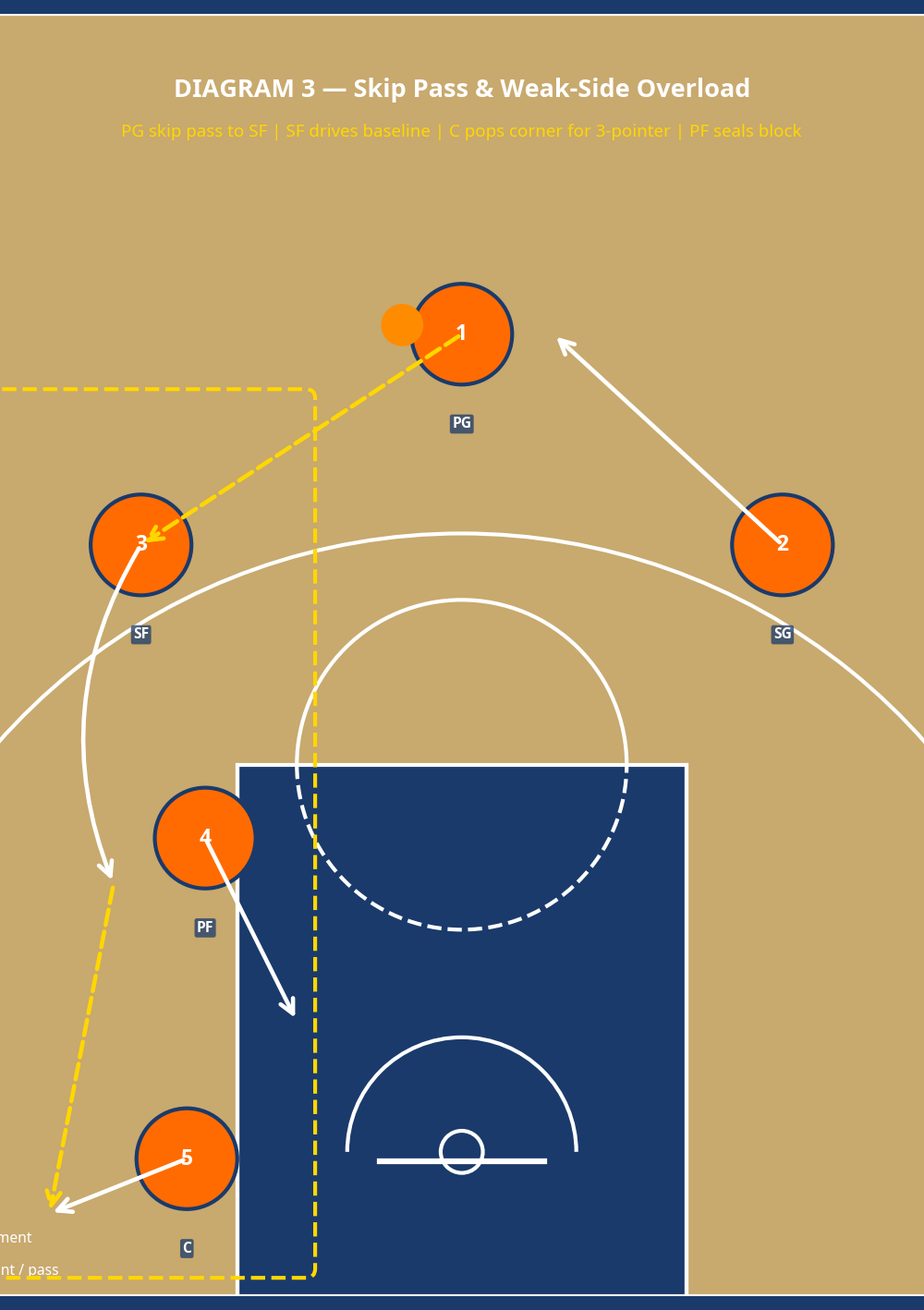
Equipment Needed:
- 1 Basketball
- Half-court playing area (FIBA standard 28m x 15m recommended for spacing)
- 5 Offensive Players (numbered 1 through 5)
Player Positions:
- Point Guard (1): Starts at the top of the key, approximately 1-2 meters beyond the three-point arc.
- Shooting Guard (2): Positioned on the right wing, free-throw line extended.
- Small Forward (3): Positioned on the left wing, free-throw line extended.
- Power Forward (4): Starts near the right short corner or mid-post area, ready to flash to the high post.
- Center (5): Anchored at the low post or baseline, ready to slide along the baseline.
3. Step-by-Step Instructions
Phase 1: The Wing Entry
The initial movement is designed to shift the zone to one side of the floor, forcing the top defender and the wing defender to commit.
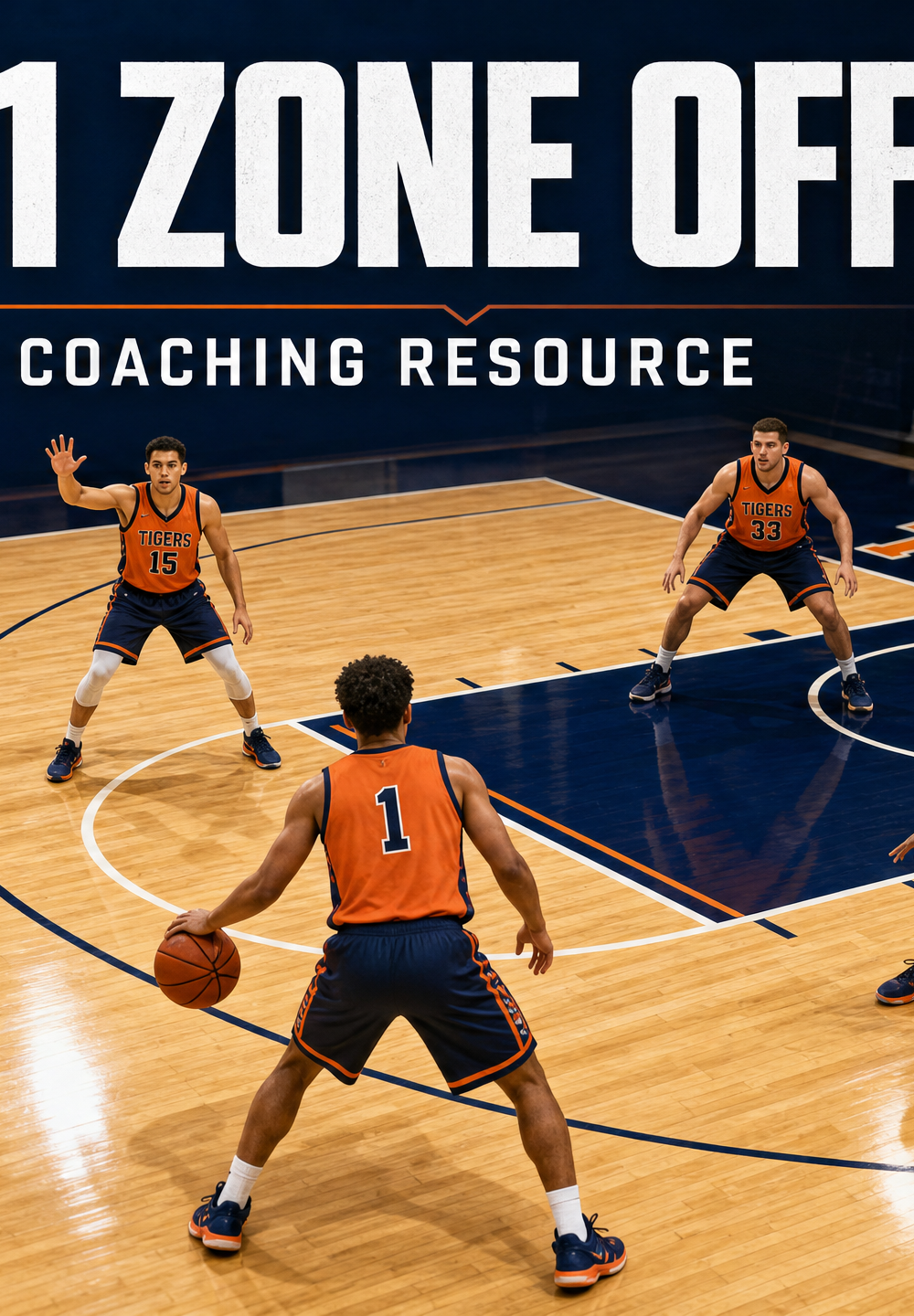
- Initiate: The Point Guard (1) brings the ball up the floor and centers the offense at the top of the key.
- Wing Entry: PG (1) makes a decisive pass to the Shooting Guard (2) on the right wing.
- Flash High: As the pass is in the air, the Power Forward (4) flashes aggressively to the high post (right elbow). This occupies the middle defender of the 1-3-1 zone.
- Baseline Slide: Simultaneously, the Center (5) slides along the baseline to the right short corner, drawing the attention of the baseline defender.
- Fill and Replace: After passing, PG (1) cuts toward the right elbow area to fill the space behind the play, acting as a safety valve.
Phase 2: High-Low Action
With the ball on the wing, the offense looks to penetrate the interior of the zone using a high-low post sequence.
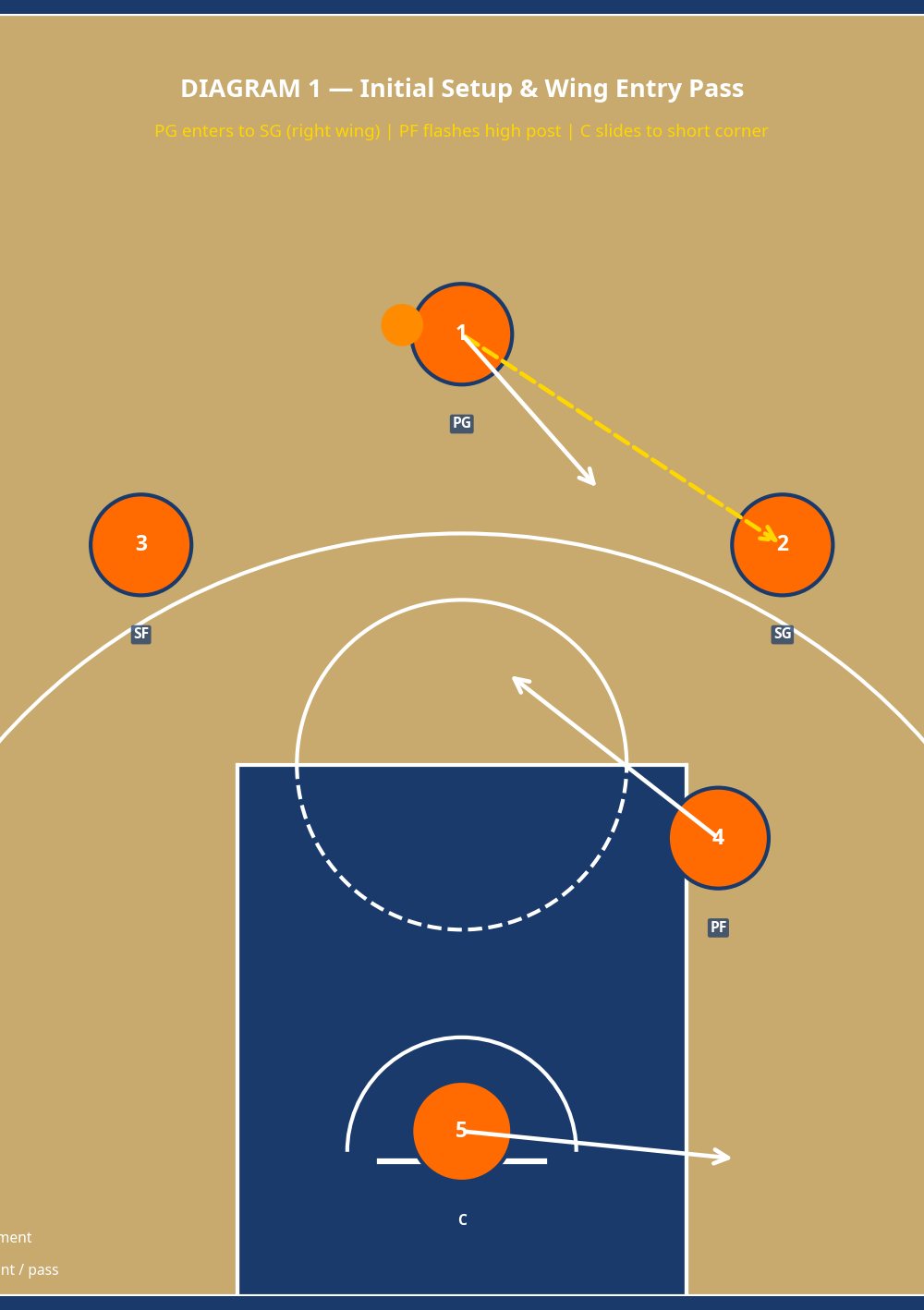
- Post Feed: SG (2) looks inside and passes the ball to the flashing PF (4) at the high post.
- Baseline Cut: The moment PF (4) catches the ball, the Center (5) makes a hard back-door cut along the baseline toward the basket.
- The Assist: PF (4) immediately looks for C (5) on the cut, delivering a lob or a crisp bounce pass for a high-percentage layup.
- Weak-Side Fill: While this happens, the Small Forward (3) cuts from the left wing down to the left block, positioning for an offensive rebound or a secondary pass.
- Reset Option: If the interior pass is denied, PG (1) rotates back to the top of the key to receive a kick-out pass and reset the offense.
Phase 3: Skip Pass & Weak-Side Overload
If the defense collapses on the high post and the initial actions are covered, the offense transitions into a weak-side overload to punish the shifting zone.
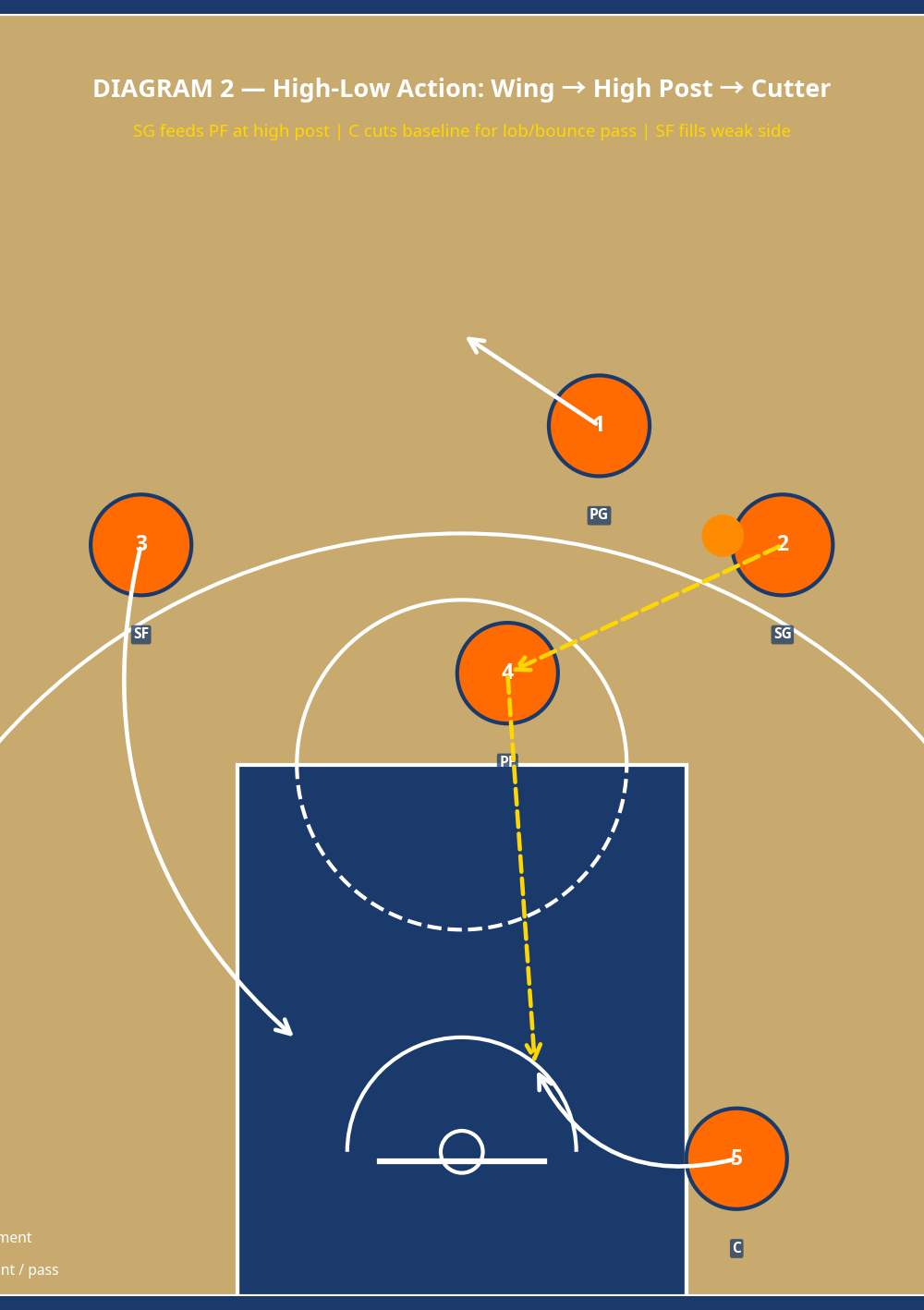
- The Skip: The ball is reversed back to PG (1) at the top of the key. PG (1) immediately throws a skip pass across the court to SF (3) on the left wing.
- Baseline Drive: SF (3) catches the skip pass and immediately attacks the baseline on the dribble, forcing the zone to collapse toward the corner.
- Corner Pop: The Center (5) pops out to the left corner, positioning behind the three-point line.
- Post Seal: The Power Forward (4) moves down to the left block and seals their defender, preventing them from closing out on the corner.
- The Shot: SF (3) kicks the ball out to the wide-open C (5) in the corner for a three-point attempt. Meanwhile, SG (2) rotates to the top of the key for defensive balance.
4. Key Coaching Points
- Patience and Poise: Players must not panic against the traps of a 1-3-1 zone. Use ball fakes to shift defenders before making a pass.
- High Post Positioning: The player flashing to the high post (PF) must catch the ball facing the basket. This allows them to see the baseline cutter and the opposite wing simultaneously.
- Sharp, Crisp Passing: Looping passes will be intercepted. Passes must be thrown with velocity, particularly the skip passes and the entry pass to the high post.
- Baseline Movement: The player running the baseline (C) must constantly move behind the backboard, staying out of the direct line of sight of the baseline defender.
- Rebounding Balance: Ensure that when a shot goes up from the corner, the weak-side wing and the high post player are crashing the offensive glass.
5. Common Mistakes
- Holding the Ball Too Long: Allowing the defense to set their traps. The ball must move faster than the zone can shift.
- Ignoring the High Post: Settling for perimeter passes around the arc without ever forcing the ball into the middle of the zone.
- Poor Spacing: Offensive players creeping too close together, allowing one zone defender to guard two offensive players.
- Telegraphing Passes: Staring down the intended receiver, allowing the long arms of the 1-3-1 defenders to tip or steal the ball.
6. Variations & Progressions
- Dribble Entry (Progression): Instead of a pass to the wing, the PG dribbles at the wing defender to engage them, then pitches the ball to the wing player who has faded toward the corner.
- High Post Screen (Variation): If the high post flash is denied, the PF can set a pin-down screen on the middle defender of the zone, freeing up the opposite wing for a flash cut to the free-throw line.
- Five-Out Alignment (Variation): Start in a 5-out look to pull the baseline defender away from the hoop, then have the center dive hard to the block as the ball is entered to the wing.
7. Age Adaptations
- Under 10 / Under 12: Focus heavily on the basic spacing and the simple wing entry pass. Replace the skip pass with shorter, safer passes around the perimeter. Emphasize the importance of the high post flash.
- Under 14 / Under 16: Introduce the high-low action as the primary scoring option. Teach the baseline player how to read the defense and time their cut precisely when the ball hits the high post.
- Open / Advanced: Implement the full weak-side overload and emphasize rapid ball reversals. Advanced teams should be able to execute skip passes seamlessly and utilize the baseline drive to create corner three-point opportunities.